
Concrete driveways, car parks, and other paved areas can cause problems during heavy rain, especially when water has nowhere to go. Permeable concrete is an alternative to traditional concrete as it lets rainwater pass through the surface rather than running off into surrounding areas. It’s becoming an increasingly popular choice for projects where surface water needs careful management.
Concrete permeability plays an important role in sustainable drainage, helping manage rainwater where it falls and reducing the pressure on conventional drainage systems.
In this guide, we’ll look at how permeable concrete works, where it can be used, its benefits and what to consider before choosing it for a project.
✅ Order permeable concrete today
✅ Free, fast quote within 24 hours
✅ Call, message or complete our simple online form
Flowmix Tewkesbury: Tel: 01684 217888 Flowmix Walsall: Tel: 01922 741731
What Is Permeable Concrete?
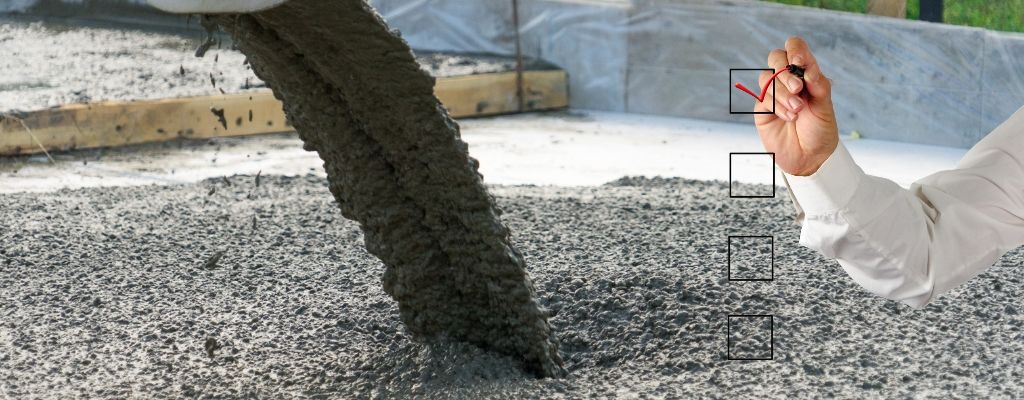
Permeable concrete, also known as pervious or porous concrete, is designed to let water drain through it.
Unlike conventional concrete, which is generally produced to limit water penetration, permeable concrete contains a network of interconnected voids. Concrete permeability allow rainwater to travel through the concrete and into the drainage layers below.
The material is typically made using cement, water and carefully graded coarse aggregates, with little or no fine aggregate. This creates gaps between the larger aggregate particles, giving the concrete its porous structure.
The result is a hard-wearing surface that can support suitable traffic loads while allowing rainwater to drain away.
However, concrete permeability alone doesn’t guarantee effective drainage. Ground conditions and the construction of the layers beneath the concrete are equally important.
How Does Concrete Permeability Work?
The drainage properties of permeable concrete come from the spaces between its aggregate particles.
In conventional concrete, sand and other fine materials fill many of these spaces, producing a dense material with relatively low permeability.
Permeable concrete is different. Its mix is designed to leave interconnected gaps through which water can flow.
When rain falls on a permeable concrete surface, the water passes through these gaps into a layer of open-graded aggregate beneath the slab.
Depending on the drainage design, the water can then:
- Soak gradually into the underlying soil.
- Be temporarily stored within the aggregate sub-base.
- Drain through a controlled outlet to another drainage system.
Concrete permeability reduces the amount of rainwater flowing directly across the surface and into nearby drains.
The rate at which water passes through the concrete depends on its void structure, mix design, installation quality and ongoing maintenance.
What Are the Benefits of Permeable Concrete?
#: Reduces Surface Water Runoff
One of the biggest advantages of permeable concrete is its ability to reduce surface water runoff.
On conventional impermeable surfaces, rainwater flows towards gullies, drains and surrounding areas. During heavy rainfall, these drainage systems can become overwhelmed.
Concrete permeability means that water passes through the surface instead, helping reduce the volume and speed of runoff.
#2: Helps Manage Flood Risk
Permeable concrete can form part of a wider flood management strategy. By allowing rainwater to enter the pavement structure, it can temporarily store water and release it more slowly.
This is particularly useful in built-up areas where large areas of impermeable paving contribute to surface water flooding.
However, the effectiveness of concrete permeability depends on its design, storage capacity, ground conditions, and rainfall intensity.
#3: Supports Sustainable Drainage Systems (SuDS)
Sustainable drainage systems, commonly known as SuDS, are designed to manage surface water in a way that more closely reflects natural drainage processes.
Permeable concrete can be incorporated into SuDS designs to reduce runoff and help control how rainwater moves through a site.
Depending on the project, concrete permeability may also help reduce the need for some conventional surface drainage infrastructure.
#4: Reduces Standing Water
Puddles can create problems on driveways, footpaths and parking areas, particularly during prolonged periods of wet weather.
Because permeable concrete allows rainwater to pass through its surface, it can help prevent standing water when the drainage system is functioning correctly.
This concrete permeability can make outdoor areas more convenient to use and reduce the likelihood of water collecting in low spots.
#5: Helps Filter Surface Water
As rainwater passes through a permeable pavement system, some pollutants and suspended particles can be trapped or treated within the surface and underlying aggregate layers.
This can improve the quality of water leaving the system, although treatment performance varies depending on the pollutants present and the pavement design.
Need Expert Advice?
Speak to the team at Flowmix Tewkesbury, Gloucestershire or Aldridge, Walsall. We are happy to help with all your concrete requirements. Contact us by email or telephone.
Flowmix Tewkesbury: Tel: 01684 217888 Flowmix Walsall: Tel: 01922 741731
Where Is Permeable Concrete Used?
Permeable concrete can be used in a range of residential, commercial and public spaces where managing surface water is a priority.
Driveways
Permeable concrete driveways allow rainwater to drain through the surface rather than flowing towards the road or neighbouring properties.
They can be particularly useful where surface water runoff needs to be controlled.
Car Parks
Large car parks can produce considerable surface water runoff during heavy rain. Using permeable concrete in parking bays and other suitable areas allows rainwater to pass through the surface, reducing the amount of water flowing into nearby drains. The concrete must be specified to withstand the weight and movement of vehicles using the area.
Footpaths and Walkways
Permeable concrete can provide a firm walking surface while reducing puddles and surface runoff.
It may be suitable for garden paths, pedestrian routes, parks and landscaped developments.
Residential Developments
New housing developments often need to incorporate measures for managing rainwater.
Permeable concrete can be considered for suitable access areas, parking spaces and shared outdoor surfaces as part of the overall drainage design.
Commercial and Public Spaces
Permeable concrete may also be used in courtyards, public spaces and other areas where drainage and surface water management are important.
The proposed traffic loads, accessibility requirements and maintenance arrangements should always be considered.
Permeable Concrete vs Traditional Concrete
Although both materials use cement and aggregates, their properties and intended applications are different.
| Feature | Permeable Concrete | Traditional Concrete |
| Water drainage | Allows water to pass through | Generally, limits water penetration |
| Structure | Contains interconnected voids | Dense structure with fewer connected voids |
| Typical applications | Driveways, paths, parking areas | Foundations, floors, structural elements and paving |
| Surface water management | Can reduce runoff | Usually requires separate drainage arrangements |
| Strength | Designed for specified, suitable loads | Available in a wide range of structural strengths |
| Maintenance | Requires regular cleaning to maintain permeability | Generally, doesn’t require pore-clearing maintenance |
Neither material is automatically better than the other. The choice depends on the application, loading requirements and drainage design.
How Is Permeable Concrete Installed?
Installing permeable concrete requires a different approach from conventional concrete because its drainage properties depend on maintaining the interconnected voids.
Step 1: Assess the Ground Conditions
Before installation, assess the site to determine how water will drain away. Soil permeability, groundwater levels, site gradients and expected rainfall all influence the drainage design.
Step 2: Prepare the Sub-Base
The concrete is laid on a bed of open-graded stone, which leaves gaps for water to drain through. The stone also supports the concrete above it. How deep the sub-base needs to be depends on the ground conditions, the loads it will carry, and the amount of rainwater it needs to accommodate.
Step 3: Place the Concrete
Place the permeable concrete mix over the prepared sub-base.
Unlike conventional concrete, it must retain enough interconnected voids to allow water to flow through the finished surface.
Step 4: Compact and Finish
A roller screed is commonly used to level and compact the surface without crushing the gaps between the aggregate. These gaps must remain open for water to pass through.
Step 5: Cure the Concrete
Correct curing is particularly important because permeable concrete has an open structure that can lose moisture quickly.
Protect the surface promptly after placement and cure it according to the mix specification.
Insufficient curing can affect strength, durability and long-term performance.
Does Permeable Concrete Need Maintenance?
Yes. Although permeable concrete is designed to allow water through, its pores can gradually become blocked by dirt, leaves, sediment and other debris.
Over time, this can reduce the rate at which water drains through the surface.
Typical maintenance includes:
- Removing leaves, soil and loose debris.
- Vacuum sweeping using suitable equipment.
- Cleaning areas where sediment has accumulated.
- Preventing soil and landscaping materials from washing onto the surface.
- Checking for signs of standing water or reduced drainage.
Pressure washing may be appropriate in some circumstances, but cleaning methods should follow the pavement designer’s or manufacturer’s recommendations.
Good maintenance is especially important in areas exposed to mud, heavy sediment or frequent vehicle movements.
Potential Disadvantages to Permeable Concrete
Permeable concrete has its limitations, so it’s worth checking whether it’s the right choice for the job.
Strength: The gaps within permeable concrete make it less strong than conventional concrete of a similar mix. The expected traffic and weight loads need to be considered before installation.
Clogging: Dirt, leaves, and other debris can gradually block the gaps in the surface, making it harder for rainwater to pass through.
Ground conditions: If the soil beneath the concrete doesn’t drain well, the water may need somewhere else to go. This could mean including extra storage beneath the surface or installing an outlet to carry excess water away.
Specialist installation: The mix requires appropriate placement, compaction and curing techniques.
Winter conditions: Freeze-thaw exposure and winter maintenance need to be considered as part of the pavement design.
These factors don’t necessarily rule out permeable concrete, but they highlight the importance of proper planning and specification.
Is Permeable Concrete Suitable for Every Driveway?
Permeable concrete can be a practical option for domestic driveways, but suitability depends on more than the surface material.
The pavement must be designed to support the vehicles using it, and the drainage system must have sufficient capacity to handle expected rainfall.
Ground conditions, driveway gradients and nearby buildings should also be assessed.
In some cases, an alternative permeable paving system or a conventional concrete driveway with suitable drainage may be more appropriate.
It’s also worth checking whether planning requirements apply, particularly where driveway drainage or alterations to existing hard surfaces are involved.
Choosing the Right Concrete for Your Project
Concrete permeability is an important consideration when designing outdoor surfaces and drainage systems.
Permeable concrete helps manage rainwater at source, reducing surface runoff and supporting sustainable drainage.
However, its performance relies on more than the concrete itself. The sub-base, ground conditions, expected loading and maintenance requirements all need to be considered.
For projects where drainage through the surface isn’t required, conventional ready-mix concrete may be the more appropriate choice.
How Flowmix Can Help with Your Project
Flowmix has two plants, Gloucester and Walsall. We provide the following services (with time slots):
✅ Ready-mix concrete, mix on-site (volumetric concrete)
✅ Traditional and liquid screed.
✅ Concrete line pump Hire to reduce manual labour and associated costs, increase efficiency, reduce wastage and clean up.
✅ Interlocking concrete blocks for temporary or permanent barriers.
✅ Mini-Mix loads up to 4 cubic metres.
Flowmix holds the BSA-approved Ready Mix Concrete Kitemark KM683844, a certification that “confirms a product or service’s claim has been independently and repeatedly tested by experts” (source BSI).
Flowmix Tewkesbury: Tel: 01684 217888 Flowmix Walsall: Tel: 01922 741731
Flowmix Delivery Areas
| Tewkesbury | Walsall Plant |
| Bourton-on-the-Water | Aldridge |
| Brockworth | Barton-Under-Needwood |
| Chalford | Birmingham |
| Cheltenham | Brownhills |
| Chipping Campden | Burntwood |
| Cirencester | Burton Upon Trent |
| Droitwich Spa | Cannock |
| Evesham | Coleshill |
| Gloucester | Dudley |
| Great Malvern | Great Haywood |
| Ledbury | Lichfield |
| Newent | Norton Canes |
| Northleach | Penkridge |
| Pershore | Rugeley |
| Ross-on-Wye | Stafford |
| Stow-on-the-Wold | Tamworth |
| Stroud | Walsall |
| Tewkesbury | West Bromwich |
| Worcester | Wolverhampton |