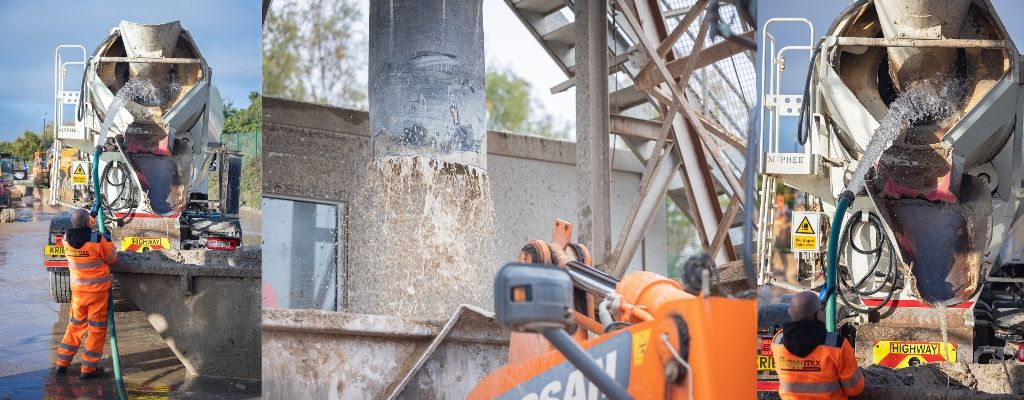
Concrete washout might not be the first thing you think about when planning a concrete pour, but it’s an important part of responsible construction site management.
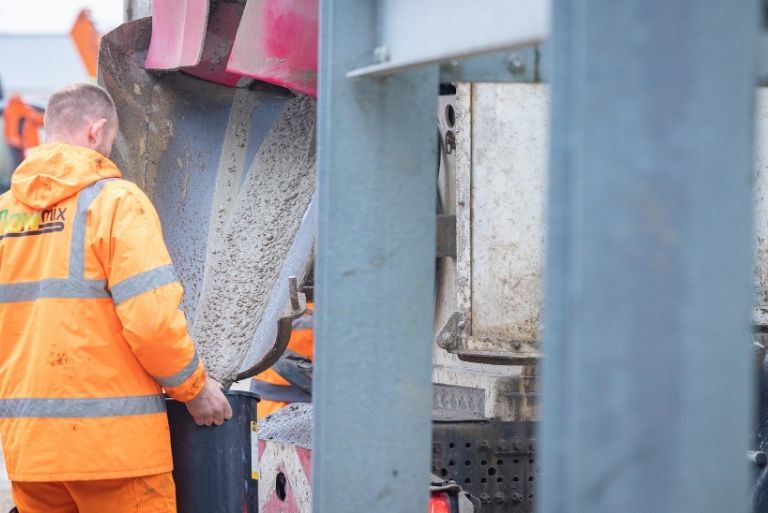
After placing concrete, equipment and tools need cleaning to remove residual concrete before it hardens.
Without proper containment and disposal, concrete washout can cause environmental damage, create safety hazards and potentially lead to enforcement action.
Whether you’re managing a commercial construction site or working on a smaller domestic project, understanding how to handle concrete washout correctly can help you avoid unnecessary problems.
✅ Order ready-mix or volumetric concrete today
✅ Free, fast quote within 24 hours
✅ Call, message or complete our simple online form
Flowmix Tewkesbury: Tel: 01684 217888 Flowmix Walsall: Tel: 01922 741731
What Is Concrete Washout?
Concrete washout refers to the process of cleaning residual concrete and cement-based materials from equipment, tools and vehicles after concrete work.
Depending on the project, this may involve cleaning concrete delivery chutes, wheelbarrows, buckets, pumps and other equipment used during placement.
The resulting waste typically contains a mixture of water, cement particles, sand, aggregates and residual concrete.
Unlike ordinary dirty water, concrete washout water is highly alkaline because of the cement it contains.
Fresh cement-based washout water can harm aquatic life and the environment.
As the solids settle, the remaining water may still contain dissolved alkaline substances, meaning it shouldn’t be assumed safe simply because it looks clearer.
Why Is Concrete Washout a Problem?
Poorly managed concrete washout can create several environmental and practical problems.
Water Pollution
One of the biggest concerns is concrete washout water entering surface water drains, streams, rivers, or other watercourses.
Its high alkalinity can harm fish and other aquatic organisms, while suspended cement particles can increase turbidity and affect water quality.
Even relatively small quantities of contaminated water can cause problems, particularly in sensitive environments.
Soil Contamination
Concrete washout water is highly alkaline and can harm plants and affect the soil. If it isn’t contained, it can also enter drains or seep through the ground, causing pollution.
Blocked Drains and Pipework
Cement particles and residual concrete can settle and harden inside drainage systems. This may lead to blockages, reduced drainage capacity and expensive cleaning or repair work.
Health and Safety Risks
Fresh concrete and cement-based washout water can cause skin irritation and serious chemical burns.
Workers handling washout waste should use appropriate personal protective equipment and follow safe working procedures.
Concrete Washout Regulations in the UK
Concrete washout management forms part of a construction site’s wider environmental responsibilities.
Across the UK, businesses and contractors must take appropriate steps to prevent pollution and manage waste lawfully. The specific legal requirements and regulatory guidance vary between England, Scotland, Wales and Northern Ireland.
In England, the Environment Agency regulates activities that may cause water pollution, while environmental regulators in the other UK nations perform equivalent functions.
Key considerations include:
- Preventing contaminated washout water from entering surface water drains or watercourses.
- Ensuring concrete waste is stored and handled without causing pollution.
- Using appropriately authorised waste carriers and facilities where required.
- Maintaining suitable waste documentation and following applicable duty-of-care requirements.
- Complying with any relevant environmental permits or discharge consents.
Importantly, concrete washout water shouldn’t be discharged into drains, onto land or into watercourses without establishing that the discharge is lawful and appropriately authorised.
For larger construction projects, concrete washout arrangements should form part of the site’s environmental management procedures.
Need Expert Advice?
Speak to the team at Flowmix Tewkesbury, Gloucestershire or Aldridge, Walsall. We are happy to help with all your concrete requirements. Contact us by email or telephone.
Flowmix Tewkesbury: Tel: 01684 217888 Flowmix Walsall: Tel: 01922 741731
How to Set Up a Concrete Washout Area
A designated concrete washout area helps keep waste contained and prevents contaminated water from spreading across the site.
Choose a Suitable Location
Position the washout area away from surface water drains, watercourses and locations where run off could escape the site.
The area should be accessible to the equipment requiring cleaning without creating unnecessary vehicle movements or safety risks.
Use Proper Containment
Collect concrete washout in a suitable, watertight containment system.
Options may include purpose-made portable washout containers, lined skips or engineered containment facilities designed for concrete waste.
The containment system should hold both liquid waste and solid residues without leakage.
Allow Sufficient Capacity
Estimate the likely quantity of washout waste before work begins.
The containment facility should have enough capacity for the anticipated waste, with suitable allowance for rainfall and unexpected volumes where relevant.
Overfilled washout containers can allow contaminated water to escape.
Clearly Identify the Area
On busy construction sites, clearly mark the designated washout location. Workers and delivery personnel should understand where washout is permitted and what procedures must be followed.
Inspect and Maintain the Facility
Check the containment system regularly for damage, leaks and excessive waste accumulation. Arrange waste removal before the facility reaches capacity and prevent rainwater from causing overflow.
How to Dispose of Concrete Washout Waste Safely
The correct disposal method depends on the type and quantity of waste produced, as well as the facilities available.
Separate Solids and Liquids
Where suitable, contain concrete washout waste to allow heavier solids to settle. However, the remaining liquid may still be highly alkaline and must be managed appropriately.
Settling alone doesn’t make washout water suitable for discharge.
Allow Residual Concrete to Harden
Some contained concrete residues can be allowed to harden before being removed.
Once the concrete has hardened, it may be possible to recycle it rather than send it to landfill. This depends on what the waste contains and whether the recycling facility can accept it. Any hardened concrete waste must still be disposed of in line with waste regulations.
Use Authorised Waste Services
Where waste cannot be appropriately managed on site, arrange collection by a suitably registered or authorised waste carrier.
Waste should be taken to a facility permitted or otherwise authorised to accept the relevant material.
Consider Specialist Washout Systems
On sites that produce large amounts of concrete washout, a dedicated washout system may be worth considering. Some systems separate the solid waste from the water, allowing the water to be treated and reused where suitable.
Any treatment or discharge arrangements must comply with relevant environmental requirements.
Common Concrete Washout Mistakes to Avoid
Even experienced construction teams can encounter problems when washout arrangements aren’t properly planned.
- Washing equipment into drains: Surface water drains often discharge directly into the environment. Concrete washout water must not enter them.
- Using unsuitable containment: An unlined hole or poorly sealed container may allow contaminated liquid to escape into the ground.
- Allowing containers to overflow: Insufficient capacity or heavy rainfall can cause washout water to spill onto surrounding surfaces.
- Assuming clear water is safe: Washout water may remain highly alkaline even after suspended particles have settled.
- Leaving arrangements until the end of the pour: By the time equipment needs cleaning, it may be too late to organise suitable containment.
- Failing to communicate responsibilities: Contractors, site managers and delivery personnel should understand the agreed washout arrangements before work begins.
How to Reduce Concrete Washout Waste
Reducing waste can make concrete operations more efficient while lowering disposal requirements.
Order the correct quantity of concrete to help minimise surplus concrete at the end of a pour. Ensure the site is prepared, equipment is ready and sufficient labour is available before concrete arrives.
Having a dedicated washout area makes it easier to manage waste. Reusable containment systems can also reduce the amount of disposable material needed.
Where suitable facilities are available, hardened concrete residues may be processed for use as recycled aggregate or other approved applications.
This can reduce the quantity of material sent to landfill and support more resource-efficient construction practices.
Who Is Responsible for Concrete Washout on Site?
Establish responsibility for concrete washout before concrete delivery.
The site operator or principal contractor will generally have responsibilities for managing environmental risks associated with site activities.
Individual contractors and concrete suppliers also have obligations relating to their own operations and waste handling.
However, the exact arrangements depend on the project, contractual agreements and applicable legal requirements. Don’t assume the concrete supplier will automatically provide washout facilities or remove all waste generated during delivery.
Before the pour, confirm where delivery equipment may be cleaned, whether washout facilities are required on site and who will provide and maintain the containment system. Determine who is responsible for collecting and disposing of waste and what procedures apply if washout cannot be carried out safely.
Conclusion: Plan Concrete Washout Before the Pour
Concrete washout is an essential consideration for any construction project involving ready-mixed concrete.
Although cleaning equipment may seem routine, the resulting wastewater and cement residues can cause significant problems if they’re not properly contained and managed.
Setting up a proper washout area, disposing of waste correctly, and keeping everyone on site clear about their responsibilities can help prevent pollution and avoid unnecessary delays.
How Flowmix Can Help with Your Project
Flowmix has two plants, Gloucester and Walsall. We provide the following services (with time slots):
✅ Ready-mix concrete, mix on-site (volumetric concrete)
✅ Traditional and liquid screed.
✅ Concrete line pump Hire to reduce manual labour and associated costs, increase efficiency, reduce wastage and clean up.
✅ Interlocking concrete blocks for temporary or permanent barriers.
✅ Mini-Mix loads up to 4 cubic metres.
Flowmix holds the BSA-approved Ready Mix Concrete Kitemark KM683844, a certification that “confirms a product or service’s claim has been independently and repeatedly tested by experts” (source BSI).
Flowmix Tewkesbury: Tel: 01684 217888 Flowmix Walsall: Tel: 01922 741731
Flowmix Delivery Areas
| Tewkesbury | Walsall Plant |
| Bourton-on-the-Water | Aldridge |
| Brockworth | Barton-Under-Needwood |
| Chalford | Birmingham |
| Cheltenham | Brownhills |
| Chipping Campden | Burntwood |
| Cirencester | Burton Upon Trent |
| Droitwich Spa | Cannock |
| Evesham | Coleshill |
| Gloucester | Dudley |
| Great Malvern | Great Haywood |
| Ledbury | Lichfield |
| Newent | Norton Canes |
| Northleach | Penkridge |
| Pershore | Rugeley |
| Ross-on-Wye | Stafford |
| Stow-on-the-Wold | Tamworth |
| Stroud | Walsall |
| Tewkesbury | West Bromwich |
| Worcester | Wolverhampton |