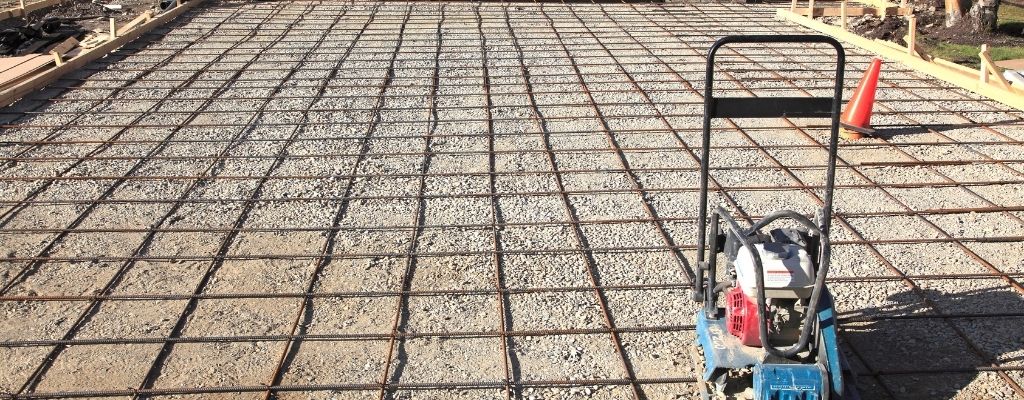
If you’re planning a new driveway, choosing the right concrete is one of the most important decisions you’ll make.
A driveway needs to cope with vehicle weight, regular use, and everything the British weather can throw at it, including months of rain and, in recent years, shocking heatwaves. Choosing the right concrete can mean the difference between a strong, long-lasting driveway and one that starts to show wear sooner than expected.
This post highlights the best concrete for driveways and answers common questions about planning your driveway project.
✅ Order ready-mix or volumetric concrete today
✅ Free, fast quote within 24 hours
✅ Call, message or complete our simple online form
Flowmix Tewkesbury: Tel: 01684 217888 Flowmix Walsall: Tel: 01922 741731
Why Is Concrete a Good Choice for Driveways?
Concrete for driveways is popular because it combines strength and durability with relatively low maintenance. Once properly laid and cured, a concrete driveway creates a solid surface that can handle everyday vehicle traffic for many years. Choosing the right concrete for driveways is therfore critical.
Some of the main advantages of concrete for driveways include:
- Low maintenance
- Resistant to everyday wear
- Excellent strength and durability
- A range of possible surface finishes
- Suitable for cars, vans and other vehicles
- No individual blocks to move or become uneven
- Suitable for driveways of almost any shape or size
To get those benefits, you need to order the right concrete for driveways and understand proper driveway preparation.
What Is the Best Concrete for Driveways?
Flowmix recommend C30 concrete for driveways and external paving.
C30 is a strong, durable concrete for driveways. It’s suitable for exposed outdoor applications and regular vehicle traffic. The mix Flowmix supplies for these applications also contains an additive to protect against freezing, which is vital for concrete exposed to the British weather.
Although you may see weaker concrete grades suggested for some domestic driveway applications, choosing concrete isn’t simply about whether it can support the weight of a car.
Remember that a driveway is permanently exposed to rain, frost, and changing temperatures, as well as repeated vehicle loads. Hence, an appropriate C30 mix gives you a robust surface designed for the job.
If you’re unsure which concrete you need, speak to the Flowmix team before ordering. We can help you choose the appropriate specification for your particular project.
How Thick Should Concrete Be for a Driveway?
The concrete mix is only part of the equation; driveway thickness is equally important. For a typical domestic driveway carrying cars and other light vehicles, around 100mm of concrete is commonly used as a minimum.
If the driveway will regularly accommodate heavier vehicles, such as vans, it may require additional depth.
The appropriate thickness depends on factors like ground conditions, the type of vehicles that will use the driveway, the quality and depth of the sub-base, whether you use reinforcement, and the overall driveway design.
If you’re constructing a driveway that will regularly carry particularly heavy vehicles, it’s worth getting professional advice on the specification before work begins. If you’re unclear, please call the Flowmix team for advice.
Need Expert Advice?
Speak to the team at Flowmix Tewkesbury, Gloucestershire or Aldridge, Walsall. We are happy to help with all your concrete requirements. Contact us by email or telephone.
Flowmix Tewkesbury: Tel: 01684 217888 Flowmix Walsall: Tel: 01922 741731
Why the Sub-Base Matters
The sub-base provides a foundation for the concrete slab and helps distribute vehicle weight across the ground.
Without a good sub-base, movement beneath the concrete increases the risk of cracking or sinking. The ground should therefore be properly excavated, a suitable sub-base installed and thoroughly compacted before pouring the concrete.
Planning the sub-base is one of those aspects of the project you won’t see when the driveway is finished, but it can greatly influence how well the driveway performs.
Does a Concrete Driveway Need Reinforcement?
Depending on the driveway and the loads it will carry, you may want to consider reinforcement. Whether reinforcement is necessary depends on the design, ground conditions, thickness, and expected use of the driveway.
Steel reinforcement mesh can help distribute loads and control cracking within the concrete slab. Fibre-reinforced concrete may also suit certain applications.
For larger driveways or areas carrying heavier vehicles, it’s sensible to get professional advice before pouring the concrete.
What Finish Can You Have on a Concrete Driveway?
Concrete doesn’t have to be a completely smooth grey surface. Several finishes can be used, depending on the appearance and grip level required.
A brushed finish is one of the simplest options. A brush is drawn across the surface while the concrete is still workable, creating fine lines and additional texture.
Exposed aggregate provides a more decorative appearance by revealing some of the aggregate within the concrete.
Pattern-imprinted concrete can create the appearance of materials such as paving, stone or cobbles while retaining the benefits of a continuous concrete surface.
Whatever finish you choose, remember that a driveway needs to provide suitable traction when wet. Appearance matters, but practicality does too.
Ready Mix or Mix Concrete Yourself?
For a small repair, mixing concrete yourself may be practical, but a driveway is different.
Even a relatively modest driveway can require several cubic metres of concrete. Mixing that quantity manually is labour-intensive, time-consuming, and can be challenging to keep consistent throughout the pour.
Ready-mixed concrete provides a consistent specification and arrives ready for immediate placement, allowing you to pour the driveway much more efficiently.
It also lets you focus on placing, levelling, and finishing the concrete rather than repeatedly mixing batches while earlier sections begin to set.
When You Can Use Your New Concrete Driveway
Concrete begins hardening relatively quickly, but that doesn’t mean it has reached its full strength. Curing is gradual, and putting vehicles on the driveway too early can damage the new surface. The longer you can leave it, the better.
The exact curing time depends on the concrete specification, weather, and site conditions, so follow the advice for your project before allowing vehicles onto the driveway.
A little patience at this stage can help protect all the work that’s gone into creating your driveway.
Why Drainage Matters
It’s critical to consider drainage for your driveway. An impermeable concrete surface changes the way rainwater drains from the property, so water needs somewhere suitable to go rather than simply running towards the road or neighbouring properties.
The drainage solution should therefore form part of the driveway design before the concrete is poured.
Depending on the property and driveway size, planning requirements may also apply, particularly where an impermeable surface directs water onto the highway.
If you’re unsure, check the current requirements for your property before starting work. We are happy to advise you.
Ordering Concrete for a Driveway
✅ Order ready-mix or volumetric concrete today
✅ Free, fast quote within 24 hours
✅ Call, message or complete our simple online form
Flowmix Tewkesbury: Tel: 01684 217888 Flowmix Walsall: Tel: 01922 741731
Before calling to order your concrete for driveways, it’s useful to have a few details ready, including the following:.
- Access to the site
- Your delivery location
- The planned concrete depth
- The type of vehicles that will use it
- The approximate length and width of the driveway
- How the concrete will get from the delivery vehicle to the pour
Don’t worry if you’re not certain about everything because the Flowmix team can help guide you. We appreciate that concrete isn’t something most homeowners order every week, so you don’t need to become a concrete expert before picking up the phone.
That’s what we’re here for.
How Flowmix Can Help with Your Project
Flowmix has two plants, Gloucester and Walsall. We provide the following services (with time slots):
✅ Ready-mix concrete, mix on-site (volumetric concrete)
✅ Traditional and liquid screed.
✅ Concrete line pump Hire to reduce manual labour and associated costs, increase efficiency, reduce wastage and clean up.
✅ Interlocking concrete blocks for temporary or permanent barriers.
✅ Mini-Mix loads up to 4 cubic metres.
Flowmix holds the BSA-approved Ready Mix Concrete Kitemark KM683844, a certification that “confirms a product or service’s claim has been independently and repeatedly tested by experts” (source BSI).
Flowmix Tewkesbury: Tel: 01684 217888 Flowmix Walsall: Tel: 01922 741731
Flowmix Delivery Areas
| Tewkesbury | Walsall Plant |
| Bourton-on-the-Water | Aldridge |
| Brockworth | Barton-Under-Needwood |
| Chalford | Birmingham |
| Cheltenham | Brownhills |
| Chipping Campden | Burntwood |
| Cirencester | Burton Upon Trent |
| Droitwich Spa | Cannock |
| Evesham | Coleshill |
| Gloucester | Dudley |
| Great Malvern | Great Haywood |
| Ledbury | Lichfield |
| Newent | Norton Canes |
| Northleach | Penkridge |
| Pershore | Rugeley |
| Ross-on-Wye | Stafford |
| Stow-on-the-Wold | Tamworth |
| Stroud | Walsall |
| Tewkesbury | West Bromwich |
| Worcester | Wolverhampton |