
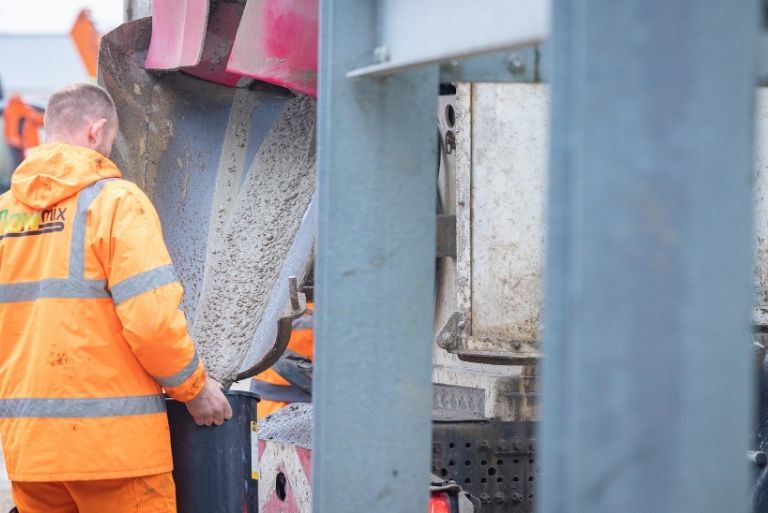
Laying a concrete driveway can be one of the most rewarding projects to improve your property. If you’re planning to lay a concrete drive, of course you have many questions including what concrete to use for best results.

Concrete is durable. It could last for thirty years and requires little maintenance. Gone are the days of a stark, cream-coloured drive. Now you can colour concrete, add texture and polish your posh new drive to the envy of the neighbours.

This article answers most of the questions our team gets asked. We hope to be your ready mix or volumetric concrete supplier and guide for installing your concrete driveway.

#1: What Concrete Do I Need for Laying A Driveway?

It might surprise you that there are multiple types and strengths of concrete, so it’s super important you choose the right one for laying a concrete driveway.

Although the essential ingredients are the same – cement, aggregate and water – different mixes have additional materials that influence how the concrete works for a specific application, such as the following: –

  • Fibres – adds strength
  • Plasticisers – improve flow and workability
  • Retarding Agents – to reduce the setting rate
  • Corrosion Inhibitors – reduce corrosion of steel rebars
  • Admixtures – a substance to modify concrete properties
  • Accelerating Chemicals – speeds up the setting process

Adding these materials to the concrete creates a perfect mix for your driveway.

#2: Do I Need Planning Permission To Concrete My Drive?

Using permeable concrete to lay your drive, you don’t need planning permission. Water soaks through permeable concrete, so there’s no runoff, which could be problematic in wet areas.

However, you will need planning permission if you don’t use permeable concrete. The reasons are: –

  1. The risk of flooding
  2. The danger of affecting nearby electrical equipment

When speaking with ready mix concrete suppliers, seek confirmation that the concrete you purchase is permeable and suitable for laying a concrete driveway.

#3: How Much Concrete Will I Need?

Measure your driveway and contact the Flowmix team to discuss how much concrete you need for the project. Alternatively, use the concrete calculator at the top of the page.

As your ready mix supplier, we ensure you have the optimum concrete amount for laying your driveway. That way, you don’t risk overpaying for unused concrete.

#4: Can I Add A Dropped Kerb?

This question is tricky because local councils can be awkward about approving a request to add a dropped curve. That said, if you’re laying a concrete driveway, the last thing you want is your much-loved vehicle bouncing off the curb.

If your driveway doesn’t have a dropped curve, you will need planning permission. Our advice would be to submit your application early. Local councils don’t tend to rush these requests.

#5: How Long Do I Wait Before Walking on the Concrete?

Concrete gets stronger over time, but the initial curing period is crucial to ensure a driveway that withstands years of daily use. The suggested minimum time for curing the concrete is 24-48 hours.

The longer you can give the concrete to cure, the better. Ideally, wait around 28 days before you start parking cars on the driveway.

Read: Top 9 Factors Affecting Concrete Strength

#6: What Happens to the Concrete if it’s a Hot Day?

Understandably, the best time to lay a concrete driveway is during the dry season, which may mean hot weather.

It’s best not to lay concrete above 75 degrees Fahrenheit. It increases the risks of premature drying and cracking. It’s best to liaise with your ready mix concrete supplier to choose optimum conditions for your delivery.

Read How to Pour Concrete in Hot Weather: The Top 6 Tips for best practices.

#7: Do I need to Organise a Timed Concrete Delivery?

Yes, a timed concrete delivery is vital for the success of your driveway project. Flowmix ready mix concrete suppliers guarantee a 2-hour time slot to suit your needs. 

We use cloud software, meaning we know the exact movements of our concrete delivery trucks. If something goes wrong, we can immediately adapt to ensure we deliver your concrete on time.

#8: How Do I Find A Ready Mix Concrete Supplier I Can Trust?

Flowmix has established a reputation for caring for our customers and exceeding expectations. We understand the importance of your concrete project.

We value your business and will do as much as possible to make laying your concrete driveway stress-free.

From your first phone call to the concrete delivery, you will know you’re in good hands with people who care. Contact our friendly experienced team to discuss your concrete project.

Conclusion

Laying a concrete driveway needn’t be stressful. You are good to go once you know what to do, what concrete to choose and organise a timed delivery with your local ready mix concrete supplier.

Flowmix covers the surrounding areas of Tewkesbury and Aldridge. Call our friendly and experienced team for the best advice on laying a concrete driveway.

How Flowmix Can Help With Your Project

Flowmix has two plants, Gloucester and Walsall. We provide the following services (with time slots):

✅ Ready-mix concrete, mix on-site (volumetric concrete)
✅ Traditional and liquid screed.
✅ 200′ Concrete line pump Hire to reduce manual labour and associated costs, increase efficiency, reduce wastage and clean up.
✅ Interlocking concrete blocks for temporary or permanent barriers.
✅ Mini-Mix loads up to 4 cubic metres.

Flowmix holds the BSA-approved Ready Mix Concrete Kitemark KM683844, a certification that “confirms a product or service’s claim has been independently and repeatedly tested by experts” (source BSI).

Flowmix Tewkesbury: Tel: 01684 217888 Flowmix Walsall: Tel: 01922 741731

Flowmix Delivery Areas

Tewkesbury PlantWalsall Plant
Bourton-on-the-WaterAldridge
BrockworthBarton-Under-Needwood
ChalfordBirmingham
CheltenhamBrownhills
Chipping CampdenBurntwood
CirencesterBurton Upon Trent
Droitwich SpaCannock
EveshamColeshill
GloucesterDudley
Great MalvernGreat Haywood
LedburyLichfield
NewentNorton Canes
NorthleachPenkridge
PershoreRugeley
Ross-on-WyeStafford
Stow-on-the-WoldTamworth
StroudWalsall
TewkesburyWest Bromwich
WorcesterWolverhampton

Concrete pouring dangers? What are they and why do they matter?

Concrete is one of the most popular building materials because it’s strong and long-lasting. Still, those same qualities mean that if something goes wrong during mixing or pouring, the mistakes can be pretty obvious and tricky to fix.

If you’re considering tackling a concrete project yourself, having the proper knowledge, skills, and tools is vital before starting. A little planning goes a long way! To help you out, we’ve compiled a list of common mistakes to watch out for so you can avoid them from the start.

✅ Order ready-mix or volumetric concrete today
✅ Free, fast quote within 24 hours
✅ Call, message or complete our simple online form

Flowmix Tewkesbury: Tel: 01684 217888 Flowmix Walsall: Tel: 01922 741731

Whether you’re pouring a driveway, patio, or another concrete surface, doing your research beforehand is key. DIY concrete work can lead to structural, aesthetic, and even safety issues if not done correctly. So before you get started, here’s what you need to know—and when it might be best to call in a pro.

Pouring Concrete Yourself: What Can Go Wrong?

What can go wrong if you’re pouring concrete yourself? Well, quite a bit if you haven’t adequately prepared. Concrete pouring dangers, such as improper mixing, curing issues, or structural weaknesses, can lead to serious problems down the line.

Working with concrete takes knowledge, skill, and careful planning, unlike spreading gravel, laying pavers, or even pouring asphalt. You also need the right materials, tools, and equipment to complete the job.

Don’t let that put you off. Many DIYers successfully pour concrete armed with the proper research and commitment. If you plan to take on the challenge, here are some common mistakes to avoid and key factors to consider before you start.

Need Expert Advice?

Speak to the team at Flowmix Tewkesbury or Walsall. We are happy to help with all your concrete requirements.

Flowmix Tewkesbury: 01684 217888 Flowmix Walsall: Tel: 01922 741731

#1: Inadequate Preparation

One of the biggest mistakes in pouring concrete yourselfis inadequate preparation. Many DIYers assume that preparing the ground is as simple as excavating the area and removing plants and stones. However, that isn’t enough to create a strong foundation to resist cracking, crumbling, or shifting as the soil settles.

It’s essential to properly level and compact the ground to avoid concrete pouring dangers. Also, building sturdy forms is necessary to keep the concrete in place and ensure a smooth finish. Skipping these steps can lead to serious structural issues down the road.

#2: The Wrong Weather Conditions

The weather affects the ultimate success of a concrete pour. Extreme heat or cold, humidity, and wind can all impact the quality of the mix, the pouring process, and even the curing stage.

Extreme heat causes concrete to dry too quickly, leading to cracks, while cold weather can slow down curing and weaken the final structure. Even after the pour, concrete pouring dangers remain, as sudden rain or temperature drops can compromise the integrity of your project.

It’s also important to consider your area’s general climate since long-term exposure to moisture, freezing temperatures, or excessive heat can affect durability. So, adjusting your mix to weather conditions is essential.

#3: Getting the Water-to-Cement Ratio Wrong

One of the most common mistakes in DIY concrete projects is adding too much water to the mix. Many assume that a runnier mixture is easier to work with—and while that’s true, it comes at a cost.

Too much water weakens the concrete, making it more prone to cracking and reducing its long-term durability. On the other hand, if the mix is too thick, it can be difficult to pour and finish properly, leading to an uneven surface. Striking the right balance ensures the finished concrete’s strength, appearance and durability.

Read: Concrete Slump Test: What is it & Why Does It Matter?

Ready to Order Ready-Mix or Volumetric Concrete?

✅ Order ready-mix or volumetric concrete today
✅ Free, fast quote within 24 hours
✅ Call, message or complete our simple online form

Flowmix Tewkesbury: Tel: 01684 217888 Flowmix Walsall: Tel: 01922 741731

#4: Not Having the Right Tools for the Job

Working with concrete is highly time-sensitive—it starts setting soon after the concrete is poured, so having all the right tools on site is crucial. If you don’t, you risk the concrete hardening before you can properly shape or finish it, leading to a problematic and potentially expensive removal process.

If you don’t have the right tools for the job, it can lead to significant issues, such as an uneven surface, bumps, holes, or cracks. Concrete is heavy and challenging to work with, so strong, heavy-duty tools are an absolute must. To avoid last-minute scrambling, make sure you have everything prepared before you begin mixing.

Here are some essential tools you’ll need:

  • Concrete mixer – Electric mixers are the most efficient for even mixing.
  • Bull float – Helps flatten and smooth the wet surface.
  • Magnesium float – Smooths out bumps and ensures a uniform finish.
  • Large wheelbarrow – Makes transporting the concrete easier.
  • Heavy-duty concrete groover – Essential for creating control joints to prevent cracking.
  • Broom or concrete brush – Adds texture to the surface to prevent it from becoming too slippery.

Having the right tools on hand will make your concrete project much smoother and help ensure a durable, professional-looking result.

#5: Not Taking Safety Seriously

One of the biggest mistakes DIY concrete pourers make is overlooking safety precautions. While concrete is generally safe to work with, it’s best not to ignore potential concrete pouring dangers.

Exposure to cement dust can irritate your skin, eyes, and respiratory system, while prolonged contact with wet concrete can cause chemical burns. Additionally, handling heavy materials and equipment poses a risk of injury if you don’t use proper lifting techniques.

It’s essential to ensure you have the proper protective gear, such as:

  • Safety goggles
  • A dust mask
  • Gloves
  • Hearing protection if using loud equipment.

Taking the proper precautions ensures a smoother and safer concrete pouring process and helps you avoid the typical concrete pouring dangers.

When Should You Call Ready-Mix Concrete Professionals

While DIY concrete projects can be rewarding, sometimes the best way to ensure high-quality, durable, and visually appealing results is to hire a team of experienced professionals. You want to ensure you have the best mix so your concrete project looks good and lasts decades. Becoming aware of these concrete pouring dangers is essential for site safety.

Professional concrete suppliers like Flowmix have the knowledge and skills needed to tackle complex tasks, and they’re familiar with local conditions and your area’s climate, which can impact the outcome.

You should consider calling a concrete professional if you are:

  • Unsure of what you want or need
  • Have a specific or custom design, colour, or texture in mind
  • Working with a slope or uneven ground
  • Don’t have the right tools or equipment
  • You have a tricky site (a concrete line pump can access a challenging pour site)

Conclusion: Concrete Pouring Dangers

Pouring concrete yourself can be a rewarding DIY project, but comes with various challenges and risks. Common mistakes include inadequate preparation, incorrect water-to-cement ratios, and not considering weather conditions, all of which can lead to structural and aesthetic issues.

Concrete pouring dangers like exposure to cement dust or mishandling heavy materials also pose health risks. It’s essential to have the right tools and equipment ready and to take safety precautions seriously.

At Flowmix, we help ensure your project succeeds by supplying the perfect concrete mix when and where you need it. Contact our experienced team for advice on your concrete project.

What’s more, when you use our ready mix concrete, you only order what you need, saving you time and money and the risk of too much concrete that you’ll have to waste resources on disposal.  

How Flowmix Can Help With Your Project

Flowmix has two plants, Gloucester and Walsall. We provide the following services (with time slots):

✅ Ready-mix concrete, mix on-site (volumetric concrete)
✅ Traditional and liquid screed.
✅ Concrete line pump Hire to reduce manual labour and associated costs, increase efficiency, reduce wastage and clean up.
✅ Interlocking concrete blocks for temporary or permanent barriers.
✅ Mini-Mix loads up to 4 cubic metres.

Flowmix holds the BSA-approved Ready Mix Concrete Kitemark KM683844, a certification that “confirms a product or service’s claim has been independently and repeatedly tested by experts” (source BSI).

Flowmix Delivery Areas

TewkesburyWalsall Plant
Bourton-on-the-WaterAldridge
BrockworthBarton-Under-Needwood
ChalfordBirmingham
CheltenhamBrownhills
Chipping CampdenBurntwood
CirencesterBurton Upon Trent
Droitwich SpaCannock
EveshamColeshill
GloucesterDudley
Great MalvernGreat Haywood
LedburyLichfield
NewentNorton Canes
NorthleachPenkridge
PershoreRugeley
Ross-on-WyeStafford
Stow-on-the-WoldTamworth
StroudWalsall
TewkesburyWest Bromwich
WorcesterWolverhampton


Why Choose Flowmix For Hot Weather Concrete Pours?

With over a decade of experience in Tewkesbury, Gloucestershire, and Aldridge, Flowmix provides tailored mixes, expert advice, and reliable delivery to help your concrete project succeed even in the hottest conditions.

Pour concrete in hot weather? It might sound like a logical thing to do, but that isn’t the case.

Hot summer days present a challenge for concrete work. While bright sunshine might seem ideal for outdoor projects, it can spell disaster for a concrete pour.

If you pour concrete in hot weather, it can wreak havoc with your project.

The good news is that you can still achieve professional results even in punishing heat (if we ever get any in the UK!) with the right approach.

This article highlights the best tips to pour concrete in hot weather.

✅ Order ready-mix or volumetric concrete today
✅ Free, fast quote within 24 hours
✅ Call, message or complete our simple online form

Flowmix Tewkesbury: Tel: 01684 217888 Flowmix Walsall: Tel: 01922 741731

The Hidden Dangers of Heat in Concrete Pouring

Logic suggests that heat would accelerate concrete strengthening, but the reality reveals a more complex and potentially problematic relationship between temperature and concrete curing.

The problem is that speed kills concrete strength because it sets too fast. This rapid setting prevents the internal crystal structure from forming correctly. So, when you pour concrete in hot weather, it’s like rushing to build a house without laying a solid foundation. Each temperature increase weakens the final product, which can cause concrete durability problems such as cracking.

In addition, heat makes the water in concrete evaporate quickly, making it harder to work with. Many people add extra water to make the mix manageable again. However, that dilution further weakens the concrete mix.

It’s a lose-lose situation: you struggle to handle stiff concrete or end up with a weaker final product.

The worst damage often happens as concrete dries. The hot surface loses water faster than the deeper layers, creating internal stress. The surface can blister or crack as moisture gets pulled up from below.

These aren’t just cosmetic issues – they can seriously compromise your concrete’s durability.

Follow these 6 tips to make the most of the hot weather without compromising your concrete project.

Read: The Top 9 Factors Affecting Concrete Strength

#1: Plan The Best Time for Your Concrete Pour

Smart scheduling makes all the difference when you pour concrete in hot weather. The hot afternoon sun can spell disaster for your project, but there’s a simple solution: work when it’s cooler.

Early mornings offer ideal conditions. The air is crisp, surfaces are still cool from the night, and you’ll have several hours before the real heat kicks in. Depending on the temperature, late afternoon can be your next best bet if morning doesn’t work.

Read: Concrete Weather Conditions Top Tips

Consider the temperature patterns in your area. Check your local forecast and plan accordingly. Many professional crews start at dawn to beat the heat entirely.

Remember that fighting the afternoon heat isn’t worth the risk. Those few hours of delay can mean the difference between concrete that lasts decades and concrete that starts cracking within months.

#2: Block the Sun: Essential Shade for Concrete

Keeping your concrete out of direct sunlight is crucial – and easier than you might think. The right shade can dramatically slow drying time and prevent surface damage if you pour concrete in hot weather.

If you pour concrete in hot weather, you don’t need fancy equipment. Basic shade sails work great. So do large umbrellas. Even strategically placed sheets of plywood can make a big difference. The goal is simple: Block the harsh rays from hitting your fresh concrete.

For the cost of a few basic materials and ten minutes of setup, you can significantly improve your chances of a successful concrete project.

Need Expert Advice?

Speak to the team at Flowmix Tewkesbury or Walsall. We are happy to help with all your concrete requirements.

Flowmix Tewkesbury: 01684 217888 Flowmix Walsall: Tel: 01922 741731

Read: 5 DIY Concrete Pouring Dangers: When to Call A Professional

#3: Pre-Wet Your Forms: A Quick Temperature Fix

Dampen your forms with cold water before you pour. It’s that simple. This quick step stops hot forms from stealing moisture from your fresh concrete mix.

Cold forms mean better concrete. When your forms are pre-soaked and cool, they work with your mix instead of against it. The concrete keeps its moisture longer and sets more evenly.

The process takes just minutes but can save your entire pour. Keep a hose handy and give those forms a good soak – it’s one of the easiest ways to protect your concrete on hot days.

Read: Ready Mix Concrete vs Site Mixed Concrete – Which Is Best?

#4: Retarding Admixtures: The Hot Weather Solution

Mix in a retarding admixture to buy yourself crucial working time. These speciality chemicals slow down how fast your concrete sets – precisely what you need when it’s hot outside.

Retarders give you extra time to properly place and finish your concrete instead of racing against rapid hardening.

The small cost of adding a retarder pays off in better results. You’ll have time to work carefully instead of rushing, leading to stronger, more durable concrete.

Flowmix can advise on the best admixtures for hot weather.

#5: Use Curing Compound or Curing Blankets

Curing blankets are extensive fabric sheets laid over concrete to shield it from sunlight and maintain moisture levels. Similarly, a curing compound is a liquid applied to the concrete’s surface to accomplish the same purpose.

Ready to Order Ready-Mix or Volumetric Concrete?

If you are ready to order a ready-mix concrete delivery, speak to the team at Flowmix Tewkesbury or Walsall. We will help you select the right mix and quantities and arrange for fast delivery to your site.

Flowmix Tewkesbury: 01684 217888 Flowmix Walsall: Tel: 01922 741731

#6: Shorten Timescales

The longer it takes to transport, mix, and place concrete, the more it will heat up. To minimise this happening, consider sourcing concrete from a local supplier like Flowmix Gloucester or Walsall.

Alternatively, mixing the concrete on-site instead of pre-mixed deliveries can help.

How Flowmix Can Help With Your Project

Flowmix has two plants, Gloucester and Walsall. We provide the following services (with time slots):

✅ Ready-mix concrete, mix on-site (volumetric concrete)
✅ Traditional and liquid screed.
✅ Concrete line pump Hire to reduce manual labour and associated costs, increase efficiency, reduce wastage and clean up.
✅ Interlocking concrete blocks for temporary or permanent barriers.
✅ Mini-Mix loads up to 4 cubic metres.

Flowmix holds the BSA-approved Ready Mix Concrete Kitemark KM683844, a certification that “confirms a product or service’s claim has been independently and repeatedly tested by experts” (source BSI).

Flowmix Delivery Areas

TewkesburyWalsall Plant
Bourton-on-the-WaterAldridge
BrockworthBarton-Under-Needwood
ChalfordBirmingham
CheltenhamBrownhills
Chipping CampdenBurntwood
CirencesterBurton Upon Trent
Droitwich SpaCannock
EveshamColeshill
GloucesterDudley
Great MalvernGreat Haywood
LedburyLichfield
NewentNorton Canes
NorthleachPenkridge
PershoreRugeley
Ross-on-WyeStafford
Stow-on-the-WoldTamworth
StroudWalsall
TewkesburyWest Bromwich
WorcesterWolverhampton

A concrete shed base is a solid, long-lasting foundation for your garden shed, ensuring durability and stability for years. While hiring a professional can be convenient, doing it yourself can save money and provide a sense of accomplishment. Here’s how to easily lay a concrete shed base yourself, step by step.

✅ Order ready-mix or volumetric concrete today
✅ Free, fast quote within 24 hours
✅ Call, message or complete our simple online form

Flowmix Tewkesbury: Tel: 01684 217888 Flowmix Walsall: Tel: 01922 741731

Why Choose Ready Mix Concrete?

Using ready-mix concrete is an excellent way to save time and effort on your DIY project, especially when working alone. That said, mixing concrete by hand is practical only for small areas. It can be a time-consuming process that requires precise measurement, proper ratios, and the ability to judge concrete consistency by sight.

Read: Concrete Slump Test: What is it & Why Does It Matter?

Why You Need a Concrete Shed Base

A concrete base provides a flat, stable, long-lasting foundation, preventing your shed from sinking or shifting. It also protects against moisture, pests, and uneven weight distribution.

Tools and Materials You’ll Need

Before you lay a concrete shed base, gather the following tools and materials:

Tools:

  • Trowel
  • Shovel
  • Spirit level
  • Rubber mallet
  • Concrete float
  • Wheelbarrow
  • Tape measure
  • Wooden stakes

Materials:

  • Concrete mix
  • Wooden planks (for the frame)
  • Gravel
  • Sand
  • Water

Step 1: Check Weather Conditions

Hot Weather: Concrete cures too fast in hot weather, which causes it to set prematurely. The problem is that fast curing can create structural weakness, cause surface defects or completely fail altogether.

If you suddenly experience a freakishly hot day and you’ve already committed to the project, you can try the following:

  1. Precool the ingredients.
  2. Hydrate with misting – but don’t over dampen.
  3. Shade and insulate the area to avoid direct sunlight.
  4. Consider laying the shed base early morning or later in the day when temperatures cool.

Cold Weather: When it’s cold, setting times slow down and can affect concrete strength.

To combat cold weather conditions when you lay a concrete shed base, here are some tips:

  1. Warm the materials (water, cement and aggregates) before mixing.
  2. Insulate the surfaces and forms to reduce the risk of freezing.
  3. Cover the freshly poured concrete with tarps or blankets, ensuring there is sufficient ventilation to prevent condensation.

Wet Weather: There’s more chance of wet weather in the UK than other conditions, so it’s best to prepare. Excessive rainfall can weaken the cement mix by diluting the cement-water ratio, reducing concrete strength and other issues.

To combat excessive rain, consider the following options:

  1. Use Waterproof Admixtures: They can improve water resistance by creating a barrier preventing water penetration.
  2. Monitor Weather Forecasts: Choose a time when there’s a break in the rainfall.
  3. Cover the Concrete: Shield the newly poured shed base with waterproof tarps to minimise exposure to rain.

Read: Concrete Weather Conditions: Flowmix Gloucester Top Tips

Need Expert Advice?

Speak to the team at Flowmix Tewkesbury or Walsall. We are happy to help with all your concrete requirements.

Flowmix Tewkesbury: 01684 217888 Flowmix Walsall: Tel: 01922 741731

Step 2: Choose the Best Location

Pick a flat area that isn’t prone to waterlogging. Ensure the site is accessible and provides enough clearance for your shed’s size and intended use.

Pro Tip: Use spray paint or stakes and string to mark out the area.

Step 3: Measure and Mark the Base

  • Measure the shed’s dimensions and add an extra 4-6 inches on all sides for overhang.
  • Mark the area using wooden stakes and string to create a rectangle or square.

Step 4: Prepare the Ground

  1. Clear the Site: Remove grass, plants, and debris from the area.
  2. Excavate the Ground: Dig about 6 inches to create space for the base layers.
  3. Level the Surface: Use a spirit level to ensure the ground is flat.

Step 5: Build a Wooden Frame

  • Cut wooden planks to match the dimensions of your base.
  • Assemble the frame and secure it with screws or nails.
  • Place the frame on the prepared ground and check it is level.

Step 6: Lay the Sub-Base

  1. Add Gravel: Pour a 3-inch layer of gravel into the frame for drainage.
  2. Compact It: Use a tamper or a heavy object to compact the gravel.
  3. Add Sand: Spread a 1” layer of sand over the gravel to create a smooth surface.

Step 7: Mix and Pour the Concrete

  1. Mix the Concrete: Follow the simple instructions on the back of the concrete mix bag. Aim for a thick, smooth consistency.
  2. Pour the Concrete: Fill the wooden frame with the concrete mix, starting from one end.
  3. Spread Evenly: Using a shovel or trowel, spread the concrete evenly across the frame.

Step 8: Level and Smooth the Surface

  • Use a straight plank or a screed board to level the concrete by running it across the frame edges.
  • Smooth the surface with a concrete float for a professional finish.

Step 9: Let It Cure

  • Allow the concrete to set for at least 24-48 hours before removing the frame.
  • Avoid placing heavy objects on the base until fully cured (about 7 days).

Tips for A Successful Shed Base

  • Work Quickly: Concrete sets fast, so have everything ready before you start mixing.
  • Check the Weather: Choose a dry day to avoid rain-related issues affecting the curing process.
  • Safety First: Wear sturdy gloves and safety goggles when handling concrete.

Ready to Order?

✅ Order ready-mix or volumetric concrete today
✅ Free, fast quote within 24 hours
✅ Call, message or complete our simple online form

Flowmix Tewkesbury: Tel: 01684 217888 Flowmix Walsall: Tel: 01922 741731

Conclusion

When you lay a concrete shed base yourself, you’ll see it isn’t a complicated process. It’s a straightforward DIY project if you prepare well, watch the weather, use the right tools, and materials. Not only will you save money, but you’ll also gain the satisfaction of building a sturdy foundation for your shed.

Follow these steps, and you’ll have a durable base ready for your garden shed in no time!

How Flowmix Can Help With Your Project

Flowmix has two plants, Gloucester and Walsall. We provide the following services (with time slots):

✅ Ready-mix concrete, mix on-site (volumetric concrete)
✅ Traditional and liquid screed.
✅ Concrete line pump Hire to reduce manual labour and associated costs, increase efficiency, reduce wastage and clean up.
✅ Interlocking concrete blocks for temporary or permanent barriers.
✅ Mini-Mix loads up to 4 cubic metres.

Flowmix holds the BSA-approved Ready Mix Concrete Kitemark KM683844, a certification that “confirms a product or service’s claim has been independently and repeatedly tested by experts” (source BSI).

Flowmix Delivery Areas

TewkesburyWalsall Plant
Bourton-on-the-WaterAldridge
BrockworthBarton-Under-Needwood
ChalfordBirmingham
CheltenhamBrownhills
Chipping CampdenBurntwood
CirencesterBurton Upon Trent
Droitwich SpaCannock
EveshamColeshill
GloucesterDudley
Great MalvernGreat Haywood
LedburyLichfield
NewentNorton Canes
NorthleachPenkridge
PershoreRugeley
Ross-on-WyeStafford
Stow-on-the-WoldTamworth
StroudWalsall
TewkesburyWest Bromwich
WorcesterWolverhampton

Preparing for a concrete floor is the best way to ensure a smooth, hassle-free experience and a concrete flooring installation you can be proud of.

Before you receive your concrete delivery from Flowmix, here are four simple steps to prepare the site for your concrete pour.  

✅ Order ready-mix or volumetric concrete today
✅ Free, fast quote within 24 hours
✅ Call, message or complete our simple online form

Flowmix Tewkesbury: Tel: 01684 217888 Flowmix Walsall: Tel: 01922 741731

1: Prepare The Foundation

Before you even think about pouring concrete, take a moment to focus on the foundation. A weak or uneven base will leave your concrete prone to cracking and crumbling, no matter how small or large the project is. The first step is preparing for a concrete floor to create a strong, level surface.

Start by digging down to the necessary depth. If you’re working on foundations or floor slabs, don’t forget to factor in space for the subbase, a damp-proof membrane, and the concrete itself. Remember to clear the area of stones, plants, and any debris that could interfere with your work.

Pro Tip: When preparing for a concrete floor, consider how water will flow around your concrete, especially if it’s outdoors or in a spot prone to moisture. Adding drainage solutions—like channels or weep holes—can prevent water from pooling under the slab and gradually weakening it.

Taking the time now to handle these details will help prevent problems down the road!

2: Lay The Subbase And Damp-Proof Membrane

After excavating the area to the correct depth, it’s time to prepare for the concrete pour by laying the subbase.
Note: If unsure of the depth required, contact the Flowmix team for advice.

A subbase is a layer of aggregate material that sits snugly between the subgrade (the compacted soil beneath) and the base course. Its primary job is to create a solid, load-bearing foundation that can withstand the weight and wear of outdoor spaces such as driveways, gardens, and pathways. 

Without a properly laid subbase, your paving risks shifting, cracking, or sinking over time. The foundation ensures everything above it stays level and durable, regardless of traffic or weather conditions.

The key when preparing for a concrete floor, is to consider what job the concrete will do. The subbase thickness is an essential element of preparing for a concrete floor as it directly affects how much weight the concrete can handle.

  • Lighter Applications: Gravel or crushed stone works well.
  • Heavy-Duty Use: For high-traffic areas, you’ll want to go the extra mile with a reinforced subbase—compacted stone or even a concrete foundation beneath the slab might be your best bet.

Don’t forget about the damp-proof membrane (DPM). This thin layer prevents moisture from creeping up into your slab, which can lead to problems like efflorescence or damage to flooring materials. Moreover, it ensures the fresh concrete doesn’t dry out too quickly, giving you a stronger, more durable finish.

Taking these steps might feel like extra work, but they’re the secret to a concrete slab that stands the test of time.

Need Expert Advice?

Speak to the team at Flowmix Tewkesbury or Walsall. We are happy to help with all your concrete requirements.

Flowmix Tewkesbury: 01684 217888 Flowmix Walsall: Tel: 01922 741731

3: Build A Frame To Hold it All Together

Before the concrete pouring, building a sturdy frame to shape and support the concrete as it sets is essential. Typically, this frame is made from 25mm-thick timber planks, carefully positioned and secured to stay in place throughout the pour. The thickness of the frame should match the desired thickness of your concrete slab, so precise measurements are key.

Getting the frame level and square is critical. Grab a spirit level and tape measure to double-check everything is aligned. A crooked or uneven frame can leave you with a misaligned slab, so don’t skip this step!

For larger projects, consider adding extra bracing to keep the frame steady and prevent any shifting under the weight of the wet concrete.

Building a solid, well-measured frame will ensure your slab turns out smooth, even, and ready to handle whatever comes its way.

Read: Concrete Slump Test: What is it & Why Does It Matter?

4: Get Ready For The Concrete Delivery

The final step before the concrete arrives is to prepare your site for a smooth and efficient pour. A little planning at this stage goes a long way in preventing delays and ensuring the concrete doesn’t start curing prematurely.

  • Start by clearing paths for easy access, especially if the terrain is uneven or sloped.
  • Lay down planks or supports where needed.
  • Double-check you have all the tools and labour required for the job.

Ensure your equipment is ready to go—wheelbarrows, shovels, and trowels are must-haves for evenly distributing the concrete. If it’s a larger pour, you’ll likely need extra hands to help with levelling, smoothing, and finishing the surface as quickly as possible. Timing is everything, and being well-prepared ensures you maintain the quality of the finish.

Note: Hiring a concrete line pump can significantly speed up the concrete pour, minimise mess and wastage and reduce the need for intensive manual labour. Flowmix can supply a concrete line pump. Contact the Flowmix team for details.

When preparing for a concrete floor, don’t forget to check the weather forecast! Extreme heat is a contractor’s nightmare, as it can cause the concrete to cure too quickly. So, on hot days, wetting the subbase or using retarders can help.

Conversely, cold temperatures can slow curing or even cause freezing. In that case, consider using heaters or thermal blankets to keep the concrete at an optimal temperature. if you’re unsure, contact the Flowmix team for advice.

A little foresight at this final stage can help ensure your project has a flawless pour and excellent, long-lasting results.

How Flowmix Can Help With Your Project

Flowmix has two plants, Gloucester and Walsall. We provide the following services (with time slots):

✅ Ready-mix concrete, mix on-site (volumetric concrete)
✅ Traditional and liquid screed.
✅ Concrete line pump Hire to reduce manual labour and associated costs, increase efficiency, reduce wastage and clean up.
✅ Interlocking concrete blocks for temporary or permanent barriers.
✅ Mini-Mix loads up to 4 cubic metres.

Flowmix holds the BSA-approved Ready Mix Concrete Kitemark KM683844, a certification that “confirms a product or service’s claim has been independently and repeatedly tested by experts” (source BSI).

Flowmix Delivery Areas

TewkesburyWalsall Plant
Bourton-on-the-WaterAldridge
BrockworthBarton-Under-Needwood
ChalfordBirmingham
CheltenhamBrownhills
Chipping CampdenBurntwood
CirencesterBurton Upon Trent
Droitwich SpaCannock
EveshamColeshill
GloucesterDudley
Great MalvernGreat Haywood
LedburyLichfield
NewentNorton Canes
NorthleachPenkridge
PershoreRugeley
Ross-on-WyeStafford
Stow-on-the-WoldTamworth
StroudWalsall
TewkesburyWest Bromwich
WorcesterWolverhampton

Are you gearing up for a construction project and need concrete advice from a ready mix concrete supplier?

Finding the right ready mix concrete supplier can make or break your build if that’s the case! The last thing you want is a concrete supplier letting you down or sending the wrong ready mix concrete.

In this guide, we’ll pour over everything you need to know about what to look for from a ready mix concrete supplier.

What is Ready Mix Concrete and Why Choose It?

It might seem obvious to construction companies but if you’re an individual planning a concrete home project, we will provide the definition of ready mix concrete.

The Definition Of Ready Mix Concrete

Ready mix concrete consists of a carefully measured blend of cement, aggregates (sand and gravel or crushed stone), water, and often chemical admixtures.

The production method sets ready mix concrete apart – it’s mixed off-site and delivered to the construction site in a freshly mixed state, typically in revolving drum trucks.

The key features of ready mix concrete are its consistency and quality control. Each batch is mixed according to specific recipes that meet the exact requirements of a particular construction project.

Each batch could include strength, workability, setting time, and durability specifications. Computerised batching systems ensure that each load maintains the same high quality, eliminating variations that can occur with on-site mixing.

The Advantages Of Ready Mix over Site-Mixed Concrete

Ready mix concrete offers several significant advantages over concrete mixed on-site:

  1. Quality Control: Flowmix Gloucester and Walsall plants have sophisticated equipment and trained staff to ensure precise measurements and consistent mixing. This level of control is difficult to achieve on a construction site.
  2. Time and Labor Savings: Using ready mix concrete eliminates the need for on-site material storage, mixing equipment, and additional labour required for mixing, meaning faster construction timelines.
  3. Reduced Waste: Batch plants can more accurately calculate required quantities, reducing excess waste.
  4. Variety of Mixes: A ready mix supplier offer a wide range of specialised concrete mixes that would be challenging to produce on-site.
  5. Environmental Benefits: Centralised production allows for better dust control and more efficient use of resources, reducing the environmental impact compared to site mixing.
  6. Consistency: Every batch of ready mix concrete is mixed to the exact specifications, ensuring uniform quality throughout a project

Need Expert Advice?

Speak to the team at Flowmix Tewkesbury or Walsall. We are happy to help with all your concrete requirements.

Flowmix Tewkesbury: 01684 217888 Flowmix Walsall: Tel: 01922 741731

Common Ready Mix Applications in Construction

Ready mix concrete is versatile and used in multiple construction applications, such as foundations, structural elements like beams and walls, and infrastructures such as highways and tunnels.

Ready mix is ideal for precast elements like barrier walls, marine structures exposed to saltwater, industrial floors, underwater concreting and airport runways.

Ready mix concrete is popular for many residential projects, such as driveways and patios.

Key Factors to Consider When Choosing A Ready Mix Concrete Supplier

Do you know what to look for when choosing a ready mix supplier? If not, the following is a helpful checklist.

#1: Reputation and Experience in the Industry

A supplier’s reputation reflects the company’s reliability and product quality. Look for companies with an excellent track record in the industry.

Experienced ready mix concrete suppliers like Flowmix have likely dealt with a vast range of construction projects and can offer valuable insights.

Check online reviews, ask for recommendations, and inquire about their years in business.

A well-established ready mix supplier is more likely to understand local construction needs and regulations. We can advise on topics like planning permission.

They’re also more likely to be around for the long haul, which is crucial if you need support or have questions post-project.

#2: Quality Control Measures and Certifications

High-quality concrete is crucial for the success and safety of any construction project. Reputable suppliers like Flowmix have stringent quality control processes in place. That includes: –

  • Precise measurement systems
  • Regular testing of materials
  • Well-maintained equipment

Look for a ready mix concrete supplier certified by industry organisations such as the British Ready Mixed Concrete Association (BRMCA).

These certifications indicate that the supplier meets specific standards for product quality, plant operations, and environmental compliance. Don’t hesitate to ask about their quality assurance procedures and how they handle any issues that may arise. Our friendly and experienced team at Flowmix is happy to answer your questions.

Ready to Order Ready-Mix or Volumetric Concrete?

If you are ready to order a ready-mix concrete delivery, speak to the team at Flowmix Tewkesbury or Walsall. We will help you select the right mix and quantities and arrange for fast delivery to your site.

Flowmix Tewkesbury: 01684 217888 Flowmix Walsall: Tel: 01922 741731

#3: Delivery Capabilities and Fleet Size

The ability to deliver concrete when and where you need it is crucial. A supplier’s fleet size and condition can impact their ability to meet your schedule, especially for large or time-sensitive projects.

Ask about their delivery radius, average response times, and ability to handle rush orders.

A more extensive fleet generally means more flexibility and reliability. However, you might consider the age and maintenance of their trucks. Modern mixer trucks with GPS tracking can provide more accurate delivery estimates.

Another question is whether the concrete supplier’s drivers can manage tricky delivery spots, such as narrow tracks, awkward site access, turning areas, etc.

Flowmix routinely offers timed delivery slots, and we can track deliveries with our cloud-based software.

Stuff happens, so ask about their policies for delays or breakdowns to ensure they have established contingency plans.

#4: Range of Concrete Mix Designs Offered

A good concrete supplier should offer a wide range of concrete mix designs to suit various applications. That includes different concrete strength grades, speciality mixes for harsh environments (like marine-grade concrete), and mixes with specific properties like rapid setting or high flowability.

They should also be able to create custom concrete mixes to meet unique project requirements. Ask the company whether they can add various concrete additives or supplementary materials for enhanced performance or sustainability.

Another consideration that may be important to you is whether the company provides sustainable and eco-friendly concrete options. That may include concrete mixes using recycled aggregates and low-carbon types of cement.

The Ready Mix Concrete Ordering Process

You’re ready to order your ready mix concrete. Here is what to expect from your concrete supplier.

How to Accurately Estimate Your Concrete Needs

Measure the area precisely, including length, width, and depth and factor in the shape (rectangular, circular, or irregular).

Add 5-10% to your calculation to account for potential waste or spillage and consider slopes or variations in thickness.

Once you have accurate measurements, consult your contractor or the concrete supplier for verification. Call our experienced and friendly team, and we will do our best to help you.

How to Place an Order with a Concrete Supplier

Contact the concrete supplier well before the required date to provide project details, such as location, date, time, and volume needed.

Specify the concrete mix design or performance requirements. If you aren’t sure, the supplier will ask the right questions to ascertain your needs.

Discuss any site access issues or special equipment needs (like pumps)

Finally, confirm the order details in writing to avoid misunderstandings and ask about cancellation policies and weather contingencies.

What to Expect on Delivery Day

Being prepared for concrete delivery helps ensure a smooth process. Before delivery, know the supplier’s policy on rejected loads or excess concrete.

Ensure the site is accessible for the concrete mixer truck and that your forms, reinforcement, and finishing tools are ready.

Contact the concrete supplier to discuss a contingency plan if there’s torrential rain or a sudden heatwave. If, on the day, the temperature is above 75 degrees Fahrenheit, leaving it until a cooler day is best to avoid cracking and premature curing.

Concrete workability in hot or wet conditions is tricky and can reduce concrete strength.

Assign someone to guide the truck driver to the pour location, be prepared to check the delivery ticket for accuracy, and plan to test the concrete if required (slump test, air content, etc.).

Be ready to start placing and finishing the concrete immediately upon arrival.

Tips for Working with Ready Mix Concrete Suppliers

Discover how to get the best from the ready mix concrete supplier you work with.

Build Strong Relationships with Concrete Suppliers

It’s essential to build a good relationship with your concrete supplier. The most vital ingredient is good communication, ensuring the smooth execution of your project.

Can you get expert advice on concrete specifications, mix designs, and application techniques? Is there an option for priority service during peak seasons or tight schedules?

Finally, how does the ready mix concrete supplier resolve the issue if something goes wrong? Here at Flowmix, we put the customer first.

Our team of experienced internal staff and drivers are part of the Flowmix family. We pride ourselves on hiring people with excellent problem-solving and communication skills.

Negotiate Prices and Contracts

We know it’s not British to negotiate, but it can lead to improved pricing and terms, especially if you have ongoing concrete requirements.

Negotiation should always be win-win. Be open to value-added services that might offset higher prices, and remember, the lowest price isn’t always the best deal if it compromises quality or reliability.

Conclusion

Purchasing from the right ready mix concrete supplier is crucial for the success of your concrete construction projects. Considering factors like concrete quality control, reliability, and service range, you’ll be well-equipped to make an informed decision.

Remember, the perfect supplier isn’t just about getting the mix right – it’s about building a solid foundation for your entire project.

Ready to take the next step? Contact the Flowmix team for friendly and experienced guidance on your concrete project.

How Flowmix Can Help With Your Project

Flowmix has two plants, Gloucester and Walsall. We provide the following services (with time slots):

Flowmix has the BSA-approved Ready Mix Concrete Kitemark KM683844, a certification that “confirms a product or service’s claim has been independently and repeatedly tested by experts” (source BSI).

Flowmix Tewkesbury: 01684 217888 Flowmix Walsall: Tel: 01922 741731

Flowmix Delivery Areas

Tewkesbury PlantWalsall Plant
Bourton-on-the-WaterAldridge
BrockworthBarton-Under-Needwood
ChalfordBirmingham
CheltenhamBrownhills
Chipping CampdenBurntwood
CirencesterBurton Upon Trent
Droitwich SpaCannock
EveshamColeshill
GloucesterDudley
Great MalvernGreat Haywood
LedburyLichfield
NewentNorton Canes
NorthleachPenkridge
PershoreRugeley
Ross-on-WyeStafford
Stow-on-the-WoldTamworth
StroudWalsall
TewkesburyWest Bromwich
WorcesterWolverhampton


Concrete weather conditions can significantly affect the performance of ready-mix concrete. It depends on numerous factors, but perhaps none is more influential than weather conditions during placement and curing.

Whether laying a simple residential patio or managing a major commercial construction project, understanding weather’s impact on concrete can mean the difference between lasting results and premature failure.

Concrete weather conditions such as temperature, humidity, wind, and rainfall significantly affect how concrete behaves during placement and throughout its critical early curing period. These factors can either support or compromise the development of concrete’s intended structural properties.

This article examines how various weather conditions influence concrete work, from the challenges of cold-weather pours to the specific considerations needed for hot and wet conditions. Understanding these environmental factors is essential for achieving high-quality, durable concrete structures that stand the test of time.

✅ Order ready-mix or volumetric concrete today
✅ Free, fast quote within 24 hours
✅ Call, message or complete our simple online form

Flowmix Tewkesbury: Tel: 01684 217888 Flowmix Walsall: Tel: 01922 741731

What Does Different Weather Do To Concrete?

Different concrete weather conditions can significantly impact results, especially when aiming for a consistent pour within a limited curing period. The concrete pouring environment influences the consistency of the mix and affects the outcome, especially in extreme weather.

While the long-term weathering of concrete, such as erosion from water, is a concern after curing, it’s crucial to evaluate the feasibility of pouring concrete in challenging weather conditions.

Adverse weather can affect the cement and extend curing times or make it harder to complete the job. Assessing weather conditions for each concrete project is essential to ensure the best possible results.

At Flowmix Concrete Suppliers, we’re experienced concrete experts for Gloucestershire and West Midlands and beyond. We’ve seen all kinds of weather extremes over the years and enjoy sharing tips on pouring concrete in the not so Great British weather!

Need Expert Advice?

Speak to the team at Flowmix Tewkesbury or Walsall. We are happy to help with all your concrete requirements.

Flowmix Tewkesbury: 01684 217888 Flowmix Walsall: Tel: 01922 741731

The Performance of Ready Mix Concrete in Different Weather Conditions

How Hot Weather Affects Concrete

Hot weather is one of the most challenging concrete weather conditions to navigate.

When temperatures climb, ready-mix concrete crews face a litany of unique challenges. The accelerated hydration and evaporation rates typical of hot conditions can severely compromise concrete performance if not adequately addressed.

Chief among the concerns about hot weather is the risk of premature setting. Concrete’s rapid initial curing in heat makes it increasingly difficult to effectively place, consolidate, and finish the material before it hardens. That can lead to unsightly surface defects, structural weaknesses, and even complete failure of the concrete element.

How to Overcome Hot Weather Challenges

Combating the effects of heat requires a multifaceted approach:

  • Cooling the Ingredients: Precooling the concrete mix components, especially the aggregates, can substantially slow the hydration process and extend the window for workability.
  • Shading and Insulation: Providing shade over the pour area and using insulating blankets helps mitigate direct solar exposure that drives moisture loss.
  • Moisture Retention: The frequent application of curing compounds or continuous misting helps hydrate the concrete surface, preventing rapid drying and shrinkage cracking.
  • Proper Scheduling: Pour concrete during the coolest times of day (early morning or night) to take advantage of lower ambient temperatures.

With these hot-weather best practices for concrete pouring, construction teams can successfully place and cure high-quality concrete even in the most challenging conditions. Careful planning and execution are essential to producing durable, long-lasting results regardless of the concrete weather conditions.

Read: Concrete Slump Test: What is it & Why Does It Matter?

How Cold Weather Affects Concrete

In Gloucestershire’s cold weather, low temperatures can significantly influence the performance of ready-mix concrete.

Cold concrete weather conditions slow down cement hydration, extending setting times and limiting early strength gain. Builders, therefore, need to take measures to ensure the concrete cures effectively, reaching the necessary strength and durability.

Practical Strategies To Combat Cold Weather Challenges Include:

  • Pre-heat Materials: Warming aggregates, water, and cement before mixing helps keep the concrete mix at an ideal temperature, preventing rapid cooling during placement.
  • Insulate Forms & Surfaces: Insulating the forms, subgrade, and other concrete placement areas helps retain warmth, reducing the risk of freezing and excessive hardening.
  • Cover Freshly Poured Concrete: Covering newly placed concrete with insulated blankets or tarps immediately after pouring helps trap heat and prevent freezing. Ensure proper ventilation to reduce condensation and maintain ideal curing conditions.

Contact the experienced Flowmix team in Gloucester or Walsall to discuss a ready-mix concrete delivery in cold weather. We can advise on suitable concrete weather conditions for planning your project.

✅ Order ready-mix or volumetric concrete today
✅ Free, fast quote within 24 hours
✅ Call, message or complete our simple online form

Flowmix Tewkesbury: Tel: 01684 217888 Flowmix Walsall: Tel: 01922 741731

Rainy Conditions: Managing Ready-Mix Concrete in Typical British Weather

In rainy conditions, ready-mix concrete can encounter multiple issues that may impact its quality and durability. Excessive rainfall can increase the water-cement ratio, leading to challenges like lower strength, surface imperfections, and permeability.

Additionally, rainwater can dilute the mix, affecting its overall workability.

To tackle rainy weather challenges, consider the following strategies:

  • Using Waterproof Admixtures: Adding waterproofing admixtures to the concrete mix enhances water resistance, minimising the risk of moisture-related damage. These admixtures create a barrier that prevents water penetration, boosting the concrete’s performance in wet conditions.
  • Monitoring Weather Forecasts: Tracking weather forecasts allows for optimal scheduling of concrete pours, reducing delays and ensuring more favourable weather for placement and curing.
  • Covering the Concrete: Using waterproof tarps or curing blankets during concrete placement and curing shields it from direct rain exposure, helping maintain the necessary moisture balance for proper curing.

Conclusion

Here at Flowmix Concrete, we’re used to the UK’s diverse, often unseasonal concrete weather conditions. If you need advice and guidance on concrete pouring in less-than-ideal weather in Gloucestershire, West Midlands, and the surrounding areas, contact the Flowmix team at Tewkesbury or Walsall today.

The experienced Flowmix team can help you navigate any tricky concrete weather conditions.

How Flowmix Can Help With Your Project

Flowmix has two plants, Gloucester and Walsall. We provide the following services (with time slots):

✅ Ready-mix concrete, mix on-site (volumetric concrete)
✅ Traditional and liquid screed.
✅ Concrete line pump Hire to reduce manual labour and associated costs, increase efficiency, reduce wastage and clean up.
✅ Interlocking concrete blocks for temporary or permanent barriers.
✅ Mini-Mix loads up to 4 cubic metres.

Flowmix holds the BSA-approved Ready Mix Concrete Kitemark KM683844, a certification that “confirms a product or service’s claim has been independently and repeatedly tested by experts” (source BSI).

Flowmix Tewkesbury: Tel: 01684 217888 Flowmix Walsall: Tel: 01922 741731

Flowmix Delivery Areas

TewkesburyWalsall Plant
Bourton-on-the-WaterAldridge
BrockworthBarton-Under-Needwood
ChalfordBirmingham
CheltenhamBrownhills
Chipping CampdenBurntwood
CirencesterBurton Upon Trent
Droitwich SpaCannock
EveshamColeshill
GloucesterDudley
Great MalvernGreat Haywood
LedburyLichfield
NewentNorton Canes
NorthleachPenkridge
PershoreRugeley
Ross-on-WyeStafford
Stow-on-the-WoldTamworth
StroudWalsall
TewkesburyWest Bromwich
WorcesterWolverhampton

You’re ready to learn how to lay a concrete driveway and excited about getting your ready-mix concrete order so you can get started.

If you’ve done the preparation work, have the right tools for laying concrete and the driveway installation goes well, you will soon have an attractive concrete driveway you can be proud of. It may last 20-50 years and be the envy of your neighbours.

Multiple factors can affect the finished quality of your concrete driveway and how long it lasts. This article is a step-by-step guide that teaches you how to lay a concrete driveway without making rookie mistakes. 

✅ Order ready-mix or volumetric concrete today
✅ Free, fast quote within 24 hours
✅ Call, message or complete our simple online form

Flowmix Tewkesbury: Tel: 01684 217888 Flowmix Walsall: Tel: 01922 741731

Pre-Planning Your Driveway Project

Planning for every stage and eventuality is vital if you want your driveway project to go smoothly.

Planning Permission For A Concrete Driveway

The most often asked question about laying a concrete driveway is whether you need planning permission. You’ll be pleased to learn the answer is straightforward.

If you use porous (permeable) concrete, you don’t need planning permission to lay a concrete driveway. Using permeable concrete is advisable because a non-porous mix increases the risk of flooding, which could cause damage to electrical equipment and property.

Need Expert Advice?

Speak to the team at Flowmix Tewkesbury or Walsall. We are happy to help with all your concrete requirements.

Flowmix Tewkesbury: 01684 217888 Flowmix Walsall: Tel: 01922 741731

Correct Dimensions and Sub-Base

It’s essential to get accurate dimensions before ordering your ready-mix concrete. If you need help with this, contact the Flowmix team for guidance.

Another defining factor is to have a suitable sub-base for the driveway. Compacted hardcore is the popular choice for a sub-base, with a recommended depth of 100mm.

Ordering Your Ready-Mix Concrete In Advance

If you plan to lay a concrete driveway yourself, planning everything with plenty of time to spare is vital. We advise having a contingency plan for unexpected weather conditions or anything that could cause delays. Don’t worry. We can help with any concerns you might have.

The best advice is to call the Flowmix team once you have decided to lay a concrete driveway. We can help you plan your project, advise you on concrete mixes, and book a timed delivery slot when the foundations are down and you are ready to start.

Read: Top 9 Factors Affecting Concrete Strength

How to Lay a Concrete Driveway

Now, we’re down to the nitty-gritty about how to lay a concrete driveway so it will look fantastic and last for decades. Driveway site preparation is essential to doing a good job, so these twelve tips will help you master this epic project.

Step #1: Lay the Perimeter

Use wooden stakes to mark the perimeter of your driveway. Stake them into the ground at determined intervals.

Once completed, check that the outline matches the planned width and length of the driveway.

Step #2: Add Wooden Forms

Adding wooden forms contains the wet ready-mix concrete so it stays in place and doesn’t slide off the sub-base when it’s poured. Ensure the forms are securely anchored to be straight, aligned and remain in place.

Step #3: Dig Out The Topsoil And Level Out The Sub-Base

This step is critical for successfully laying a concrete driveway. The foundations must be solid and level. Dig the topsoil to the required depth. If you’re unsure of the correct depth, contact the experienced Flowmix team for advice.

After adding the sub-base, the next step is to firmly compact it with a plate compactor, which you can hire locally for a reasonable price.

Finally, use a spirit or laser level to check your sub-base is level before laying the concrete.

Step #4: Reinforcing The Concrete

You may not need to reinforce the concrete for your driveway, so this step is optional, depending on whether the driveway will regularly have heavy loads.

Flowmix can advise whether the driveway needs reinforcing with steel rebars or mesh. The chances are, if you’re laying a domestic driveway, reinforcing is unnecessary. However, you might choose this option if you want a super-strong concrete driveway.

Ready to Order Ready-Mix or Volumetric Concrete?

If you are ready to order a ready-mix concrete delivery, speak to the team at Flowmix Tewkesbury or Walsall. We will help you select the right mix and quantities and arrange for fast delivery to your site.

Flowmix Tewkesbury: 01684 217888 Flowmix Walsall: Tel: 01922 741731

Step #5: Driveway Pouring Process

Plan your concrete delivery for when the weather forecast is above 50°F for around seven consecutive days. Be aware that extreme heat can cause concrete to harden too fast.

When your ready-mix concrete arrives, the experienced Flowmix driver will pour the concrete in even loads. Before delivery, we can advise if you need a concrete line pump. In most cases, unless access to the pour is tricky, we can pour the concrete directly into the forms.

As the drum pours the concrete, you can distribute it on the sub-base using a hoe, aiming to keep it flat and above the top of the forms.

Step #6: Smooth the Surface

Once the concrete is poured, the next step is to flatten it to create a smooth, even surface. Remove excess concrete and level using a straight piece of 2′ x 4′ timber horizontally, moving it backwards and forward across the concrete in a sawing motion.

You will need a concrete float (a simple specialised tool for smoothing concrete once the surface is level) to smooth the surface. Floating helps remove imperfections on the surface of the concrete and helps compact it.

Step #7: Cut in Contraction Joints

Concrete expands and contracts with temperature fluctuations. As it hardens, the volume shrinks. Contraction joints help control the natural shrinking and expansion as the concrete dries.

You will need a grooving tool to cut evenly-spaced expansion joints for concrete, depending on the depth. The suggested spacing for a 4″ deep concrete driveway is around every four feet. If you have concerns about this step, discuss them with the Flowmix team during the planning and preparation stage.

Step #8: Create A Non-Slip Finish

Creating a non-slip finish for your newly laid concrete driveway is simple. Grab a hard-bristled broom and run it evenly across the driveway, sticking in one direction with each stroke. This vital step will aid traction for your vehicles.

Step #9: Curing Your Newly Laid Concrete Driveway

You have completed the hard work; now it’s time to be patient before driving your car onto the driveway.

After around 7-10 days, your drive should be water-cured, which helps keep the concrete surface moist. It helps prevent evaporation, aids heat absorption, minimises shrinkage and distributes temperature evenly.

You can spray, mist or sprinkle water on the surface, ensuring that you don’t use water 5°C cooler than the surface of the concrete as that can cause thermal shock, which can cause the concrete to crack.

Step #10: Remove the Forms

Once the concrete has hardened, carefully remove the stakes and one form at a time. This is usually possible within 24 hours, but it’s advisable to leave for at least 48 hours.

At this stage, the concrete hasn’t fully cured, so take your time and use common sense to remove the forms safely.

Step #11: Edging the Concrete

Concrete finishing techniques can help perfect the final result.

You will need an edging tool for this optional step to help create smooth edges on the driveway. Avoid pressing the concrete down by slightly raising the back or front of the edging tool and using a smooth motion.

Step #12: Using Your Driveway

Curing concrete driveways is the slow part of the job.

Your driveway is ready for vehicles to use around 28 days after pouring. You can easily walk on the concrete after 48 hours, but avoid parking on the driveway until after 28 days.

Taking Care of Your Concrete Driveway

A correctly installed and maintained concrete driveway can last for decades. The following are 3 factors to consider when you lay a concrete driveway: –

  1. Quality Concrete: Using the right type and mix of concrete to lay your driveway is essential.
  2. Weather Conditions: Excessive weather conditions like snow, rain and extreme heat can cause a driveway to deteriorate faster.
  3. Driveway Sealing and Maintenance:  Sealing your concrete driveway can help prevent staining and damage from salt and excess moisture. Seal all gaps and cracks to prevent water damage. Driveway sealing and maintenance

Read: Concrete Slump Test: What is it & Why Does It Matter?

Conclusion

Flowmix can provide the correct concrete mix for driveways. We can help you with your plans and advise  and guide you every step of the way.

If you are ready to order a ready-mix concrete delivery, speak to the team at Flowmix Tewkesbury or Walsall. We will help you select the right mix and quantities and arrange for fast delivery to your site.

Flowmix Tewkesbury: 01684 217888 Flowmix Walsall: Tel: 01922 741731

How Flowmix Can Help With Your Project

Flowmix has two plants, Gloucester and Walsall. We provide the following services (with time slots):

Flowmix has the BSA-approved Ready Mix Concrete Kitemark KM683844, a certification that “confirms a product or service’s claim has been independently and repeatedly tested by experts” (source BSI).

Flowmix Tewkesbury: 01684 217888 Flowmix Walsall: Tel: 01922 741731

Flowmix Delivery Areas

Tewkesbury PlantWalsall Plant
Bourton-on-the-WaterAldridge
BrockworthBarton-Under-Needwood
ChalfordBirmingham
CheltenhamBrownhills
Chipping CampdenBurntwood
CirencesterBurton Upon Trent
Droitwich SpaCannock
EveshamColeshill
GloucesterDudley
Great MalvernGreat Haywood
LedburyLichfield
NewentNorton Canes
NorthleachPenkridge
PershoreRugeley
Ross-on-WyeStafford
Stow-on-the-WoldTamworth
StroudWalsall
TewkesburyWest Bromwich
WorcesterWolverhampton


Ready mix vs site mixed concrete? Which is the best? It’s a question the Flowmix team often get asked.

Whether you’re a contractor working on a commercial or domestic build or a DIY enthusiast planning a new driveway, there’s a lot to consider when sourcing your concrete.

It’s essential to weigh up the many advantages and disadvantages of ready mixed vs site mixed concrete. From calculating the costs, including manual labour and wastage, and your projected timescales.

Often, for DIY enthusiasts, the volume of ready mix concrete might be too much for a small project. For contractors, there’s the convenience of ready mix concrete. However, if there are holdups, it could be costly.

This article on ready-mix vs site-mixed concrete explains the differences between the two and their pros and cons.

✅ Order ready-mix or volumetric concrete today
✅ Free, fast quote within 24 hours
✅ Call, message or complete our simple online form

Flowmix Tewkesbury: Tel: 01684 217888 Flowmix Walsall: Tel: 01922 741731

What Is Site Mixed Concrete?

Often referred to as volumetric concrete, site mixed concrete is when the supplier delivers the “dry” ingredients ready to be mixed on-site for construction or domestic applications.

There are many benefits to having the concrete mixed on-site, but the main criterion for this choice is having sufficient space in the construction area for mixing.

Flowmix Tewkesbury or Walsall provides the precise ratio of ingredients for the desired concrete strength.

Pros And Cons Of Site Mixed Concrete

Mixed on-site has multiple advantages and is entirely suitable for small DIY projects. For contractors, some of the disadvantages can be costly.

Advantages Of Site Mixed Concrete

  • On-site mixed concrete offers precise cost control because it reduces waste. You only need to produce the amount of cement required. Any leftover raw materials can be reused.
  • On-site production of site-mix concrete can be decreased or increased according to demand. For instance, If there are holdups in the project, you can delay mixing the concrete until needed.
  • On-site mixing provides a level of flexibility. You can adapt the mixes if necessary.

Disadvantages of Site Mixed Concrete

  • For on-site mixing, you need enough space to mix the concrete.
  • If you aren’t mixing immediately, you will need storage space for the raw materials.
  • It can be tricky to keep a mix consistency between batches of concrete if you’re mixing yourself because the measurement of raw materials needs to be precise. There is no choice but to rely on the person mixing the concrete to have sufficient skills to mix correctly.
  • On-site mixing, if done poorly, can cause time delays and costly wastage. Such waste is also harmful to the environment.
  • On-concrete mixing is labour-intensive, from purchasing and handling to the on-site mix and concrete placement. The additional time could delay a project’s timescales and increase costs.

Ready mix vs site mixed concrete choices are best determined by the project requirements.

Read: Ordering eady Mix Concrete Gloucester: A Homeowner’s Guide

What Is Ready Mixed Concrete?

Ready-mixed concrete is pre-mixed to order at the Flowmix concrete plant according to the required amount and strength.

During transit, the drum rotates to prevent the concrete from setting. Once the concrete arrives on-site, it’s ready for pouring.

Need Expert Advice?

Speak to the team at Flowmix Tewkesbury or Walsall. We are happy to help with all your concrete requirements.

Flowmix Tewkesbury: 01684 217888 Flowmix Walsall: Tel: 01922 741731

Advantages and Disadvantages Of Ready Mixed Concrete

When shopping ready mixed concrete, one must know the benefits and potential downsides.

Advantages of Ready Mixed Concrete

  • Ready Mixed Concrete is convenient, especially for DIY projects
  • Time spent laying the concrete is more efficient than on-site mix. Once the concrete truck arrives, it’s just a case of pouring the concrete into the fill site.
  • Ordering ready mix concrete from an established, reputable supplier like Flowmix provides peace of mind. You know it is produced in a controlled environment, using precise measuring techniques to your exact volume and mix specifications.
  • You don’t need storage space as the ready mix concrete is ready for pouring immediately on delivery.
  • Labour costs are lower. Even if the truck cannot get near the area, you can hire a concrete line pump from Flowmix for time efficiency – no need for multiple wheelbarrow trips to the fill.
  • There is minimum waste, making the entire process more sustainable
  • An expert mixes the ready mix concrete, which guarantees durability, meaning it can endure adverse weather conditions, such as floods, extreme heat or cold, without compromising its stability.

Disadvantages Of Ready Mixed Concrete

  • The cost of ready mix vs site mixed concrete may appear more expensive. However, although that may seem like a disadvantage when compared to the time-saving and labour costs, ready-mix concrete often works out to be a cheaper option.
  • Ordering ready-mix concrete may not be the best option if it’s a small DIY job requiring little volume.
  • When the Flowmix truck arrives on site, it’s essential to use the concrete immediately. If there’s a holdup with the project, that could prove to be costly.

Conclusion: Ready Mix vs Site Mixed Concrete

When deciding between ready mix vs site mixed concrete, consider the differences, and whether you have someone with sufficient skill to mix on site. If you are unsure which to choose, contact the Flowmix team for advice.

How Flowmix Can Help With Your Project

Flowmix has two plants, Gloucester and Walsall. We provide the following services (with time slots):

✅ Ready-mix concrete, mix on-site (volumetric concrete)
✅ Traditional and liquid screed.
✅ Concrete line pump Hire to reduce manual labour and associated costs, increase efficiency, reduce wastage and clean up.
✅ Interlocking concrete blocks for temporary or permanent barriers.
✅ Mini-Mix loads up to 4 cubic metres.

Flowmix holds the BSA-approved Ready Mix Concrete Kitemark KM683844, a certification that “confirms a product or service’s claim has been independently and repeatedly tested by experts” (source BSI).

Flowmix Tewkesbury: Tel: 01684 217888 Flowmix Walsall: Tel: 01922 741731

Read: Concrete Slump Test: What is it & Why Does It Matter?

Flowmix Delivery Areas

TewkesburyWalsall Plant
Bourton-on-the-WaterAldridge
BrockworthBarton-Under-Needwood
ChalfordBirmingham
CheltenhamBrownhills
Chipping CampdenBurntwood
CirencesterBurton Upon Trent
Droitwich SpaCannock
EveshamColeshill
GloucesterDudley
Great MalvernGreat Haywood
LedburyLichfield
NewentNorton Canes
NorthleachPenkridge
PershoreRugeley
Ross-on-WyeStafford
Stow-on-the-WoldTamworth
StroudWalsall
TewkesburyWest Bromwich
WorcesterWolverhampton

Concrete strength is vital to a concrete project’s success, safety and longevity.

Starting a project with weak concrete, especially if you’re a contractor, can weaken your reputation, as the customer will blame the contractor rather than the materials.

Even if you are a homeowner working on a small domestic project, like laying a driveway, understanding what influences concrete strength can help you do a better job.

✅ Order ready-mix or volumetric concrete today
✅ Free, fast quote within 24 hours
✅ Call, message or complete our simple online form

Flowmix Tewkesbury: Tel: 01684 217888 Flowmix Walsall: Tel: 01922 741731

#1: The Quality of Raw Materials

The quality of constituents determines the strength of the concrete

  • Water-Cement Ratio: Although a high-water cement ratio makes it easier to mix and place, a higher water content can weaken the strength of the set concrete. The Flowmix team can advise on the optimum water-to-cement ratio.
  • Cement: The strength of concrete improves when using high-quality cement with fewer impurities.
  • Aggregates: These should be clean, hard, and free from chemicals and organic matter.

#2: The Mixing Process

Concrete strength depends on mixing thoroughly to ensure a uniform consistency. If the ingredients aren’t mixed properly, it can create pockets of weakness in the concrete.

#3: Optimum Curing Conditions

Concrete can take a long time to cure fully. It needs the right temperature, adequate moisture and time to cure to full strength. Protecting the concrete during curing is vital when experiencing extreme heat or cold conditions.

Read: How Concrete Hardens: The Science Explained in Simple Terms

#4: Admixtures

Admixtures are additives or chemicals added during the concrete mix for specific enhancements such as durability, workability, and early or final concrete strength.

If you intend to use admixtures, it’s essential to use suitable types and quantities as they can impact the strength of concrete.

Contact the Flowmix team about using the best admixtures for your concrete project.

#5: Ambient Temperature

Choosing the best time for your concrete project depends on watching the weather forecast. If it’s too hot, whilst the heat may speed up the curing process, it can weaken the overall concrete strength. If it’s too cold, that retards the curing process.

If you’re unsure about the best time to plan for your concrete delivery, the Flowmix team will provide guidance.

Need Expert Advice?

Speak to the team at Flowmix Tewkesbury or Walsall. We are happy to help with all your concrete requirements.

Flowmix Tewkesbury: 01684 217888 Flowmix Walsall: Tel: 01922 741731

#6: Compaction

A concrete mix needs to be compacted to avoid air pockets, which can reduce its strength. Correct compaction ensures a dense and strong concrete structure.

#7: Porosity and Density

As mentioned in compaction, porous concrete is weaker than dense concrete. Influencing factors are: –

  • Water-cement ratio
  • Compaction techniques
  • Curing conditions

#8: Age of Concrete

Concrete becomes stronger as it ages, although the strengthening process slows down over time. The overall strength depends on the type of cement used and the curing conditions.

#9: Type and Duration of Load

Dynamic loads can affect the strength and longevity of concrete more than static loads, depending on the duration of the load and whether it has prolonged dynamic use.

For example, a heavy truck parked on a concrete area will cause less wear and tear than a fleet of heavy trucks driving across the concrete for eight or more hours daily.

Read: Ordering Ready Mix Concrete: A Homeowners Guide

Conclusion

When planning your concrete project, consider the factors affecting concrete strength.

Concrete is exceptionally strong and strengthens over time. Still, consider the elements affecting the strength before ordering a concrete delivery.

Whether you’re a contractor, architect or a homeowner planning to lay a concrete drive, considering all the elements can ensure the concrete structure withstands the test of time.

How Flowmix Can Help With Your Project

Flowmix has two plants, Gloucester and Walsall. We provide the following services (with time slots):

✅ Ready-mix concrete, mix on-site (volumetric concrete)
✅ Traditional and liquid screed.
✅ Concrete line pump Hire to reduce manual labour and associated costs, increase efficiency, reduce wastage and clean up.
✅ Interlocking concrete blocks for temporary or permanent barriers.
✅ Mini-Mix loads up to 4 cubic metres.

Flowmix holds the BSA-approved Ready Mix Concrete Kitemark KM683844, a certification that “confirms a product or service’s claim has been independently and repeatedly tested by experts” (source BSI).

Flowmix Tewkesbury: Tel: 01684 217888 Flowmix Walsall: Tel: 01922 741731

Flowmix Delivery Areas

Tewkesbury PlantWalsall Plant
Bourton-on-the-WaterAldridge
BrockworthBarton-Under-Needwood
ChalfordBirmingham
CheltenhamBrownhills
Chipping CampdenBurntwood
CirencesterBurton Upon Trent
Droitwich SpaCannock
EveshamColeshill
GloucesterDudley
Great MalvernGreat Haywood
LedburyLichfield
NewentNorton Canes
NorthleachPenkridge
PershoreRugeley
Ross-on-WyeStafford
Stow-on-the-WoldTamworth
StroudWalsall
TewkesburyWest Bromwich
WorcesterWolverhampton

Ready to Book a Delivery?

Top-quality concrete, traditional or liquid screed, pump hire or precast interlocking concrete blocks delivered to suit your schedule.