
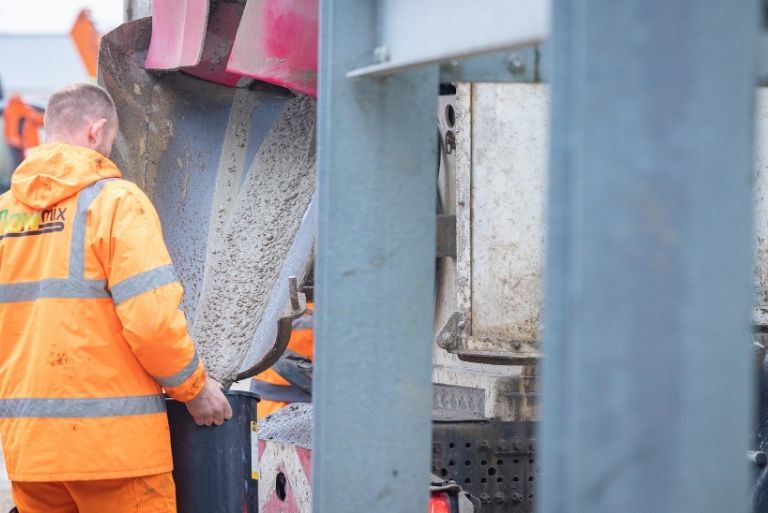
Pouring concrete in winter presents unique challenges, from freezing temperatures to slower curing times. Cold weather can cause concrete to set improperly, leading to cracks, reduced strength, and long-term durability issues. Still, with the proper techniques and precautions, it’s possible to achieve a strong, durable concrete pour even in harsh winter conditions.

This guide will cover essential tips for cold-weather concrete pouring, including preventing freezing, maintaining optimal curing conditions, and ensuring your concrete sets properly.

Whether working on a driveway, foundation, or patio, these expert strategies will help you get the best results when pouring concrete in low temperatures.

✅ Order ready-mix or volumetric concrete today
✅ Free, fast quote within 24 hours
✅ Call, message or complete our simple online form

Flowmix Tewkesbury: Tel: 01684 217888 Flowmix Walsall: Tel: 01922 741731

Monitor the Temperature Closely

When pouring concrete in winter, temperature control is crucial to achieving a strong and durable finish. Cold weather can significantly impact concrete curing, so knowing the key temperature thresholds will help you avoid potential issues.

Once temperatures drop below 5°C (41°F), concrete is considered to be in cold conditions. If left exposed for more than 24 hours, the water in the mix may not react properly, preventing the concrete from reaching its full strength. To avoid this, you’ll need to take extra precautions.

One effective method is insulating blankets or thermal covers to trap the heat generated during curing. That helps maintain the concrete’s temperature and ensures proper hydration, preventing weak or brittle results. It’s possible to achieve a smooth and long-lasting finish by keeping your concrete protected from the cold, even in winter conditions.

Preventing Frost and Freezing During a Winter Concrete Pour

When pouring concrete in winter, temperatures below 5°C (41°F) start to pose challenges, but the real trouble begins when they drop even lower. Without the proper precautions, freezing conditions can lead to wasted materials, lost time, and a weakened final product.

Protecting freshly poured concrete from freezing for at least 24 hours is essential. That means you’ll need to monitor the temperature on the day of the pour and the following day.

Since concrete contains a high percentage of water, it can be disastrous if ice crystals form within the mix. When water freezes, it expands, disrupting the essential hydration process that gives concrete its strength. If that happens, your concrete could end up with only 50% of its intended strength, making it unsuitable and even dangerous for use in construction.

Another common winter hazard is frost buildup in trenches and cavities. These areas can accumulate hidden frost, which may not be immediately evident. Pouring concrete over a frozen surface can lead to an uneven set and increase the risk of concrete freezing on contact.

Before starting your pour, always check for frost and ensure the ground is adequately thawed to create a stable base.

Read: Concrete Weather Conditions: Flowmix Gloucester Top Tips

5 Ways to Protect Concrete Pouring in Winter

If you have no choice but to work in cold temperatures, the following 5 tips for concrete pouring in winter will help ensure a successful concrete pour.

Tip 1: Use Warm Water in the Concrete Mix

Cold temperatures cause issues by slowing down the chemical reaction that helps concrete set, which can lead to weak or improperly cured slabs. To counter this, use warm water when mixing your concrete. That helps maintain a higher initial temperature, allowing the concrete to begin curing correctly before the cold can interfere.

However, avoid using hot water, as excessive heat can cause the mix to set too quickly, leading to cracks or uneven curing. Aim for a water temperature between 21°C and 38°C (70°F–100°F) for optimal results.

Additionally, try storing your other materials, like aggregates such as sand, gravel, and cement, in a warmer area before mixing.

Need Expert Advice?

Speak to the team at Flowmix Tewkesbury or Walsall. We are happy to help with all your concrete requirements.

Flowmix Tewkesbury: 01684 217888 Flowmix Walsall: Tel: 01922 741731

Tip 2: Adjust the Concrete Mix for Cold Weather

Modifying the mix when pouring concrete in winter can help it set properly despite the cold. One effective adjustment is increasing the cement-to-water ratio, which generates more internal heat and speeds up curing. In addition, you can use accelerating admixtures, such as calcium chloride or non-chloride accelerators. These additives can help the concrete gain strength faster.

However, if you’re working with reinforced concrete, avoid excessive use of calcium chloride, as it can cause steel rebar to corrode over time. Instead, opt for non-chloride accelerators, which provide a safer alternative without compromising durability.

Also, low-slump concrete (with less water) can help reduce the risk of freezing while maintaining strength. If conditions are exceptionally cold or freezing, consider using warm water in the mix and pre-warming your aggregates to prevent rapid temperature drops during placement.

Read: Top 9 Factors Affecting Concrete Strength

Tip 3:  Keep the Concrete Covered for Longer

Concrete takes longer to gain strength in cold weather, so proper insulation is essential to prevent freezing and ensure a strong finish. After pouring, cover the concrete with thermal blankets, insulated tarps, or plastic sheeting to retain heat and protect it from temperature drops. It’s imperative during the first 24 to 48 hours when the concrete is most vulnerable.

Consider layering straw or foam boards beneath the blankets for even better insulation to trap additional heat. If you anticipate temperatures dropping significantly, heated enclosures or portable heaters can help maintain ideal curing conditions.

Keeping the concrete covered longer than usual—typically at least a week in cold weather—ensures proper hydration and prevents cracking or weak spots.

✅ Order ready-mix or volumetric concrete today
✅ Free, fast quote within 24 hours
✅ Call, message or complete our simple online form

Flowmix Tewkesbury: Tel: 01684 217888 Flowmix Walsall: Tel: 01922 741731

Tip 4: Avoid Late-Day Pours

Timing is crucial when pouring concrete in winter. Schedule your pour early in the day to take advantage of warmer temperatures and allow the concrete to develop strength before nightfall. If you pour too late in the afternoon, the concrete may not have enough time to generate sufficient heat before freezing temperatures set in.

Since overnight temperatures tend to drop significantly, fresh concrete is at a higher risk of freezing if placed too late in the day. Starting early in the morning gives it the best chance to set correctly and maintain a stable temperature throughout the crucial early curing period.

If a late-day pour is unavoidable, use insulated blankets and heating methods to prevent temperature-related issues.

Tip 5: Use Windbreaks and Heated Enclosures

Cold winds can rapidly lower the temperature of freshly poured concrete, increasing the risk of surface freezing, uneven curing, and moisture loss. Set up windbreaks using temporary walls, plastic sheeting, or plywood barriers around the worksite to protect your pour. These help shield the concrete from wind chill and maintain a more stable environment for proper curing.

For even better protection in extreme cold, consider using heated enclosures. Portable heaters or ground thawing blankets can keep the surrounding air and concrete warm enough to prevent freezing. Just be sure to monitor the heat levels as excessive heat can cause the surface to cure too quickly while the interior remains weak, leading to cracking.

Controlling exposure to wind and cold air creates the ideal conditions for a strong, durable concrete pour, even in winter.

Conclusion

Pouring concrete in winter presents unique challenges, but you can ensure a successful pour with the proper precautions. Key tips include monitoring the temperature closely and using warm water in the mix to promote correct curing.

Adjusting the concrete mix with accelerating admixtures or a higher cement content helps it set faster in cold weather. Proper insulation, such as thermal blankets or heated enclosures, is essential to prevent freezing and maintain consistent curing temperatures.

Additionally, scheduling the pour early in the day and using windbreaks can protect the concrete from harsh conditions and ensure a strong, durable finish. By following these cold weather guidelines, you can confidently tackle a winter concrete pour and achieve a high-quality result.

How Flowmix Can Help With Your Project

Flowmix has two plants, Gloucester and Walsall. We provide the following services (with time slots):

Flowmix holds the BSA-approved Ready Mix Concrete Kitemark KM683844, a certification that “confirms a product or service’s claim has been independently and repeatedly tested by experts” (source BSI).

Flowmix has the BSA-approved Ready Mix Concrete Kitemark KM683844, a certification that “confirms a product or service’s claim has been independently and repeatedly tested by experts” (source BSI).

Flowmix Tewkesbury: 01684 217888 Flowmix Walsall: Tel: 01922 741731

Flowmix Delivery Areas

TewkesburyWalsall Plant
Bourton-on-the-WaterAldridge
BrockworthBarton-Under-Needwood
ChalfordBirmingham
CheltenhamBrownhills
Chipping CampdenBurntwood
CirencesterBurton Upon Trent
Droitwich SpaCannock
EveshamColeshill
GloucesterDudley
Great MalvernGreat Haywood
LedburyLichfield
NewentNorton Canes
NorthleachPenkridge
PershoreRugeley
Ross-on-WyeStafford
Stow-on-the-WoldTamworth
StroudWalsall
TewkesburyWest Bromwich
WorcesterWolverhampton

Stop moss and weeds poking through concrete, and you will prevent a lot of hassle later on trying to get on top of the problem.

Are you tired of seeing moss and weeds creep through the cracks in your concrete? Those stubborn green invaders can make everything look untidy and neglected, whether it’s your driveway, patio, or garden path.

The good news is you can take control. In this post, we’ll show you how to stop moss and weeds poking through concrete using five proven methods that actually work.

From natural remedies to long-lasting solutions, these tips will help you keep moss at bay, prevent weed growth, and protect your concrete from future problems.

Say goodbye to endless scraping and spraying. It’s time to tackle the root of the problem and enjoy cleaner, low-maintenance surfaces all year round.

✅ Order ready-mix or volumetric concrete today
✅ Free, fast quote within 24 hours
✅ Call, message or complete our simple online form

Flowmix Tewkesbury: Tel: 01684 217888 Flowmix Walsall: Tel: 01922 741731

Why Are Weeds and Moss Bad for Concrete?

Weeds and moss aren’t just an eyesore. They can cause real damage to your concrete if left unchecked. When they start growing between slabs or cracks, their roots can force the concrete apart over time. That leads to loose, uneven surfaces and even broken slabs, which look messy and can be a serious trip hazard.

If you don’t address the problem early, you might have to replace entire sections. That’s why it’s essential to stop moss and weeds from poking through concrete before they get out of hand. Even better, find ways to prevent moss growth and block weed roots in the first place so you won’t have to keep fixing the same issue repeatedly.

So, let’s take a look at how you can tackle weeds and moss at every stage, and, more importantly, how to stop moss and weeds poking through concrete in the future. With the right approach, you can reduce regrowth, keep your surfaces tidy, and reduce how often you have to deal with this irritating problem.

Tip #1: Lay Concrete Properly to Prevent Weeds and Moss

One of the best ways to stop moss and weeds poking through concrete is to get things right from the start. Cracks often form when concrete isn’t mixed or laid correctly, and those gaps are precisely where weeds and moss love to settle in.

To avoid this, ensure you’re using the right mix and avoid pouring concrete in hot weather or near tree roots as both can increase the risk of cracking.

Repeated heavy loads, like parked cars or machinery, can also take their toll over time. But the good news is that concrete is a tough and long-lasting material when installed correctly.

With some essential maintenance and good habits early on, you can prevent weed growth, reduce moss build-up, and avoid dealing with broken or uneven slabs down the line.

Need Expert Advice?

Speak to the team at Flowmix Tewkesbury or Walsall. We are happy to help with all your concrete requirements.

Flowmix Tewkesbury: 01684 217888 Flowmix Walsall: Tel: 01922 741731

Tip #2: Use a Weed Killer That Works for You

Whether you’re happy to use chemicals or prefer a gentler, natural approach, there are plenty of ways to stop moss and weeds poking through concrete by targeting them directly. Chemical weed killers are widely available and can be a fast and effective option, but follow the instructions precisely and choose a product suitable for your space.

If you have pets or children, always check the label to make sure the weed killer is safe to use around them. There are plenty of pet-friendly weed killers available to give you peace of mind when getting rid of the weeds and moss.

Some products need time to dry or require restricted access for a few hours, so it’s worth planning ahead.

If you prefer a more eco-friendly approach, boiling water is a cheap yet effective way to kill weeds naturally. Another go-to method is vinegar, not the stuff you splash on your chips, though 😊 Mix white vinegar with salt and washing up liquid, and it gets rid of the weeds pretty quickly.

You’ll want a stronger variety (around 20% acetic acid), which you can find at most garden centres. Apply it a few times for the best results, and be careful not to spray it near other plants.

Clearing the weeds now will make it much easier to prevent regrowth later and keep weeds from returning.

Read: Ready Mix Concrete Suppliers Gloucester: Top Tips 2024

Tip #3: Seal Cracks Before Weeds Settle In

Even the strongest, best-laid concrete can crack over time. It’s just part of how the material naturally shifts and settles. But if you want to stop moss and weeds poking through concrete, sealing those cracks is a must. Left open, they become the perfect hiding spot for seeds and spores to take hold.

Start by removing any existing weed or moss growth. Apply your chosen weed killer or natural treatment, then dig out the dying plants and any loose debris. A wire brush can help scrub the cracks clean and give you a solid base to work with.

Once everything’s cleared out, fill the gap with sand to create a stable base, then apply a crack sealant over the top. Let it spill out slightly. It usually shrinks as it dries, so don’t worry if it looks overfilled. For best results, follow the manufacturer’s instructions.

This step not only helps to block weed growth and prevent moss build-up, but it also adds extra protection to your concrete, helping it last longer and look better.

✅ Order ready-mix or volumetric concrete today
✅ Free, fast quote within 24 hours
✅ Call, message or complete our simple online form

Flowmix Tewkesbury: Tel: 01684 217888 Flowmix Walsall: Tel: 01922 741731

Tip #4: Replace Damaged Slabs Before the Weeds Take Over

Sometimes, a slab is just too far gone. If cracks are wide, pieces are crumbling, or weeds keep coming back no matter what you do, it might be time to replace the slab entirely. Starting fresh can be the best long-term solution to stop moss and weeds poking through concrete.

When you do replace a slab, make sure you use high-quality concrete from a trusted supplier. A strong, well-laid mix will be far more resistant to cracks and gaps where weeds and moss usually sneak in.

Once installed, stay on top of basic upkeep to prevent weed regrowth and keep moss at bay. A bit of regular care helps keep your concrete surfaces clean, safe, and weed-free.

Tip #5: Keep the Surface Clean and Well-Maintained

Regular cleaning and simple upkeep are some of the most effective ways to keep moss and weeds from taking hold.

Sweep your concrete surfaces regularly to remove debris like leaves, dirt, and organic matter that can encourage moss and weed seeds to take root.

In addition, pressure washing your driveway or patio once a year can help keep the surface clear and prevent unwanted growth. If you notice any small cracks or signs of damage, take care of them early before they become a larger problem.

A clean and well-maintained surface is much less likely to attract moss or weeds, so making this a routine part of your home care can save you time and effort in the long run.

How Flowmix Can Help With Your Project

Flowmix has two plants, Gloucester and Walsall. We provide the following services (with time slots):

✅ Ready-mix concrete, mix on-site (volumetric concrete)
✅ Traditional and liquid screed.
✅ Concrete line pump Hire to reduce manual labour and associated costs, increase efficiency, reduce wastage and clean up.
✅ Interlocking concrete blocks for temporary or permanent barriers.
✅ Mini-Mix loads up to 4 cubic metres.

Flowmix holds the BSA-approved Ready Mix Concrete Kitemark KM683844, a certification that “confirms a product or service’s claim has been independently and repeatedly tested by experts” (source BSI).

Flowmix Delivery Areas

TewkesburyWalsall Plant
Bourton-on-the-WaterAldridge
BrockworthBarton-Under-Needwood
ChalfordBirmingham
CheltenhamBrownhills
Chipping CampdenBurntwood
CirencesterBurton Upon Trent
Droitwich SpaCannock
EveshamColeshill
GloucesterDudley
Great MalvernGreat Haywood
LedburyLichfield
NewentNorton Canes
NorthleachPenkridge
PershoreRugeley
Ross-on-WyeStafford
Stow-on-the-WoldTamworth
StroudWalsall
TewkesburyWest Bromwich
WorcesterWolverhampton

Permeable concrete (porous or pervious) is emerging as a sustainable and practical solution in the construction industry. Managing excess rainwater has become a pressing challenge for residential and commercial developments as the UK continues to experience increasingly wet winters and more frequent storms.

Traditional concrete surfaces often struggle to cope with heavy rainfall, leading to surface water flooding, strain on drainage systems, and long-term infrastructure issues.

This is where permeable concrete makes a significant impact. Allowing water to pass directly through its surface and into the ground below helps reduce runoff, supports natural groundwater recharge, and eases pressure on urban drainage networks.

In this article, we’ll take a closer look at the unique characteristics of permeable concrete, explore its many environmental and practical benefits, and highlight the ideal applications where this innovative material can offer long-lasting value.

✅ Order ready-mix or volumetric concrete today
✅ Free, fast quote within 24 hours
✅ Call, message or complete our simple online form

Flowmix Tewkesbury: Tel: 01684 217888 Flowmix Walsall: Tel: 01922 741731

What is Permeable Concrete?

Permeable concrete is a specially designed material that allows water to flow freely through its surface and into the ground below.

Unlike traditional concrete, which forms a solid, impermeable barrier, permeable paving features a porous structure with interconnected voids. These gaps let rainwater soak through rather than forming pools of water on the surface or overwhelming drainage systems.

The permeability makes this concrete ideal for areas prone to surface water flooding. It helps to reduce overflow, improve water quality, and support natural groundwater recharge.

It’s a practical, environmentally friendly alternative to standard concrete in everything from driveways and footpaths to car parks and public spaces.

Read: How to Lay a Concrete Driveway: A 12-Step Beginners Guide  

What Are the Advantages of Permeable Concrete?

So, why are more builders, developers, and local councils turning to permeable concrete? Beyond its ability to handle heavy rainfall, this innovative concrete offers a range of benefits that make it the popular choice for sustainable construction.

Whether you’re working on a driveway, car park, or a large-scale commercial project, permeable solutions can deliver both environmental and practical advantages.

Let’s explore some key reasons why permeable concrete is becoming a go-to option across the UK.

Benefits of Permeable Concrete

Thanks to its unique porous structure, permeable concrete offers many valuable benefits beyond just drainage. From environmental advantages to long-term cost savings, this innovative material is a good choice for all types of construction projects.

Need Expert Advice?

Speak to the team at Flowmix Tewkesbury or Walsall. We are happy to help with all your concrete requirements.

Flowmix Tewkesbury: 01684 217888 Flowmix Walsall: Tel: 01922 741731

Here are some of the key benefits of using this material:

Benefit #1: Stormwater Management

One of the primary advantages of porous concrete is its effectiveness in managing stormwater. Its porous design allows rainwater to filter through the surface rather than pooling or running off, significantly reducing surface water and the risk of waterlogging. That eases the pressure on public drainage systems and plays a vital role in flood prevention, especially important given how increasingly unpredictable and wet the UK’s weather has become.

Using porous concrete in areas like car parks, pathways, and driveways can create a more resilient surface that copes better during heavy downpours.

Read: Concrete Weather Conditions: Flowmix Gloucester Top Tips   

Benefit #2: Groundwater Recharge

Another key benefit of permeable concrete is its ability to support groundwater recharge. By allowing rainwater to seep through the surface and into the soil below, this material helps replenish underground aquifers, vital reserves that play a crucial role in maintaining long-term water availability.

Unlike traditional concrete, which directs water away from the surface, this permeable material allows water to soak through and re-enter the ground, supporting the natural water cycle. That makes it an eco-friendly option for sustainable development.

Benefit #3: Reduced Heat Island Effect

Traditional impermeable surfaces like asphalt and standard concrete absorb and retain heat, contributing to the urban heat island effect. Permeable concrete, however, allows water to evaporate through its porous surface, helping to cool the surrounding area and lower surface temperatures.

What is the Heat Island Effect?

The heat island effect is where urban areas are often notably warmer than surrounding rural areas. It is mainly caused by the abundance of hard, impermeable surfaces, like roads, pavements, and buildings, that absorb and retain heat from the sun during the day and slowly release it at night.

As a result, cities experience higher temperatures, particularly during warm weather, which can lead to increased energy consumption, poorer air quality, and heightened health risks. Materials like porous concrete help counteract this effect by promoting natural cooling through water evaporation and reducing heat retention on the surface.

Benefit #4: Improved Water Quality

As rainwater passes through porous concrete, it undergoes a natural filtration process, trapping and removing impurities. That helps to improve water quality by reducing the risk of pollutants and contaminants from reaching water bodies like rivers, lakes, and reservoirs. The result is cleaner water, which benefits both the environment and public health by preventing the spread of harmful substances.

✅ Order ready-mix or volumetric concrete today
✅ Free, fast quote within 24 hours
✅ Call, message or complete our simple online form

Flowmix Tewkesbury: Tel: 01684 217888 Flowmix Walsall: Tel: 01922 741731

Applications Of Permeable Concrete

Now that we’ve explored the benefits of porous concrete, you might wonder about the best applications for this popular construction material.

From residential spaces to commercial developments, permeable concrete can enhance various projects.

  • Car Parks: It is an ideal solution for car parks, where stormwater runoff is a frequent challenge. Its ability to manage water flow prevents puddles from forming and eases the burden on drainage systems, helping to keep the area functional and dry even during heavy rainfall.
  • Pavements: Porous concrete is an excellent choice for pavements and walkways in busy urban areas, as it helps manage stormwater effectively. Not only does it reduce surface water runoff, but it also offers a sturdy, slip-resistant, and pedestrian-friendly surface that enhances safety and sustainability.
  • Driveways: Porous concrete is a fantastic option for homeowners looking to create eco-friendly driveways. It helps reduce runoff and supports groundwater sustainability, enhancing your property’s functionality and contributing to a greener, more sustainable environment.
  • Public Spaces: Pervious concrete is an excellent material for public spaces and pathways. It improves their ability to withstand heavy rainfall while promoting sustainability, helping to create greener, more resilient environments in urban areas.
  • Golf Courses and Sports Fields: It is ideal for golf courses and sports fields, where good drainage is crucial. It helps prevent waterlogging and maintains playable surfaces even after heavy rainfall.
  • Landscaping and Garden Paths: This concrete is excellent for landscaping features such as garden paths and outdoor walkways. Its ability to control water runoff while integrating naturally with the landscape makes it a favourite for sustainable garden designs.
  • Parking Lots: Small to medium-sized parking lots benefit from porous concrete, reducing the risk of flooding while improving water absorption. That makes it a popular construction choice for residential and commercial parking areas.
  • Retaining Walls and Drainage Systems: You can use porous concrete to retain walls and integrated drainage systems, allowing water to filter through while supporting structural integrity. That makes it particularly useful in areas with limited drainage options.
  • Public Transport Areas: Busy transit areas, including bus stops and train station platforms, can benefit from porous concrete. It helps manage stormwater runoff while maintaining durability under heavy foot traffic and vehicle use.

Conclusion

Porous concrete provides a practical, sustainable solution for managing stormwater and promoting eco-friendly construction. Its unique ability to reduce surplus water, enhance groundwater recharge, and improve water quality makes it essential for various applications, from car parks and pavements to public spaces and driveways.

Opting for permeable materials creates more durable and functional surfaces and supports a greener, more sustainable environment.

Whether you’re a homeowner looking to improve your driveway or a developer working on large-scale projects, water-absorbing concrete is a wise choice that benefits both the planet and the community.

If you want to see how eco-friendly concrete can enhance your next project, contact Flowmix today to learn more!

How Flowmix Can Help With Your Project

Flowmix has two plants, Gloucester and Walsall. We provide the following services (with time slots):

✅ Ready-mix concrete, mix on-site (volumetric concrete)
✅ Traditional and liquid screed.
✅ Concrete line pump Hire to reduce manual labour and associated costs, increase efficiency, reduce wastage and clean up.
✅ Interlocking concrete blocks for temporary or permanent barriers.
✅ Mini-Mix loads up to 4 cubic metres.

Flowmix holds the BSA-approved Ready Mix Concrete Kitemark KM683844, a certification that “confirms a product or service’s claim has been independently and repeatedly tested by experts” (source BSI).

Flowmix Delivery Areas

TewkesburyWalsall Plant
Bourton-on-the-WaterAldridge
BrockworthBarton-Under-Needwood
ChalfordBirmingham
CheltenhamBrownhills
Chipping CampdenBurntwood
CirencesterBurton Upon Trent
Droitwich SpaCannock
EveshamColeshill
GloucesterDudley
Great MalvernGreat Haywood
LedburyLichfield
NewentNorton Canes
NorthleachPenkridge
PershoreRugeley
Ross-on-WyeStafford
Stow-on-the-WoldTamworth
StroudWalsall
TewkesburyWest Bromwich
WorcesterWolverhampton

FAQs

What Is Permeable Concrete Made Of?

Permeable concrete is typically made from coarse aggregates, cement, and water, without the fine aggregates (like sand) in traditional concrete. That creates open voids within the structure, allowing water to pass through easily.

How Long Does Permeable Concrete Last?

When properly installed and maintained, porous concrete can last just as long as traditional concrete, often 20 to 40 years. Regular cleaning to prevent clogging helps maintain its drainage performance over time.

Is Permeable Concrete Suitable for Driveways in the UK?

Yes, permeable concrete driveways are a great option for UK homes. They reduce surface water runoff, help prevent puddles, and support compliance with sustainable drainage regulations.

Does Permeable Concrete Get Clogged?

Over time, debris and sediment can clog the pores of pervious concrete, reducing its permeability. However, You can preserve the performance effectively with routine maintenance like sweeping and power washing.

Can Permeable Concrete Handle Heavy Loads?

When properly designed and installed, water-permeable concrete can support heavy loads such as vehicles in car parks and driveways. It’s essential to use the right mix and sub-base to ensure durability.

Is Permeable Concrete More Expensive Than Regular Concrete?

Permeable concrete can be slightly more expensive due to specific materials and installation methods. However, the long-term benefits, such as reduced drainage costs and improved sustainability, often outweigh the upfront investment.

Ready mix concrete and liquid screed: Knowing the difference is essential if you’re planning a home project.

Though ready-mix concrete and liquid screed share foundational ingredients – aggregate, water, and cement – they’re distinct materials with different purposes. Their textures and applications vary significantly based on specific project needs.

Think of concrete as the heavyweight champion, built for structural strength. Screed, meanwhile, is the finishing specialist, designed to create those perfectly smooth surfaces. While they might look similar at first glance, these materials serve very different roles in construction.

Let’s cut through the confusion and explore what sets them apart.

✅ Order ready-mix or volumetric concrete today
✅ Free, fast quote within 24 hours
✅ Call, message or complete our simple online form

Flowmix Tewkesbury: Tel: 01684 217888 Flowmix Walsall: Tel: 01922 741731

What Is Ready Mix Concrete?

Ready mix concrete is a precise blend of cement, water, and aggregates (usually gravel and crushed stone up to 20mm) manufactured at specialised plants.

Ready mix concrete suppliers like Flowmix customises to exact specifications, with potential additives for enhanced strength or faster curing.

Key Features:

  • Designed for structural applications
  • Delivered ready-to-use in mixer trucks
  • Mixed at dedicated facilities under controlled conditions
  • Batch consistency through computer-controlled mixing
  • Available with various performance-enhancing additives

Main Uses:

  • Structural foundations
  • Driveways and pathways
  • Load-bearing walls
  • Shed bases
  • Fence posts

What Is Ready Mix Concrete Used For?

Ready-mix concrete excels in structural applications where strength is crucial. It forms the backbone of foundations, driveways, pathways, and fence posts. It’s the go-to choice for external projects that demand serious durability – think shed bases, walls, and heavy-duty paving where failure isn’t an option.

Read: Ready Mix Concrete Suppliers Gloucester: Top Tips

✅ Order ready-mix or volumetric concrete today
✅ Free, fast quote within 24 hours
✅ Call, message or complete our simple online form

Flowmix Tewkesbury: Tel: 01684 217888 Flowmix Walsall: Tel: 01922 741731

What is Liquid Screed?

Liquid screed revolutionises flow and finish. The proportions make all the difference while it shares basic ingredients with concrete – aggregates, water, and cement.

The secret to liquid screeding is using fewer and smaller aggregates (5-6mm). That creates a more fluid mix that flows easily into place. Think of it as concrete’s smoother, more refined cousin – less chunky, more liquid.

Key Features:

  • Flows easily into place
  • Self-levelling properties
  • Ideal for precision finishing
  • Superior thermal conductivity
  • Smaller, fewer aggregates than concrete

Main Uses:

  • Interior floor finishes
  • Leveling uneven surfaces
  • Underfloor heating systems
  • Areas requiring precise finish
  • Commercial flooring projects

What Is Liquid Screed Used For?

Liquid screed excels at creating flawless interior floors. Its fluid nature eliminates lumps and bumps, producing perfectly smooth surfaces – ideal for protecting existing concrete floors.

One standout application is underfloor heating. The screed flows seamlessly around heating pipes, eliminating air pockets and maximising heat transfer in ways traditional screed can’t match.

Need concrete or screed for your project? At Flowmix, we deliver custom-mixed solutions for both DIY and commercial jobs. Contact us to discuss your specific requirements.

Read: Screed and Underfloor Heating: A Complete Guide 2025

What Liquid Screeds Do Flowmix Supply?

  1. Gyvlon Liquid Screed: Gyvlon is suitable for floating, unbonded, or bonded construction and perfect for underfloor heating application
    Learn about Gyvlon Liquid Screed.
  2. Cemfloor Liquid Screed: This fast-drying and self-levelling screed is ideal for underfloor heating. It is compatible with all floor covering products and adhesives.
    Learn about Cemfloor Liquid Screed.

Flowmix also provides Traditional screed, a dry mix of sand and cement at a typical ratio of one part cement to four parts sand.

Need Expert Advice?

Speak to the team at Flowmix Tewkesbury or Walsall. We are happy to help with all your concrete requirements.

Flowmix Tewkesbury: 01684 217888 Flowmix Walsall: Tel: 01922 741731

What Are Ready Mixed Concrete And Liquid Screed Used For?

Ready mix concrete and liquid screed serve distinct construction purposes based on their properties:

Ready Mix Concrete:

  • Foundations and structural work
  • External pathways and driveways
  • Shed bases and fence posts
  • Load-bearing walls
  • Heavy-duty paving

Liquid Screed:

  • Leveling surfaces
  • Internal flooring finishes
  • Underfloor heating systems
  • Areas needing ultra-smooth finish
  • Spaces requiring precise levelling

The key difference is that concrete provides structural strength, while screed creates the perfect level surface finish.

How Flowmix Can Help With Your Project

Flowmix has two plants, Gloucester and Walsall. We provide the following services (with time slots):

✅ Ready-mix concrete, mix on-site (volumetric concrete)
✅ Traditional and liquid screed.
✅ Concrete line pump Hire to reduce manual labour and associated costs, increase efficiency, reduce wastage and clean up.
✅ Interlocking concrete blocks for temporary or permanent barriers.
✅ Mini-Mix loads up to 4 cubic metres.

Flowmix has the BSA-approved Ready Mix Concrete Kitemark KM683844, a certification that “confirms a product or service’s claim has been independently and repeatedly tested by experts” (source BSI).

Flowmix Tewkesbury: 01684 217888 Flowmix Walsall: Tel: 01922 741731

Flowmix Delivery Areas

Tewkesbury AreaWalsall Area
Bourton-on-the-WaterAldridge
BrockworthBarton-Under-Needwood
ChalfordBirmingham
CheltenhamBrownhills
Chipping CampdenBurntwood
CirencesterBurton Upon Trent
Droitwich SpaCannock
EveshamColeshill
GloucesterDudley
Great MalvernGreat Haywood
LedburyLichfield
NewentNorton Canes
NorthleachPenkridge
PershoreRugeley
Ross-on-WyeStafford
Stow-on-the-WoldTamworth
StroudWalsall
TewkesburyWest Bromwich
WorcesterWolverhampton

Is your concrete floor looking worse for wear? Cracks, flakes, or stubborn stains might seem minor issues, but they could be signs that your concrete floor needs replacing. Ignoring these problems can lead to safety issues, decreased property value, and even structural damage.

The reality is that concrete floors don’t last forever. Over time, heavy foot traffic, water exposure, and foundation shifts can take a toll. Cracks may indicate deeper foundation issues, while spalling (when the surface flakes or chips away) often points to moisture damage.

If your concrete floor needs replacing, addressing it sooner rather than later can restore safety, enhance functionality, and even boost the value of your space. At Flowmix, we have decades of combined expertise in concrete solutions, ensuring a seamless and stress-free replacement process.

If you’re unsure if it’s time to replace your concrete floor, read on to learn the three key warning signs and how we can help.

✅ Order ready-mix or volumetric concrete today
✅ Free, fast quote within 24 hours
✅ Call, message or complete our simple online form

Flowmix Tewkesbury: Tel: 01684 217888 Flowmix Walsall: Tel: 01922 741731

#1: Spalling: When Moisture Wreaks Havoc on Your Concrete Floor

One of the biggest red flags that your concrete floor needs replacing is spalling—also known as scaling. It happens when moisture seeps into the concrete, causing the surface to flake, peel, or crumble. At first, it might seem like a minor cosmetic issue, but spalling can seriously weaken your floor’s structural integrity over time. If left unaddressed, spalling can lead to bigger (and costlier) problems and make your space unsafe.

What Causes Spalling?

If your concrete floor needs replacing, spalling could be a major culprit. Still, what exactly causes it? Here are the typical factors behind this common issue:

  • Freeze-Thaw Cycles: In colder weather, moisture seeps into the concrete, then freezes and expands, breaking down the surface over time.
  • Corroding Reinforcements: If steel reinforcements inside the concrete get exposed to moisture, they can rust. That puts stress on the surrounding material and causes cracking and flaking.

Signs to Watch For

Not sure if spalling is affecting your floor? Here’s what to look out for:

  • Flaky or uneven surfaces that feel rough to the touch.
  • Visible rust or corrosion on exposed reinforcements.
  • Small surface cracks that worsen over time as moisture seeps in.

Repair or Replace?

In some cases, it’s possible to repair minor spalling with resurfacing. However, if the damage is severe, your concrete floor needs replacing to restore strength and safety. Ensure your floors are properly sealed and have good drainage to prevent future spalling.

Read: 5 DIY Concrete Pouring Dangers: When to Call A Professional

Need Expert Advice?

Speak to the team at Flowmix Tewkesbury or Walsall. We are happy to help with all your concrete requirements.

Flowmix Tewkesbury: 01684 217888 Flowmix Walsall: Tel: 01922 741731

#2: Cracking: A Sign Your Concrete Floor Needs Replacing

Cracks in your concrete floor aren’t just an eyesore. They can be a warning sign of deeper structural issues. While minor hairline cracks might not seem like a big deal, larger or widening cracks can compromise the floor’s durability and load-bearing capacity.

Not all cracks are the same, and understanding their severity is key to determining whether a simple repair will do or if your concrete floor needs replacing. Ignoring serious cracks could lead to bigger problems, so it’s essential to assess the damage early.

Types of Cracking

Some cracks might be cosmetic, while others indicate that your concrete floor needs replacing. The following are the most common types:

  • Pressure Cracks: These cracks appear when the floor has more weight loading than it can handle, such as heavy machinery, vehicles, or industrial equipment.
  • Heaving Cracks: These cracks occur from movement beneath the concrete. They result from tree roots, soil expansion, or foundation settling. They tend to widen over time, creating uneven surfaces and trip hazards.

When to Worry About Cracking

If you spot any of the following signs, your concrete floor needs replacing sooner rather than later.

  • Cracks combined with water seepage or spalling (flaking concrete).
  • Uneven slabs or gaps form between sections, making the floor unsafe.
  • Wide, deep cracks spreading across the surface and worsening with use.

Repair or Replace?

Hairline cracks aren’t a problem because you can usually fill and repair them. But if the cracks are large, deep, or affecting the strength of your floor, a complete replacement is the best solution.

Delaying action can make the damage worse, leading to even higher repair costs down the road.

Read: How to Lay a Concrete Driveway: A 12-Step Beginners Guide

#3: Discolouration: Why It’s More Than Just a Cosmetic Issue

It’s easy to overlook discolouration on concrete floors, but it can be a warning sign that your concrete floor needs replacing. While stains and fading might seem like minor aesthetic issues, they often point to deeper problems that affect durability and structural integrity.

Water exposure, chemical spills, and even algae growth can cause discolouration, slowly weakening the surface. If ignored, these issues can lead to cracks, spalling, and further deterioration, turning what seemed like a cosmetic concern into a major repair headache.

What Causes Discolouration?

Discolouration could be an early warning sign that your concrete floor needs replacing. Here’s what might be behind those unsightly stains:

  • Moisture Damage: Damp conditions promote algae and fungi growth, which can eat away at the concrete’s surface over time.
  • Chemical Stains: Oils, salts, and industrial chemicals seep into the concrete, leaving permanent stains and weakening its structure.
  • UV Exposure: Outdoor, poorly sealed concrete can fade unevenly in prolonged sunlight, creating patchy, worn-out areas.

Read: Concrete Weather Conditions: Flowmix Gloucester Top Tips

Why It Matters

At first, discolouration might not seem like a big deal. However, in many cases, it signals deeper problems like moisture infiltration or chemical corrosion. These issues, if left unchecked, can compromise the strength of your floor. Over time, this damage can escalate, leading to cracks, spalling, and even costly structural repairs.

If your concrete floor needs replacing, it is best to address discolouration before it becomes problematic.

When to Act

Wondering whether your concrete floor needs replacing or just a quick fix? Here’s how to decide:

  • Repair: If the discolouration is limited to surface stains or fading, polishing or sealing can help restore its appearance and protect the concrete.
  • Replace: If discolouration comes with cracks, algae growth, or spalling, a complete replacement may be necessary to prevent further deterioration.

Ready to Order Ready-Mix or Volumetric Concrete?

✅ Order ready-mix or volumetric concrete today
✅ Free, fast quote within 24 hours
✅ Call, message or complete our simple online form

Flowmix Tewkesbury: Tel: 01684 217888 Flowmix Walsall: Tel: 01922 741731

When to Repair vs. Replace Your Concrete Floor

Not all concrete damage calls for a complete overhaul. Here’s what to consider before making a decision:

  • The Extent of Damage: Surface-level stains and minor cracks are often repairable, but widespread structural damage means your concrete floor needs replacing.
  • Usage Requirements: High-traffic (or industrial areas) need more substantial, durable solutions to withstand long-term wear and tear.
  • Cost vs. Longevity: Repairs may be a quick and budget-friendly fix, but replacing your floor ensures a long-term, durable solution.

If you’re unsure whether to repair or replace, consulting with our expert Flowmix team can help you make the best choice for your space.

Read: Ordering Ready Mix Concrete: A Homeowners Guide

Upgrade Your Concrete Floors with Confidence!

Your projects deserve a strong, durable foundation. When your concrete floor needs replacing, acting quickly can save you time, money, and stress. Whether dealing with spalling, cracking, or discolouration, addressing the issue early prevents further damage and costly repairs.

At Flowmix, we provide high-quality, ready-mix concrete solutions tailored to your needs. You can confidently upgrade your floors with our reliable service and expertise. Take advantage of our no-risk consultation and see how we can help.

How Flowmix Can Help With Your Project

Flowmix has two plants, Gloucester and Walsall. We provide the following services (with time slots):

Flowmix has the BSA-approved Ready Mix Concrete Kitemark KM683844, a certification that “confirms a product or service’s claim has been independently and repeatedly tested by experts” (source BSI).

Flowmix Tewkesbury: 01684 217888 Flowmix Walsall: Tel: 01922 741731

Flowmix Delivery Areas

TewkesburyWalsall Plant
Bourton-on-the-WaterAldridge
BrockworthBarton-Under-Needwood
ChalfordBirmingham
CheltenhamBrownhills
Chipping CampdenBurntwood
CirencesterBurton Upon Trent
Droitwich SpaCannock
EveshamColeshill
GloucesterDudley
Great MalvernGreat Haywood
LedburyLichfield
NewentNorton Canes
NorthleachPenkridge
PershoreRugeley
Ross-on-WyeStafford
Stow-on-the-WoldTamworth
StroudWalsall
TewkesburyWest Bromwich
WorcesterWolverhampton

A smooth concrete delivery will make your project plain sailing and help prevent mistakes, adding time and additional expense to your project.

Concrete literally underpins our world, but unless you’re lucky enough to have a production plant in your backyard, getting this essential material requires careful planning.

Most construction professionals partner with dedicated suppliers like Flowmix for concrete delivery straight to the site. You have two main options: handle moving the concrete yourself or hire a concrete line pump to place it precisely where needed.

The concrete delivery method you choose shapes how you’ll prep the site. But here’s the thing – thorough preparation can transform what might be a logistical nightmare into a seamless operation. Little details matter enormously. A well-prepared site speeds up the whole process and can save you headaches (and money) down the line.

At Flowmix, we’ve handled countless concrete deliveries and seen every situation imaginable. Sometimes, it’s a straightforward pour. Other times, we’re pumping concrete up to a tenth-floor renovation.

Drawing from our deep well of experience, we’ve compiled a comprehensive site preparation guide to the essential steps to ensure everything goes smoothly when that concrete starts flowing.

✅ Order ready-mix or volumetric concrete today
✅ Free, fast quote within 24 hours
✅ Call, message or complete our simple online form

Flowmix Tewkesbury: Tel: 01684 217888 Flowmix Walsall: Tel: 01922 741731

Tip #1: Check There’s Enough Space

Here’s the thing about concrete delivery equipment – it takes up space, and you need to plan accordingly. For example, you can’t squeeze a concrete mixer truck through any old entrance or under low-hanging obstacles.

When it comes to pumps, you’ve got choices, each with unique spatial demands. Some projects use boom pumps, but the more popular option is a concrete line pump. It’s designed for pumping concrete through a robust hose over distance, where you can’t get a mixer truck near the fill site.

You can hire a 200-metre concrete line pump from Flowmix.

Space planning doesn’t stop at getting the equipment in place. Think about the entire operation. You will need room for the trucks to manoeuvre and keep in line with health and safety standards.

And here’s something people often overlook: you need a dedicated washout area with proper drainage. After every pour, equipment needs cleaning, and you don’t want concrete waste causing problems on your site.

The success of your concrete delivery hinges on these seemingly mundane details. Professional contractors know that measuring clearances and planning access routes isn’t just busywork. It’s the difference between a smooth concrete delivery and an expensive headache.

Tip #2: Clear the Pouring Site

Once you have checked the space for the concrete delivery, the next step is to clear the site. Remove vehicles, materials, debris – anything that could interfere with the pour. Remember to look up, too. Are there any overhead wires, tree branches, and building overhangs that could be problematic for the concrete delivery truck?

If you discover an immovable obstacle on-site, talk to the Flowmix team. We pride ourselves on our problem-solving skills. We’ve seen it all and can usually adapt. The key is early communication, so the sooner we know about potential issues, the better.

Remember: a clean, obstacle-free site isn’t just about convenience but safety and efficiency. Every minute spent manoeuvring around unnecessary obstacles costs time and money.

Need Expert Advice?

Speak to the team at Flowmix Tewkesbury or Walsall. We are happy to help with all your concrete requirements.

Flowmix Tewkesbury: 01684 217888 Flowmix Walsall: Tel: 01922 741731

Tip #3: Prepare the Ground for the Concrete Delivery

Site preparation is critical for concrete success. Level and compact the ground thoroughly – this prevents future cracking. Clear away ALL organic matter: grass, roots, sticks, and rocks must go. Even small debris can compromise structural integrity.

Weather matters immensely. Check forecasts several days ahead. Rain demands tarps or covers to protect fresh pours. On hot days, lightly dampen the ground first. That stops it from absorbing moisture from the concrete mix, which could lead to uneven curing and potential weakening.

Read: Concrete Weather Conditions: Flowmix Gloucester Top Tips

Tip #4: Gather Necessary Equipment

The last step is to gather your tools and equipment. For direct pours, you’ll need essential tools such as:

  • Wheelbarrows and buckets for transport
  • Rakes for even spreading
  • Edgers for clean borders 
  • A Lute for surface smoothing
  • Tarps if it’s cold
  • Windbreaks if it’s windy
  • Water if it’s hot to keep the concrete from drying too quickly

Hiring a concrete line pump from Flowmix can eliminate the back-breaking and time-consuming work of hauling concrete by wheelbarrows and buckets. Using a concrete pump can significantly reduce the need for additional labour.

Read: Concrete Line Pump: 7 Unexpected Benefits for Your Project

Remember safety gear, too:

  • Heavy-duty gloves
  • Eye protection
  • Hi-vis jackets

If you’re unsure of all the equipment you need to prepare for the concrete delivery, contact the Flowmix team for advice.

How Flowmix Can Help With Your Project

Flowmix has two plants, Gloucester and Walsall. We provide the following services (with time slots):

Flowmix has the BSA-approved Ready Mix Concrete Kitemark KM683844, a certification that “confirms a product or service’s claim has been independently and repeatedly tested by experts” (source BSI).

Flowmix Tewkesbury: 01684 217888 Flowmix Walsall: Tel: 01922 741731

Flowmix Delivery Areas

TewkesburyWalsall Plant
Bourton-on-the-WaterAldridge
BrockworthBarton-Under-Needwood
ChalfordBirmingham
CheltenhamBrownhills
Chipping CampdenBurntwood
CirencesterBurton Upon Trent
Droitwich SpaCannock
EveshamColeshill
GloucesterDudley
Great MalvernGreat Haywood
LedburyLichfield
NewentNorton Canes
NorthleachPenkridge
PershoreRugeley
Ross-on-WyeStafford
Stow-on-the-WoldTamworth
StroudWalsall
TewkesburyWest Bromwich
WorcesterWolverhampton

Ready mix concrete myths and misconceptions abound. We’ve heard them all and want to throw back the curtain on the facts about ready mix concrete.

Whether you’re a DIY enthusiast or working on a professional project, getting caught up in misinformation that can derail your progress is easy. Understanding the facts and avoiding common myths is key to ensuring a smooth-running project and that your concrete project turns out precisely as you need it.

These misconceptions can lead to avoidable mistakes, from curing techniques to durability concerns.

Laying and finishing concrete is a skill that requires precision and a clear understanding of best practices, so let’s set the record straight on some of the most common myths we hear about ready-mix concrete.

✅ Order ready-mix or volumetric concrete today
✅ Free, fast quote within 24 hours
✅ Call, message or complete our simple online form

Flowmix Tewkesbury: Tel: 01684 217888 Flowmix Walsall: Tel: 01922 741731

Key Takeaways: 4 Ready Mix Concrete Myths Debunked

  1. Concrete is not Impermeable: Concrete can be porous, allowing water to pass through it. Surface treatments and sealants can enhance impermeability and make concrete more resistant to water penetration.
  2. Weather Matters When Pouring Concrete: Rain and extreme heat can weaken the mix or cause cracking. It’s best to pour in mild, dry conditions, but if that’s not possible, there are ways to manage these challenges.
  3. Concrete Doesn’t Always Stay Flat and Level: Concrete changes in volume as it sets, which can cause slab edges to curl. Managing temperature and moisture during curing is crucial.
  4. Reinforced Concrete Can Still Crack: Steel reinforcement helps maintain structural integrity but doesn’t prevent cracks from forming. Minor cracks are usually cosmetic and don’t impact the concrete’s performance.

Keep reading about the ready mix concrete myths,and discover the truth behind them as we share tips for achieving a flawless concrete finish every time.

Myth #1: Concrete Is Impermeable

The first of the ready mix concrete myths is the top untruths we encounter at Flowmix.

Contrary to popular belief, concrete isn’t completely impermeable. Liquid water and water vapour can pass through it, even when it appears solid and dense. While using well-graded aggregate can help reduce permeability, even the most tightly packed concrete can still be porous to some degree.

The good news is that surface treatments and sealants can make a significant difference. These products create a barrier, helping to make your concrete flooring far more resistant to water penetration.

If you want to enhance your concrete’s impermeability, talk to the Flowmix team. We are here to guide you with tailored advice and solutions to meet your needs.

Read: Permeable Concrete: 4 Benefits & Popular Applications

Myth #2: You Can Lay Concrete In Any Weather

Number two in the ready mix concrete myths concerns the weather.

Weather conditions play a critical role in the success of a concrete pour, and the idea that it’s OK to pour concrete in any weather couldn’t be further from the truth. The water-to-cement ratio is a delicate balance; external factors like rain can upset this balance by adding excess water to the mix. It can weaken the concrete, compromising its durability and strength.

On the flip side, extreme heat isn’t ideal either. High temperatures are problematic because the concrete can cure too quickly, leading to cracks and a less stable finish.

Aim to pour in mild, dry weather if you want your concrete to stand the test of time. And if conditions are less than ideal, there are ways to mitigate the risks. Contact the Flowmix team, your local experts in everything concrete.

We can help you navigate weather-related challenges for a flawless pour.

Read: Concrete Weather Conditions: Flowmix Gloucester Top Tips

Need Expert Advice?

Speak to the team at Flowmix Tewkesbury or Walsall. We are happy to help with all your concrete requirements.

Flowmix Tewkesbury: 01684 217888 Flowmix Walsall: Tel: 01922 741731

Myth #3: Concrete Will Stay Flat And Level Once It’s Finished

One of the ready mix concrete myths is that concrete will remain perfectly flat and level after it’s poured and finished, but that’s not always the case. As concrete sets, hardens and dries, it can change in volume. This natural process can cause slab edges to curl, especially if there’s a significant moisture content or temperature difference between the top and bottom of the slab.

Managing temperature differentials and ensuring consistent moisture levels during curing is crucial to minimise curling. If your budget permits, hiring a professional finisher can significantly improve results—they have the expertise to address these challenges and know how to ensure a smooth, stable result.

Remember, concrete might seem simple, but achieving a flawless finish requires a skilled touch.

Read: Concrete Slump Test: What is it & Why Does It Matter?

Myth #4: Reinforced Concrete Won’t Crack

Finally, the last in the ready mix concrete myths is that concrete won’t crack if reinforced.

Reinforcement, like steel, strengthens concrete by absorbing tensile stress, but it doesn’t make concrete immune to cracking. The reality is that even reinforced concrete can develop cracks over time. While the steel reinforcement helps maintain structural integrity by distributing stress, it doesn’t stop cracks from forming altogether.

Most minor cracks, like hairline ones, are typically cosmetic and don’t pose any structural risk. While they may affect the appearance of your concrete, they don’t usually impact its performance or strength. It’s a normal part of the curing process; even the best-finished concrete can develop them over time.

If you’re concerned, it may be possible to seal the cracks to prevent water infiltration or further aesthetic damage.

These tiny imperfections are nearly impossible to avoid, even for the most seasoned professionals. The key is understanding that reinforcement adds durability and resilience, but it doesn’t eliminate the natural tendencies of concrete as it cures and ages.

Read: Top 9 Factors Affecting Concrete Strength

✅ Order ready-mix or volumetric concrete today
✅ Free, fast quote within 24 hours
✅ Call, message or complete our simple online form

Flowmix Tewkesbury: Tel: 01684 217888 Flowmix Walsall: Tel: 01922 741731

Conclusion

These 4 ready mix concrete myths show how many misconceptions exist about ready-mix concrete. Still, understanding the facts is key to achieving a successful pour. From the belief that concrete is impermeable to the idea that reinforced concrete won’t crack, it’s clear that concrete is more complex than it may seem.

For long-lasting success, you’ll set up your concrete project by debunking these 4 ready mix concrete myths and taking the proper steps, such as paying attention to weather conditions, applying surface treatments, and carefully managing the curing process.

With the correct concrete knowledge and preparation, you can avoid common pitfalls and ensure your concrete remains durable and strong for years.

Trust the professionals and stay informed to get the best results for your concrete work.

How Flowmix Can Help With Your Project

Flowmix has two plants, Gloucester and Walsall. We provide the following services (with time slots):

✅ Ready-mix concrete, mix on-site (volumetric concrete)
✅ Traditional and liquid screed.
✅ Concrete line pump Hire to reduce manual labour and associated costs, increase efficiency, reduce wastage and clean up.
✅ Interlocking concrete blocks for temporary or permanent barriers.
✅ Mini-Mix loads up to 4 cubic metres.

Flowmix holds the BSA-approved Ready Mix Concrete Kitemark KM683844, a certification that “confirms a product or service’s claim has been independently and repeatedly tested by experts” (source BSI).

Flowmix Delivery Areas

TewkesburyWalsall Plant
Bourton-on-the-WaterAldridge
BrockworthBarton-Under-Needwood
ChalfordBirmingham
CheltenhamBrownhills
Chipping CampdenBurntwood
CirencesterBurton Upon Trent
Droitwich SpaCannock
EveshamColeshill
GloucesterDudley
Great MalvernGreat Haywood
LedburyLichfield
NewentNorton Canes
NorthleachPenkridge
PershoreRugeley
Ross-on-WyeStafford
Stow-on-the-WoldTamworth
StroudWalsall
TewkesburyWest Bromwich
WorcesterWolverhampton

Concrete footings are crucial for the success of your project. A building is only as strong as what lies beneath it. Concrete footings, therefore, are the critical foundation that keeps everything stable, but getting them right requires careful planning and execution.

Without proper footings, buildings can crack, sink, or fail in the worst cases. It’s not just about pouring concrete into a hole; it’s about creating a foundation that will support tons of weight for decades.

The concrete footings process demands precision. From choosing the right concrete mix to preparing the site correctly, each step plays a vital role in creating the best foundation. Poor installation isn’t just an inconvenience – it’s a serious structural risk that can compromise an entire building.

Flowmix is a specialist in all things concrete and has many years of experience serving clients in Gloucestershire and West Midlands. This guide covers the critical steps for installing proper concrete footings.

We’ll walk through selecting materials, preparing your site, and ensuring your foundation gives your structure the support it needs.

✅ Order ready-mix or volumetric concrete today
✅ Free, fast quote within 24 hours
✅ Call, message or complete our simple online form

Flowmix Tewkesbury: Tel: 01684 217888 Flowmix Walsall: Tel: 01922 741731

What are Concrete Footings?

Concrete footings form the crucial base of every structure. Like massive feet, they spread the building’s weight across the ground, preventing sinking and instability.

The concrete must withstand at least 3,500 pounds per square inch of pressure (psi). Whether supporting a single column, multiple columns, or entire walls, these foundations need to handle immense weight without failing.

Something to consider is that although concrete excels at handling downward pressure (compression), it’s weaker when pulled apart (tension). That’s why builders reinforce footings with steel rebar (reinforcing bars) running horizontally and vertically. This combination creates a foundation that can handle whatever forces the building throws at it.

Read: 5 DIY Concrete Pouring Dangers: When to Call A Professional

Need Expert Advice?

Speak to the team at Flowmix Tewkesbury or Walsall. We are happy to help with all your concrete requirements.

Flowmix Tewkesbury: 01684 217888 Flowmix Walsall: Tel: 01922 741731

What is the Best Concrete Mix to Use for Footings?

Getting your concrete mix right can make or break your footing’s strength. It’s all about balance – specifically, the careful combination of cement, sand, and stone that creates the perfect foundation.

The secret is in the stone because aggregate is the real muscle behind concrete strength. The stones and sand particles make up most of the mix and determine how much weight it can handle. More stone generally means stronger concrete, but there’s a catch.

If you use too large or coarse stones, you will end up with “honeycombing“, when gaps form where the aggregate clusters around the rebar. Those empty spaces weaken the entire structure. To prevent this issue, add finer aggregates and mix thoroughly.

Don’t worry about getting it wrong. Flowmix is happy to advise on the best mix for your concrete footings.

For solid footings, the following is the typical ratio:

  • 1 part cement
  • 2 parts sand
  • 4 parts stone (measured by volume)

This mix strikes the sweet spot between strength and workability. It’s tough enough to support massive weight while still being practical to pour and finish.

Getting the proportions precisely right matters as much as using quality ingredients. This ratio has proven itself time and again in creating foundations that last.

Ready-Mix: The Smart Choice for Concrete Footings

Skip the mixing headache, save time and labour and go straight to pouring. Ready-mix concrete delivers the perfect blend without the backbreaking work of measuring and mixing by hand.

Read: Concrete Slump Test: What is it & Why Does It Matter?

Ready to Order Ready-Mix or Volumetric Concrete?

If you are ready to order a ready-mix concrete delivery, speak to the team at Flowmix Tewkesbury or Walsall. We will help you select the right mix and quantities and arrange for fast delivery to your site.

Flowmix Tewkesbury: 01684 217888 Flowmix Walsall: Tel: 01922 741731

Why Ready-Mix Concrete Makes Sense

Think of ready-mix concrete like a custom-tailored suit – made precisely to your specifications. There is no excess material sitting around, no workers tied up mixing cement, there is less mess and clean up, and there is no need to store piles of raw materials on your job site.

Professional concrete mixing plants like Flowmix use precision equipment to create consistent batches every time. We test our mixes regularly and can adjust the formula based on weather conditions and your specific needs.

The cost savings add up. DIY mixing might seem cheaper at first glance, but ready-mix often saves money in the long run:

  • No labour costs for mixing
  • No storage space needed
  • Consistent quality every time
  • Zero waste from improper ratios

For foundation work where strength and reliability matter most, ready-mix concrete gives you professional results without the hassle of manual mixing.

Read: 4 Top Tips For Preparing For A Concrete Floor

How Do You Lay Concrete Footings?

Here’s a quick and simple guide to laying concrete footings.

Building Your Foundation: A Step-by-Step Guide

Four key steps stand between you and solid concrete footings. While this overview helps explain the process, remember that foundation work requires experienced professionals to get it right.

Step 1: Site Preparation

Success starts with understanding your soil. Test its load-bearing capacity – this determines your footing’s size and depth. Clear all vegetation and debris, then mark your foundation corners precisely.

Soft soil needs extra attention to prevent future sinking.

Step 2: Trench Work

Dig wide and deep. Your trench should extend at least 2 feet beyond the foundation’s edges, giving workers room to manoeuvre. Aim for a 2-foot width and 2-3 foot depth minimum.

Remove all loose dirt and roots afterwards.

Step 3: Rebar Installation

Think of rebar as your concrete’s skeleton. Space grade pins are 2 feet apart, keeping them 1 foot from corners. Position rebar equally distant from sides and base to ensure uniform strength distribution throughout your footing.

Step 4: The Pour

Whether using ready-mix or site-mixed concrete, timing is crucial. Pour within 30 minutes of mixing to ensure proper setting. Flowmix offers timed delivery spots so you can be sure of the perfect timing for the pour.

Consider using a concrete pump for easier placement, especially in tight spots. Finish by applying an acrylic-based sealer to protect against moisture damage.

Professional Insight: Laying footings requires significant expertise. It’s a job best left to experienced professionals who know how to carry out the process correctly.

Each site presents unique challenges. While these four steps outline the basics, successful footing installation demands experience, proper equipment, and a deep understanding of concrete behaviour.

How Flowmix Can Help With Your Project

Flowmix has two plants, Gloucester and Walsall. We provide the following services (with time slots):

✅ Ready-mix concrete, mix on-site (volumetric concrete)
✅ Traditional and liquid screed.
✅ Concrete line pump Hire to reduce manual labour and associated costs, increase efficiency, reduce wastage and clean up.
✅ Interlocking concrete blocks for temporary or permanent barriers.
✅ Mini-Mix loads up to 4 cubic metres.

Flowmix holds the BSA-approved Ready Mix Concrete Kitemark KM683844, a certification that “confirms a product or service’s claim has been independently and repeatedly tested by experts” (source BSI).

Flowmix Delivery Areas

TewkesburyWalsall Plant
Bourton-on-the-WaterAldridge
BrockworthBarton-Under-Needwood
ChalfordBirmingham
CheltenhamBrownhills
Chipping CampdenBurntwood
CirencesterBurton Upon Trent
Droitwich SpaCannock
EveshamColeshill
GloucesterDudley
Great MalvernGreat Haywood
LedburyLichfield
NewentNorton Canes
NorthleachPenkridge
PershoreRugeley
Ross-on-WyeStafford
Stow-on-the-WoldTamworth
StroudWalsall
TewkesburyWest Bromwich
WorcesterWolverhampton

Rebar prevents crackin

Ready mix concrete has become one of the most popular materials used in construction. It shapes our modern world in ways we rarely stop to consider.

It’s incredible to believe that concrete is second only to water as Earth’s most widely used substance. This remarkable material surrounds us everywhere – from the shelter above our heads to the smooth roads beneath our wheels.

The versatility of concrete knows few bounds, giving rise to soaring towers and elegant bridges while quietly serving in more humble roles like shed and garage floors. Homeowners and commercial builders have embraced ready mixed concrete for its remarkable convenience and adaptability across countless applications.

This post explores the most popular uses for ready mixed concrete, with examples of commercial and domestic uses for ready mix concrete.

✅ Order ready-mix or volumetric concrete today
✅ Free, fast quote within 24 hours
✅ Call, message or complete our simple online form

Flowmix Tewkesbury: Tel: 01684 217888 Flowmix Walsall: Tel: 01922 741731

7 Domestic Uses for Ready Mix Concrete We Take for Granted

The last decade has seen concrete take on an unexpected new life, with polished surfaces becoming a sought-after aesthetic choice in contemporary interior design. The following are seven most common applications for ready mix concrete.

What Would Our Roads Be Like Without Concrete?

The story of concrete roads stretches back to 1893, marking the beginning of a transportation revolution that continues to shape our world. While asphalt claims its share of our highways and byways, ready mix concrete is the more resilient choice.

Concrete’s remarkable durability has proven itself repeatedly, with roadways often standing firm for decades. This exceptional toughness, combined with its natural resistance to cracking, makes concrete the unsung hero of our transportation infrastructure.

The Foundations Beneath Our Feet

Ready mix concrete is the sought-after material for commercial and domestic foundations. Perhaps you’re planning a conservatory or extension or want to lay the foundations for a shed, garden room, or an annexe for an elderly parent. Once ready mix concrete cures, it is an excellent base, providing long-term stability with its unrivalled capacity for load bearing.

Need Expert Advice?

Speak to the team at Flowmix Tewkesbury or Walsall. We are happy to help with all your concrete requirements.

Flowmix Tewkesbury: 01684 217888 Flowmix Walsall: Tel: 01922 741731

Driveways the Envy of Your Neighbours

When creating the perfect driveway, ready mixed concrete stands in a class of its own. This durable material creates an impeccable foundation for daily life, offering a rock-solid surface that welcomes family 4x4s and heavy SUVs with equal grace.

Unlike many alternatives that buckle under years of constant use, ready mix concrete driveways remain steadfast through decades of faithful service.

Though many appreciate its classic grey elegance, concrete holds a surprising secret. It can transform into a canvas of colour through carefully chosen additives, allowing homeowners to express their personal style while maintaining all the practical benefits that make concrete legendary in the first place.

Patios for Perfect Summer BBQs

A well-crafted concrete patio can transform an ordinary backyard into an elegant outdoor living space. Ready mixed concrete opens up a world of creative possibilities, starting with a simple pour that evolves into something truly special.

Beyond its classic grey finish, this versatile material welcomes countless artistic touches. Some homeowners opt for a mirror-like polished surface, while others discover the joy of creating intricate patterns by pressing designs into the not-quite-set concrete.

Each patio uniquely reflects its owner’s vision whilst providing the steadfast durability that makes concrete a trusted material for outdoor living.

The Walls Around Your Home

Ready mixed concrete brings legendary strength and versatility to wall construction, with each batch precision-engineered for the task at hand. A Flowmix delivery straight to the construction site transforms what could be a logistical headache into a seamless operation.

The true magic lies in fine-tuning every aspect of the concrete mix. From adjusting the consistency to perfecting the slump value, Flowmix can craft each batch to match exact specifications.

This level of control extends to the concrete’s density, allowing builders to strike the perfect balance between structural integrity, longevity, and insulation properties.

Such precision ensures that every wall stands as a testament to modern engineering, combining raw strength with sophisticated performance characteristics that will serve for generations.

✅ Order ready-mix or volumetric concrete today
✅ Free, fast quote within 24 hours
✅ Call, message or complete our simple online form

Flowmix Tewkesbury: Tel: 01684 217888 Flowmix Walsall: Tel: 01922 741731

Floors We Take for Granted

In the industrial world, ready mixed concrete floors have reigned supreme for centuries. Its durability makes concrete the backbone of warehouses and factories across the globe.

A concrete surface shrugs off the daily assault of heavy machinery and constant foot traffic, creating worry-free environments where workers can focus on tasks rather than watching where they walk.

Concrete has quietly staged a revolution in residential spaces, shedding its industrial reputation to emerge as an unexpected star of modern home design. Its chameleon-like versatility allows homeowners to unleash their creativity, from subtle stains enhancing concrete’s natural beauty to bold decorative treatments that transform entire rooms.

Fencing Posts Keeping Our Gardens Secure

While DIY enthusiasts can certainly tackle fence installation with basic tools and determination, it’s the addition of concrete that elevates an ordinary barrier into an immovable guardian of property lines. Concrete secured posts help a fence stand firm against wind, weather, and time.

Popular Commercial Uses For Ready Mixed Concrete

Ready-mixed concrete is a staple in commercial construction projects, prized for its convenience and adaptability. Its ability to slither through tight spaces makes concrete ideal for hard-to-reach areas like bridge supports or piled foundations, where human access is nearly impossible.

Here are some common ways commercial construction uses this versatile material.

High-Rise Buildings

Ready-mixed concrete plays a crucial role in constructing towering skyscrapers and high-rise buildings. Its strength and reliability make it the go-to material for reinforced foundations and the multiple floors that stack above. Without the combination of concrete and steel, the striking skylines we admire in modern cities simply wouldn’t exist.

Bridges

When you think of concrete, “beautiful” might not be the first word that comes to mind. Yet, some of the world’s most stunning bridges owe their existence to this remarkable material. Its unmatched strength and dependability—essential qualities for any bridge—make concrete a cornerstone in the construction of various types, from graceful arch bridges to sleek cable-stayed designs.

Footpaths

Ready mixed concrete creates footpaths that stand the test of time and nature. Where other materials might falter, concrete paths offer years of trouble-free service without developing the usual suspects of wear – those annoying cracks, breaks, and potholes that plague lesser materials.

Concrete’s durability proves especially valuable for paths winding through remote areas, from wild coastal trails to secluded countryside walks. In these hard-to-reach spots, where regular maintenance would pose significant challenges, concrete paths quietly serve their purpose year after year, requiring little more than the occasional check-up.

Industrial Flooring

Ready-mixed concrete is a top choice for industrial flooring in factories and warehouses. Its durability allows concrete to withstand heavy foot traffic, the weight of machinery and shelving, and the wear and tear from abrasions, chemicals, and more.

Car Parks

Multistorey car parks rely heavily on concrete, valued for its exceptional load-bearing capacity and durability against constant heavy vehicle traffic.

Infrastructure

It’s hard to imagine a major infrastructure project that doesn’t rely on ready-mixed concrete. From dams and water treatment plants to sewage systems and beyond, concrete forms the backbone of countless structures that keep society running smoothly.

How Flowmix Can Help With Your Project

Flowmix has two plants, Gloucester and Walsall. We provide the following services (with time slots):

Flowmix has the BSA-approved Ready Mix Concrete Kitemark KM683844, a certification that “confirms a product or service’s claim has been independently and repeatedly tested by experts” (source BSI).

Flowmix Tewkesbury: 01684 217888 Flowmix Walsall: Tel: 01922 741731

Flowmix Delivery Areas

TewkesburyWalsall Plant
Bourton-on-the-WaterAldridge
BrockworthBarton-Under-Needwood
ChalfordBirmingham
CheltenhamBrownhills
Chipping CampdenBurntwood
CirencesterBurton Upon Trent
Droitwich SpaCannock
EveshamColeshill
GloucesterDudley
Great MalvernGreat Haywood
LedburyLichfield
NewentNorton Canes
NorthleachPenkridge
PershoreRugeley
Ross-on-WyeStafford
Stow-on-the-WoldTamworth
StroudWalsall
TewkesburyWest Bromwich
WorcesterWolverhampton

Concrete pumping makes pouring concrete into hard-to-reach areas safer and more efficient, especially with high volumes. Still, it’s not a foolproof process. Mistakes happen. That can result in a compromised pour, safety issues, and project delays.

The Flowmix team have a combined forty years of experience and we’ve witnessed every mistake possible with concrete pumping.

For this article, we put our heads together and decided on the top 5 concrete pumping mistakes to help you achieve a safe and flawless pour. 

✅ Order a concrete pump hire today
✅ Free, fast quote within 24 hours
✅ Call, message or complete our simple online form

Flowmix Tewkesbury: Tel: 01684 217888 Flowmix Walsall: Tel: 01922 741731

#1: Choosing the Wrong Pump

There are a variety of concrete pumps available for hire, and it’s essential to choose the right one for your concrete project.

Here are a few essential concrete pumping factors to consider:

  • On-site access limitations.
  • The concrete volume needed.
  • How far the concrete has to travel vertically and horizontally.

Rather than guesswork, give the Flowmix team a quick call. We are happy to advise and help decrease the risk of mistakes. Ready-mix concrete pouring needn’t be a major headache.

Flowmix provides a 70 metre line pump hire, which can cope with most on-site situations.

Read: Concrete Line Pump: 7 Key Benefits for Your Project

#2: Mixing the Concrete Incorrectly

When relying on a construction worker to mix the concrete on-site, the results can vary, depending on their attention to measurements. Inconsistent mixes can cause issues with concrete strength and quality.

If the concrete mix is too wet, the fine and coarse aggregates could segregate and cause a pump blockage. Conversely, if the mix is too dry, it’s more challenging to pump. In addition, a dry mix can compromise concrete strength when cured.

Read: Concrete Slump Test: What is is & Why Does it Matter?

To avoid either situation, which can cause time delays, work with a ready mix or mix on-site (volumetric) concrete supplier like Flowmix.

From our Tewkesbury and Walsall plants, we deliver concrete across a wide area. We can fine-tune the mix to the exact specifications for the application, ensuring consistent flow through the concrete line pump.

Ready to Hire a Concrete Line Pump?

If you are ready to hire a concrete line pump, speak to the team at Flowmix Tewkesbury or Walsall. We will arrange for prompt delivery to your site when you are ready to start your concrete project.

Flowmix Tewkesbury: 01684 217888 Flowmix Walsall: Tel: 01922 741731

#3: Trying to Rush the Process

We get it. With any construction project, there are always time demands. Still, rushing to complete a concrete pumping job almost always causes issues. Shortcuts with concrete pouring are unadvised.

For instance, trying to speed up the pour can cause air bubbles, causing the final product to be weaker, which can later lead to cracking. 

Working with Flowmix, we guarantee a 2-hour timed delivery slot and a friendly operator with exceptional experience and a positive approach.

Trying to rush a concrete pour inevitably causes delays and leads to a poorer result.

To ensure we’re all on the same page, contact the Flowmix team to communicate what’s needed and when.

Read: Ordering Ready Mix Concrete: A Homeowners Guide

#4: Ignoring Weather Conditions

One thing we can guarantee is the unpredictability of British weather. Mother Nature throws a spanner into construction workers’ lives. From a deluge of rain to intense heat to extreme cold, we can often see it all on the same day!

Cold weather delays concrete setting time, and hot weather speeds it up, which can weaken the long-term strength and cause cracking issues.

The Flowmix team watch the weather like a hawk watches a mouse. We prepare for every eventuality. For instance, we can adjust the pumping schedule or add admixtures to control setting times. If the weather is freezing, insulating blankets can protect the setting concrete.

Planning is king, and we are masters of that. Contact the Flowmix team at Tewkesbury or Aldridge, and we can help you plan your project around the weather to minimise delays and maximise efficiency and concrete strength.

Read: Concrete Weather Conditions: Flowmix Gloucester Top Tips

#5: Neglecting On-Site Safety Protocols

Construction sites pose many safety hazards. A combo of slippery, wet concrete and heavy machinery presents safety challenges to on-site construction workers.

The primary on-site construction hazards when using a concrete line pump include:

  • Pressure-related risks:
    • Sudden line blockages can cause dangerous pressure buildup
    • Hose whipping if connections fail
    • Risk of blowback when cleaning or unclogging
  • Stability issues:
    • Tip-over risk if not properly stabilised
    • Ground collapse under outriggers
  • Material hazards:
    • Concrete splash causing chemical burns
    • Respiratory risks from concrete dust
    • Eye injuries from splashing material

Need Expert Advice?

Speak to the team at Flowmix Tewkesbury or Walsall. We are happy to help with all your concrete requirements.

Flowmix Tewkesbury: 01684 217888 Flowmix Walsall: Tel: 01922 741731

Key Safety Measures

Before delivery of the concrete pump, do a risk assessment and organise a safety briefing with everyone involved in the pump pour and construction workers on site.

  • Always use certified operators.
  • Check ground stability before setup.
  • Use proper PPE (eye protection, gloves, steel-toed boots).
  • Insist on clear communication between the pump operator and ground crew.
  • Ensure proper cleanup and line-clearing procedures following safety guidelines.

With concrete pumping, It’s essential to comply with up-to-date industry standards. Flowmix can assist with all safety aspects.

Read: 5 DIY Concrete Pouring Dangers: When to Call A Professional

Our skilled operators are highly experienced with safety procedures for concrete line pumping. We save you the hassle and concern of hiring a third party or expecting an untrained operator to use the concrete pump.

Flowmix works with you to supply specific volumes and concrete mix for your project. You can have peace of mind knowing you will receive a timed delivery with the right volume and perfect consistency for your concrete requirements.

How Flowmix Can Help With Your Project

Flowmix has two plants, Gloucester and Walsall. We provide the following services (with time slots):

✅ Ready-mix concrete, mix on-site (volumetric concrete)
✅ Traditional and liquid screed.
✅ Concrete line pump Hire to reduce manual labour and associated costs, increase efficiency, reduce wastage and clean up.
✅ Interlocking concrete blocks for temporary or permanent barriers.
✅ Mini-Mix loads up to 4 cubic metres.

Flowmix holds the BSA-approved Ready Mix Concrete Kitemark KM683844, a certification that “confirms a product or service’s claim has been independently and repeatedly tested by experts” (source BSI).

Flowmix Delivery Areas

Tewkesbury PlantWalsall Plant
Bourton-on-the-WaterAldridge
BrockworthBarton-Under-Needwood
ChalfordBirmingham
CheltenhamBrownhills
Chipping CampdenBurntwood
CirencesterBurton Upon Trent
Droitwich SpaCannock
EveshamColeshill
GloucesterDudley
Great MalvernGreat Haywood
LedburyLichfield
NewentNorton Canes
NorthleachPenkridge
PershoreRugeley
Ross-on-WyeStafford
Stow-on-the-WoldTamworth
StroudWalsall
TewkesburyWest Bromwich
WorcesterWolverhampton

Ready to Book a Delivery?

Top-quality concrete, traditional or liquid screed, pump hire or precast interlocking concrete blocks delivered to suit your schedule.