Concrete should form a dense, solid and durable structure. However, if voids or gaps appear after the formwork is removed, they could indicate concrete honeycombing.
Concrete honeycombing not only affects the appearance of the finished surface but can also reduce strength, expose reinforcement and allow water to penetrate the structure. Fortunately, most cases of concrete honeycombing are preventable with the right concrete mix, correct placement techniques and proper compaction.
In this guide, we’ll explain what concrete honeycombing is, why it happens, how to prevent it and when it can be repaired.
✅ Order ready-mix or volumetric concrete today
✅ Free, fast quote within 24 hours
✅ Call, message or complete our simple online form
Flowmix Tewkesbury: Tel: 01684 217888 Flowmix Walsall: Tel: 01922 741731
What Is Concrete Honeycombing?
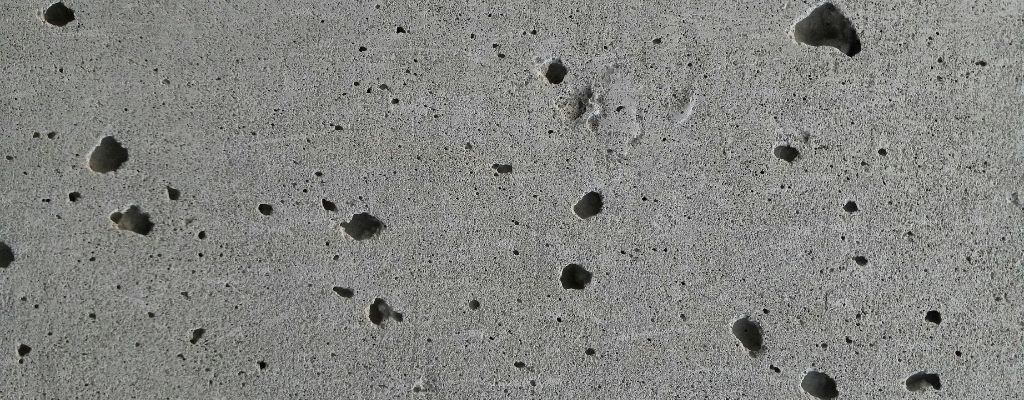
Concrete honeycombing is the term for visible voids or cavities left in hardened concrete where the cement mortar has failed to completely surround the coarse aggregate. The surface often appears rough and uneven, resembling a honeycomb’s cells, hence the defect’s name.
While some cases are only cosmetic, deeper concrete honeycombing can weaken the concrete, reduce durability and expose steel reinforcement to moisture, increasing the risk of corrosion.
What Causes Concrete Honeycombing?
Several factors can cause concrete honeycombing. In many cases, it’s a combination of issues rather than a single cause.
- Poor Compaction: One of the most common causes is inadequate vibration or compaction. If trapped air isn’t removed during placement, voids remain within the concrete, leaving the characteristic honeycomb appearance once the formwork is removed.
- Incorrect Concrete Mix: A concrete mix with insufficient fines or poor aggregate grading may not flow properly around reinforcement or into every corner of the formwork. This increases the likelihood of concrete honeycombing developing.
- Poor Formwork: Poorly sealed formwork allows cement paste to escape, leaving coarse aggregate behind that can create visible voids on the finished surface.
- Congested Reinforcement: Where reinforcement bars are closely spaced, concrete can struggle to flow between them, and pockets of honeycombing may develop around the steel.
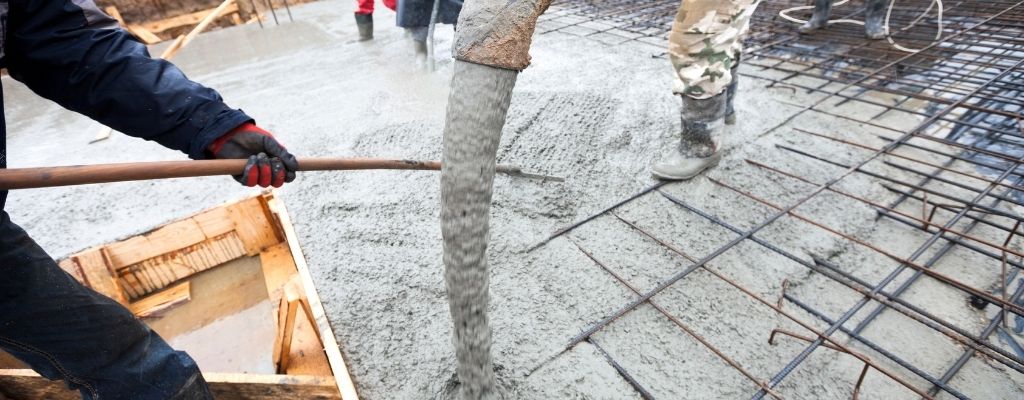
- Incorrect Pouring Techniques: Pouring concrete from excessive heights or allowing segregation within the mix can prevent proper consolidation, increasing the risk of defects.
Why Is Concrete Honeycombing a Problem?
Not every area of concrete honeycombing is structurally significant, but it should never be ignored. Potential consequences include reduced durability, structural strength and surface appearance. It can cause corrosion of reinforced steel and increase water permeability. All of that can lead to expensive repairs if left untreated.
The deeper the honeycombing extends into the concrete, the greater the potential impact on the structure.
Need Expert Advice?
Speak to the team at Flowmix Tewkesbury, Gloucestershire or Aldridge, Walsall. We are happy to help with all your concrete requirements. Contact us by email or telephone.
Flowmix Tewkesbury: Tel: 01684 217888 Flowmix Walsall: Tel: 01922 741731
How to Prevent Concrete Honeycombing
Preventing concrete honeycombing starts long before the concrete arrives on site.
- Choose the Correct Concrete Mix: Using the correct mix design ensures the concrete has sufficient workability to flow around reinforcement and completely fill the formwork.
- Compact Concrete Properly: Mechanical vibration removes trapped air and helps the concrete fully consolidate. Care should be taken to vibrate evenly without over-vibrating, which can also cause segregation.
- Ensure Good Formwork: Well-built, watertight formwork prevents cement paste from leaking out and helps maintain a dense concrete surface .
- Place Concrete Carefully: Concrete should be poured steadily and in manageable layers to minimise segregation and ensure the formwork is completely filled.
- Plan the Pour: Good communication between the contractor and concrete supplier helps ensure the correct mix, quantity and delivery timing, reducing the risk of rushed placement or delays.
How to Spot Concrete Honeycombing
Most cases of concrete honeycombing become visible once the shuttering or formwork has been removed.
Typical signs include:
- Air pockets
- Visible cavities
- Exposed aggregate
- Rough, uneven surfaces
- Missing mortar between stones
- Localised voids around reinforcement
Where there is any doubt about the severity of the defect, a structural engineer should assess whether repairs are necessary.
Conclusion
Concrete honeycombing is a common construction defect, but you can significantly reduce the risk by selecting the right concrete mix, preparing formwork correctly and ensuring proper placement and compaction.
If honeycombing does occur, identifying the cause early and carrying out the appropriate repair will help protect the long-term strength, durability and appearance of the concrete structure.
How Flowmix Can Help with Your Project
Flowmix has two plants, Gloucester and Walsall. We provide the following services (with time slots):
✅ Ready-mix concrete, mix on-site (volumetric concrete)
✅ Traditional and liquid screed.
✅ Concrete line pump Hire to reduce manual labour and associated costs, increase efficiency, reduce wastage and clean up.
✅ Interlocking concrete blocks for temporary or permanent barriers.
✅ Mini-Mix loads up to 4 cubic metres.
Flowmix holds the BSA-approved Ready Mix Concrete Kitemark KM683844, a certification that “confirms a product or service’s claim has been independently and repeatedly tested by experts” (source BSI).
Flowmix Tewkesbury: Tel: 01684 217888 Flowmix Walsall: Tel: 01922 741731
Flowmix Delivery Areas
| Tewkesbury | Walsall Plant |
| Bourton-on-the-Water | Aldridge |
| Brockworth | Barton-Under-Needwood |
| Chalford | Birmingham |
| Cheltenham | Brownhills |
| Chipping Campden | Burntwood |
| Cirencester | Burton Upon Trent |
| Droitwich Spa | Cannock |
| Evesham | Coleshill |
| Gloucester | Dudley |
| Great Malvern | Great Haywood |
| Ledbury | Lichfield |
| Newent | Norton Canes |
| Northleach | Penkridge |
| Pershore | Rugeley |
| Ross-on-Wye | Stafford |
| Stow-on-the-Wold | Tamworth |
| Stroud | Walsall |
| Tewkesbury | West Bromwich |
| Worcester | Wolverhampton |