
If you’ve ever tackled a home extension, garden wall or small commercial build, you’ve probably come across the term reinforced concrete. But what exactly does it mean, and why is it so widely used in construction today?
It combines the malleable strength of steel with the compressive strength of concrete, making it one of the most reliable and versatile building materials available.
Whether you’re a builder working on a new foundation or a homeowner planning a structural renovation, understanding how this type of concrete works can help you make better decisions for your project.
In this article, we’ll explain what it is, how it’s made, and why it continues to be the backbone of modern construction, especially for small-scale and domestic builds where durability, safety and cost-effectiveness really matter.
What is Reinforced Concrete?
Simply put, it’s a combination of steel and concrete that creates a structure that is far stronger and more durable than either material on its own.
Concrete is excellent at withstanding compression, which means it holds up well under heavy weight. However, it isn’t very good at handling tension, the forces that pull or stretch. That’s where reinforced concrete comes in.
Steel reinforcement bars, often known as rebar, are embedded within the concrete before it sets. These steel bars absorb the tensile stresses, while the concrete resists compression, forming a composite material that performs exceptionally well under a wide range of environmental stresses.
For small building firms and domestic clients in Gloucestershire and Walsall, it offers peace of mind. It’s not just about strength. It’s about long-term reliability. Whether you’re pouring a driveway or supporting a load-bearing wall, it gives you the structural performance you need to meet the demands of building regulations and everyday wear and tear.
Need Expert Advice?
Speak to the team at Flowmix Tewkesbury or Walsall. We are happy to help with all your concrete requirements.
Flowmix Tewkesbury: 01684 217888 Flowmix Walsall: Tel: 01922 741731
How is Reinforced Concrete Made?
It’s a carefully controlled process that begins with correctly combining the right materials. First, a traditional concrete mix is prepared (cement, water, and aggregates like sand and gravel). That creates a strong but flexible base material. Before pouring the concrete, steel reinforcement bars (rebar) are positioned within the mould or formwork according to the structural design.
These steel bars are typically arranged in a grid pattern and may be tied together with wire to hold them in place. The layout depends on the type of structure and anticipated loads. Once the rebar is in place, the concrete is poured over and around it, ensuring that the flow surrounds the steel, leaving no air pockets.
The result is a single, solid unit combining steel’s strength and concrete’s durability.
Why Is it Reinforced Concrete Necessary?
It’s essential in modern construction because plain concrete alone isn’t strong enough to handle the full range of stresses that some structures face. While concrete can bear heavy loads pressing down on it, it’s weak when stretched or bent.
Without reinforcement, concrete would crack or fail under tension, particularly in elements such as beams, floors, and cantilevers, where bending forces are common.
Steel reinforcement solves this problem. It provides the superior tensile strength that concrete lacks, allowing the two materials to work together under pressure. That makes reinforced concrete incredibly versatile and reliable, even in challenging conditions.
For small building companies and domestic projects, it means safer, longer-lasting results. Whether it’s a patio that won’t shift over time, a retaining wall that holds soil securely in place, or a garage slab that can withstand vehicle weight, reinforcement helps prevent cracking, structural failure, and costly repairs in the future.
Applications for Reinforced Concrete
It has a wide range of applications in domestic and small-scale construction projects due to its strength, durability, and adaptability. It can withstand compression and tension, making it suitable for structural elements that need to support weight, resist weather, and last over time.
Here are some typical applications of reinforced concrete in domestic and small building projects:
- Foundations: Reinforced concrete provides a stable and secure base for homes, extensions, and small commercial buildings. It distributes weight evenly and resists ground movement.
- Driveways and slabs: Concrete slabs reinforced with steel mesh or bars are ideal for driveways, garages, sheds, garden offices, and parking areas, especially where heavy loads are expected.
- Retaining walls: In sloped gardens or properties with varying ground levels, reinforced concrete retaining walls provide strong support and prevent soil movement.
- Beams and lintels: These structural elements support openings such as doors and windows, and reinforced concrete ensures they can carry the load without cracking or sagging.
- Staircases and balconies: Where cantilevered designs or elevated structures are needed, reinforced concrete provides both safety and structural integrity.
How Does Reinforced Concrete Work?
Reinforced concrete works by blending the strengths of two key materials — concrete and steel — to create a structure that can handle a wide range of stresses.
- Concrete is naturally strong under compression, meaning it can withstand heavy loads without collapsing.
- Steel reinforcement, often in the form of bars or mesh, is strong under tension, making it ideal for resisting pulling and bending forces.
When steel is placed into the formwork and concrete is poured over it, the two materials bond as the concrete cures. The result is a single, solid unit that can resist not only compression but also tension and shear forces, making it significantly more reliable than concrete alone.
Why Use Steel?
Steel is the most common choice for reinforcing concrete because:
- It has excellent tensile strength
- Steel bonds well with concrete, reducing the risk of slippage
- The expansion and contraction rate is similar to concrete when temperatures change, keeping the structure stable over time.
This combination of properties is what makes reinforced concrete such a dependable choice for structural work, from garden retaining walls to load-bearing slabs and foundations.
Benefits of Reinforced Concrete
Reinforced concrete offers a range of benefits that make it a wise choice for domestic and small-scale construction:
- Strength and durability – Handles heavy loads, ground movement, and weather without cracking or failing
- Versatility – Suitable for foundations, slabs, walls, beams, and more
- Fire and weather resistance – Concrete protects the steel inside, making it ideal for outdoor or high-risk areas
- Cost-effective over time – Fewer repairs and longer lifespan mean better value in the long run
- Low maintenance – Once installed correctly, reinforced concrete needs very little upkeep
- Design flexibility – Can be shaped, poured, or cast to suit almost any project
For small building firms and homeowners alike, reinforced concrete provides lasting strength with minimal hassle, making it a go-to material for reliable results.
Conclusion
Reinforced concrete is a trusted, versatile material that combines the best of concrete and steel to deliver strength, durability, and long-lasting performance.
Whether your project is a driveway, retaining wall, or home extension, reinforced concrete offers the reliability and value that make it the backbone of modern construction.
If you’re planning a project and want expert advice on quality reinforced concrete supplies, don’t hesitate to get in touch with us.
How Flowmix Can Help With Your Project
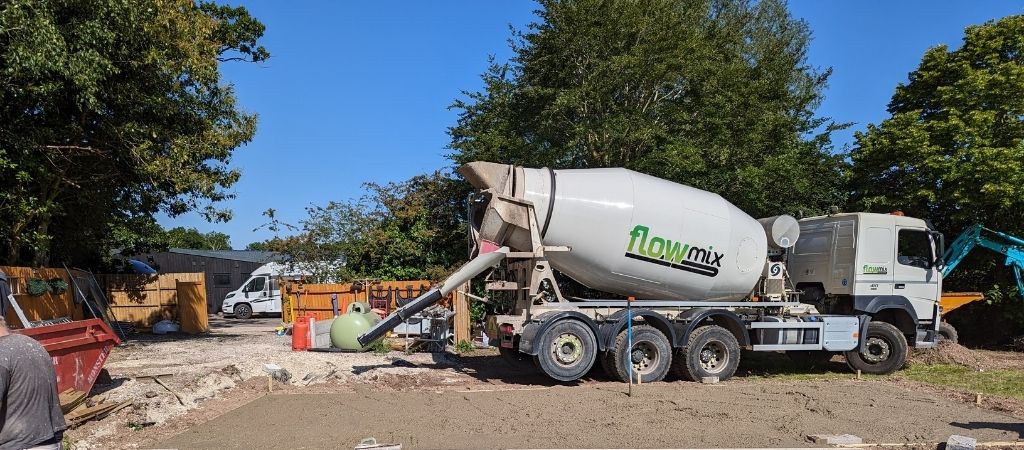
Flowmix has two plants, Gloucester and Walsall. We provide the following services (with time slots):
- Ready-mix concrete, mix on-site (volumetric) and liquid screed.
- 200′ Concrete line pump Hire to reduce manual labour and associated costs, increase efficiency, reduce wastage and clean up.
- Interlocking concrete blocks for temporary or permanent barriers.
Flowmix has the BSA-approved Ready Mix Concrete Kitemark KM683844, a certification that “confirms a product or service’s claim has been independently and repeatedly tested by experts” (source BSI).
Flowmix Tewkesbury: 01684 217888 Flowmix Walsall: Tel: 01922 741731
FAQs
Does Reinforced Concrete Rust?
Steel inside reinforced concrete can rust if moisture and air reach it, usually through cracks or poor-quality concrete. However, when properly mixed, compacted, and cured, concrete forms a protective barrier that prevents corrosion.
Using the correct cover depth and additives also helps keep reinforced concrete structures durable and rust-free for decades.
Do I Need Reinforced Concrete for My Project?
Whether you need reinforced concrete depends on what you’re building and where. Here’s a quick guide:
- Small shed foundation – Not usually unless the ground is soft or uneven
- Driveways – Recommended for heavy-use or large areas
- Patios – Optional for small patios; advised for larger ones
- Garage floors – Yes, to support vehicle weight and prevent cracks
- Retaining walls – Yes, to resist soil pressure
- Commercial buildings – Essential for strength, stability, and compliance
When in doubt, reinforced concrete offers added peace of mind and long-term durability.
Can I Mix Reinforced Concrete Myself?
It’s not advisable for small DIY projects because reinforced concrete requires precise mixing and placement of rebar. It’s best to use a professional supplier for quality results.
How Thick Should a Reinforced Concrete Slab Be?
Residential slabs are usually 4–6 inches thick. Commercial slabs often require 8–12 inches or more, depending on the load requirements.
Is Reinforced Concrete Environmentally Friendly?
Yes, especially when using recycled steel and aggregates, reinforced concrete can be an eco-friendly option.