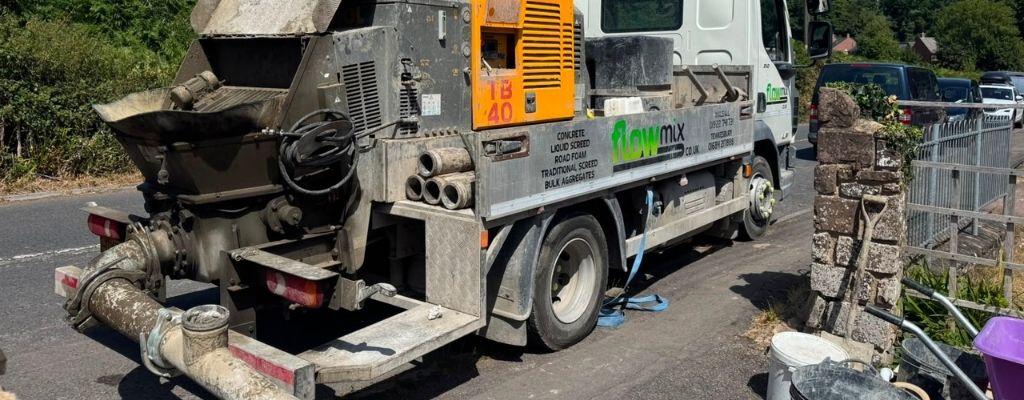
Getting concrete to a site is one thing. Getting it from the delivery lorry to exactly where you need it can be quite another.
If the concrete mixer can pull up alongside your foundations, slab or driveway and discharge directly into the pour, the job is relatively straightforward. But construction sites rarely make life quite that easy. Rear gardens, existing buildings, narrow access, walls, uneven ground and long distances from the road can all make concrete placement more challenging.
You could move the concrete manually using wheelbarrows, but for many projects there is a quicker and more practical alternative.
When you hire a concrete pump, concrete can be transferred from the mixer through a pipeline directly to the pour location. This can make placement faster, reduce manual handling and provide access to areas that a concrete lorry simply can’t reach.
Here are nine reasons why concrete pump hire could make your next project considerably easier.
✅ Arrange concrete pump hire today
✅ Free, fast quote within 24 hours
✅ Call, message or complete our simple online form
Flowmix Tewkesbury: Tel: 01684 217888 Flowmix Walsall: Tel: 01922 741731
Why Hire a Concrete Pump?
When you hire a concrete pump, it provides a way of moving wet concrete from the delivery vehicle to the point where it needs to be placed.
A line pump uses a series of connected pipes or flexible hoses to transport the concrete across the site. The pipeline can be routed around many of the obstacles that would prevent a concrete mixer from getting close to the pour.
This makes pumped concrete useful for everything from domestic extensions and garden projects to foundations, floor slabs and commercial construction.
So, when should you hire a concrete pump rather than rely on direct discharge or wheelbarrows?
9 Reasons to Hire a Concrete Pump
#1: A Pump Can Reach Areas a Concrete Lorry Can’t
Restricted access is one of the most common reasons to use a concrete pump.
A concrete mixer is a large vehicle and needs sufficient access and a suitable position from which to discharge. If your pour is at the rear of a property, behind an existing building or a significant distance from the road, getting the lorry close enough may simply not be possible.
A line pump solves the problem by transporting concrete through a pipeline between the delivery vehicle and the pour.
Pipes and hoses can be routed through or around many site obstacles, making concrete line pump hire particularly useful for:
- Concrete floors
- Garden rooms
- Patios and paths
- Rear extensions
- Foundations and footings
- Sites with narrow entrances
- Areas behind existing buildings
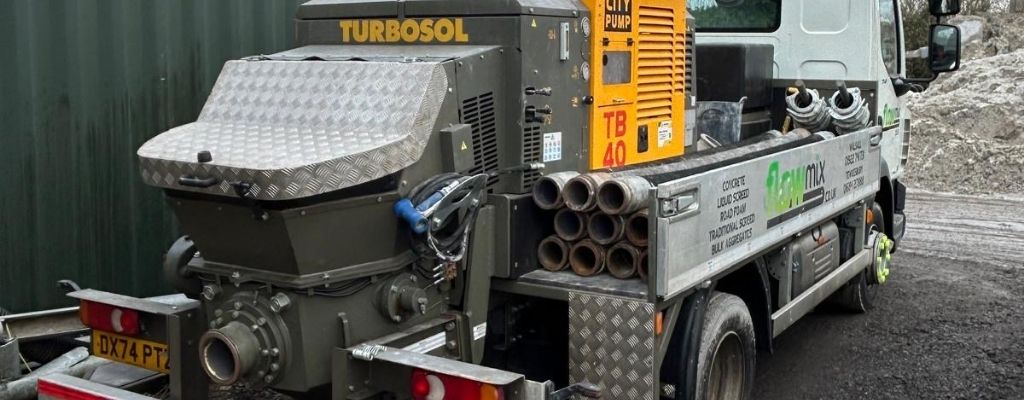
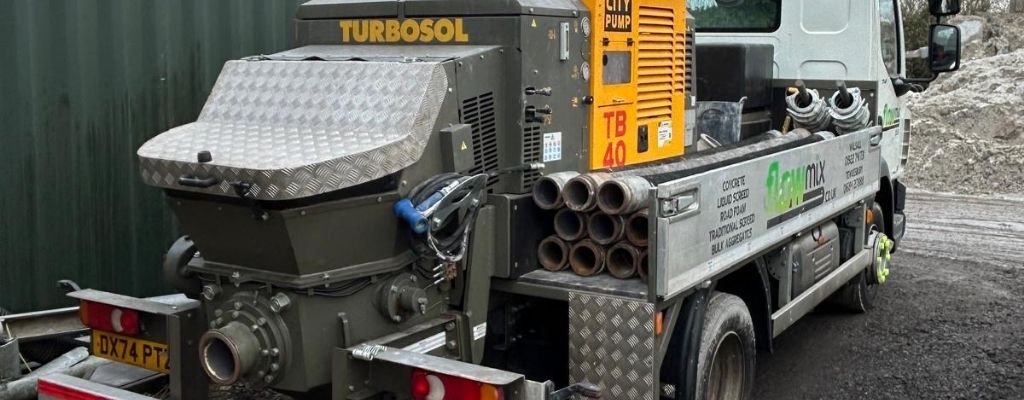
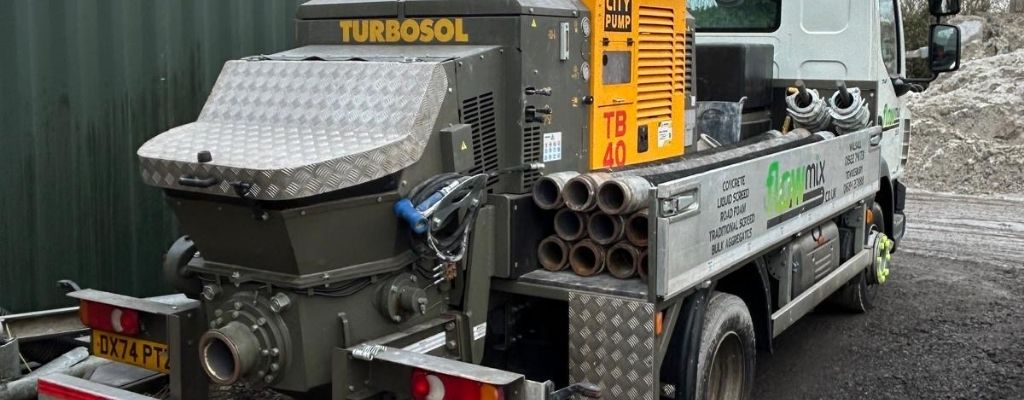
Flowmix’s concrete line pump is 70 metres long, allowing concrete to be moved a considerable distance when direct access isn’t practical.
#2: Complete Your Concrete Pour Faster
Moving several cubic metres of concrete using wheelbarrows takes time. Each load needs to be filled, moved to the pour, emptied and returned before the process begins again. The further the concrete needs to travel, the more time this can add to the job.
When you hire a concrete pump, concrete is transferred continuously from the mixer towards the pour area. Instead of repeatedly transporting small quantities across the site, larger volumes can be placed efficiently.
This can be particularly valuable when working to a tight construction schedule or carrying out a larger concrete pour.
Faster placement also means your team can spend more time levelling, compacting and finishing the concrete rather than simply moving it.
#3: Reduce the Amount of Manual Labour Required
Without direct access or a concrete pump, somebody has to get the concrete from A to B.
On a small pour over a very short distance, a wheelbarrow may be perfectly practical. Increase the volume or distance, however, and the amount of labour involved quickly increases.
You may need several people continually moving concrete simply to keep pace with the delivery.
Choose to hire a concrete pump and much of this transportation is handled mechanically. Your workforce can instead concentrate on placing and finishing the concrete and completing other important jobs around the site.
For commercial contractors, that can mean using skilled workers more productively. For domestic projects, it can mean fewer people are required to complete the pour.
#4: Improve the Accuracy of Concrete Placement
Concrete pumps don’t just move concrete; they allow much greater control over where it is delivered.
The end of a line pump can be positioned close to the area being filled, allowing the concrete to be directed where it’s required, which is useful when pouring foundations, footings and areas containing reinforcement, where controlled placement can make the job considerably easier.
Compare that with emptying wheelbarrows or attempting to move piles of wet concrete around manually after discharge.
Accurate placement also makes it easier for the team working at the pour to control the flow of concrete and distribute it across the required area.
#5: Reduce Spillage and Concrete Waste
Every time concrete is manually transported across a site, there’s an opportunity for some of it to end up somewhere it shouldn’t.
Wheelbarrows can tip, concrete can spill while they’re being filled and wet material can be dropped along the route between the delivery vehicle and the pour.
Apart from wasting concrete you’ve paid for, that creates additional cleaning.
Concrete pumping provides a more contained method of transporting the mix. The concrete moves through a closed pipeline until it reaches the pour area, reducing the opportunities for spillage along the way.
If you’re trying to work out whether to hire a concrete pump, it’s therefore worth considering more than the pump hire price itself. The potential savings in labour, time, waste and cleaning can all influence the overall cost of the pour.
Need Expert Advice?
Speak to the team at Flowmix Tewkesbury, Gloucestershire or Aldridge, Walsall. We are happy to help with all your concrete requirements. Contact us by email or telephone.
Flowmix Tewkesbury: Tel: 01684 217888 Flowmix Walsall: Tel: 01922 741731
#6: Make Difficult Sites Easier to Manage
Restricted vehicle access isn’t the only thing that can make a concrete pour awkward.
You might have walls, landscaping, steps or other buildings between the concrete lorry and the pour. The ground could be uneven, muddy or simply unsuitable for repeatedly pushing loaded wheelbarrows across.
Commercial sites can present their own challenges, with equipment, materials and other trades competing for space.
A concrete line pump offers greater flexibility because the pipeline can be planned around many of these obstacles.
This is one of the reasons it pays to think about concrete placement before delivery day. If the route from the road to the pour already looks difficult on foot, transporting tonnes of wet concrete along it manually probably isn’t going to improve matters.
#7: Reduce Manual Handling
Moving wet concrete is physically demanding work.
A wheelbarrow full of concrete is heavy, and manually transporting load after load across a site places considerable physical demands on the people doing it. Uneven ground, slopes and obstacles can make the task more difficult still.
Concrete pump hire reduces the amount of physical transportation required because the pump does the bulk of the work between the mixer and the pour.
There will still be work involved in controlling, placing and finishing the concrete, but eliminating repeated wheelbarrow journeys can make the overall process much more manageable.
If you have a large volume of concrete to place or a long distance between the delivery point and the pour, this alone can be a compelling reason to hire a concrete pump.
#8: Keep the Site Cleaner
Moving wheelbarrows backwards and forwards creates a route through the site that can quickly become messy. Wet concrete can be spilled, and wheels can carry material across driveways, paths and other finished surfaces.
This can be particularly important on domestic projects where work is taking place around an occupied home or established garden.
With pumped concrete, the pipeline provides a defined route from the delivery point to the pour location. Fewer wheelbarrow movements can mean less disturbance to the surrounding area and less cleaning once the job is complete.
Of course, the pump and pipeline still need to be properly managed and cleaned after use, but the concrete’s journey across the site is much more controlled.
#9: Make Large Pours More Manageable
The advantages of pumping become increasingly noticeable as the amount of concrete required increases.
Moving a handful of wheelbarrows is one thing. Moving several cubic metres of concrete is something else entirely.
For larger foundations, slabs and commercial projects, a concrete pump can provide a continuous and efficient method of concrete placement.
It can also help the team maintain a steady workflow. Concrete arrives, is pumped to the required area and can be placed and finished without workers continually stopping to fetch another barrow.
If you’re planning a substantial pour, the time and labour savings can make the decision to hire a concrete pump particularly worthwhile.
Projects Where Concrete Pump Hire Makes Sense
Concrete pumps aren’t reserved for enormous commercial construction projects. Line pumps in particular are well suited to many everyday domestic and commercial jobs.
For a home extension, for example, the foundations are often located behind the existing house. Unless there is suitable vehicle access to the rear of the property, a direct pour from the concrete mixer isn’t possible.
The same applies to garden rooms, patios, shed bases and other projects at the rear of a property.
Concrete pumping can also be useful for driveways where access or the position of the pour makes direct discharge difficult, as well as larger floor slabs and foundations where efficient placement is important.
Commercial projects can benefit for the same reasons. Long distances, restricted access and larger concrete volumes can all make pumping a more practical alternative to manual transportation.
The important thing is to consider how the concrete will get from the lorry to the pour, rather than simply whether the delivery vehicle can reach the site entrance.
Hire a Concrete Pump from Flowmix
If you’re planning a concrete delivery and access to the pour is difficult, Flowmix can provide concrete line pump hire alongside your concrete supply.
Our 70-metre concrete line pump is designed for tricky site pours where the concrete mixer can’t discharge directly into the required location. It can help reduce manual labour, improve placement efficiency and get concrete to areas that would otherwise be difficult to reach.
✅ Arrange concrete pump hire today
✅ Free, fast quote within 24 hours
✅ Call, message or complete our simple online form
Flowmix Tewkesbury: Tel: 01684 217888 Flowmix Walsall: Tel: 01922 741731
If you’re not sure whether you need to hire a concrete pump, speak to the Flowmix team when planning your delivery. We can discuss your site access, the distance between the delivery vehicle and pour, and the amount of concrete you require to help you choose the most practical option.
Planning the delivery method in advance means that when the concrete arrives, you can concentrate on the pour rather than wondering how you’re going to get several tonnes of it around the back of the building.
How Flowmix Can Help with Your Project
Flowmix has two plants, Gloucester and Walsall. We provide the following services (with time slots):
✅ Ready-mix concrete, mix on-site (volumetric concrete)
✅ Traditional and liquid screed.
✅ Concrete line pump Hire to reduce manual labour and associated costs, increase efficiency, reduce wastage and clean up.
✅ Interlocking concrete blocks for temporary or permanent barriers.
✅ Mini-Mix loads up to 4 cubic metres.
Flowmix holds the BSA-approved Ready Mix Concrete Kitemark KM683844, a certification that “confirms a product or service’s claim has been independently and repeatedly tested by experts” (source BSI).
Flowmix Tewkesbury: Tel: 01684 217888 Flowmix Walsall: Tel: 01922 741731
Flowmix Delivery Areas
| Tewkesbury | Walsall Plant |
| Bourton-on-the-Water | Aldridge |
| Brockworth | Barton-Under-Needwood |
| Chalford | Birmingham |
| Cheltenham | Brownhills |
| Chipping Campden | Burntwood |
| Cirencester | Burton Upon Trent |
| Droitwich Spa | Cannock |
| Evesham | Coleshill |
| Gloucester | Dudley |
| Great Malvern | Great Haywood |
| Ledbury | Lichfield |
| Newent | Norton Canes |
| Northleach | Penkridge |
| Pershore | Rugeley |
| Ross-on-Wye | Stafford |
| Stow-on-the-Wold | Tamworth |
| Stroud | Walsall |
| Tewkesbury | West Bromwich |
| Worcester | Wolverhampton |