
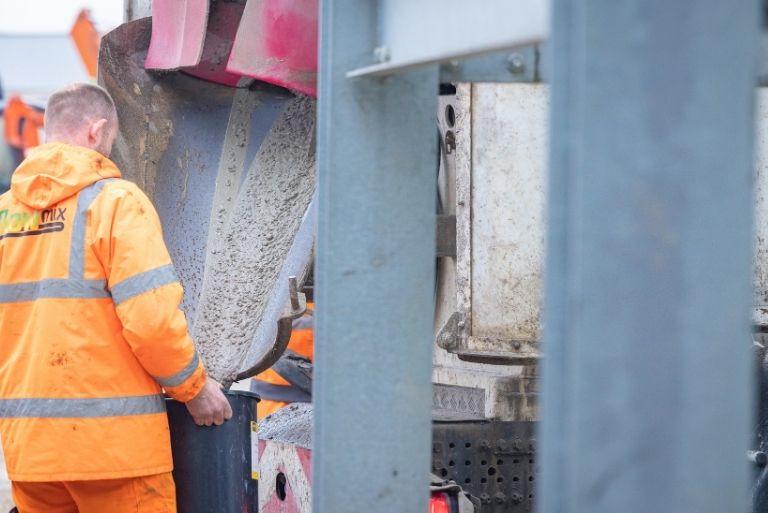
The concrete industry has always relied on precision, consistency and trust. Traditionally, quality control focused on what happened at the batching plant, with testing often taking place after delivery. Now, that model is changing.

Digital quality control is moving beyond production and into concrete delivery itself. With new technologies that monitor concrete performance in real time during transport, producers and customers alike are gaining better visibility, fewer errors, and greater confidence in every load delivered.

For suppliers like Flowmix, this shift represents a significant step forward in how we deliver quality, reliability and service across the UK construction sector. Whilst we are definitely hot on these three factors, we believe any improvements in quality processes can make a difference to the consumer experience.

Order ready-mix or volumetric concrete today
Free, fast quote within 24 hours
Call, message or complete our simple online form

Flowmix Tewkesbury: Tel: 01684 217888 Flowmix Walsall: Tel: 01922 741731

What Is Digital Quality Control in Concrete Delivery?

Digital quality control, often referred to as digital QC, uses smart sensors and integrated software systems to monitor concrete during transportation from the plant to the site. Instead of relying solely on manual checks or post-delivery testing, it enables continuous tracking of consistency, temperature, and volume.

By integrating production data with delivery systems, each load can be digitally recorded from batching through to discharge. That creates a clear, traceable quality record and allows potential issues to be identified earlier, often before the concrete reaches the site.

In simple terms, it means fewer surprises, greater accuracy and stronger quality assurance throughout the entire delivery process.

Why Digital QC Matters for Ready Mix Concrete Suppliers

Improved Mix Consistency

One of the biggest challenges in ready-mix concrete is maintaining consistent quality across every load. Digital monitoring helps identify variations in real time, reducing the risk of out-of-specification concrete arriving on site.

For suppliers, this means fewer rejected loads, less wasted material and smoother operations overall. Digital QC could help reduce shady practices and low-quality concrete if it became mandatory.

Greater Operational Visibility

Digital QC brings production, dispatch and delivery data together in one system. It allows teams to see exactly how each load performs, making it easier to spot trends, improve processes and maintain high standards across multiple sites.

For established suppliers like Flowmix, this supports our commitment to long-term quality control and continuous improvement.

Faster Intervention When Issues Arise

If something changes during transport, such as unexpected delays or environmental factors affecting the mix, digital systems can flag this immediately. That early visibility allows teams to take action before a problem becomes costly or disruptive on-site.

More Reliable Deliveries

Customers want confidence that the concrete they order is exactly what arrives on site. As digital QC becomes more widely adopted, reliability improves across the supply chain. Loads are more consistent, meeting specifications more accurately, and reducing delays caused by rejected concrete.

Stronger Quality Assurance

Digital records provide clear evidence of quality throughout the delivery process. It supports compliance with specifications and helps contractors meet project requirements with greater certainty.

Flowmix has built its reputation on dependable service and high-quality concrete throughout Gloucestershire and the West Midlands. Digital innovation across the industry further strengthens our commitment.

Smarter, More Efficient Service

As digital systems improve communication between plant, driver and site, customers benefit from smoother coordination, better planning and more predictable outcomes. It’s especially valuable on time-sensitive projects where delivery windows matter.

Need Expert Advice?

Speak to the team at Flowmix Tewkesbury, Gloucestershire or Aldridge, Walsall. We are happy to help with all your concrete requirements.

Flowmix Tewkesbury: Tel: 01684 217888 Flowmix Walsall: Tel: 01922 741731

The Bigger Picture: Digitalisation Across the Concrete Supply Chain

Digital quality control is part of a broader shift within the construction and concrete industries. GPS-tracked vehicles (Flowmix use cloud software that tracks every movement of our vehicles), digital dispatch systems and online ordering platforms are already becoming more common.

Customers increasingly expect transparency and real-time information, just as they do in other industries. As concrete delivery becomes more data-driven, suppliers who embrace these changes are better positioned to deliver efficiency, sustainability, and long-term value.

For Flowmix, operating across Gloucestershire and the West Midlands, these developments align with a forward-focused approach to service and quality.

Digital QC Adoption in the UK

While digital quality control is gaining traction internationally, adoption across the UK remains uneven. Larger producers have led much of the early implementation, but the benefits are increasingly relevant to regional suppliers and local projects.

As technology becomes more accessible, digital QC is likely to play an increasingly important role alongside traditional testing methods, not replacing them but enhancing overall quality assurance.

Potential Downsides to Digital Quality Control

There are a few potential downsides to digital quality control, and it’s sensible to be aware of them. None are deal-breakers, but they’re worth understanding, especially in the UK concrete industry.

As we shift to an ever-increasing digital world, we must consider the following factors:

  • Upfront Cost and Investment: Digital QC systems require investment in hardware, software and integration with existing batching and dispatch systems. For smaller or regional suppliers, the initial cost can be a barrier, even if long-term efficiencies outweigh it.
  • Training and Change Management: Introducing digital quality control requires training and time for teams to adapt. Drivers, plant operators and office staff may all interact with new systems. If companies don’t manage the change well, it can slow adoption or create resistance.
  • Data Interpretation Risks: Digital systems generate a lot of data, but data alone does not equal understanding. If readings are misinterpreted or used without context, they could lead to incorrect decisions. Human experience and traditional quality checks are still essential.
  • Technology Reliability: Like any digital system, sensors and software can experience faults, connectivity issues or calibration drift. Regular maintenance and verification are critical to ensure data remains accurate and trustworthy.
  • Integration With Existing Processes: Some digital QC platforms do not integrate seamlessly with older batching or dispatch systems. Poor integration can lead to duplication, manual workarounds, or fragmented records if not implemented carefully.
  • Over-Reliance on Automation: There is a risk of treating digital QC as a replacement for professional judgment. Site conditions, weather and handling can affect concrete behaviour, factors that still require experienced oversight beyond what data alone can provide.
  • Industry Standardisation: Because digital QC is still evolving, standards and best practices are not yet fully aligned across the UK industry. That can make it harder to compare data between suppliers or projects in the short term.

Conclusion

Digital quality control is no longer a future concept. It is actively reshaping how concrete suppliers manage quality from the batching plant to the concrete pour site.

For Flowmix and its customers, this shift supports what matters most: consistent quality concrete, reliable deliveries and confidence in every pour. As digital tools continue to develop, they will strengthen the standards that underpin successful construction projects across the UK.

How Flowmix Can Help With Your Project

Flowmix has two plants, Gloucester and Walsall. We provide the following services (with time slots):

Ready-mix concrete, mix on-site (volumetric concrete)
Traditional and liquid screed.
Concrete line pump Hire to reduce manual labour and associated costs, increase efficiency, reduce wastage and clean up.
Interlocking concrete blocks for temporary or permanent barriers.
Mini-Mix loads up to 4 cubic metres.

Flowmix has the BSA-approved Ready Mix Concrete Kitemark KM683844, a certification that “confirms a product or service’s claim has been independently and repeatedly tested by experts” (source BSI).

Flowmix Tewkesbury: Tel:01684 217888 Flowmix Walsall: Tel: 01922 741731

Flowmix Delivery Areas

Tewkesbury AreaWalsall Area
Bourton-on-the-WaterAldridge
BrockworthBarton-Under-Needwood
ChalfordBirmingham
CheltenhamBrownhills
Chipping CampdenBurntwood
CirencesterBurton Upon Trent
Droitwich SpaCannock
EveshamColeshill
GloucesterDudley
Great MalvernGreat Haywood
LedburyLichfield
NewentNorton Canes
NorthleachPenkridge
PershoreRugeley
Ross-on-WyeStafford
Stow-on-the-WoldTamworth
StroudWalsall
TewkesburyWest Bromwich
WorcesterWolverhampton

Sulphate-resistant concrete is essential if you want your concrete to withstand challenging ground conditions and last for many years.

Many people do not realise that the soil beneath a project, the local groundwater or even everyday farm waste can contain chemicals that slowly damage concrete. Without this type of specialised concrete, these hidden chemicals can cause cracking, weakening and early deterioration.

Choosing sulphate-resistant concrete means choosing long-term protection. It can handle environments where standard concrete might struggle, especially in areas with clay soils, farmland, or places exposed to chemical run-off. By using this concrete, you avoid unnecessary repairs and make sure your structure stays strong.

Flowmix supplies high-quality sulphate-resistant concrete for all kinds of projects, offering expert guidance so you get the right mix for the conditions on site.

What Are Sulphates And Why Do They Matter?

Sulphates are natural chemicals found in certain types of clay, groundwater, fertilisers and farm waste. On their own, they aren’t harmful, but when they come into contact with the wrong kind of concrete, they can slowly cause damage. Over time, sulphates can cause concrete to swell, crack, or break apart, leading to expensive repairs and safety issues.

Choosing sulphate-resistant concrete is so important in the right environments, as it is specially formulated to withstand these chemicals, helping your concrete stay strong rather than weaken from the inside out. By understanding where sulphates are most likely to appear, you can make smarter decisions about the type of concrete your project needs.

Need Expert Advice?

Speak to the team at Flowmix Tewkesbury, Gloucestershire or Aldridge, Walsall. We are happy to help with all your concrete requirements.

Flowmix Tewkesbury: 01684 217888 Flowmix Walsall: Tel: 01922 741731

What Does DC2 Mean?

DC2 is a simple way of saying the concrete is for areas with a moderate level of sulphates in the ground or water. In everyday terms, it means the concrete is stronger and more durable, so it can withstand chemicals that might otherwise cause damage over time.

When you choose sulphate-resistant concrete with a DC2 rating, you select a mix carefully designed to protect your project from these hidden risks. It is tougher than standard concrete, less likely to crack, and far better suited to environments where the environment could slowly degrade weaker mixes.

In short, DC2 indicates that the concrete provides adequate protection for many real-world conditions, especially in farmland, clay soils, and areas with chemical exposure.

When Do You Need Sulphate-Resistant Concrete?

You will need sulphate-resistant concrete whenever the ground or environment contains chemicals that could slowly attack a standard mix. This situation is more common than people think, especially in rural and industrial settings.

On farms, sulphates are often found in slurry, manure, silage run off and fertilisers. Any concrete used in barns, yards, animal housing, silage pits, or drainage channels is likely to be exposed to these chemicals every day. Using the wrong concrete here can lead to cracking and early failure.

Foundations built on certain clay soils can also be at risk because those clays naturally hold sulphates. The same applies to areas with groundwater containing chemicals. Even industrial locations can have sulphates present due to spills, wash-off, or the storage of certain materials.

If your concrete project is in any of these settings, choosing the right mix from the start will save time, money, and worry later.

Benefits Of Choosing The Right Mix

Using sulphate-resistant concrete gives you long-term peace of mind because it can handle environments that would slowly damage ordinary concrete. One of the most significant benefits is durability. The mix resists cracking, swelling, and surface damage, even under challenging conditions.

Another advantage is cost savings. When you use the correct concrete from the start, you avoid unnecessary repairs, replacements or downtime. That’s especially important on farms and industrial sites where surfaces work hard and any failure can disrupt your routine.

Most importantly, sulphate-resistant concrete helps your structure stay strong and reliable. Whether it is a floor, a foundation or a yard, you know it has the proper protection to keep performing as it should.

Ready to Order Ready-Mix or Volumetric Concrete?

At Flowmix, getting the right sulphate-resistant concrete is straightforward. We will discuss the conditions on your site and recommend a mix that will withstand the environment. That takes the guesswork out of choosing concrete and ensures you get a product that will last.

If you are ready to order a concrete delivery, speak to the team at Flowmix Tewkesbury or Walsall. We will help you select the right mix and quantities and arrange for fast delivery to your site.

Flowmix offers reliable delivery and flexible mix-on-site options. That means you get the exact amount and type of concrete you need, at the right strength and chemical resistance. Our team is ready to advise if you are unsure which mix is suitable, helping you avoid mistakes and unnecessary costs.

Flowmix Tewkesbury: 01684 217888 Flowmix Walsall: Tel: 01922 741731

Common Mistakes To Avoid

Even when you know about sulphates, it’s easy to make mistakes that can shorten the life of your concrete. One common error is using standard concrete in challenging conditions. That can lead to cracking and damage much sooner than expected.

Another mistake is not checking the ground or water first. Without knowing the environment, you might choose the wrong mix for the conditions. Similarly, cutting corners on curing or cover depth can reduce the effectiveness of even a DC2 mix.

Finally, trying to save money by picking the cheapest concrete can backfire. Using the right sulphate-resistant concrete from the start protects your investment and keeps your project safe for years.

Conclusion

Choosing sulphate-resistant concrete is one of the easiest ways to protect your project from hidden chemical damage. It can withstand soils, water, and farm or industrial chemicals that would otherwise slowly harm standard concrete. Using the right mix from the start means your structure stays strong, lasts longer and avoids costly repairs.

Flowmix makes it simple to get the right concrete for your project. With expert advice, high-quality mixes and reliable delivery, you can be confident that your concrete will perform exactly as it should, even in challenging conditions.

How Flowmix Can Help With Your Project

Flowmix has two plants, Gloucester and Walsall. We provide the following services (with time slots):

Flowmix has the BSA-approved Ready Mix Concrete Kitemark KM683844, a certification that “confirms a product or service’s claim has been independently and repeatedly tested by experts” (source BSI).

Flowmix Tewkesbury: 01684 217888 Flowmix Walsall: Tel: 01922 741731

Flowmix Delivery Areas

Tewkesbury AreaWalsall Area
Bourton-on-the-WaterAldridge
BrockworthBarton-Under-Needwood
ChalfordBirmingham
CheltenhamBrownhills
Chipping CampdenBurntwood
CirencesterBurton Upon Trent
Droitwich SpaCannock
EveshamColeshill
GloucesterDudley
Great MalvernGreat Haywood
LedburyLichfield
NewentNorton Canes
NorthleachPenkridge
PershoreRugeley
Ross-on-WyeStafford
Stow-on-the-WoldTamworth
StroudWalsall
TewkesburyWest Bromwich
WorcesterWolverhampton

FAQs

What Is Sulphate-Resistant Concrete?

It is a type of concrete designed to withstand chemicals called sulphates, found in certain soils, groundwater, and farm or industrial waste. That makes it much more durable in challenging environments.

How Do I Know If I Need It?

If your project is on farmland, clay soils, or anywhere exposed to chemical run-off or groundwater, it’s best to use sulphate-resistant concrete to prevent long-term damage.

Is Sulphate-Resistant Concrete More Expensive Than Standard Concrete?

It can cost a little more upfront, but using the right mix avoids costly repairs and replacements later, saving money in the long run.

Can I Use It For Farm Buildings Or Slurry Channels?

Yes, these are common areas where sulphate-resistant concrete is essential. It protects floors, walls and drainage channels from cracking and deterioration.

How Can Flowmix Help Me Choose The Right Concrete?

Flowmix can assess your site, recommend the best mix for your conditions, and deliver it on time. That ensures your project uses the correct concrete for long-term durability.

In the world of modern construction, new materials are redefining what’s possible. One of the most significant innovations in recent years is ultra-high performance concrete. Known for its exceptional strength, durability and versatility, this advanced material is transforming how we design and build everything from bridges to architectural façades.

At Flowmix, based in Tewkesbury and Walsall, we’re proud to supply ultra-high performance concrete to clients across Gloucestershire and the West Midlands, offering a superior solution that delivers long-term performance and visual appeal.

Order ready-mix or volumetric concrete today
Free, fast quote within 24 hours
Call, message or complete our simple online form

Flowmix Tewkesbury: 01684 217888 Flowmix Walsall: Tel: 01922 741731

What Is Ultra High Performance Concrete?

Ultra-high performance concrete (UHPC) is a next-generation material engineered to outperform traditional concrete in almost every aspect. It’s created using a refined blend of cement, fine aggregates, silica fume and fibres such as steel or synthetic strands. The mix features an extremely low water-to-cement ratio, resulting in a dense, compact structure that resists cracking and water penetration.

While conventional concrete typically achieves compressive strengths of 30-50 MPa, ultra-high performance concrete can exceed 150 MPa. This outstanding strength makes it suitable for structural and architectural applications where durability and precision are essential.

Its dense microstructure also provides excellent resistance to freeze–thaw cycles, chlorides and chemical attack, ensuring a long service life even in demanding environments.

Key Benefits of Ultra High Performance Concrete

Unmatched Strength

One of the most notable advantages of ultra-high performance concrete is its extraordinary strength. With compressive strength several times that of standard mixes, it’s ideal for bridges, infrastructure, and structural elements that need to bear heavy loads.

Exceptional Durability

Thanks to its dense composition and fibre reinforcement, ultra-high performance concrete resists corrosion, abrasion and environmental degradation. It’s built to last, even in coastal or industrial settings where ordinary concrete may deteriorate.

Design Flexibility

Architects and designers appreciate UHPC for its ability to form sleek, thin and intricate shapes without compromising structural integrity. From decorative façades to sculptural features, ultra-high performance concrete offers creative freedom alongside strength.

Sustainability

Because ultra-high performance concrete lasts significantly longer than standard mixes, it reduces the need for frequent repairs or replacements. That lowers both maintenance costs and the project’s environmental impact over its lifespan.

Together, these benefits make ultra-high performance concrete a material that balances performance, aesthetics and sustainability in one innovative solution.

Need Expert Advice?

Speak to the team at Flowmix Tewkesbury or Walsall. We are happy to help with all your concrete requirements.

Flowmix Tewkesbury: 01684 217888 Flowmix Walsall: Tel: 01922 741731

Typical Applications of Ultra High Performance Concrete

The versatility of ultra-high performance concrete makes it ideal across a wide range of sectors. In civil engineering, it’s a top choice for bridges, tunnels and infrastructure projects where high load-bearing capacity and longevity are essential. Its exceptional strength allows for thinner sections and longer spans, reducing overall material use while maintaining structural safety.

In architectural design, ultra-high performance concrete is valued for its smooth finish and ability to capture fine details. It’s ideal for façade panels, cladding, street furniture and artistic installations that demand both durability and aesthetic precision.

Commercial and industrial clients also benefit from UHPC’s resistance to wear and impact, making it ideal for high-use environments such as warehouse floors, loading bays, and transport hubs. At Flowmix, we supply tailored UHPC mixes designed to meet the specific structural and visual needs of each project.

Ultra-High Performance Concrete vs Traditional Concrete

While traditional concrete remains a reliable material for many general construction projects, ultra-high performance concrete offers clear advantages when long-term performance is the priority.

FeatureTraditional ConcreteUltra-High Performance Concrete
Compressive Strength30–50 MPa150–150 MPa
DurabilityGoodExceptional
PermeabilityModerateExtremely low
Design OptionsLimitedHigh – enables thin, complex shapes
Initial CostLowerHigher
Maintenance & LifespanRequires upkeepMinimal maintenance, decades-long lifespan

Although ultra-high performance concrete can be more expensive upfront, its reduced maintenance needs and extended life make it a cost-effective investment over time.

Why Choose Flowmix for Ultra High Performance Concrete

Flowmix has earned a strong reputation for quality, reliability and precision in concrete production. Our ultra-high performance concrete mix uses premium materials and advanced batching methods to ensure consistency, strength and durability.

With plants in Tewkesbury, Gloucestershire and Aldridge, West Midlands, we serve both residential and commercial clients with dependable delivery and expert advice. Whether you’re working on a large-scale infrastructure project or a bespoke architectural design, Flowmix can provide the perfect UHPC mix to meet your exact requirements.

We provide the following services (with 2-hour delivery time slots):

Flowmix has the BSA-approved Ready Mix Concrete Kitemark KM683844, a certification that “confirms a product or service’s claim has been independently and repeatedly tested by experts” (source BSI).

Flowmix Tewkesbury: 01684 217888 Flowmix Walsall: Tel: 01922 741731

Flowmix Delivery Areas

Tewkesbury AreaWalsall Area
Bourton-on-the-WaterAldridge
BrockworthBarton-Under-Needwood
ChalfordBirmingham
CheltenhamBrownhills
Chipping CampdenBurntwood
CirencesterBurton Upon Trent
Droitwich SpaCannock
EveshamColeshill
GloucesterDudley
Great MalvernGreat Haywood
LedburyLichfield
NewentNorton Canes
NorthleachPenkridge
PershoreRugeley
Ross-on-WyeStafford
Stow-on-the-WoldTamworth
StroudWalsall
TewkesburyWest Bromwich
WorcesterWolverhampton

Conclusion

Ultra-high-performance concrete represents the future of sustainable and high-performance construction. Its combination of strength, resilience and versatility makes it ideal for modern projects that demand both function and design excellence.

If you’re looking to elevate your next build with a material that goes beyond the limits of traditional concrete, contact Flowmix today to learn more about our ultra-high performance concrete solutions and request a free quote.

Ready to Order Ready-Mix or Volumetric Concrete?

If you are ready to order a ready-mix concrete delivery (UHPC or standard), speak to the team at Flowmix Tewkesbury or Walsall. We will help you select the right mix and quantities and arrange for fast delivery to your site.

Order ready-mix or volumetric concrete today
Free, fast quote within 24 hours
Call, message or complete our simple online form

Flowmix Tewkesbury: 01684 217888 Flowmix Walsall: Tel: 01922 741731

FAQs

What Makes Ultra High Performance Concrete Different From Traditional Concrete?

Ultra High Performance Concrete is a refined mix of materials that gives it far greater strength, density and durability than traditional concrete. It has a lower water-to-cement ratio and includes fine powders and fibres that improve its structural performance and resistance to cracking, weathering, and chemical attack.

Where Can Ultra High Performance Concrete Be Used?

Ultra High Performance Concrete is incredibly versatile for both structural and decorative applications, such as bridges, architectural façades, cladding panels, precast elements, industrial floors, and even bespoke urban furniture or landscaping features.

Is Ultra High Performance Concrete More Expensive?

While the initial cost of Ultra High Performance Concrete is higher than standard concrete, it offers excellent long-term value. Its superior durability means fewer repairs, less maintenance, and a longer service life, often resulting in lower overall costs throughout a project’s lifespan.

Can Ultra High Performance Concrete Be Customised For My Project?

Yes. At Flowmix, we can tailor Ultra-high performance concrete to meet the specific structural, aesthetic or performance needs of your project. Whether you require a particular strength, finish or workability, our expert team can produce a bespoke mix to match your requirements.

Is Ultra High Performance Concrete Environmentally Friendly?

Ultra-high performance concrete is considered more sustainable than conventional concrete due to its longer lifespan and reduced maintenance requirements. Its dense composition also helps lower material consumption, and its long-term performance minimises the environmental impact associated with frequent repairs or replacements.

Why Should I Choose Flowmix For Ultra High Performance Concrete?

Flowmix has years of experience supplying high-quality concrete solutions across Gloucestershire and the West Midlands. Our Ultra High Performance Concrete mix uses premium materials and advanced batching technology to ensure consistent strength and quality.

We also offer reliable 2-hour delivery slots, expert guidance, and competitive pricing to ensure your project runs smoothly.

Does Ultra High Performance Concrete Require Special Installation Methods?

Ultra High Performance Concrete may require slightly different handling and placement techniques compared to standard concrete due to its high density and flow characteristics. Flowmix can provide professional advice on best practices to ensure optimal results and long-lasting performance.

How Long Does Ultra High Performance Concrete Last?

When correctly designed and installed, Ultra High Performance Concrete can last several decades with minimal maintenance. Its dense structure and superior resistance to wear, moisture and chemicals make it one of the most durable construction materials available today.

Walk through the ruins of Rome and you’ll notice something extraordinary. The aqueducts still stretch across valleys. The Colosseum still towers over the city, and the Pantheon’s vast dome still looks as though it could have been built yesterday. These marvels aren’t just relics; they’re clues to a mystery that runs deep through the history of concrete.

Why have these ancient structures stood the test of time, while so much of our modern concrete crumbles in a few short decades? The answer isn’t apparent, and for centuries, it baffled scientists and historians alike.

Somewhere in the long history of concrete, the Romans discovered a method that made their buildings stronger with age, not weaker. And here’s the intriguing part. They left behind hints of their secret in the very walls that still stand today.

How Did the Romans Discover Concrete?

Long before Rome, early civilisations experimented with binding materials, from crushed limestone in Syria to gypsum mortars in Egypt. But it was the Romans who transformed concrete from a simple binder into a revolutionary building material.

Around 150 BC, they developed opus caementicium, allowing architects to pour, mould, and shape buildings on a scale never seen before. In the history of concrete, this was the moment imagination met durability.

Think of the Pantheon. Its unreinforced dome is still the largest of its kind in the world. Without the Roman leap forward in the history of concrete, such a feat would have been impossible.

What made this moment so important wasn’t just that the Romans invented a stronger material, but that they unlocked creativity. Concrete freed architects from the limitations of stone and brick, allowing them to dream on a scale never seen before.

Yet, as groundbreaking as this was, the Romans weren’t only interested in creating grand structures. They also focused on endurance. And here is where their story in the history of concrete takes a fascinating twist, because the mixture they developed not only lasted but also became stronger over time.

What was their secret? That, we’ll soon uncover.

Composition & Materials

Roman concrete blended lime, volcanic ash, and rock fragments, but it wasn’t just about mixing ingredients; it was about choosing the right ones. Pozzolana, the volcanic ash near Naples, reacted with lime and water to form minerals that strengthened the material over time.

Even centuries later, Roman harbours and piers show a resilience modern concrete often lacks. The fascinating history of concrete reveals that these builders intuitively understood how materials could grow stronger with age, not weaker.

But there’s still a puzzle here.

Choosing volcanic ash was one part of the secret, but how the Romans combined these ingredients held the real key to their concrete’s legendary resilience. And that part of the history of concrete takes us into the fascinating world of Roman mixing techniques, a world where cracks didn’t mean weakness, but the beginning of something extraordinary.

Mixing & Self-Healing

The Romans’ real secret wasn’t just what they used, but how they combined it. Their hot-mixing method caused chemical reactions inside the concrete, creating tiny lime clasts (small pieces of rock or debris that have broken off from existing rock due to natural forces like water, wind, ice, or gravity).

For years, these were mistaken for mistakes, but they allowed the material to self-heal: when cracks formed, water triggered reactions that patched the concrete from within.

In the history of concrete, this innovation was revolutionary, a material that actively repaired itself and became more durable over centuries.

Durability & Environmental Interaction

Roman concrete wasn’t just strong on land. It thrived in the sea. Unlike modern mixtures that erode with saltwater, the Romans’ combination of volcanic ash and lime reacted with seawater to form new minerals, gradually strengthening their structures.

In the history of concrete, this ability to improve over time was unmatched, allowing harbours, piers, and breakwaters to survive storms for millennia. Their secret wasn’t magic. It was chemistry and observation perfected over generations.

Modern Relevance for Today’s Concrete

Today, engineers and scientists study Roman concrete to inspire more sustainable construction. Its low-energy production, durability, and self-healing properties offer lessons for reducing carbon emissions and building longer-lasting infrastructure.

While we can’t copy the formula exactly, modern projects rely on steel reinforcement and readily available materials, the history of concrete shows that looking to the past can guide the future.

The Romans discovered that the correct mix, the proper method, and a little ingenuity could create something truly timeless. In the history of concrete, their achievements remain a benchmark for resilience, ingenuity, and sustainable thinking, proof that innovation doesn’t always need modern technology to leave a lasting mark.

Conclusion

The history of concrete is more than a timeline of materials. It’s a story of human ingenuity, curiosity, and experimentation. From humble beginnings in early civilisations to the revolutionary methods of the Romans, concrete has shaped the way we build, live, and imagine our world.

Roman builders showed us that strength isn’t just about ingredients, but about method, vision, and understanding the environment. Their secret: hot mixing, lime clasts, and self-healing reactions, remains a source of inspiration for architects and engineers striving for sustainability today.

As we continue to seek materials that endure, adapt, and repair themselves, the history of concrete reminds us that sometimes, we often find the answers to the future buried in the past.

Who knows, perhaps the next innovation in building resilience will come not from modern labs, but from lessons learned two thousand years ago on the shores of the Mediterranean.

How Flowmix Can Help With Your Project

Moving on from Roman times, Flowmix has two plants, Gloucester and Walsall. We provide the following services (with time slots):

Flowmix has the BSA-approved Ready Mix Concrete Kitemark KM683844, a certification that “confirms a product or service’s claim has been independently and repeatedly tested by experts” (source BSI).

Flowmix Tewkesbury: 01684 217888 Flowmix Walsall: Tel: 01922 741731

Flowmix Delivery Areas

Tewkesbury AreaWalsall Area
Bourton-on-the-WaterAldridge
BrockworthBarton-Under-Needwood
ChalfordBirmingham
CheltenhamBrownhills
Chipping CampdenBurntwood
CirencesterBurton Upon Trent
Droitwich SpaCannock
EveshamColeshill
GloucesterDudley
Great MalvernGreat Haywood
LedburyLichfield
NewentNorton Canes
NorthleachPenkridge
PershoreRugeley
Ross-on-WyeStafford
Stow-on-the-WoldTamworth
StroudWalsall
TewkesburyWest Bromwich
WorcesterWolverhampton

FAQs

What Did The Romans Originally Use To Make Concrete?

Roman concrete was made from volcanic ash, lime, water, and small stones. This unique mix helped structures like the Pantheon and aqueducts last for thousands of years.

Why Is Roman Concrete Considered Stronger Than Modern Concrete?

Roman concrete naturally strengthens over time because of a chemical reaction between volcanic ash and seawater. This creates long lasting crystals that help the concrete self-heal and resist cracking.

How Was Roman Concrete Discovered?

The Romans didn’t invent concrete from scratch, but they refined and perfected earlier techniques. They discovered that mixing volcanic ash, called pozzolana, with lime created a durable material ideal for large scale building.

Which Famous Structures Were Built With Roman Concrete?

Many iconic structures used Roman concrete, including the Pantheon, the Colosseum, Roman baths, and extensive aqueduct systems that still stand today.

Did The Romans Use Reinforcement Like We Do With Steel Today?

No, Roman concrete didn’t rely on steel reinforcement. Instead, the Romans designed thick walls, arches, and domes that distributed weight naturally, making their structures incredibly stable.

How Did Concrete Evolve After The Roman Empire?
After the fall of Rome, concrete use declined for centuries. It re-emerged in the 18th and 19th

centuries when modern Portland cement was developed, leading to the concrete we use today.

The construction world is changing fast, and one breakthrough has everyone talking. 3D concrete printing is a high-tech, game-changing method that could completely reshape how we build.

Imagine entire buildings created layer by layer with incredible accuracy, no scaffolding, no moulds, and far less waste. Sounds futuristic? Yes, of course, but it’s already happening. 3D concrete printing uses massive printers to “print” structures directly from digital designs, opening the door to quicker, smarter, and more sustainable construction.

But here’s the big question: is 3D concrete printing just a passing trend, or are we looking at a rapid shift in the future of the construction industry? As technology advances at an ever-increasing pace, do you agree it might be silly to ignore such innovation coming to the construction industry?

In this article, we’ll explore how 3D concrete printing works, its advantages and limitations, and whether it genuinely has the potential to revolutionise the way we build. Whether you’re in the industry or simply curious about cutting-edge technology, this deep dive will give you a clear picture of what’s next for construction.

Let’s look closer at what makes 3D concrete printing so exciting, and why it might be more than just a buzzword.

How 3D Concrete Printing Works

So, how does 3D concrete printing actually work? It might sound like something out of a sci-fi film, but the process is surprisingly straightforward once you understand the basics.

3D concrete printing is an additive manufacturing process. That means instead of pouring concrete into moulds like in traditional construction, it builds up a structure layer by layer, just like a regular 3D printer, but on a significantly larger scale. Think of it as piping icing onto a cake, except the “icing” is a specially formulated concrete mix, and the “cake” is a house, a wall, or even a bridge.

The process starts with a digital design. Architects and engineers create a 3D model of the structure using computer-aided design (CAD) software. This file gets fed into the printer, which reads the design and begins the building process—no manual labour needed.

A robotic arm or gantry system moves in multiple directions, extruding the concrete in precise lines. Because the printing process is automated and computer-controlled, the level of detail and accuracy is incredibly high. It can even handle complex curves and overhangs that would be difficult, expensive, or time-consuming to achieve with traditional methods.

The concrete used in the printing process isn’t your average cement mix. It’s engineered to flow smoothly through the printer and still set quickly enough to support the next layer. That means walls can be printed in hours, not days, without waiting for traditional curing times between stages.

Some systems also include reinforcement strategies, like inserting rebar or fibres during the print, to ensure structural strength. Others incorporate insulation or finishing elements into the printing process, reducing the need for additional trades later.

In short, 3D concrete printing takes a digital idea and turns it into a full-scale physical structure with incredible speed and precision. It’s not just a fancy gimmick—it’s a profound shift in how we approach construction.

Common Uses Include:

  • Bridges
  • Retaining walls
  • Decorative facades
  • Houses and buildings
  • Urban furniture (e.g., benches, planters)

And we’re only just scratching the surface. Next, let’s look at the benefits that have led builders and developers to pay close attention to this rapidly growing technology.

How It Works in Brief:

  1. Digital Model: A 3D digital model (CAD file) of the structure is created.
  2. Layered Printing: A robotic arm or gantry system extrudes layers of concrete to match the design.
  3. Material: The concrete is usually a quick-setting, pumpable mix with additives for better flow, strength, and bonding.

8 Benefits of 3D Concrete Printing

There’s a reason 3D concrete printing generates so much buzz. It offers some serious advantages over traditional construction methods. From cutting costs to pushing the boundaries of design, here are some of the biggest benefits:

1. Faster Construction Times

3D concrete printing dramatically reduces build time. Structures that would typically take weeks or even months to complete can be printed in just a few days. Some houses have been printed in under 24 hours! Because the process is automated, it runs continuously without delays caused by weather, labour shortages, or material handling.

Consider the cost savings of months of manual labour that this process represents.

2. Lower Labour Costs

Traditional construction requires large teams of skilled workers. With 3D concrete printing, much of the manual labour is replaced by machines, meaning fewer workers are needed on-site. This process cuts costs and reduces the risk of injury, making it a safer option.

3. Design Freedom and Flexibility

Curves, arches, intricate facades—what used to be expensive and complex is now simple with 3D concrete printing. It allows architects to think beyond straight lines and right angles, unlocking endless possibilities for creative, innovative design.

4. Reduced Material Waste

Conventional construction is known for producing a lot of waste. With 3D concrete printing, materials are used much more efficiently. The printer deposits only what’s needed, precisely where it’s needed, drastically cutting down on excess concrete and scrap.

5. Sustainability

Because this process uses fewer resources and produces less waste, 3D concrete printing is a more environmentally friendly option. Many developers are also experimenting with eco-friendly concrete mixes, further reducing construction projects’ environmental footprint.

6. Greater Precision and Consistency

Human error can lead to costly mistakes on a building site. 3D concrete printing eliminates much of this risk. It follows the digital design with millimetre-level accuracy, ensuring consistency throughout the build and reducing the need for rework.

7. Potential for Affordable Housing

With its speed and cost-efficiency, 3D concrete printing has enormous potential in tackling the global housing crisis. Countries like India, the Netherlands, the US and some African nations are exploring 3D printing to quickly build low-cost, durable homes, offering a real solution for communities in need.

8 Challenges of 3D Concrete Printing

Of course, not everything about 3D concrete printing is rosy. While the process holds incredible promise, there are challenges like any emerging technology.

1. High Initial Costs

Although 3D concrete printing can save money in the long run, the upfront investment is significant. The machines, software, and setup required can be costly, especially for smaller contractors or developers who aren’t ready to commit to new technology.

2. Limited Availability of Materials

Not all concrete mixes are suitable for printing. 3D concrete printing requires specially formulated concrete that is suitable for pumping, capable of being extruded, and setting quickly. These mixes can be complex to source and more expensive than standard materials, particularly in remote areas.

3. Regulatory and Building Code Barriers

In many regions, building regulations haven’t caught up with the technology. 3D concrete printing structures may not meet local codes, and approval processes can be slow or unclear. That makes it harder to roll out large-scale projects, especially in urban environments.

4. Structural Limitations

While 3D concrete printing is excellent for walls and external shells, other components—like roofs, windows, plumbing, and electrical systems—still require traditional construction methods. This hybrid approach can complicate planning and reduce some of the efficiency gains.

5. Skilled Technicians Still Needed

Even though the technology reduces demands for manual labour, 3D concrete printing still relies on skilled technicians to operate the machines, maintain the equipment, and manage the software. There’s currently a skills gap in the workforce regarding this specialised knowledge.

6. Size and Mobility Constraints

The printers used in 3D concrete printing are massive and not always easy to transport. That challenge limits their use to larger building sites or requires a time-consuming setup when moved from one location to another.

7. Weather Sensitivity

Because 3D concrete printing often happens outdoors, weather conditions can affect printing. Rain, extreme temperatures, or strong winds can interfere with layer bonding or cause delays, just like in traditional construction.

8. Public and Industry Scepticism

Despite its benefits, some in the industry remain cautious about 3D concrete printing. Concerns around durability, long-term performance, and lack of widespread testing make investors and builders hesitant to adopt it at scale, or at least for now.

Although these challenges are real, they’re not insurmountable. Engineers, architects and tech innovators worldwide are already tackling the issues. As the technology matures, 3D concrete printing is likely to become more accessible, more reliable, and more widely accepted. Remember, when computers first manifested, they took up an entire room. Now, we practically carry one in our mobile phones.

Next, let’s look at the real-world applications proving just how powerful 3D concrete printing can be.

Need Expert Advice?

Speak to the team at Flowmix Tewkesbury or Walsall. We are happy to help with all your concrete requirements.

Flowmix Tewkesbury: 01684 217888 Flowmix Walsall: Tel: 01922 741731

Real-World Applications of 3D Concrete Printing

3D concrete printing isn’t just an idea for the future. It’s already being used globally in pretty exciting ways. From affordable housing to architectural showpieces, the technology is proving its worth in the real world.

Affordable Housing Projects

Perhaps one of the most potent uses of 3D concrete printing is its potential to solve housing shortages. In countries like Mexico, India, and the Netherlands, they built entire communities of printed homes to provide safe, low-cost housing. These projects demonstrate how the technology can deliver speed, quality, and cost-efficiency where needed most.

Disaster Relief Shelters

After natural disasters, there’s often an urgent need for quick, durable shelter. It’s possible to deploy 3D concrete printing to create solid structures within hours, offering a faster alternative to tents or temporary wooden buildings. These printed shelters enable a design to withstand future disasters like floods or earthquakes.

Eco-Friendly Construction

In Dubai, a full-size 3d-printed office building was completed in just 17 days! The project used less labour and created less waste than traditional builds, showcasing how 3D concrete printing can support sustainable development goals.

Innovative Architecture

Designers are using 3D concrete printing to explore new frontiers in architecture. Complex curves, sweeping walls, and futuristic facades that would be nearly impossible or incredibly expensive with traditional techniques are now achievable. One standout example is a stunning 3D-printed bridge in the Netherlands, made entirely from reinforced concrete.

Military and Defence

Even the military is getting involved. The US Army has tested 3D concrete printing to build barracks and bunkers directly on-site. These printed structures reduce the need to transport materials in dangerous zones and speed up the construction of secure facilities.

Commercial and Retail Spaces

Retailers and developers are experimenting with printed pop-up shops and kiosks. It’s possible to build these temporary spaces quickly. They can be moved easily and customised in design, perfect for seasonal promotions or events.

From simple homes to high-concept designs, 3D concrete printing is already making waves across the construction world. And as technology improves, its range of applications will only continue to grow.

Conclusion

So, is 3D concrete printing the future of construction? It’s certainly starting to look that way.

While it’s not without its challenges, the benefits are hard to ignore:

  • Reduced costs
  • Faster build times
  • Sustainable materials
  • The freedom to create bold, innovative designs.

Around the world, we’re already seeing printed homes, bridges, and buildings becoming a reality, not just a concept. As the technology evolves, it will become accessible and affordable, it could revolutionise how we think about building everything from affordable housing to skyscrapers.

Of course, we’re still in the early stages. There are questions to answer, regulations to catch up on, and mindsets to shift. But the momentum is undeniable with so many success stories already in motion.

How Flowmix Can Help With Your Project

FlowFlowmix has two plants, Gloucester and Walsall. We provide the following services (with time slots):

Ready-mix concrete, mix on-site (volumetric concrete)
Traditional and liquid screed.
Concrete line pump Hire to reduce manual labour and associated costs, increase efficiency, reduce wastage and clean up.
Interlocking concrete blocks for temporary or permanent barriers.
Mini-Mix loads up to 4 cubic metres.

Flowmix holds the BSA-approved Ready Mix Concrete Kitemark KM683844, a certification that “confirms a product or service’s claim has been independently and repeatedly tested by experts” (source BSI).

Flowmix Delivery Areas

TewkesburyWalsall Plant
Bourton-on-the-WaterAldridge
BrockworthBarton-Under-Needwood
ChalfordBirmingham
CheltenhamBrownhills
Chipping CampdenBurntwood
CirencesterBurton Upon Trent
Droitwich SpaCannock
EveshamColeshill
GloucesterDudley
Great MalvernGreat Haywood
LedburyLichfield
NewentNorton Canes
NorthleachPenkridge
PershoreRugeley
Ross-on-WyeStafford
Stow-on-the-WoldTamworth
StroudWalsall
TewkesburyWest Bromwich
WorcesterWolverhampton

FAQs

What Is 3D Concrete Printing?

3D concrete printing is an advanced construction technique that uses automated printers to layer concrete material according to a digital design. It eliminates the need for traditional formwork, enabling faster, more precise, and more innovative building designs.

How Does 3D Concrete Printing Work?

The process starts with a computer-generated model. A large robotic printer then extrudes layers of specially formulated concrete through a nozzle, gradually building up the structure. Each layer hardens enough to support the next, creating a strong, durable result.

What Are the Benefits of 3D Concrete Printing?

This technology offers faster construction times, reduced labour costs, minimal waste, and the ability to create complex architectural designs that are difficult to achieve with traditional methods. It’s also more sustainable because it uses materials efficiently.

Can 3D Concrete Printing Replace Traditional Construction Methods?

Not entirely, at least not yet. While it’s excellent for specific applications such as housing, infrastructure components, and architectural features, traditional construction is still essential for large-scale projects that require complex structural systems or mixed materials.

Is 3D Printed Concrete as Strong as Regular Concrete?

Yes, in many cases, it can be even stronger. The printed material is formulated for strength and flow, and the layering process allows for high-density results. However, the final strength depends on the mix design, curing process, and printer precision.

What Are the Limitations of 3D Concrete Printing?

Challenges include the high cost of equipment, the need for skilled operators, and limitations in printing height or scale. The technology also requires consistent environmental conditions for optimal results.

Is 3D Concrete Printing Environmentally Friendly?

Compared to conventional methods, it can be more sustainable. It reduces waste, uses less material, and can incorporate recycled or locally sourced concrete mixes. Researchers are also developing eco-friendly printing materials to enhance their green potential.

Where Is 3D Concrete Printing Being Used Today?

It’s already in use for housing projects, bridges, schools, and even commercial buildings in countries like the Netherlands, the UAE, and the US. The UK construction industry is also exploring its potential for affordable housing and sustainable infrastructure.

Will 3D Concrete Printing Become the Future of Construction?

Many experts believe it will play a significant role in the future of construction. As technology advances and costs decrease, 3D concrete printing could revolutionise how we build, making construction faster, wiser, and more sustainable.

Ready to Book a Delivery?

Top-quality concrete, traditional or liquid screed, pump hire or precast interlocking concrete blocks delivered to suit your schedule.