
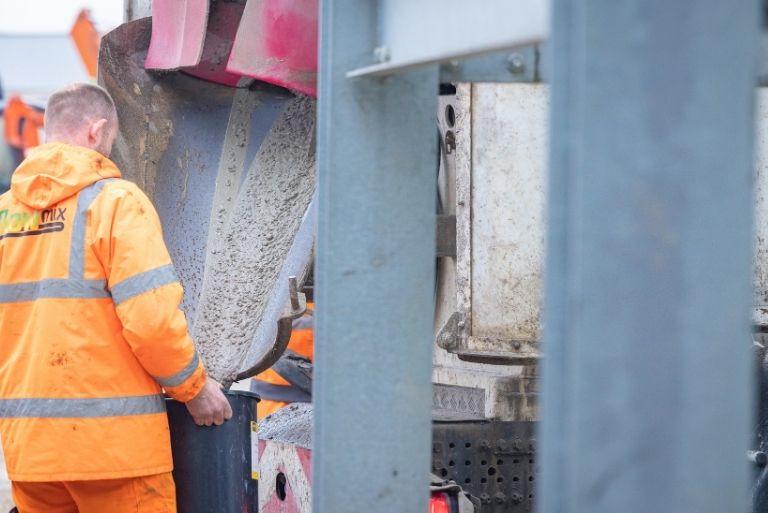
Ready mix concrete and liquid screed: Knowing the difference is essential if you’re planning a home project.

Though ready-mix concrete and liquid screed share foundational ingredients – aggregate, water, and cement – they’re distinct materials with different purposes. Their textures and applications vary significantly based on specific project needs.

Think of concrete as the heavyweight champion, built for structural strength. Screed, meanwhile, is the finishing specialist, designed to create those perfectly smooth surfaces. While they might look similar at first glance, these materials serve very different roles in construction.

Let’s cut through the confusion and explore what sets them apart.

What Is Ready Mix Concrete?

Ready mix concrete is a precise blend of cement, water, and aggregates (usually gravel and crushed stone up to 20mm) manufactured at specialised plants.

Ready mix concrete suppliers like Flowmix customises to exact specifications, with potential additives for enhanced strength or faster curing.

Key Features:

  • Designed for structural applications
  • Delivered ready-to-use in mixer trucks
  • Mixed at dedicated facilities under controlled conditions
  • Batch consistency through computer-controlled mixing
  • Available with various performance-enhancing additives

Main Uses:

  • Structural foundations
  • Driveways and pathways
  • Load-bearing walls
  • Shed bases
  • Fence posts

What Is Ready Mix Concrete Used For?

Ready-mix concrete excels in structural applications where strength is crucial. It forms the backbone of foundations, driveways, pathways, and fence posts. It’s the go-to choice for external projects that demand serious durability – think shed bases, walls, and heavy-duty paving where failure isn’t an option.

Read: Ready Mix Concrete Suppliers Gloucester: Top Tips

Ready to Order Ready-Mix or Volumetric Concrete?

If you are ready to order a ready-mix concrete delivery, speak to the team at Flowmix Tewkesbury or Walsall. We will help you select the right mix and quantities and arrange for fast delivery to your site.

Flowmix Tewkesbury: 01684 217888 Flowmix Walsall: Tel: 01922 741731

What is Liquid Screed?

Liquid screed revolutionises flow and finish. The proportions make all the difference while it shares basic ingredients with concrete – aggregates, water, and cement.

The secret to liquid screeding is using fewer and smaller aggregates (5-6mm). That creates a more fluid mix that flows easily into place. Think of it as concrete’s smoother, more refined cousin – less chunky, more liquid.

Key Features:

  • Flows easily into place
  • Self-levelling properties
  • Ideal for precision finishing
  • Superior thermal conductivity
  • Smaller, fewer aggregates than concrete

Main Uses:

  • Interior floor finishes
  • Leveling uneven surfaces
  • Underfloor heating systems
  • Areas requiring precise finish
  • Commercial flooring projects

What Is Liquid Screed Used For?

Liquid screed excels at creating flawless interior floors. Its fluid nature eliminates lumps and bumps, producing perfectly smooth surfaces – ideal for protecting existing concrete floors.

One standout application is underfloor heating. The screed flows seamlessly around heating pipes, eliminating air pockets and maximising heat transfer in ways traditional screed can’t match.

Need concrete or screed for your project? At Flowmix, we deliver custom-mixed solutions for both DIY and commercial jobs. Contact us to discuss your specific requirements.

Read: Screed and Underfloor Heating: A Complete Guide 2025

What Liquid Screeds Do Flowmix Supply?

  1. Gyvlon Liquid Screed: Gyvlon is suitable for floating, unbonded, or bonded construction and perfect for underfloor heating application
    Learn about Gyvlon Liquid Screed.
  2. Cemfloor Liquid Screed: This fast-drying and self-levelling screed is ideal for underfloor heating. It is compatible with all floor covering products and adhesives.
    Learn about Cemfloor Liquid Screed.

Flowmix also provides Traditional screed, a dry mix of sand and cement at a typical ratio of one part cement to four parts sand.

Need Expert Advice?

Speak to the team at Flowmix Tewkesbury or Walsall. We are happy to help with all your concrete requirements.

Flowmix Tewkesbury: 01684 217888 Flowmix Walsall: Tel: 01922 741731

What Are Ready Mixed Concrete And Liquid Screed Used For?

Ready mix concrete and liquid screed serve distinct construction purposes based on their properties:

Ready Mix Concrete:

  • Foundations and structural work
  • External pathways and driveways
  • Shed bases and fence posts
  • Load-bearing walls
  • Heavy-duty paving

Liquid Screed:

  • Leveling surfaces
  • Internal flooring finishes
  • Underfloor heating systems
  • Areas needing ultra-smooth finish
  • Spaces requiring precise levelling

The key difference is that concrete provides structural strength, while screed creates the perfect level surface finish.

How Flowmix Can Help With Your Project

FHow Flowmix Can Help With Your Project

Flowmix has two plants, Gloucester and Walsall. We provide the following services (with time slots):

Ready-mix concrete, mix on-site (volumetric concrete)
Traditional and liquid screed.
200′ Concrete line pump Hire to reduce manual labour and associated costs, increase efficiency, reduce wastage and clean up.
Interlocking concrete blocks for temporary or permanent barriers.
Mini-Mix loads up to 4 cubic metres.

Flowmix has the BSA-approved Ready Mix Concrete Kitemark KM683844, a certification that “confirms a product or service’s claim has been independently and repeatedly tested by experts” (source BSI).

Flowmix Tewkesbury: 01684 217888 Flowmix Walsall: Tel: 01922 741731

Flowmix Delivery Areas

Tewkesbury AreaWalsall Area
Bourton-on-the-WaterAldridge
BrockworthBarton-Under-Needwood
ChalfordBirmingham
CheltenhamBrownhills
Chipping CampdenBurntwood
CirencesterBurton Upon Trent
Droitwich SpaCannock
EveshamColeshill
GloucesterDudley
Great MalvernGreat Haywood
LedburyLichfield
NewentNorton Canes
NorthleachPenkridge
PershoreRugeley
Ross-on-WyeStafford
Stow-on-the-WoldTamworth
StroudWalsall
TewkesburyWest Bromwich
WorcesterWolverhampton


Flowmix Tewkesbury Delivery Areas

Bourton-on-the-Water
Brockworth
Chalford
Cheltenham
Chipping Campden
Cirencester
Droitwich Spa
Evesham
Gloucester
Great Malvern
Ledbury
Newent
Northleach
Pershore
Ross-on-Wye
Stow-on-the-Wold
Stroud
Tewkesbury
Worcester

FAQs

Which Is Better For Underfloor Heating – Concrete Or Liquid Screed?

Ready mixed concrete and liquid screed have different purposes. Liquid screed is ideal for underfloor heating. Its fluid nature ensures better coverage around heating pipes and superior heat conductivity.

How Long Until I Can Walk On New Concrete and liquid Screed?

Ready mix concrete typically needs 24-48 hours before light foot traffic.

Liquid screed usually allows light foot traffic after 24-36 hours, but preferably leave it to dry for at least 7 days.

Can I DIY Concrete Or Screed Installation?

While concrete can be DIY-friendly for small projects, liquid screed requires professional installation due to its specific flow properties and levelling requirements.

Which Is More Expensive? Ready Mix Concrete or Liquid Screed?

Liquid screed typically costs more per square meter than concrete, but installation is often faster and requires less labour.

Can I Use Concrete Instead Of Screed For Indoor Flooring?

While possible, concrete isn’t ideal for indoor flooring finishes. Screed provides better surface quality and is solely for this purpose.

How Thick Should Ready Mix Concrete & Liquid Screed Be?

Ready mix concrete depth varies by application but typically needs 100mm+ for structural use. Liquid screed can be as thin as 25mm for bonded applications.

What Is Ready Mix Concrete Made Of?

Ready mix concrete is a customised blend to exact specifications, combining aggregates, water, cement, and any needed additives for enhanced performance – such as extra strength or faster curing.

Ready mix uses gravel and crushed stone up to 20mm in diameter. These chunky components create the structural backbone that makes this concrete perfect for heavy-duty construction work.

What Is Liquid Screed Made Of?

Liquid screed is a fluid flooring material made from smaller aggregates (5-6mm), cement, and water. Its consistency allows it to self-level, creating ultra-smooth surfaces.

Is your concrete floor looking worse for wear? Cracks, flakes, or stubborn stains might seem minor issues, but they could be signs that your concrete floor needs replacing. Ignoring these problems can lead to safety issues, decreased property value, and even structural damage.

The reality is that concrete floors don’t last forever. Over time, heavy foot traffic, water exposure, and foundation shifts can take a toll. Cracks may indicate deeper foundation issues, while spalling (when the surface flakes or chips away) often points to moisture damage.

If your concrete floor needs replacing, addressing it sooner rather than later can restore safety, enhance functionality, and even boost the value of your space. At Flowmix, we have decades of combined expertise in concrete solutions, ensuring a seamless and stress-free replacement process.

If you’re unsure if it’s time to replace your concrete floor, read on to learn the three key warning signs and how we can help.

#1: Spalling: When Moisture Wreaks Havoc on Your Concrete Floor

One of the biggest red flags that your concrete floor needs replacing is spalling—also known as scaling. It happens when moisture seeps into the concrete, causing the surface to flake, peel, or crumble. At first, it might seem like a minor cosmetic issue, but spalling can seriously weaken your floor’s structural integrity over time. If left unaddressed, spalling can lead to bigger (and costlier) problems and make your space unsafe.

What Causes Spalling?

If your concrete floor needs replacing, spalling could be one of the main culprits. Still, what exactly causes it? Here are the typical factors behind this common issue:

  • Freeze-Thaw Cycles: In colder weather, moisture seeps into the concrete, then freezes and expands, breaking down the surface over time.
  • Corroding Reinforcements: If steel reinforcements inside the concrete get exposed to moisture, they can rust. That puts stress on the surrounding material and causes cracking and flaking.

Signs to Watch For

Not sure if spalling is affecting your floor? Here’s what to look out for:

  • Flaky or uneven surfaces that feel rough to the touch.
  • Visible rust or corrosion on exposed reinforcements.
  • Small surface cracks that worsen over time as moisture seeps in.

Repair or Replace?

In some cases, it’s possible to repair minor spalling with resurfacing. However, if the damage is severe, your concrete floor needs replacing to restore strength and safety. Ensure your floors are properly sealed and have good drainage to prevent future spalling.

Read: 5 DIY Concrete Pouring Dangers: When to Call A Professional

Need Expert Advice?

Speak to the team at Flowmix Tewkesbury or Walsall. We are happy to help with all your concrete requirements.

Flowmix Tewkesbury: 01684 217888 Flowmix Walsall: Tel: 01922 741731

#2: Cracking: A Sign Your Concrete Floor Needs Replacing

Cracks in your concrete floor aren’t just an eyesore. They can be a warning sign of deeper structural issues. While minor hairline cracks might not seem like a big deal, larger or widening cracks can compromise the floor’s durability and load-bearing capacity.

Not all cracks are the same, and understanding their severity is key to determining whether a simple repair will do or if your concrete floor needs replacing. Ignoring serious cracks could lead to bigger problems, so it’s essential to assess the damage early.

Types of Cracking

Not all cracks are created equal! Some might just be cosmetic, while others signal that your concrete floor needs replacing. The following are the most common types:

  • Pressure Cracks: These cracks appear when the floor has more weight loading than it can handle, such as heavy machinery, vehicles, or industrial equipment.
  • Heaving Cracks: These cracks occur from movement beneath the concrete. They result from tree roots, soil expansion, or foundation settling. They tend to widen over time, creating uneven surfaces and trip hazards.

When to Worry About Cracking

If you spot any of the following signs, your concrete floor needs replacing sooner rather than later.

  • Wide, deep cracks spreading across the surface and getting worse with use.
  • Cracks combined with water seepage or spalling (flaking concrete).
  • Uneven slabs or gaps form between sections, making the floor unsafe.

Repair or Replace?

Hairline cracks aren’t a problem because you can usually fill and repair them. But if the cracks are large, deep, or affecting the strength of your floor, a complete replacement is the best solution. Delaying action can make the damage worse, leading to even higher repair costs down the road.

Read: How to Lay a Concrete Driveway: A 12-Step Beginners Guide

#3: Discolouration: Why It’s More Than Just a Cosmetic Issue

It’s easy to overlook discolouration on concrete floors, but it can be a warning sign that your concrete floor needs replacing. While stains and fading might seem like minor aesthetic issues, they often point to deeper problems that affect durability and structural integrity.

Water exposure, chemical spills, and even algae growth can cause discolouration, slowly weakening the surface. If ignored, these issues can lead to cracks, spalling, and further deterioration, turning what seemed like a cosmetic concern into a major repair headache.

What Causes Discolouration?

Discolouration could be an early warning sign that your concrete floor needs replacing. Here’s what might be behind those unsightly stains:

  • Moisture Damage: Damp conditions promote algae and fungi growth, which can eat away at the concrete’s surface over time.
  • Chemical Stains: Oils, salts, and industrial chemicals seep into the concrete, leaving permanent stains and weakening its structure.
  • UV Exposure: Outdoor, poorly sealed concrete can fade unevenly in prolonged sunlight, creating patchy, worn-out areas.

Read: Concrete Weather Conditions: Flowmix Gloucester Top Tips

Why It Matters

At first, discolouration might not seem like a big deal. However, in many cases, it signals deeper problems like moisture infiltration or chemical corrosion. These issues, if left unchecked, can compromise the strength of your floor. Over time, this damage can escalate, leading to cracks, spalling, and even costly structural repairs.

If your concrete floor needs replacing, it is best to address discolouration before it becomes problematic.

When to Act

Wondering whether your concrete floor needs replacing or just a quick fix? Here’s how to decide:

  • Repair: If the discolouration is limited to surface stains or fading, polishing or sealing can help restore its appearance and protect the concrete.
  • Replace: If discolouration comes with cracks, algae growth, or spalling, a complete replacement may be necessary to prevent further deterioration.

Ready to Order Ready-Mix or Volumetric Concrete?

If you are ready to order a ready-mix concrete delivery, speak to the team at Flowmix Tewkesbury or Walsall. We will help you select the right mix and quantities and arrange for fast delivery to your site.

Flowmix Tewkesbury: 01684 217888 Flowmix Walsall: Tel: 01922 741731

When to Repair vs. Replace Your Concrete Floor

Not all concrete damage calls for a complete overhaul. Here’s what to consider before making a decision:

  • The Extent of Damage: Surface-level stains and minor cracks are often repairable, but widespread structural damage means your concrete floor needs replacing.
  • Usage Requirements: High-traffic (or industrial areas) need more substantial, durable solutions to withstand long-term wear and tear.
  • Cost vs. Longevity: Repairs may be a quick and budget-friendly fix, but replacing your floor ensures a long-term, durable solution.

If you’re unsure whether to repair or replace, consulting with our expert Flowmix team can help you make the best choice for your space.

Read: Ordering Ready Mix Concrete: A Homeowners Guide

Upgrade Your Concrete Floors with Confidence!

Your property deserves a strong, durable foundation, and when your concrete floor needs replacing, acting fast can save you time, money, and stress. Whether dealing with spalling, cracking, or discolouration, addressing the issue early prevents further damage and costly repairs.

At Flowmix, we provide high-quality, ready-mix concrete solutions tailored to your needs. You can confidently upgrade your floors with our reliable service and expertise. Take advantage of our no-risk consultation and see how we can help.

How Flowmix Can Help With Your Project

Flowmix has two plants, Gloucester and Walsall. We provide the following services (with time slots):

Flowmix has the BSA-approved Ready Mix Concrete Kitemark KM683844, a certification that “confirms a product or service’s claim has been independently and repeatedly tested by experts” (source BSI).

Flowmix Tewkesbury: 01684 217888 Flowmix Walsall: Tel: 01922 741731

FAQs

What Are The Most Common Signs My Concrete Floor Needs Replacing?

Cracks, uneven surfaces and crumbling edges are clear warning signs your concrete floor may need replacing. You might also notice sinking or pooling water, which indicates structural issues beneath the surface. Over time, these problems can worsen and affect the safety and appearance of your property.

Can Cracked Concrete Be Repaired Instead Of Replaced?

Minor cracks can often be repaired, but if the damage runs deep or the slab has shifted, a full replacement is usually more effective. A professional assessment will determine whether patching is enough or if the integrity of the floor has been compromised.

What Causes Concrete Floors To Deteriorate Over Time?

Several factors can weaken a concrete floor, including poor drainage, sub-base movement, freeze-thaw cycles and heavy loads. Age also plays a major role, as older concrete gradually loses its strength and stability without proper maintenance.

How Long Does It Take To Replace A Concrete Floor?

The timeframe depends on the size and complexity of the area. Most residential projects can be completed within a few days, including removal, preparation and curing time. Professional concrete teams ensure minimal disruption and a high-quality finish that lasts.

Can A New Concrete Floor Add Value To My Property?

Absolutely. A newly laid concrete floor improves safety, appearance and functionality. It also enhances the overall value of your property, particularly in garages, workshops and commercial spaces where durability is key.

A smooth concrete delivery will make your project plain sailing and help prevent mistakes, adding time and additional expense to your project.

Concrete literally underpins our world, but unless you’re lucky enough to have a production plant in your backyard, getting this essential material requires careful planning.

Most construction professionals partner with dedicated suppliers like Flowmix for concrete delivery straight to the site. You have two main options: handle moving the concrete yourself or hire a concrete line pump to place it precisely where needed.

The concrete delivery method you choose shapes how you’ll prep the site. But here’s the thing – thorough preparation can transform what might be a logistical nightmare into a seamless operation. Little details matter enormously. A well-prepared site speeds up the whole process and can save you headaches (and money) down the line.

At Flowmix, we’ve handled countless concrete deliveries and seen every situation imaginable. Sometimes, it’s a straightforward pour. Other times, we’re pumping concrete up to a tenth-floor renovation.

Drawing from our deep well of experience, we’ve compiled a comprehensive site preparation guide to the essential steps to ensure everything goes smoothly when that concrete starts flowing.

Ready to Order Ready-Mix or Volumetric Concrete?

If you are ready to order a ready-mix concrete delivery, speak to the team at Flowmix Tewkesbury or Walsall. We will help you select the right mix and quantities and arrange for fast delivery to your site.

Flowmix Tewkesbury: 01684 217888 Flowmix Walsall: Tel: 01922 741731

Tip #1: Check There’s Enough Space

Here’s the thing about concrete delivery equipment – it takes up space, and you need to plan accordingly. For example, you can’t squeeze a concrete mixer truck through any old entrance or under low-hanging obstacles.

When it comes to pumps, you’ve got choices, each with unique spatial demands. Some projects use boom pumps, but the more popular option is a concrete line pump. It’s designed for pumping concrete through a robust hose over distance, where you can’t get a mixer truck near the fill site.

You can hire a 200-metre concrete line pump from Flowmix.

Space planning doesn’t stop at getting the equipment in place. Think about the entire operation. You will need room for the trucks to manoeuvre and keep in line with health and safety standards.

And here’s something people often overlook: you need a dedicated washout area with proper drainage. After every pour, equipment needs cleaning, and you don’t want concrete waste causing problems on your site.

The success of your concrete delivery hinges on these seemingly mundane details. Professional contractors know that measuring clearances and planning access routes isn’t just busywork. It’s the difference between a smooth concrete delivery and an expensive headache.

Tip #2: Clear the Pouring Site

Once you have checked the space for the concrete delivery, the next step is to clear the site. Remove vehicles, materials, debris – anything that could interfere with the pour. Remember to look up, too. Are there any overhead wires, tree branches, and building overhangs that could be problematic for the concrete delivery truck?

If you discover an immovable obstacle on-site, talk to the Flowmix team. We pride ourselves on our problem-solving skills. We’ve seen it all and can usually adapt. The key is early communication, so the sooner we know about potential issues, the better.

Remember: a clean, obstacle-free site isn’t just about convenience but safety and efficiency. Every minute spent manoeuvring around unnecessary obstacles costs time and money.

Need Expert Advice?

Speak to the team at Flowmix Tewkesbury or Walsall. We are happy to help with all your concrete requirements.

Flowmix Tewkesbury: 01684 217888 Flowmix Walsall: Tel: 01922 741731

Tip #3: Prepare the Ground for the Concrete Delivery

Site preparation is critical for concrete success. Level and compact the ground thoroughly – this prevents future cracking. Clear away ALL organic matter: grass, roots, sticks, and rocks must go. Even small debris can compromise structural integrity.

Weather matters immensely. Check forecasts several days ahead. Rain demands tarps or covers to protect fresh pours. On hot days, lightly dampen the ground first. That stops it from absorbing moisture from the concrete mix, which could lead to uneven curing and potential weakening.

Read: Concrete Weather Conditions: Flowmix Gloucester Top Tips

Tip #4: Gather Necessary Equipment

The last step is to gather your tools and equipment. For direct pours, you’ll need essential tools such as:

  • Wheelbarrows and buckets for transport
  • Rakes for even spreading
  • Edgers for clean borders 
  • A Lute for surface smoothing
  • Tarps if it’s cold
  • Windbreaks if it’s windy
  • Water if it’s hot to keep the concrete from drying too quickly

Hiring a concrete line pump from Flowmix can eliminate the back-breaking and time-consuming work of hauling concrete by wheelbarrows and buckets. Using a concrete pump can significantly reduce the need for additional labour.

Read: Concrete Line Pump: 7 Unexpected Benefits for Your Project

Remember safety gear, too:

  • Heavy-duty gloves
  • Eye protection
  • Hi-vis jackets

If you’re unsure of all the equipment you need to prepare for the concrete delivery, contact the Flowmix team for advice.

How Flowmix Can Help With Your Project

Flowmix has two plants, Gloucester and Walsall. We provide the following services (with time slots):

Flowmix has the BSA-approved Ready Mix Concrete Kitemark KM683844, a certification that “confirms a product or service’s claim has been independently and repeatedly tested by experts” (source BSI).

Flowmix Tewkesbury: 01684 217888 Flowmix Walsall: Tel: 01922 741731

FAQs

How Long Does Concrete Delivery Take?

At Flowmix, we offer convenient 2-hour delivery slots to keep your project on schedule. This reduces downtime and helps avoid unnecessary waiting around on site.

Can I Order The Exact Amount Of Concrete I Need?

Yes, with our mix on-site (volumetric) service you only pay for what you use. This saves both time and money by cutting waste and ensuring you always have the right amount.

What If I’m Not Sure What Type Of Concrete I Need?

Our experienced team can advise you on the best concrete for your project, whether it’s ready mix, liquid screed, or pump-delivered concrete, so you can plan more efficiently.

Do You Offer Concrete Pump Hire With Delivery?

Yes, Flowmix provides concrete line pump hire to make placing concrete faster and easier, especially in hard-to-reach areas. This service can save hours of manual labour.

Can Weather Affect My Concrete Delivery?

While extreme weather can influence pouring and curing, our team works with you to plan delivery times and methods to minimise disruption and keep your project moving smoothly.

Why Choose Flowmix For Concrete Delivery?

We’ve built an excellent reputation over more than a decade, offering competitive prices, reliable service, and flexible delivery options across Gloucestershire and the West Midlands.

Flowmix Tewkesbury: 01684 217888 Flowmix Walsall: Tel: 01922 741731

Ready mix concrete myths and misconceptions abound. We’ve heard them all and want to throw back the curtain on the facts about ready mix concrete.

Whether you’re a DIY enthusiast or working on a professional project, getting caught up in misinformation that can derail your progress is easy. Understanding the facts and avoiding common myths is key to ensuring a smooth-running project and that your concrete project turns out precisely as you need it.

These misconceptions can lead to avoidable mistakes, from curing techniques to durability concerns.

Laying and finishing concrete is a skill that requires precision and a clear understanding of best practices, so let’s set the record straight on some of the most common myths we hear about ready-mix concrete.

Key Takeaways: 4 Ready Mix Concrete Myths Debunked

  1. Concrete is not Impermeable: Concrete can be porous, allowing water to pass through it. Surface treatments and sealants can enhance impermeability and make concrete more resistant to water penetration.
  2. Weather Matters When Pouring Concrete: Rain and extreme heat can weaken the mix or cause cracking. It’s best to pour in mild, dry conditions, but if that’s not possible, there are ways to manage these challenges.
  3. Concrete Doesn’t Always Stay Flat and Level: Concrete changes in volume as it sets, which can cause slab edges to curl. Managing temperature and moisture during curing is crucial.
  4. Reinforced Concrete Can Still Crack: Steel reinforcement helps maintain structural integrity but doesn’t prevent cracks from forming. Minor cracks are usually cosmetic and don’t impact the concrete’s performance.

Keep reading as our we discover the truth behind the myths and share tips for achieving a flawless concrete finish every time.

Myth #1: Concrete Is Impermeable

The first of the ready mix concrete myths is the top untruths we encounter at Flowmix.

Contrary to popular belief, concrete isn’t completely impermeable. Liquid water and water vapour can pass through it, even when it appears solid and dense. While using well-graded aggregate can help reduce permeability, even the most tightly packed concrete can still be porous to some degree.

The good news is that surface treatments and sealants can make a significant difference. These products create a barrier, helping to make your concrete flooring far more resistant to water penetration.

If you want to enhance your concrete’s impermeability, talk to the Flowmix team. We are here to guide you with tailored advice and solutions to meet your needs.

Read: Permeable Concrete: 4 Benefits & Popular Applications

Myth #2: You Can Lay Concrete In Any Weather

Number two in the ready mix concrete myths concerns the weather.

Weather conditions play a critical role in the success of a concrete pour, and the idea that it’s OK to pour concrete in any weather couldn’t be further from the truth. The water-to-cement ratio is a delicate balance; external factors like rain can upset this balance by adding excess water to the mix. It can weaken the concrete, compromising its durability and strength.

On the flip side, extreme heat isn’t ideal either. High temperatures are problematic because the concrete can cure too quickly, leading to cracks and a less stable finish.

Aim to pour in mild, dry weather if you want your concrete to stand the test of time. And if conditions are less than ideal, there are ways to mitigate the risks. Contact the Flowmix team, your local experts in everything concrete.

We can help you navigate weather-related challenges for a flawless pour.

Read: Concrete Weather Conditions: Flowmix Gloucester Top Tips

Need Expert Advice?

Speak to the team at Flowmix Tewkesbury or Walsall. We are happy to help with all your concrete requirements.

Flowmix Tewkesbury: 01684 217888 Flowmix Walsall: Tel: 01922 741731

Myth #3: Concrete Will Stay Flat And Level Once It’s Finished

One of the ready mix concrete myths is that concrete will remain perfectly flat and level after it’s poured and finished, but that’s not always the case. As concrete sets, hardens and dries, it can change in volume. This natural process can cause slab edges to curl, especially if there’s a significant moisture content or temperature difference between the top and bottom of the slab.

Managing temperature differentials and ensuring consistent moisture levels during curing is crucial to minimise curling. If your budget permits, hiring a professional finisher can significantly improve results—they have the expertise to address these challenges and know how to ensure a smooth, stable result.

Remember, concrete might seem simple, but achieving a flawless finish requires a skilled touch.

Read: Concrete Slump Test: What is it & Why Does It Matter?

Myth #4: Reinforced Concrete Won’t Crack

Finally, the last in the ready mix concrete myths is that concrete won’t crack if reinforced.

Reinforcement, like steel, strengthens concrete by absorbing tensile stress, but it doesn’t make concrete immune to cracking. The reality is that even reinforced concrete can develop cracks over time. While the steel reinforcement helps maintain structural integrity by distributing stress, it doesn’t stop cracks from forming altogether.

Most minor cracks, like hairline ones, are typically cosmetic and don’t pose any structural risk. While they may affect the appearance of your concrete, they don’t usually impact its performance or strength. It’s a normal part of the curing process; even the best-finished concrete can develop them over time.

If you’re concerned, it may be possible to seal the cracks to prevent water infiltration or further aesthetic damage.

These tiny imperfections are nearly impossible to avoid, even for the most seasoned professionals. The key is understanding that reinforcement adds durability and resilience, but it doesn’t eliminate the natural tendencies of concrete as it cures and ages.

Read: Top 9 Factors Affecting Concrete Strength

Ready to Order Ready-Mix or Volumetric Concrete?

If you are ready to order a ready-mix concrete delivery, speak to the team at Flowmix Tewkesbury or Walsall. We will help you select the right mix and quantities and arrange for fast delivery to your site.

Flowmix Tewkesbury: 01684 217888 Flowmix Walsall: Tel: 01922 741731

Conclusion

These 4 ready mix concrete myths show how many misconceptions exist about ready-mix concrete. Still, understanding the facts is key to achieving a successful pour. From the belief that concrete is impermeable to the idea that reinforced concrete won’t crack, it’s clear that concrete is more complex than it may seem.

For long-lasting success, you’ll set up your concrete project by debunking these 4 ready mix concrete myths and taking the proper steps—such as paying attention to weather conditions, applying surface treatments, and carefully managing the curing process.

With the correct concrete knowledge and preparation, you can avoid common pitfalls and ensure your concrete remains durable and strong for years.

Trust the professionals and stay informed to get the best results for your concrete work.

How Flowmix Can Help With Your Project

Flowmix has two plants, Gloucester and Walsall. We provide the following services (with time slots):

Flowmix has the BSA-approved Ready Mix Concrete Kitemark KM683844, a certification that “confirms a product or service’s claim has been independently and repeatedly tested by experts” (source BSI).

Flowmix Tewkesbury: 01684 217888 Flowmix Walsall: Tel: 01922 741731

FAQs

What Is Ready Mix Concrete?

Ready mix concrete is a pre-mixed blend of cement, aggregates, and water, manufactured in a batching plant and delivered directly to your site in Tewkesbury, Gloucestershire, or Aldridge. It ensures consistent quality, saves time, and provides a professional finish compared to mixing concrete manually on site.

Is Ready Mix Concrete More Expensive Than Site-Mixed Concrete?

Not necessarily. While the initial cost may appear higher, ready mix concrete often works out cheaper overall. It reduces waste, labour time, and material storage costs. Flowmix provides precise batching and consistent quality, preventing costly rework and ensuring excellent value for your project.

Can I Use Ready Mix Concrete for Small DIY Projects?

Absolutely. Ready mix concrete isn’t just for large-scale construction. Flowmix offers smaller loads suitable for home improvements such as driveways, patios, shed bases, and garden paths across Gloucestershire and the West Midlands. You’ll receive the same high-quality mix used on commercial sites, delivered right to your property.

Does Ready Mix Concrete Set Too Quickly to Work With?

No, ready mix concrete can be customised to suit your project. Flowmix can adjust the setting time by adding admixtures, giving you enough flexibility to work comfortably before the concrete hardens. This ensures smooth, stress-free placement whether you’re in Tewkesbury or Aldridge.

Is Ready Mix Concrete Weaker Than Site-Mixed Concrete?

Not at all. Ready mix concrete from Flowmix is carefully batched using accurate ratios, producing a mix that’s strong, durable, and fully compliant with British Standards. Every batch is tested for consistency and reliability, ensuring long-lasting results for both domestic and commercial projects.

Can Ready Mix Concrete Be Delivered to Hard-to-Reach Areas?

Yes. Flowmix offers concrete line pump hire services to deliver ready mix concrete into hard-to-access spaces, such as rear gardens, over walls, or through narrow entryways. Whether you’re based in Gloucestershire or the West Midlands, our team ensures efficient, mess-free delivery.

What Are the Environmental Benefits of Ready Mix Concrete?

Ready mix concrete is produced in controlled conditions, which means less waste, lower emissions, and more efficient material use. Flowmix is committed to sustainable concrete production across Tewkesbury and Aldridge, helping to minimise the environmental impact of every project.

Concrete footings are crucial for the success of your project. A building is only as strong as what lies beneath it. Concrete footings, therefore, are the critical foundation that keeps everything stable, but getting them right requires careful planning and execution.

Without proper footings, buildings can crack, sink, or fail in the worst cases. It’s not just about pouring concrete into a hole; it’s about creating a foundation that will support tons of weight for decades.

The concrete footings process demands precision. From choosing the right concrete mix to preparing the site correctly, each step plays a vital role in creating the best foundation. Poor installation isn’t just an inconvenience – it’s a serious structural risk that can compromise an entire building.

Flowmix is a specialist in all things concrete and has many years of experience serving clients in Gloucestershire and West Midlands. This guide covers the critical steps for installing proper concrete footings.

We’ll walk through selecting materials, preparing your site, and ensuring your foundation gives your structure the support it needs.

Whether you’re building a simple deck or a complex structure, understanding these basics helps ensure your project starts on solid ground.

What are Concrete Footings?

Concrete footings form the crucial base of every structure. Like massive feet, they spread the building’s weight across the ground, preventing sinking and instability.

The concrete must withstand at least 3,500 pounds per square inch of pressure (psi). Whether supporting a single column, multiple columns, or entire walls, these foundations need to handle immense weight without failing.

Something to consider is that although concrete excels at handling downward pressure (compression), it’s weaker when pulled apart (tension). That’s why builders reinforce footings with steel rebar (reinforcing bars) running horizontally and vertically. This combination creates a foundation that can handle whatever forces the building throws at it.

Read: 5 DIY Concrete Pouring Dangers: When to Call A Professional

Need Expert Advice?

Speak to the team at Flowmix Tewkesbury or Walsall. We are happy to help with all your concrete requirements.

Flowmix Tewkesbury: 01684 217888 Flowmix Walsall: Tel: 01922 741731

What is the Best Concrete Mix to Use for Footings?

Getting your concrete mix right can make or break your footing’s strength. It’s all about balance – specifically, the careful combination of cement, sand, and stone that creates the perfect foundation.

The secret is in the stone because aggregate is the real muscle behind concrete strength. The stones and sand particles make up most of the mix and determine how much weight it can handle. More stone generally means stronger concrete, but there’s a catch.

If you use too large or coarse stones, you will end up with “honeycombing“, when gaps form where the aggregate clusters around the rebar. Those empty spaces weaken the entire structure. To prevent this issue, add finer aggregates and mix thoroughly.

Don’t worry about getting it wrong. Flowmix is happy to advise on the best mix for your concrete footings.

For solid footings, the following is the typical ratio:

  • 1 part cement
  • 2 parts sand
  • 4 parts stone (measured by volume)

This mix strikes the sweet spot between strength and workability. It’s tough enough to support massive weight while still being practical to pour and finish.

Getting the proportions precisely right matters as much as using quality ingredients. This ratio has proven itself time and again in creating foundations that last.

Ready-Mix: The Smart Choice for Concrete Footings

Skip the mixing headache, save time and labour and go straight to pouring. Ready-mix concrete delivers the perfect blend without the backbreaking work of measuring and mixing by hand.

Read: Concrete Slump Test: What is it & Why Does It Matter?

Ready to Order Ready-Mix or Volumetric Concrete?

If you are ready to order a ready-mix concrete delivery, speak to the team at Flowmix Tewkesbury or Walsall. We will help you select the right mix and quantities and arrange for fast delivery to your site.

Flowmix Tewkesbury: 01684 217888 Flowmix Walsall: Tel: 01922 741731

Why Ready-Mix Concrete Makes Sense

Think of ready-mix concrete like a custom-tailored suit – made precisely to your specifications. There is no excess material sitting around, no workers tied up mixing cement, there is less mess and clean up, and there is no need to store piles of raw materials on your job site.

Professional concrete mixing plants like Flowmix use precision equipment to create consistent batches every time. We test our mixes regularly and can adjust the formula based on weather conditions and your specific needs.

The cost savings add up. DIY mixing might seem cheaper at first glance, but ready-mix often saves money in the long run:

  • No labour costs for mixing
  • No storage space needed
  • Consistent quality every time
  • Zero waste from improper ratios

For foundation work where strength and reliability matter most, ready-mix concrete gives you professional results without the hassle of manual mixing.

Read: 4 Top Tips For Preparing For A Concrete Floor

How Do You Lay Concrete Footings?

Here’s a quick and simple guide to laying concrete footings.

Building Your Foundation: A Step-by-Step Guide

Four key steps stand between you and solid concrete footings. While this overview helps explain the process, remember that foundation work requires experienced professionals to get it right.

Step 1: Site Preparation

Success starts with understanding your soil. Test its load-bearing capacity – this determines your footing’s size and depth. Clear all vegetation and debris, then mark your foundation corners precisely.

Soft soil needs extra attention to prevent future sinking.

Step 2: Trench Work

Dig wide and deep. Your trench should extend at least 2 feet beyond the foundation’s edges, giving workers room to manoeuvre. Aim for a 2-foot width and 2-3 foot depth minimum.

Remove all loose dirt and roots afterwards.

Step 3: Rebar Installation

Think of rebar as your concrete’s skeleton. Space grade pins are 2 feet apart, keeping them 1 foot from corners. Position rebar equally distant from sides and base to ensure uniform strength distribution throughout your footing.

Step 4: The Pour

Whether using ready-mix or site-mixed concrete, timing is crucial. Pour within 30 minutes of mixing to ensure proper setting. Flowmix offers timed delivery spots so you can be sure of the perfect timing for the pour.

Consider using a concrete pump for easier placement, especially in tight spots. Finish by applying an acrylic-based sealer to protect against moisture damage.

Professional Insight: Laying footings requires significant expertise. It’s a job best left to experienced professionals who know how to carry out the process correctly.

Each site presents unique challenges. While these four steps outline the basics, successful footing installation demands experience, proper equipment, and a deep understanding of concrete behaviour.

How Flowmix Can Help With Your Project

Flowmix has two plants, Gloucester and Walsall. We provide ready-mix concrete, mix on-site (volumetric) and liquid screed.

In addition, you can hire a 200′ concrete line pump to reduce manual labour and associated costs, increase efficiency, reduce wastage and clean up. Moreover, we also provide interlocking concrete blocks for temporary or permanent barriers.

Flowmix has the BSA-approved Ready Mix Concrete Kitemark KM683844, a certification that “confirms a product or service’s claim has been independently and repeatedly tested by experts” (source BSI).

Flowmix Tewkesbury: 01684 217888 Flowmix Walsall: Tel: 01922 741731

FAQs

 What Is The Best Sized Aggregate To Use for Footings?

The aggregate should be around ½” – 1” in size. This mix will yield a 3,500 psi after 28 days of curing.

How Deep Should Concrete Footings Be?

Typically 2-3 feet deep for most residential structures. However, depth varies based on your area’s soil type, local building codes, and frost line. Always check local requirements – they trump general guidelines.

What Strength Concrete Do I Need For Footings?

The minimum is 3,500 PSI (pounds per square inch), which provides the necessary compression strength to support your structure. Use a 1:2:4 mix ratio (cement: sand: stone) if mixing yourself, or order ready-mix specifying 3,500 PSI.

Why Do Footings Need Rebar?

Rebar prevents cracking and provides tensile strength that concrete lacks on its own. While concrete excels at handling downward pressure, it needs steel reinforcement to resist spreading forces and soil movement.

Rebar is like a skeleton that holds everything together.

Ready mix concrete has become one of the most popular materials used in construction. It shapes our modern world in ways we rarely stop to consider.

It’s incredible to believe that concrete is second only to water as Earth’s most widely used substance. This remarkable material surrounds us everywhere – from the shelter above our heads to the smooth roads beneath our wheels.

The versatility of concrete knows few bounds, giving rise to soaring towers and elegant bridges while quietly serving in more humble roles like shed and garage floors. Homeowners and commercial builders have embraced ready mixed concrete for its remarkable convenience and adaptability across countless applications.

This post explores the most popular uses for ready mixed concrete, with examples of commercial and domestic uses for ready mix concrete.

7 Domestic Uses for Ready Mix Concrete We Take for Granted

The last decade has seen concrete take on an unexpected new life, with polished surfaces becoming a sought-after aesthetic choice in contemporary interior design. The following are seven most common applications for ready mix concrete.

What Would Our Roads Be Like Without Concrete?

The story of concrete roads stretches back to 1893, marking the beginning of a transportation revolution that continues to shape our world. While asphalt claims its share of our highways and byways, ready mix concrete is the more resilient choice.

Concrete’s remarkable durability has proven itself repeatedly, with roadways often standing firm for decades. This exceptional toughness, combined with its natural resistance to cracking, makes concrete the unsung hero of our transportation infrastructure.

The Foundations Beneath Our Feet

Ready mix concrete is the sought-after material for commercial and domestic foundations. Perhaps you’re planning a conservatory or extension or want to lay the foundations for a shed, garden room, or an annexe for an elderly parent. Once ready mix concrete cures, it is an excellent base, providing long-term stability with its unrivalled capacity for load bearing.

Need Expert Advice?

Speak to the team at Flowmix Tewkesbury or Walsall. We are happy to help with all your concrete requirements.

Flowmix Tewkesbury: 01684 217888 Flowmix Walsall: Tel: 01922 741731

Driveways the Envy of Your Neighbours

When creating the perfect driveway, ready mixed concrete stands in a class of its own. This durable material creates an impeccable foundation for daily life, offering a rock-solid surface that welcomes family 4x4s and heavy SUVs with equal grace.

Unlike many alternatives that buckle under years of constant use, ready mix concrete driveways remain steadfast through decades of faithful service.

Though many appreciate its classic grey elegance, concrete holds a surprising secret. It can transform into a canvas of colour through carefully chosen additives, allowing homeowners to express their personal style while maintaining all the practical benefits that make concrete legendary in the first place.

Patios for Perfect Summer BBQs

A well-crafted concrete patio can transform an ordinary backyard into an elegant outdoor living space. Ready mixed concrete opens up a world of creative possibilities, starting with a simple pour that evolves into something truly special.

Beyond its classic grey finish, this versatile material welcomes countless artistic touches. Some homeowners opt for a mirror-like polished surface, while others discover the joy of creating intricate patterns by pressing designs into the not-quite-set concrete.

Each patio uniquely reflects its owner’s vision whilst providing the steadfast durability that makes concrete a trusted material for outdoor living.

The Walls Around Your Home

Ready mixed concrete brings legendary strength and versatility to wall construction, with each batch precision-engineered for the task at hand. A Flowmix delivery straight to the construction site transforms what could be a logistical headache into a seamless operation.

The true magic lies in fine-tuning every aspect of the concrete mix. From adjusting the consistency to perfecting the slump value, Flowmix can craft each batch to match exact specifications.

This level of control extends to the concrete’s density, allowing builders to strike the perfect balance between structural integrity, longevity, and insulation properties.

Such precision ensures that every wall stands as a testament to modern engineering, combining raw strength with sophisticated performance characteristics that will serve for generations.

Ready to Order Ready-Mix or Volumetric Concrete?

If you are ready to order a ready-mix concrete delivery, speak to the team at Flowmix Tewkesbury or Walsall. We will help you select the right mix and quantities and arrange for fast delivery to your site.

Flowmix Tewkesbury: 01684 217888 Flowmix Walsall: Tel: 01922 741731

Floors We Take for Granted

In the industrial world, ready mixed concrete floors have reigned supreme for centuries. Its durability makes concrete the backbone of warehouses and factories across the globe.

A concrete surface shrugs off the daily assault of heavy machinery and constant foot traffic, creating worry-free environments where workers can focus on tasks rather than watching where they walk.

Concrete has quietly staged a revolution in residential spaces, shedding its industrial reputation to emerge as an unexpected star of modern home design. Its chameleon-like versatility allows homeowners to unleash their creativity, from subtle stains enhancing concrete’s natural beauty to bold decorative treatments that transform entire rooms.

Fencing Posts Keeping Our Gardens Secure

While DIY enthusiasts can certainly tackle fence installation with basic tools and determination, it’s the addition of concrete that elevates an ordinary barrier into an immovable guardian of property lines. Concrete secured posts help a fence stand firm against wind, weather, and time.

Popular Commercial Uses For Ready Mixed Concrete

Ready-mixed concrete is a staple in commercial construction projects, prized for its convenience and adaptability. Its ability to slither through tight spaces makes concrete ideal for hard-to-reach areas like bridge supports or piled foundations, where human access is nearly impossible.

Here are some common ways commercial construction uses this versatile material.

High-Rise Buildings

Ready-mixed concrete plays a crucial role in constructing towering skyscrapers and high-rise buildings. Its strength and reliability make it the go-to material for reinforced foundations and the multiple floors that stack above. Without the combination of concrete and steel, the striking skylines we admire in modern cities simply wouldn’t exist.

Bridges

When you think of concrete, “beautiful” might not be the first word that comes to mind. Yet, some of the world’s most stunning bridges owe their existence to this remarkable material. Its unmatched strength and dependability—essential qualities for any bridge—make concrete a cornerstone in the construction of various types, from graceful arch bridges to sleek cable-stayed designs.

Footpaths

Ready mixed concrete creates footpaths that stand the test of time and nature. Where other materials might falter, concrete paths offer years of trouble-free service without developing the usual suspects of wear – those annoying cracks, breaks, and potholes that plague lesser materials.

Concrete’s durability proves especially valuable for paths winding through remote areas, from wild coastal trails to secluded countryside walks. In these hard-to-reach spots, where regular maintenance would pose significant challenges, concrete paths quietly serve their purpose year after year, requiring little more than the occasional check-up.

Industrial Flooring

Ready-mixed concrete is a top choice for industrial flooring in factories and warehouses. Its durability allows concrete to withstand heavy foot traffic, the weight of machinery and shelving, and the wear and tear from abrasions, chemicals, and more.

Car Parks

Multistorey car parks rely heavily on concrete, valued for its exceptional load-bearing capacity and durability against constant heavy vehicle traffic.

Infrastructure

It’s hard to imagine a major infrastructure project that doesn’t rely on ready-mixed concrete. From dams and water treatment plants to sewage systems and beyond, concrete forms the backbone of countless structures that keep society running smoothly.

How Flowmix Can Help With Your Project

Flowmix has two plants, Gloucester and Walsall. We provide the following services (with time slots):

Flowmix has the BSA-approved Ready Mix Concrete Kitemark KM683844, a certification that “confirms a product or service’s claim has been independently and repeatedly tested by experts” (source BSI).

Flowmix Tewkesbury: 01684 217888 Flowmix Walsall: Tel: 01922 741731

FAQs

What Is Ready Mix Concrete Used For In Domestic Projects?

Ready mix concrete is ideal for driveways, patios, shed bases, garden paths, and home extensions. It provides a durable, long-lasting finish that can handle everyday use.

How Is Ready Mix Concrete Used In Commercial Projects?

Commercial uses include foundations, floors, car parks, retaining walls, and large-scale construction. Its consistent quality and quick delivery make it a reliable choice for businesses.

Why Choose Ready Mix Concrete Over Mixing On Site?

Ready mix saves time and ensures accuracy because it’s batched under controlled conditions. This gives you a consistent, high-quality mix without the hassle of mixing by hand.

Can Ready Mix Concrete Be Delivered To Small Domestic Jobs?

Yes, Flowmix can deliver ready mix concrete in the exact amount you need, whether for a small garden project or a full property extension. We offer a 2-hour time slot for delivery.

Is Ready Mix Concrete Stronger Than Traditional Mixing Methods?

Yes, because it’s prepared to precise ratios, ready mix concrete offers greater strength and consistency compared to manually mixed concrete.

Why Use Flowmix For Ready Mix Concrete?

We provide competitive prices, fast and reliable delivery, and over a decade of experience supplying concrete across Gloucestershire and the West Midlands.

Concrete pumping makes pouring concrete into hard-to-reach areas safer and more efficient, especially with high volumes. Still, it’s not a foolproof process. Mistakes happen. That can result in a compromised pour, safety issues, and project delays.

The Flowmix team have a combined forty years of experience and we’ve witnessed every mistake possible with concrete pumping.

For this article, we put our heads together and decided on the top 5 concrete pumping mistakes to help you achieve a safe and flawless pour. 

#1: Choosing the Wrong Pump

There are a variety of concrete pumps available for hire, and it’s essential to choose the right one for your concrete project.

Here are a few essential concrete pumping factors to consider:

  • On-site access limitations.
  • The concrete volume needed.
  • How far the concrete has to travel vertically and horizontally.

Rather than guesswork, give the Flowmix team a quick call. We are happy to advise and help decrease the risk of mistakes. Ready-mix concrete pouring needn’t be a major headache.

Flowmix provides a 200’ line pump hire, which can cope with most on-site situations.

Read: Concrete Line Pump: 7 Key Benefits for Your Project

#2: Mixing the Concrete Incorrectly

When relying on a construction worker to mix the concrete on-site, the results can vary, depending on their attention to measurements. Inconsistent mixes can cause issues with concrete strength and quality.

If the concrete mix is too wet, the fine and coarse aggregates could segregate and cause a pump blockage. Conversely, if the mix is too dry, it’s more challenging to pump. In addition, a dry mix can compromise concrete strength when cured.

Read: Concrete Slump Test: What is is & Why Does it Matter?

To avoid either situation, which can cause time delays, work with a ready mix or mix on-site (volumetric) concrete supplier like Flowmix.

From our Tewkesbury and Walsall plant, we cover a wide area for concrete deliveries. We can fine-tune the mix to the exact specifications for the application, ensuring consistent flow through the concrete line pump.

Ready to Hire a Concrete Line Pump?

If you are ready to hire a concrete line pump, speak to the team at Flowmix Tewkesbury or Walsall. We will arrange for prompt delivery to your site when you are ready to start your concrete project.

Flowmix Tewkesbury: 01684 217888 Flowmix Walsall: Tel: 01922 741731

#3: Trying to Rush the Process

We get it. With any construction project, there are always time demands. Still, rushing to complete a concrete pumping job almost always causes issues. Shortcuts with concrete pouring are unadvised.

For instance, trying to speed up the pour can cause air bubbles, causing the final product to be weaker, which can later lead to cracking. 

Working with Flowmix, we can guarantee a timed delivery slot and an operator with exceptional experience and a positive approach.

Trying to rush a concrete pour inevitably causes delays and leads to a poorer result.

To ensure we’re all on the same page, contact the Flowmix team to communicate what’s needed and when.

Read: Ordering Ready Mix Concrete: A Homeowners Guide

#4: Ignoring Weather Conditions

One thing we can guarantee is the unpredictability of British weather. Mother Nature throws a spanner into construction workers’ lives. From a deluge of rain to intense heat to extreme cold, we can often see it all on the same day!

Cold weather delays concrete setting time, and hot weather speeds it up, which can weaken the long-term strength and cause cracking issues.

The Flowmix team watch the weather like a hawk watches a mouse. We prepare for every eventuality. For instance, we can adjust the pumping schedule or add admixtures to control setting times. If the weather is freezing, insulating blankets can protect the setting concrete.

Planning is king, and we are masters of that. Contact the Flowmix team at Tewkesbury or Aldridge, and we can help you plan your project around the weather to minimise delays and maximise efficiency and concrete strength.

Read: Concrete Weather Conditions: Flowmix Gloucester Top Tips

#5: Neglecting On-Site Safety Protocols

Construction sites pose many safety hazards. A combo of slippery, wet concrete and heavy machinery presents safety challenges to on-site construction workers.

The primary on-site construction hazards when using a concrete line pump include:

  • Pressure-related risks:
    • Sudden line blockages can cause dangerous pressure buildup
    • Hose whipping if connections fail
    • Risk of blowback when cleaning or unclogging
  • Stability issues:
    • Tip-over risk if not properly stabilised
    • Ground collapse under outriggers
  • Material hazards:
    • Concrete splash causing chemical burns
    • Respiratory risks from concrete dust
    • Eye injuries from splashing material

Need Expert Advice?

Speak to the team at Flowmix Tewkesbury or Walsall. We are happy to help with all your concrete requirements.

Flowmix Tewkesbury: 01684 217888 Flowmix Walsall: Tel: 01922 741731

Key Safety Measures

Before delivery of the concrete pump, do a risk assessment and organise a safety briefing with everyone involved in the pump pour and construction workers on site.

  • Always use certified operators.
  • Check ground stability before setup.
  • Use proper PPE (eye protection, gloves, steel-toed boots).
  • Insist on clear communication between the pump operator and ground crew.
  • Ensure proper cleanup and line-clearing procedures following safety guidelines.

With concrete pumping, It’s essential to comply with up-to-date industry standards. Flowmix can assist with all safety aspects.

Read: 5 DIY Concrete Pouring Dangers: When to Call A Professional

Our skilled operators are highly experienced with safety procedures for concrete line pumping. We save you the hassle and concern of hiring a third party or expecting an untrained operator to use the concrete pump.

Flowmix works with you to supply specific volumes and concrete mix for your project. You can have peace of mind knowing you will receive a timed delivery with the right volume and perfect consistency for your concrete requirements.

How Flowmix Can Help With Your Project

Flowmix has two plants, Gloucester and Walsall. We provide the following services (with time slots):

Flowmix has the BSA-approved Ready Mix Concrete Kitemark KM683844, a certification that “confirms a product or service’s claim has been independently and repeatedly tested by experts” (source BSI).

Flowmix Tewkesbury: 01684 217888 Flowmix Walsall: Tel: 01922 741731

FAQs

Where Can I Hire a Concrete Pump in Gloucestershire?

Contact Flowmix Tewkesbury: 01684 217888, and we can advise you on pump hire availability.

Where Can I Hire a Concrete Pump in the West Midlands?

Contact Flowmix Walsall: Tel: 01922 741731, and we can advise you on pump hire availability.

What Is Concrete Pumping And Why Is It Important?

Concrete pumping is the process of transporting liquid concrete through a pump to place it exactly where it’s needed. It saves time, reduces labour, and ensures a cleaner, more efficient pour compared to manual methods.

What Are The Most Common Mistakes Made During Concrete Pumping?

Typical mistakes include poor site preparation, using the wrong pump size, incorrect mix consistency, neglecting safety checks, and not cleaning equipment properly after use. Avoiding these helps prevent costly delays and wasted material.

How Can Flowmix Help Me Avoid Pumping Mistakes?

Flowmix offers expert guidance with every pump hire, delivering the right equipment for your project size, plus on-time concrete supply. Their team ensures you get the correct mix consistency, so you avoid common pumping issues from the start.

What Safety Precautions Should Be Taken With Concrete Pumping?

Operators should secure hoses, maintain clear communication on site, and ensure the pump is positioned on stable ground. Flowmix’s trained staff follow strict safety standards to minimise risks and keep your project running smoothly.

Is Concrete Pumping Suitable For Small Residential Projects?

Yes. Whether you’re laying a driveway, extension base, or garden project, concrete pumps can reach tight or awkward spaces with ease. Flowmix provides both large and small-scale pumping solutions to suit residential and commercial work.

How Do I Choose The Right Concrete Pump For My Project?

The right pump depends on your site layout, project size, and the distance and height the concrete needs to travel. Flowmix’s experienced team can advise whether a line pump or boom pump is the best option for your requirements.

Laying a concrete driveway can be one of the most rewarding projects to improve your property. If you’re planning to lay a concrete drive, of course you have many questions including what concrete to use for best results.

Concrete is durable. It could last for thirty years and requires little maintenance. Gone are the days of a stark, cream-coloured drive. Now you can colour concrete, add texture and polish your posh new drive to the envy of the neighbours.

This article answers most of the questions our team gets asked. We hope to be your ready mix or volumetric concrete supplier and guide for installing your concrete driveway.

#1: What Concrete Do I Need for Laying A Driveway?

It might surprise you that there are multiple types and strengths of concrete, so it’s super important you choose the right one for laying a concrete driveway.

Although the essential ingredients are the same – cement, aggregate and water – different mixes have additional materials that influence how the concrete works for a specific application, such as the following: –

  • Fibres – adds strength
  • Plasticisers – improve flow and workability
  • Retarding Agents – to reduce the setting rate
  • Corrosion Inhibitors – reduce corrosion of steel rebars
  • Admixtures – a substance to modify concrete properties
  • Accelerating Chemicals – speeds up the setting process

Adding these materials to the concrete creates a perfect mix for your driveway.

#2: Do I Need Planning Permission To Concrete My Drive?

Using permeable concrete to lay your drive, you don’t need planning permission. Water soaks through permeable concrete, so there’s no runoff, which could be problematic in wet areas.

However, you will need planning permission if you don’t use permeable concrete. The reasons are: –

  1. The risk of flooding
  2. The danger of affecting nearby electrical equipment

When speaking with ready mix concrete suppliers, seek confirmation that the concrete you purchase is permeable and suitable for laying a concrete driveway.

#3: How Much Concrete Will I Need?

Measure your driveway and contact the Flowmix team to discuss how much concrete you need for the project. Alternatively, use the concrete calculator at the top of the page.

As your ready mix supplier, we ensure you have the optimum concrete amount for laying your driveway. That way, you don’t risk overpaying for unused concrete.

#4: Can I Add A Dropped Kerb?

This question is tricky because local councils can be awkward about approving a request to add a dropped curve. That said, if you’re laying a concrete driveway, the last thing you want is your much-loved vehicle bouncing off the curb.

If your driveway doesn’t have a dropped curve, you will need planning permission. Our advice would be to submit your application early. Local councils don’t tend to rush these requests.

#5: How Long Do I Wait Before Walking on the Concrete?

Concrete gets stronger over time, but the initial curing period is crucial to ensure a driveway that withstands years of daily use. The suggested minimum time for curing the concrete is 24-48 hours.

The longer you can give the concrete to cure, the better. Ideally, wait around 28 days before you start parking cars on the driveway.

Read: Top 9 Factors Affecting Concrete Strength

#6: What Happens to the Concrete if it’s a Hot Day?

Understandably, the best time to lay a concrete driveway is during the dry season, which may mean hot weather.

It’s best not to lay concrete above 75 degrees Fahrenheit. It increases the risks of premature drying and cracking. It’s best to liaise with your ready mix concrete supplier to choose optimum conditions for your delivery.

Read How to Pour Concrete in Hot Weather: The Top 6 Tips for best practices.

#7: Do I need to Organise a Timed Concrete Delivery?

Yes, a timed concrete delivery is vital for the success of your driveway project. Flowmix ready mix concrete suppliers guarantee a 2-hour time slot to suit your needs. 

We use cloud software, meaning we know the exact movements of our concrete delivery trucks. If something goes wrong, we can immediately adapt to ensure we deliver your concrete on time.

#8: How Do I Find A Ready Mix Concrete Supplier I Can Trust?

Flowmix has established a reputation for caring for our customers and exceeding expectations. We understand the importance of your concrete project.

We value your business and will do as much as possible to make laying your concrete driveway stress-free.

From your first phone call to the concrete delivery, you will know you’re in good hands with people who care. Contact our friendly experienced team to discuss your concrete project.

Conclusion

Laying a concrete driveway needn’t be stressful. You are good to go once you know what to do, what concrete to choose and organise a timed delivery with your local ready mix concrete supplier.

Flowmix covers the surrounding areas of Tewkesbury and Aldridge. Call our friendly and experienced team for the best advice on laying a concrete driveway.

How Flowmix Can Help With Your Project

Flowmix has two plants, Gloucester and Walsall. We provide the following services (with time slots):

Flowmix has the BSA-approved Ready Mix Concrete Kitemark KM683844, a certification that “confirms a product or service’s claim has been independently and repeatedly tested by experts” (source BSI).

Flowmix Tewkesbury: 01684 217888 Flowmix Walsall: Tel: 01922 741731

FAQs

How Thick Should a Concrete Driveway Be?

For most residential driveways, a thickness of at least 100–125mm is recommended to handle the weight of cars and small vans. Heavier vehicles may require more depth.

Do I Need Planning Permission for a Concrete Driveway?

In many cases, you don’t need planning permission, but there are exceptions. If your driveway drains onto the road rather than a permeable area, local regulations may require approval.

What’s the Best Weather for Laying a Concrete Driveway?

Mild, dry conditions are ideal. Extreme heat can cause rapid drying and cracking, while very cold weather can slow curing and weaken the finished surface.

How Long Before I Can Park on My New Concrete Driveway?

Light foot traffic is usually fine after 24–48 hours, but you should wait at least 7 days before parking vehicles, and ideally 28 days for full strength.

Can I Lay a Concrete Driveway Myself?

It’s possible for experienced DIYers, but driveways require correct base preparation, mix proportions and finishing techniques. Hiring professionals ensures durability and a smooth finish.

Concrete pouring dangers? What are they and why do they matter?

Concrete is one of the most popular materials used in building because it’s strong and long-lasting. Still, those same qualities also mean that if something goes wrong during the mixing or pouring process, the mistakes can be pretty obvious and tricky to fix.

If you’re considering tackling a concrete project yourself, having the proper knowledge, skills, and tools is vital before starting. A little planning goes a long way! To help you out, we’ve compiled a list of common mistakes to watch out for so you can avoid them from the start.

Whether you’re pouring a driveway, patio, or another concrete surface, doing your research beforehand is key. DIY concrete work can lead to structural, aesthetic, and even safety issues if not done correctly. So before you get started, here’s what you need to know—and when it might be best to call in a pro.

Pouring Concrete Yourself: What Can Go Wrong?

What can go wrong if you’re pouring concrete yourself? Well, quite a bit if you haven’t adequately prepared. Concrete pouring dangers like improper mixing, curing issues, or structural weaknesses, can lead to serious problems down the line.

Working with concrete takes knowledge, skill, and careful planning, unlike spreading gravel, laying pavers, or even pouring asphalt. You also need the right materials, tools, and equipment to complete the job.

Don’t let that put you off. Many DIYers successfully pour concrete armed with the proper research and commitment. If you plan to take on the challenge, here are some common mistakes to avoid and key factors to consider before you start.

Need Expert Advice?

Speak to the team at Flowmix Tewkesbury or Walsall. We are happy to help with all your concrete requirements.

Flowmix Tewkesbury: 01684 217888 Flowmix Walsall: Tel: 01922 741731

#1: Inadequate Preparation

One of the biggest mistakes in pouring concrete yourselfis inadequate preparation. Many DIYers assume that preparing the ground is as simple as excavating the area and removing plants and stones. However, that isn’t enough to create a strong foundation to resist cracking, crumbling, or shifting as the soil settles.

It’s essential to properly level and compact the ground to avoid concrete pouring dangers. Also, building sturdy forms is necessary to keep the concrete in place and ensure a smooth finish. Skipping these steps can lead to serious structural issues down the road.

#2: The Wrong Weather Conditions

The weather affects the ultimate success of a concrete pour. Extreme heat or cold, humidity, and wind can all impact the quality of the mix, the pouring process, and even the curing stage.

Extreme heat causes concrete to dry too quickly, leading to cracks, while cold weather can slow down curing and weaken the final structure. Even after the pour, concrete pouring dangers remain, as sudden rain or temperature drops can compromise the integrity of your project.

It’s also important to consider your area’s general climate since long-term exposure to moisture, freezing temperatures, or excessive heat can affect durability. So, adjusting your mix to weather conditions is essential.

#3: Getting the Water-to-Cement Ratio Wrong

One of the most common mistakes in DIY concrete projects is adding too much water to the mix. Many assume that a runnier mixture is easier to work with—and while that’s true, it comes at a cost.

Too much water weakens the concrete, making it more prone to cracking and reducing its long-term durability. On the other hand, if the mix is too thick, it can be difficult to pour and finish properly, leading to an uneven surface. Striking the right balance ensures the finished concrete’s strength, appearance and durability.

Read: Concrete Slump Test: What is it & Why Does It Matter?

Ready to Order Ready-Mix or Volumetric Concrete?

If you are ready to order a ready-mix concrete delivery, speak to the team at Flowmix Tewkesbury or Walsall. We will help you select the right mix and quantities and arrange for fast delivery to your site.

Flowmix Tewkesbury: 01684 217888 Flowmix Walsall: Tel: 01922 741731

#4: Not Having the Right Tools for the Job

Working with concrete is highly time-sensitive—it starts setting soon after the concrete is poured, so having all the right tools on site is crucial. If you don’t, you risk the concrete hardening before you can properly shape or finish it, leading to a problematic and potentially expensive removal process.

If you don’t have the right tools for the job, it can lead to significant issues, such as an uneven surface, bumps, holes, or cracks. Concrete is heavy and challenging to work with, so strong, heavy-duty tools are an absolute must. To avoid last-minute scrambling, make sure you have everything prepared before you begin mixing.

Here are some essential tools you’ll need:

  • Concrete mixer – Electric mixers are the most efficient for even mixing.
  • Bull float – Helps flatten and smooth the wet surface.
  • Magnesium float – Smooths out bumps and ensures a uniform finish.
  • Large wheelbarrow – Makes transporting the concrete easier.
  • Heavy-duty concrete groover – Essential for creating control joints to prevent cracking.
  • Broom or concrete brush – Adds texture to the surface to prevent it from becoming too slippery.

Having the right tools on hand will make your concrete project much smoother and help ensure a durable, professional-looking result.

#5: Not Taking Safety Seriously

One of the biggest mistakes DIY concrete pourers make is overlooking safety precautions. While concrete is generally safe to work with, it’s best not to ignore potential concrete pouring dangers.

Exposure to cement dust can irritate your skin, eyes, and respiratory system, while prolonged contact with wet concrete can cause chemical burns. Additionally, handling heavy materials and equipment poses a risk of injury if you don’t use proper lifting techniques.

It’s essential to ensure you have the proper protective gear, such as:

  • Safety goggles
  • A dust mask
  • Gloves
  • Hearing protection if using loud equipment.

Taking the proper precautions ensures a smoother and safer concrete pouring process and helps you avoid the typical concrete pouring dangers.

When Should You Call Ready-Mix Concrete Professionals

While DIY concrete projects can be rewarding, sometimes the best way to ensure high-quality, durable, and visually appealing results is to hire a team of experienced professionals. You want to ensure you have the best mix so your concrete project looks good and lasts decades. Becoming aware of these concrete pouring dangers is essential for site safety.

Professional concrete suppliers like Flowmix have the knowledge and skills needed to tackle complex tasks, and they’re familiar with local conditions and your area’s climate, which can impact the outcome.

You should consider calling a concrete professional if you are:

  • Unsure of what you want or need
  • Have a specific or custom design, colour, or texture in mind
  • Working with a slope or uneven ground
  • Don’t have the right tools or equipment
  • You have a tricky site (a concrete line pump can access a challenging pour site)

Conclusion: Concrete Pouring Dangers

Pouring concrete yourself can be a rewarding DIY project, but comes with various challenges and risks. Common mistakes include inadequate preparation, incorrect water-to-cement ratios, and not considering weather conditions, all of which can lead to structural and aesthetic issues.

Concrete pouring dangers like exposure to cement dust or mishandling heavy materials also pose health risks. It’s essential to have the right tools and equipment ready and to take safety precautions seriously.

At Flowmix, we help ensure your project succeeds by supplying the perfect concrete mix when and where you need it. Contact our experienced team for advice on your concrete project.

What’s more, when you use our ready mix concrete, you only order what you need, saving you time and money and the risk of too much concrete that you’ll have to waste resources on disposal.  

How Flowmix Can Help With Your Project

Flowmix has two plants, Gloucester and Walsall. We provide ready-mix concrete, mix on-site (volumetric) and liquid screed.

In addition, you can hire a 200′ concrete line pump to reduce manual labour and associated costs, increase efficiency, reduce wastage and clean up. Moreover, we also provide interlocking concrete blocks for temporary or permanent barriers.

Flowmix has the BSA-approved Ready Mix Concrete Kitemark KM683844, a certification that “confirms a product or service’s claim has been independently and repeatedly tested by experts” (source BSI).

Flowmix Tewkesbury: 01684 217888 Flowmix Walsall: Tel: 01922 741731

FAQs

What Are The Main Dangers Of Pouring Concrete Yourself

DIY concrete projects can go wrong if the mix ratio, curing time or base preparation aren’t done correctly. Common dangers include uneven surfaces, cracking, structural weakness, and wasted materials. Without the right equipment or experience, the results often cost more to fix than hiring a professional in the first place.

Can I Pour Concrete Without Professional Equipment?

While small garden slabs or fence posts can be manageable, larger pours such as driveways, foundations or flooring require specialised tools and vehicles. Professional concrete suppliers use volumetric mixers that ensure the perfect mix on-site, saving time and preventing waste.

What Happens If The Concrete Mix Is Too Wet Or Too Dry?

An incorrect mix can lead to major structural problems. A mix that’s too wet will weaken the concrete, while one that’s too dry won’t bond properly. Professionals know how to achieve the right consistency for each project and weather condition. You can undertake a slump test to make sure the concrete is the right consistency.

Why Does Temperature Matter When Pouring Concrete?

Concrete is sensitive to temperature. Pouring in very hot, cold or wet conditions can cause rapid drying, cracking or delayed curing. A professional team understands how to control these factors using additives, coverings and the right timing. Take note of concrete weather conditions and how they affect concrete curing.

When Should I Call A Professional Concrete Company?

If your project involves heavy loads, large areas, complex shapes or structural elements like foundations or driveways, it’s best to call a professional. Flowmix provides expert advice, high-quality ready mix and on-site mixing to ensure a strong, long-lasting finish.

Can Professionals Fix A Bad DIY Concrete Pour?

Yes, but repairs can be costly depending on the damage. It often involves breaking out and repouring sections. Getting it right the first time with a professional service can save both time and money.

Pour concrete in hot weather? It might sound like a logical thing to do, but that isn’t the case.

Hot summer days present a challenge for concrete work. While bright sunshine might seem ideal for outdoor projects, it can spell disaster for a concrete pour.

If you pour concrete in hot weather, it can wreak havoc with your project.

The good news is that you can still achieve professional results even in punishing heat (if we ever get any in the UK!) with the right approach.

This article highlights the best tips to pour concrete in hot weather.

Read: The Top 9 Factors Affecting Concrete Strength

The Hidden Dangers of Heat in Concrete Pouring

Logic suggests that heat would accelerate concrete strengthening, but the reality reveals a more complex and potentially problematic relationship between temperature and concrete curing.

The problem is that speed kills concrete strength because it sets too fast. This rapid setting prevents the internal crystal structure from forming correctly. It’s like rushing to build a house without laying a solid foundation. Each temperature increase weakens the final product, which can cause concrete durability problems such as cracking.

In addition, heat makes the water in concrete evaporate quickly, making it harder to work with. Many people add extra water to make the mix manageable again. However, that dilution further weakens the concrete mix.

It’s a lose-lose situation: you struggle to handle stiff concrete or end up with a weaker final product.

The worst damage often happens as concrete dries. The hot surface loses water faster than the deeper layers, creating internal stress. The surface can blister or crack as moisture gets pulled up from below.

These aren’t just cosmetic issues – they can seriously compromise your concrete’s durability.

Follow these 6 tips to make the most of the hot weather without compromising your concrete project.

#1: Plan The Best Time for Your Concrete Pour

Smart scheduling makes all the difference when you pour concrete in hot weather. The hot afternoon sun can spell disaster for your project, but there’s a simple solution: work when it’s cooler.

Early mornings offer ideal conditions. The air is crisp, surfaces are still cool from the night, and you’ll have several hours before the real heat kicks in. Depending on the temperature, late afternoon can be your next best bet if morning doesn’t work.

Read: Concrete Weather Conditions Top Tips

Consider the temperature patterns in your area. Check your local forecast and plan accordingly. Many professional crews start at dawn to beat the heat entirely.

Remember that fighting the afternoon heat isn’t worth the risk. Those few hours of delay can mean the difference between concrete that lasts decades and concrete that starts cracking within months.

#2: Block the Sun: Essential Shade for Concrete

Keeping your concrete out of direct sunlight is crucial – and easier than you might think. The right shade can dramatically slow drying time and prevent surface damage if you pour concrete in hot weather.

You don’t need fancy equipment. Basic shade sails work great. So do large umbrellas. Even sheets of plywood propped up strategically can make a big difference. The goal is simple: Block those harsh rays from hitting your fresh concrete.

For the cost of a few basic materials and ten minutes of setup, you can significantly improve your chances of a successful concrete project.

Need Expert Advice?

Speak to the team at Flowmix Tewkesbury or Walsall. We are happy to help with all your concrete requirements.

Flowmix Tewkesbury: 01684 217888 Flowmix Walsall: Tel: 01922 741731

Read: 5 DIY Concrete Pouring Dangers: When to Call A Professional

#3: Pre-Wet Your Forms: A Quick Temperature Fix

Dampen your forms with cold water before you pour. It’s that simple. This quick step stops hot forms from stealing moisture from your fresh concrete mix.

Cold forms mean better concrete. When your forms are pre-soaked and cool, they work with your mix instead of against it. The concrete keeps its moisture longer and sets more evenly.

The process takes just minutes but can save your entire pour. Keep a hose handy and give those forms a good soak – it’s one of the easiest ways to protect your concrete on hot days.

Read: Ready Mix Concrete vs Site Mixed Concrete – Which Is Best?

#4: Retarding Admixtures: The Hot Weather Solution

Mix in a retarding admixture to buy yourself crucial working time. These speciality chemicals slow down how fast your concrete sets – precisely what you need when it’s hot outside.

Retarders give you extra time to properly place and finish your concrete instead of racing against rapid hardening.

The small cost of adding a retarder pays off in better results. You’ll have time to work carefully instead of rushing, leading to stronger, more durable concrete.

Flowmix can advise on the best admixtures for hot weather.

#5: Use Curing Compound or Curing Blankets

Curing blankets are extensive fabric sheets laid over concrete to shield it from sunlight and maintain moisture levels. Similarly, a curing compound is a liquid applied to the concrete’s surface to accomplish the same purpose.

Ready to Order Ready-Mix or Volumetric Concrete?

If you are ready to order a ready-mix concrete delivery, speak to the team at Flowmix Tewkesbury or Walsall. We will help you select the right mix and quantities and arrange for fast delivery to your site.

Flowmix Tewkesbury: 01684 217888 Flowmix Walsall: Tel: 01922 741731

#6: Shorten Timescales

The longer it takes to transport, mix, and place concrete, the more it will heat up. To minimise this happening, consider sourcing concrete from a local supplier like Flowmix Gloucester or Walsall.

Alternatively, mixing the concrete on-site instead of pre-mixed deliveries can help.

How Flowmix Can Help With Your Project

Flowmix has two plants, Gloucester and Walsall. We provide ready-mix concrete, mix on-site (volumetric) and liquid screed.

In addition, you can hire a 200′ concrete line pump to reduce manual labour and associated costs, increase efficiency, reduce wastage and clean up. Moreover, we also provide interlocking concrete blocks for temporary or permanent barriers.

Flowmix has the BSA-approved Ready Mix Concrete Kitemark KM683844, a certification that “confirms a product or service’s claim has been independently and repeatedly tested by experts” (source BSI).

Flowmix Tewkesbury: 01684 217888 Flowmix Walsall: Tel: 01922 741731

FAQs

Why Is Hot Weather A Challenge When Pouring Concrete?

High temperatures can cause concrete to set too quickly, leading to cracking, reduced strength, and surface defects. Controlling the mix, curing, and timing is essential for a durable finish.

How Can I Keep Concrete Cool During Hot Weather?

Using chilled water in the mix, adding ice to the concrete, or shading the pour area can help maintain an optimal temperature. That slows down setting and reduces the risk of cracking.

What Are The Best Times Of Day To Pour Concrete In Hot Weather?

Early mornings or late evenings are ideal, when temperatures are lower and evaporation is slower. Avoid mid-day pours to minimise rapid drying and potential surface defects.

Should I Adjust The Concrete Mix For Hot Weather?

Yes, hot weather mixes may include retarders or additional water to extend workability. Flowmix experts can tailor the mix to suit high-temperature conditions while maintaining strength and durability.

How Do I Cure Concrete Properly In Hot Weather?

Curing is critical. Keep the surface moist using water sprays, wet coverings, or curing compounds to prevent rapid evaporation and shrinkage cracks.

Can Pouring Concrete In Hot Weather Affect Its Strength?

If not managed correctly, hot weather can reduce the concrete’s final strength. Following best practices, using suitable mixes, and proper curing ensure strong, long-lasting concrete.

Why Choose Flowmix For Hot Weather Concrete Pours?

With over a decade of experience in Tewkesbury, Gloucestershire, and Aldridge, Flowmix provides tailored mixes, expert advice, and reliable delivery to help your concrete project succeed even in the hottest conditions.

Ready to Book a Delivery?

Top-quality concrete, traditional or liquid screed, pump hire or precast interlocking concrete blocks delivered to suit your schedule.