
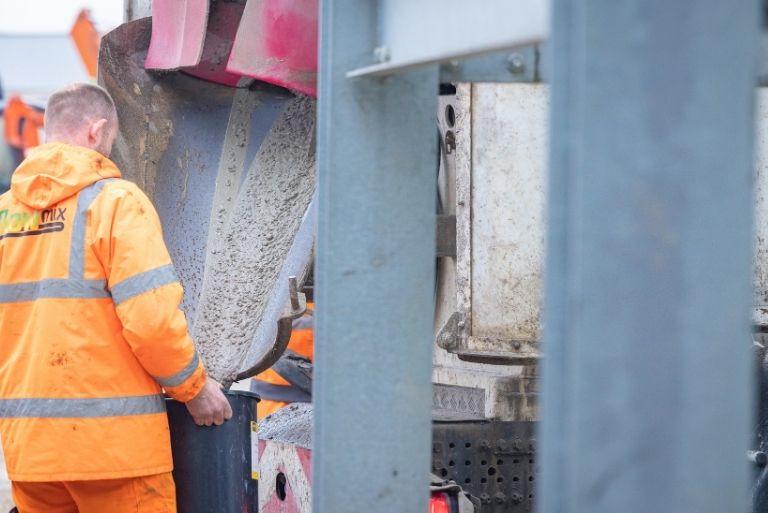
Are you curious about how concrete hardens and what you can do to ensure the best results for your concrete project? 

If you’ve ever poured a patio base, laid a driveway, or tackled a garden project, you’ve likely wondered how a wet, sloppy mix turns into a rock-hard surface. The answer lies in a chemical process called hydration, which is key to achieving a strong, long-lasting result.

When you add water to cement, it reacts and forms crystals that bind the materials together. Over time, this reaction causes the concrete to harden and gain strength. But there’s more to it than just letting it dry.

Understanding how concrete hardens can help you avoid common mistakes, especially if you’re working on a domestic project. From weather conditions to curing times, knowing what affects the hardening process gives you more control and better results.

In this guide, we’ll explain how concrete hardens, the factors that play a role, and how you can ensure your mix sets properly, so your finished job stands the test of time.

What Happens During the Concrete Hardening Process?

Concrete hardening begins the moment water mixes with cement. The secret to how concrete hardens is that the cement particles react and form new compounds. One of the most important of these is calcium silicate hydrate (C-S-H), which acts like glue, binding the cement and aggregates together into a solid mass.

This transformation is more than just drying out. It’s a gradual process where the mix turns from a liquid into a firm, durable material. The reaction is also exothermic, meaning it releases energy in the form of heat. That’s why newly poured concrete often feels warm; the heat is a natural part of the hardening process, especially in the early hours after pouring.

Understanding how concrete hardens can help you appreciate why it’s so important not to rush the process or disturb the surface too soon. Allowing proper time for curing ensures your concrete reaches its full strength.

According to The UK Concrete Society, hydration plays a vital role in the long-term performance of concrete.

“Problems that can be caused by the addition of excess water include settlement cracks, weak surface (poor abrasion resistance), dusting, poor freeze-thaw resistance, low structural strength, etc.”

Managing the curing phase correctly gives the concrete the best chance to develop fully and perform as expected. It doesn’t matter if it’s a garden path or a garage base, a bit of attention during this stage can prevent delays and expensive repairs later on.

Need Expert Advice?

Speak to the team at Flowmix Tewkesbury or Walsall. We are happy to help with all your concrete requirements.

Flowmix Tewkesbury: 01684 217888 Flowmix Walsall: Tel: 01922 741731

Water-Cement Ratio

One of the critical factors influencing how concrete hardens is the water-cement ratio.

The water-cement ratio refers to the balance between the amount of water and cement in the mix, and it plays a key role in the hydration process.

Getting the balance right is essential:

  • Too much water weakens the concrete, making it more likely to crack or wear over time.
  • Too little water means there isn’t enough moisture to fully activate the cement, which can result in dry, crumbly concrete that fails to bind properly.

At Flowmix, we carefully calculate the ideal water-cement ratio for every project. That helps ensure proper hydration and a stronger, more durable result. Whether you’re pouring a garden path or a new foundation, we adjust the mix to suit your exact requirements.

By using the correct ratio, the concrete harden efficiently and performs optimally for years to come.

The Role of Temperature in Hardening

Temperature has a significant impact on the rate of concrete hardening. It affects the speed of the hydration process, which in turn influences how quickly the concrete sets and gains strength.

In hot weather, hydration speeds up. While this might seem like a good thing, it can cause the concrete to dry too fast, increasing the risk of cracking or uneven curing. In cold conditions, the reaction slows down, which can delay the hardening process and leave the surface vulnerable for longer.

Here in the UK, weather conditions can be unpredictable. That’s why it’s essential to manage temperature carefully during the curing phase.

Flowmix has years of experience in delivering high-quality concrete in all seasons. Whether you’re pouring during a summer heatwave or tackling a project in chilly winter temperatures, we adjust the mix and delivery to suit the weather conditions. That helps ensure your concrete hardens evenly and performs as intended, regardless of the weather.

Why Curing is Essential for Concrete Hardening

While hydration is the chemical process that causes concrete to harden, curing is just as vital for ensuring it reaches its full strength. Proper curing enables the chemical reactions between water and cement to continue uninterrupted.

If concrete doesn’t cure correctly, these reactions may stop prematurely, resulting in a weaker, more brittle surface. Curing keeps the concrete moist, allowing it to continue hydrating as it hardens.

This ongoing process helps develop the internal structure that gives concrete its lasting strength and durability. By paying attention to curing, you protect your investment and make sure your concrete stands the test of time.

Ready to Order Ready-Mix Concrete?

If you are ready to order a ready-mix concrete delivery, speak to the team at Flowmix Tewkesbury or Walsall. We will help you select the right mix and quantities and arrange for fast delivery to your site.

Flowmix Tewkesbury: 01684 217888 Flowmix Walsall: Tel: 01922 741731

Curing Duration

A common question is how long it takes for concrete to harden completely.

Concrete begins to set within 24 to 48 hours of being poured, but it takes around 28 days to reach its full strength. During this time, the hydration process continues, and the concrete gradually becomes harder and more durable.

Although waiting 28 days may seem lengthy, this curing period is essential. It allows the concrete to develop the strength needed to withstand everyday wear, pressure, and weather conditions over time.

At Flowmix, we provide guidance on the curing process to help your concrete set correctly before starting building work or adding heavy loads.

Whether you’re managing a large construction project or a simple DIY task, we can offer advice and support to improve your curing techniques. Our goal is to help you achieve the best possible results every time.

Moisture and Temperature Management

To improve how concrete hardens appropriately, it must retain enough moisture during the curing process. Without sufficient moisture, the hydration reaction can slow or stop, resulting in the concrete drying out too quickly. That often leads to cracks or weak areas.

That’s why curing methods include water curing, covering with plastic sheeting, or applying curing compounds, all designed to prevent moisture loss.

At Flowmix, we provide expert advice on the optimal curing techniques tailored to your specific site conditions. For example, we use water curing in hot weather and curing compounds when it’s windy. This careful attention ensures your concrete stays strong and durable for years to come.

Conclusion: Understand How Concrete Hardens for Lasting Results

Concrete hardening is more than just pouring and waiting. It involves a series of carefully managed steps, including hydration, curing, and controlling environmental factors such as temperature and moisture.

By understanding how concrete hardens, you can avoid common pitfalls and ensure your project lasts for years to come. Whether it’s balancing the water-cement ratio or adjusting for the unpredictable UK weather, these details make all the difference.

How Flowmix Can Help With Your Project

Flowmix has two plants, Gloucester and Walsall. We provide the following services (with time slots):

Flowmix has the BSA-approved Ready Mix Concrete Kitemark KM683844, a certification that “confirms a product or service’s claim has been independently and repeatedly tested by experts” (source BSI).

Flowmix Tewkesbury: 01684 217888 Flowmix Walsall: Tel: 01922 741731

FAQs

What Causes Concrete To Harden?

Concrete hardens through a chemical reaction called hydration, where water reacts with cement to form crystals that bind the aggregates together into a solid mass.

How Long Does It Take For Concrete To Fully Cure?

While concrete begins to set within hours, it typically takes around 28 days to reach its full strength, depending on the mix, weather conditions and curing process.

Does Concrete Harden Faster In Hot Weather?

Yes, heat can speed up the setting time, but rapid drying can also weaken the finished concrete. In hot conditions, additional moisture and curing techniques are often used to prevent cracking.

Can Concrete Harden Without Water?

No, water is essential for the hydration process. Without enough water, the reaction will be incomplete, and the concrete will be weaker and more prone to cracking.

Why Does Concrete Continue To Get Stronger Over Time?

Even after 28 days, the hydration process can continue at a slower rate for months or even years, allowing the concrete to gradually gain additional strength.

If you’re planning a building project, chances are you’ve come across the term volumetric concrete, but what exactly does it mean, and why is it becoming so popular?

Whether you’re a seasoned contractor or taking on a one-off job at home, understanding the benefits of volumetric concrete and how it works can save you time, money, and hassle.

At Flowmix, we supply volumetric concrete across Gloucestershire and the West Midlands, and in this guide, we’ll walk you through what it is, how it works, and why so many of our customers prefer it.

What is Volumetric Concrete?

Volumetric concrete is a modern alternative to traditional ready mix. It’s produced on site using a specialist vehicle known as a volumetric mixer. Unlike ready-mix concrete, which is batched at a plant and transported in a drum, volumetric concrete is mixed on-site at your location.

Each ingredient — cement, aggregates, water, and any required admixtures — is stored separately in the truck. The operator controls the exact quantities, allowing adjustment of the mix to suit your precise needs on the spot. That means no waste, better quality control, and the flexibility to adjust the mix if site conditions change.

How Does a Volumetric Mixer Work?

A volumetric mixer is essentially a mobile concrete batching plant on wheels. Instead of delivering pre-mixed concrete, it carries all the raw materials separately and combines them fresh on site.

Here’s how it works in practice:

  1. Separate Storage: Cement, sand, gravel, water, and any admixtures are stored in individual compartments on the truck.
  2. Controlled Mixing: The operator uses a digital control panel to measure and blend the exact quantities needed for the job.
  3. On-Demand Production: Concrete gets mixed only when needed, ensuring it remains fresh and workable.
  4. Flexible Delivery: Since the mix is prepared on-site, it’s easy to adjust quantities or mix specifications during the job.

This process ensures you receive the exact amount and type of concrete you need, with minimal waste and maximum efficiency.

Ready to Order Volumetric Concrete?

If you’re ready to order a volumetric concrete delivery, speak to the friendly team at Flowmix Tewkesbury or Aldridge. We’ll help you choose the perfect mix and quantity for your project and organise quick, reliable delivery straight to your site.

Flowmix Tewkesbury: 01684 217888  Flowmix Aldridge: 01922 741731

What Are the Benefits of Volumetric Concrete?

Volumetric concrete offers several advantages that make it a preferred choice for many projects:

Freshness and Quality

Because the concrete is mixed on-site, it remains fresh and retains its workability for a longer period. That means you get a stronger, more reliable finish, especially important in hot weather or on longer pours where ready mix might start to set before arrival.

Example: For a driveway project on a warm summer day, volumetric concrete ensures the mix stays workable until every section gets poured, preventing cracks or weak spots.

Reduced Waste

You only mix exactly what you need, reducing the amount of leftover concrete that often goes to waste. Not only does this save money, but it also reduces the environmental impact of unused materials.

Example: In a home renovation where only a small quantity of concrete is needed for repairs, volumetric concrete prevents over-ordering and unnecessary waste.

Flexibility

You can easily adjust designs on the fly to suit changing site conditions or specific project needs. Whether you need a higher strength or a different slump, you can make adjustments immediately.
Example: If unexpected soil conditions require stronger concrete for a foundation, the volumetric mixer can alter the mix instantly without waiting for a new batch from the plant.

Cost-Effective for Small Jobs

Traditional ready mix often requires minimum order sizes, which can be costly for small or phased pours. Volumetric concrete allows you to order smaller, precise amounts, making it a budget-friendly choice.

Example: A landscaper installing small concrete features can order precisely the volume needed without paying for excess.

Faster Delivery and Scheduling

Because volumetric mixers mix on-site, they can respond quickly to schedule changes or last-minute additions, thereby reducing downtime.

Example: On a tight construction timeline, if extra concrete is needed unexpectedly, it’s possible to produce volumetric concrete immediately to keep the project on track.

Environmentally Friendly

Less waste, fewer return trips, and optimised batching mean a smaller carbon footprint for your project, aligning with sustainable building practices.

Example: Builders focused on green construction appreciate volumetric concrete for its reduced waste and efficient use of resources.

What Types of Projects Can Volumetric Concrete Be Used For?

Volumetric concrete is versatile and suitable for a wide range of projects. While it offers distinct advantages over traditional ready-mix concrete, both methods still have their unique roles depending on the job.

Thanks to the large capacity of volumetric mixer trucks, this type of concrete is especially well-suited for bigger projects where the volume required can exceed what smaller mixers can handle.

Many projects require multiple concrete mixes with varying ratios to meet different needs throughout the construction process. Additionally, unexpected changes or delays often arise during construction, making the on-site mixing flexibility of volumetric concrete a significant benefit.

Volumetric concrete is popular in domestic settings for applications such as foundations, shed bases, and driveways. On the commercial and industrial side, there are wide applications in construction works, including basement foundations and flooring.

With its clear advantages, such as minimising waste and offering adaptable mixing options, it’s no wonder volumetric concrete is becoming the preferred choice across projects of all sizes and complexities.

Need Volumetric Concrete Delivered?

Contact the expert team at Flowmix in Tewkesbury or Aldridge for all your volumetric concrete needs. We’ll guide you through selecting the right mix and volume, ensuring fresh concrete is delivered on time to keep your project running smoothly.

Call Flowmix Tewkesbury: 01684 217888 or Flowmix Aldridge: 01922 741731

Volumetric vs Ready Mix: What’s the Difference?

Both volumetric and ready mix concrete provide high-quality results, but they differ significantly in how and when the concrete is prepared.

  • Ready-mix concrete is batched and mixed at a central plant. It’s then transported to the site in a rotating drum truck, where it is poured soon after arrival. This method works well for large, continuous pours where timing and quantity are predictable.
  • Volumetric Concrete gets mixed fresh on site, using a specialised truck that carries raw materials separately and combines them as needed. That allows for greater flexibility, precision, and control.

Key differences include:

FeatureReady Mix ConcreteVolumetric Concrete
Mixing LocationOff-site at batching plantOn-site using a volumetric mixer
Mix FlexibilityFixed before deliveryAdjustable on demand
WastePotential for leftover concreteMix the exact amount needed
Ideal Job SizeLarge, continuous poursSmall or phased jobs
Delivery TimingScheduled with fixed deliveryFlexible, on-demand mixing
WorkabilityMay reduce during transportAlways fresh, mixed on site

Choosing between the two depends on your project size, schedule, and specific requirements.

Why Choose Flowmix for Volumetric Concrete?

With over a decade of experience serving Gloucestershire and the West Midlands, Flowmix is a trusted name in volumetric concrete supply.

Our modern fleet of volumetric mixer trucks and expert team ensure you get fresh, high-quality concrete delivered precisely when and where you need it.

We offer:

  • Precise mix-on-site batching tailored to your project requirements
  • Flexible volumes, ideal for both small residential jobs and large commercial projects
  • Competitive pricing with transparent quotes
  • Reliable 2-hour delivery slots, helping you plan your work without delays
  • Friendly support and expert advice every step of the way
  • Interlocking concrete blocks for temporary or permanent barriers.
  • Ready-mix concrete, mix-on-site (volumetric concrete), Traditional and liquid screed.
  • 200′ Concrete line pump Hire: Reduce manual labour, associated costs, increase efficiency, reduce wastage and clean up.

Flowmix has the BSA-approved Ready Mix Concrete Kitemark KM683844, a certification that “confirms a product or service’s claim has been independently and repeatedly tested by experts” (source BSI).

Whether you’re a builder, contractor, or homeowner, Flowmix is committed to providing a seamless, hassle-free concrete supply experience that keeps your project moving forward smoothly.

Ready to Order Volumetric Concrete?

Call us at Flowmix Tewkesbury: 01684 217888 or Flowmix Walsall: Tel: 01922 741731

FAQs

How Does Volumetric Concrete Work?

A volumetric mixer carries sand, gravel, cement, and water in separate compartments. The operator controls the exact mix on-site, producing the precise amount needed with the ability to adjust the mix mid-pour if required.

What Are The Benefits Of Volumetric Concrete?

  • Pay for what you use – no waste
  • On-site mixing means fresher concrete
  • Mix flexibility – change slump or strength on demand
  • Perfect for remote or complex sites where timing and quantity are hard to predict

Is Volumetric Concrete Cheaper Than Ready Mix?

It can be more cost-effective because you only pay for the exact amount used. It also eliminates part-load charges and minimises waste, which can make a big difference on small or unpredictable jobs.

How Accurate Is A Volumetric Mixer?

Very accurate. Volumetric mixers are equipped with precise measurement systems to ensure consistent batching. Most are also computer-controlled for added accuracy.

What Kind Of Projects Use Volumetric Concrete?

Volumetric concrete is ideal for:

  • Domestic jobs (driveways, patios, extensions)
  • Commercial pours
  • Emergency repairs (like roadworks or utility reinstatements)
  • Projects requiring multiple mix types in one visit

Can You Change The Mix On-Site With Volumetric Concrete?

Yes. That’s one of its biggest advantages. The operator can change the slump, strength, or mix design on the spot, making it perfect for varied site conditions.

Is Volumetric Concrete Suitable For Large Jobs?

Absolutely. Volumetric trucks can produce large volumes continuously. For very large pours, multiple volumetric trucks can be scheduled in rotation to ensure a steady supply.

What’s The Difference Between Volumetric And Ready Mix Concrete?

The key difference is when and where it’s mixed.

  • Ready mix is batched at a plant and delivered in a drum mixer
  • Volumetric is mixed fresh on-site using separate materials
    Volumetric offers more flexibility, less waste, and precise control over quantity.

Handling ready mix concrete may seem straightforward, but even small mistakes can cause delays, wasted materials, or weaker results. Whether you’re a contractor, builder, or DIY enthusiast, understanding how to manage ready-mix concrete properly is essential for a successful project.

In this article, we will cover three common mistakes when handling ready mix concrete, helping you save time, money, and stress while ensuring a strong, durable finish every time.

Mistake #1: Not Preparing The Site In Advance

One of the most common errors when handling ready mix concrete is failing to prepare the site properly before the concrete arrives. A cluttered or uneven site can slow down the process, cause spills, and even compromise the quality of the finished product.

Before your ready-mix concrete delivery, make sure the area is clean, level, and free from any obstacles. Having all tools and equipment ready will also help ensure a smooth pour. Proper site preparation saves time and reduces the risk of costly mistakes once the concrete is on site.

Mistake #2: Not Preparing The Concrete Mix Correctly

Another frequent mistake in handling ready-mix concrete is not preparing the mix properly before pouring. Although ready-mix concrete is delivered pre-mixed, it’s essential to check the consistency and temperature upon arrival. Adding too much water or mixing on site can weaken the concrete, leading to cracks or poor durability.

Always discuss with your supplier about the specific requirements for your project and inspect the mix before use. Correct preparation helps guarantee a strong, long-lasting finish.

Read: 4 Ready Mix Concrete Myths Debunked

Need Expert Advice?

Speak to the team at Flowmix Tewkesbury or Walsall. We are happy to help with all your concrete requirements.

Flowmix Tewkesbury: 01684 217888 Flowmix Walsall: Tel: 01922 741731

Mistake #3: Poor Concrete Finishing Work

A common issue in handling ready mix concrete is rushing or neglecting the finishing process. Proper finishing is crucial for achieving a smooth, durable surface and preventing problems such as cracking or unevenness. Ensure that you work with the concrete while it’s still workable, using the right tools and techniques. Taking the time to finish concrete properly will ensure your project looks professional and stands the test of time.

Read: Ordering Ready Mix Concrete: A Homeowner’s Guide

Mistake #4: Ignoring Weather Conditions

One mistake to avoid when handling ready mix concrete is overlooking the impact of weather. Temperature, humidity, and rain can all affect how concrete sets and cures. In hot weather, concrete can dry too quickly, leading to cracks and reduced strength.

Cold weather, on the other hand, can slow the curing process and cause freezing issues. It’s essential to plan your pour around the forecast and take protective measures, such as using curing blankets or additives as needed. Being mindful of weather conditions helps ensure your concrete reaches its full strength and durability.

Mistake #5: Improper Timing Of Pouring

Another common pitfall in handling ready mix concrete is delaying the pour after delivery. Concrete begins to set as soon as it’s mixed, so any lag between arrival and pouring can make the mix harder to work with and reduce its strength.

To avoid this, coordinate closely with your supplier and ensure your team is ready to pour immediately upon delivery. Proper timing helps maintain the concrete’s workability and provides a solid, reliable finish.

Mistake #6: Inadequate Curing Process

Proper curing is essential for durable, long-lasting concrete, but it is often overlooked when handling ready-mix concrete. After pouring, concrete needs to be kept moist for a specific period to allow it to harden correctly. Skipping or rushing the curing process can cause cracks, surface dusting, and reduced strength.

Using curing methods like water spraying, covering with damp hessian, or applying curing compounds can protect your concrete and improve its performance over time.

Conclusion

Avoiding common mistakes when handling ready-mix concrete can make all the difference in the success of your project. From preparing the site and checking the mix to managing the timing, weather, and curing process, each step plays an essential role in achieving a strong, professional finish.

By taking the time to plan correctly and working with experienced suppliers like Flowmix, you can prevent costly errors and maximise the benefits of your ready-mix concrete project.

How Flowmix Can Help With Your Project

Flowmix has two plants, Gloucester and Walsall. We provide the following services (with time slots):

Flowmix has the BSA-approved Ready Mix Concrete Kitemark KM683844, a certification that “confirms a product or service’s claim has been independently and repeatedly tested by experts” (source BSI).

Ready to Order Ready-Mix Concrete?

If you are ready to order a ready-mix concrete delivery, speak to the team at Flowmix Tewkesbury or Walsall. We will help you select the right mix and quantities and arrange for fast delivery to your site.

Flowmix Tewkesbury: 01684 217888 Flowmix Walsall: Tel: 01922 741731

FAQs

What Is The Best Way To Prepare A Site For Ready Mix Concrete?

Clear the area of debris, ensure it is level and accessible, and have all tools and personnel ready before the delivery arrives. Good preparation supports efficient handling of ready-mix concrete and helps prevent delays.

How Long Can Ready Mix Concrete Stay Usable After Delivery?

Typically, ready-mix concrete should be poured within 90 minutes of batching. Delaying this can affect workability and strength, so it’s vital to plan the pour in advance when handling ready mix concrete.

Can Weather Affect The Quality Of Ready Mix Concrete?

Yes, hot and cold weather can impact setting and curing times. Take precautions, such as covering the concrete or adjusting the mix, to ensure safe and effective handling of ready-mix concrete in any weather.

Is It Okay To Add Water To The Mix On-Site?

Adding water on site is risky as it can weaken the mix. Always consult with your supplier before making adjustments when handling ready mix concrete to avoid compromising the final result.

Why Is Concrete Curing So Important?

Curing allows concrete to reach its full strength and achieve its maximum durability. Poor curing leads to cracking and surface issues. It’s a crucial step in the correct handling of ready-mix concrete.

What Tools Do I Need For Proper Finishing?

You’ll need tools like screeds, floats, trowels, and edging tools. Using the right equipment ensures a smooth, even finish during the handling of ready-mix concrete.

If you’ve ever tackled a home extension, garden wall or small commercial build, you’ve probably come across the term reinforced concrete. But what exactly does it mean, and why is it so widely used in construction today?

It combines the malleable strength of steel with the compressive strength of concrete, making it one of the most reliable and versatile building materials available.

Whether you’re a builder working on a new foundation or a homeowner planning a structural renovation, understanding how this type of concrete works can help you make better decisions for your project.

In this article, we’ll explain what it is, how it’s made, and why it continues to be the backbone of modern construction, especially for small-scale and domestic builds where durability, safety and cost-effectiveness really matter.

What is Reinforced Concrete?

Simply put, it’s a combination of steel and concrete that creates a structure that is far stronger and more durable than either material on its own.

Concrete is excellent at withstanding compression, which means it holds up well under heavy weight. However, it isn’t very good at handling tension, the forces that pull or stretch. That’s where reinforced concrete comes in.

Steel reinforcement bars, often known as rebar, are embedded within the concrete before it sets. These steel bars absorb the tensile stresses, while the concrete resists compression, forming a composite material that performs exceptionally well under a wide range of environmental stresses.

For small building firms and domestic clients in Gloucestershire and Walsall, it offers peace of mind. It’s not just about strength. It’s about long-term reliability. Whether you’re pouring a driveway or supporting a load-bearing wall, it gives you the structural performance you need to meet the demands of building regulations and everyday wear and tear.

Need Expert Advice?

Speak to the team at Flowmix Tewkesbury or Walsall. We are happy to help with all your concrete requirements.

Flowmix Tewkesbury: 01684 217888 Flowmix Walsall: Tel: 01922 741731

How is Reinforced Concrete Made?

It’s a carefully controlled process that begins with correctly combining the right materials. First, a traditional concrete mix is prepared (cement, water, and aggregates like sand and gravel). That creates a strong but flexible base material. Before pouring the concrete, steel reinforcement bars (rebar) are positioned within the mould or formwork according to the structural design.

These steel bars are typically arranged in a grid pattern and may be tied together with wire to hold them in place. The layout depends on the type of structure and anticipated loads. Once the rebar is in place, the concrete is poured over and around it, ensuring that the flow surrounds the steel, leaving no air pockets.

The result is a single, solid unit combining steel’s strength and concrete’s durability.

Why Is it Reinforced Concrete Necessary?

It’s essential in modern construction because plain concrete alone isn’t strong enough to handle the full range of stresses that some structures face. While concrete can bear heavy loads pressing down on it, it’s weak when stretched or bent.

Without reinforcement, concrete would crack or fail under tension, particularly in elements such as beams, floors, and cantilevers, where bending forces are common.

Steel reinforcement solves this problem. It provides the superior tensile strength that concrete lacks, allowing the two materials to work together under pressure. That makes reinforced concrete incredibly versatile and reliable, even in challenging conditions.

For small building companies and domestic projects, it means safer, longer-lasting results. Whether it’s a patio that won’t shift over time, a retaining wall that holds soil securely in place, or a garage slab that can withstand vehicle weight, reinforcement helps prevent cracking, structural failure, and costly repairs in the future.

Applications for Reinforced Concrete

It has a wide range of applications in domestic and small-scale construction projects due to its strength, durability, and adaptability. It can withstand compression and tension, making it suitable for structural elements that need to support weight, resist weather, and last over time.

Here are some typical applications of reinforced concrete in domestic and small building projects:

  • Foundations: Reinforced concrete provides a stable and secure base for homes, extensions, and small commercial buildings. It distributes weight evenly and resists ground movement.
  • Driveways and slabs: Concrete slabs reinforced with steel mesh or bars are ideal for driveways, garages, sheds, garden offices, and parking areas, especially where heavy loads are expected.
  • Retaining walls: In sloped gardens or properties with varying ground levels, reinforced concrete retaining walls provide strong support and prevent soil movement.
  • Beams and lintels: These structural elements support openings such as doors and windows, and reinforced concrete ensures they can carry the load without cracking or sagging.
  • Staircases and balconies: Where cantilevered designs or elevated structures are needed, reinforced concrete provides both safety and structural integrity.

How Does Reinforced Concrete Work?

Reinforced concrete works by blending the strengths of two key materials — concrete and steel — to create a structure that can handle a wide range of stresses.

  • Concrete is naturally strong under compression, meaning it can withstand heavy loads without collapsing.
  • Steel reinforcement, often in the form of bars or mesh, is strong under tension, making it ideal for resisting pulling and bending forces.

When steel is placed into the formwork and concrete is poured over it, the two materials bond as the concrete cures. The result is a single, solid unit that can resist not only compression but also tension and shear forces, making it significantly more reliable than concrete alone.

Why Use Steel?

Steel is the most common choice for reinforcing concrete because:

  • It has excellent tensile strength
  • Steel bonds well with concrete, reducing the risk of slippage
  • The expansion and contraction rate is similar to concrete when temperatures change, keeping the structure stable over time.

This combination of properties is what makes reinforced concrete such a dependable choice for structural work, from garden retaining walls to load-bearing slabs and foundations.

Benefits of Reinforced Concrete

Reinforced concrete offers a range of benefits that make it a wise choice for domestic and small-scale construction:

  • Strength and durability – Handles heavy loads, ground movement, and weather without cracking or failing
  • Versatility – Suitable for foundations, slabs, walls, beams, and more
  • Fire and weather resistance – Concrete protects the steel inside, making it ideal for outdoor or high-risk areas
  • Cost-effective over time – Fewer repairs and longer lifespan mean better value in the long run
  • Low maintenance – Once installed correctly, reinforced concrete needs very little upkeep
  • Design flexibility – Can be shaped, poured, or cast to suit almost any project

For small building firms and homeowners alike, reinforced concrete provides lasting strength with minimal hassle, making it a go-to material for reliable results.

Conclusion

Reinforced concrete is a trusted, versatile material that combines the best of concrete and steel to deliver strength, durability, and long-lasting performance.

Whether your project is a driveway, retaining wall, or home extension, reinforced concrete offers the reliability and value that make it the backbone of modern construction.

If you’re planning a project and want expert advice on quality reinforced concrete supplies, don’t hesitate to get in touch with us.

How Flowmix Can Help With Your Project

Flowmix has two plants, Gloucester and Walsall. We provide the following services (with time slots):

Flowmix has the BSA-approved Ready Mix Concrete Kitemark KM683844, a certification that “confirms a product or service’s claim has been independently and repeatedly tested by experts” (source BSI).

Flowmix Tewkesbury: 01684 217888 Flowmix Walsall: Tel: 01922 741731

FAQs

Does Reinforced Concrete Rust?

Steel inside reinforced concrete can rust if moisture and air reach it, usually through cracks or poor-quality concrete. However, when properly mixed, compacted, and cured, concrete forms a protective barrier that prevents corrosion.

Using the correct cover depth and additives also helps keep reinforced concrete structures durable and rust-free for decades.

Do I Need Reinforced Concrete for My Project?

Whether you need reinforced concrete depends on what you’re building and where. Here’s a quick guide:

  • Small shed foundation – Not usually unless the ground is soft or uneven
  • Driveways – Recommended for heavy-use or large areas
  • Patios – Optional for small patios; advised for larger ones
  • Garage floors – Yes, to support vehicle weight and prevent cracks
  • Retaining walls – Yes, to resist soil pressure
  • Commercial buildings – Essential for strength, stability, and compliance

When in doubt, reinforced concrete offers added peace of mind and long-term durability.

Can I Mix Reinforced Concrete Myself?

It’s not advisable for small DIY projects because reinforced concrete requires precise mixing and placement of rebar. It’s best to use a professional supplier for quality results.

How Thick Should a Reinforced Concrete Slab Be?

Residential slabs are usually 4–6 inches thick. Commercial slabs often require 8–12 inches or more, depending on the load requirements.

Is Reinforced Concrete Environmentally Friendly?

Yes, especially when using recycled steel and aggregates, reinforced concrete can be an eco-friendly option.

When you see concrete poured on a building site, it’s easy to assume it’s just cement, water, sand and gravel. But in modern construction, that mix often gets a little help from some clever additives known as concrete admixtures.

Here’s an example: Last year, a customer started pouring a concrete floor during an unexpected heatwave. The concrete was setting faster than the team could finish, and cracks were already starting to show. It looked like they were heading for a disaster. Then the site manager called in a last-minute change to the mix, adding a retarding admixture to slow down the setting time.

That simple tweak saved the day. And that’s just one application for concrete admixtures.

Concrete admixtures are often the hidden heroes behind successful concrete work. They can improve workability, control setting time, increase strength, enhance durability, and help concrete perform better under challenging conditions. Whether laying a driveway, garden path or building a bridge, admixtures often play a crucial role in how the concrete behaves.

In this article, we’ll explore how concrete admixtures work and why they’re so popular in concrete construction projects. You’ll also learn about the types available and how each can impact a concrete mix.

Why Use Concrete Admixtures?

Concrete admixtures help to make concrete perform better, work smarter, and last longer. While the basic ingredients of concrete (cement, water, and aggregates) are enough to get the job done, admixtures give you more control over the final product.

Imagine pouring concrete on a freezing morning or trying to pump it across a large site. The mix might set too slowly without the right admixture, become unworkable, or even crack before it cures properly. Here is where concrete admixtures come into play. They help you adapt the mix to suit the conditions on site and the specific demands of your project.

Some admixtures make concrete easier to place and finish, while others improve strength, reduce water content, or protect against corrosion and frost damage. They’re essential when dealing with tricky weather, tight timelines, or specialised structural requirements.

In short, concrete admixtures give you flexibility and confidence. You’re not just mixing and pouring. You’re engineering a material that meets your needs.

Need Expert Advice?

Speak to the team at Flowmix Tewkesbury or Walsall. We are happy to help with all your concrete requirements.

Flowmix Tewkesbury: 01684 217888 Flowmix Walsall: Tel: 01922 741731

Different Types of Concrete Admixtures

There are many types of concrete admixtures, each designed to improve specific properties of the mix. The right admixture can help concrete set faster or slower, become more durable, easier to work with, or stronger over time. Understanding the different types will help you choose the best one for your project.

Let’s break down the most common types of concrete admixtures and how they work.

Water-Reducing Admixtures

These admixtures reduce the amount of water needed in the mix while maintaining the same level of workability. With less water, the concrete becomes stronger and more durable once cured. They are popular for mixes where strength and quality are a priority.

One reason to reduce the amount of cement in your concrete mix is that it helps lower CO₂ emissions and reduces the energy used to produce each batch.

Best used in: Structural concrete, precast elements, and floors where long-term performance matters.

Superplasticisers (High-Range Water Reducers)

Superplasticisers are an advanced form of water reducers. They allow concrete to flow easily without adding more water, making them ideal for projects that require a very fluid mix or detailed formwork.

Best used in: High-rise buildings, precast panels, or decorative concrete where a smooth finish is needed.

Accelerating Admixtures

Accelerators speed up the setting time and early strength gain of concrete. They are a good option when completing a project quickly or pouring concrete in cold weather, where regular mixes would set too slowly.

Best used in: Cold conditions or time-sensitive repairs and builds.

Retarding Admixtures

These admixtures slow down the setting process, which is helpful when working in hot weather or on large pours where more finishing time is required before the concrete starts to harden.

Best used in: Warm climates or complex pours that take longer to place and finish.

Hardening Admixtures

Hardening admixtures help speed up concrete strength gain during the early stages of curing. They enable the concrete to reach its required strength faster, which can be particularly useful when early load-bearing is necessary or when you need to remove formwork quickly.

Best used in: Precast elements, cold weather pours, and projects with tight construction schedules.

Shrinkage-Reducing Admixtures

These admixtures help minimise the amount of shrinkage that occurs as concrete dries and cures. These admixtures reduce the risk of cracking and improve the long-term durability and appearance of the finished surface. Shrinkage-reducing admixtures are especially helpful in large slabs or areas where cracking would be a serious concern.

It’s important to note that shrinkage-reducing admixtures can sometimes slow down strength development in the early stages, and as the concrete continues curing over time.

Best used in: Slabs, industrial floors, and decorative concrete where appearance and durability matter.

Air-Entraining Admixtures

Air-entraining admixtures add tiny, evenly distributed air bubbles into the concrete. These air pockets improve the concrete’s resistance to freeze-thaw cycles, which can cause cracking and surface damage over time. They also make the mix easier to work with.

Best used in: Outdoor slabs, pavements, and any concrete exposed to freezing conditions.

Pozzolanic Admixtures

Pozzolanic materials, such as fly ash or silica fume, react with calcium hydroxide in the concrete to form compounds that increase strength and durability. These admixtures are often used to enhance long-term performance and sustainability.

Best used in: Large infrastructure projects, marine environments, and sustainable construction.

Corrosion-Inhibiting Admixtures

These admixtures protect steel reinforcement from corrosion, especially in an environment where salt or moisture can penetrate the concrete. They extend the lifespan of structures by preventing rust and deterioration.

Best used in: Bridges, car parks, coastal structures, and buildings exposed to de-icing salts.

As you can see, concrete admixtures are more than just optional extras. They are essential tools in modern construction, giving you greater control over the behaviour and performance of your mix.

Whether you’re facing environmental challenges or project-specific demands, a concrete admixture can usually help you get the desired results.

Ready to Order Ready-Mix or Volumetric Concrete?

If you are ready to order a ready-mix concrete delivery, speak to the team at Flowmix Tewkesbury or Walsall. We will help you select the right mix and quantities and arrange for fast delivery to your site.

Flowmix Tewkesbury: 01684 217888 Flowmix Walsall: Tel: 01922 741731

How Do Concrete Admixtures Work?

Concrete admixtures work by changing the chemical or physical properties of the concrete mix to improve its performance. They interact with the cement, water, and aggregates to alter how the mix behaves during mixing, placing, and curing.

Some admixtures speed up the chemical reaction that causes concrete to harden, helping it gain strength faster. Others slow this process down to give workers more time to pour and finish the concrete. For example, accelerating admixtures boost early strength, while retarding admixtures extend the workable time.

Water-reducing admixtures improve concrete flow by making the mix more fluid without adding extra water. That leads to stronger concrete because excess water weakens the final product.

Air-entraining admixtures create tiny air bubbles that improve durability and resistance to freeze-thaw damage. Meanwhile, corrosion inhibitors protect the steel inside reinforced concrete, preventing rust and extending the life of the structure.

In short, concrete admixtures enhance the mix in ways that meet the specific needs of each project. They let builders control the setting time, strength, workability, and durability, resulting in better-quality concrete that suits numerous conditions.

How to Choose the Right Concrete Admixture

Choosing the right concrete admixture depends on the specific needs of your project and the conditions you’re working in. There is no one-size-fits-all solution, so it’s essential to consider several factors before deciding which admixture to use.

First, think about the environment. If you’re pouring concrete in cold weather, an accelerating admixture might be necessary to speed up curing. Conversely, for hot weather or large pours, a retarding admixture can give you more time to work with the mix.

Next, consider the strength and durability requirements. If your project demands high strength or exposure to harsh conditions like freeze-thaw cycles or salt, then water-reducing or air-entraining admixtures could be beneficial. Corrosion inhibitors are vital if your concrete contains steel reinforcement in aggressive environments.

Workability is another key factor. Superplasticisers will improve the mix without adding more water if you need concrete that flows easily into complex shapes or around dense reinforcement.

Following manufacturer recommendations and performing trial mixes when possible can help the success of your concrete project. Testing helps ensure the admixture works well with your chosen materials and meets project specifications.

Consulting with concrete experts or suppliers can save time and help avoid costly mistakes. Please get in touch with our experienced team at Flowmix, who can advise on the best concrete admixture for your project. The right concrete admixtures make a considerable difference in quality, ease of use, and longevity of your finished concrete.

Conclusion

Concrete admixtures play a crucial role in modern construction by improving concrete performance, durability, and workability. Whether you need to speed up setting time, make the mix easier to work with, or protect against harsh weather, a specific admixture exists to meet your needs.

By understanding how concrete admixtures work and choosing the right type for your project, you can achieve stronger, longer-lasting concrete that stands up to the demands of any environment.

Next time you see concrete being poured, remember the hidden science behind it, the admixtures that help make the mix just right. They might not be visible, but they make all the difference.

How Flowmix Can Help With Your Project

Flowmix has two plants, Gloucester and Walsall. We provide the following services (with time slots):

Flowmix has the BSA-approved Ready Mix Concrete Kitemark KM683844, a certification that “confirms a product or service’s claim has been independently and repeatedly tested by experts” (source BSI).

Flowmix Tewkesbury: 01684 217888 Flowmix Walsall: Tel: 01922 741731

FAQs

What Are Concrete Admixtures?

Concrete admixtures are chemical or mineral additives mixed into concrete before or during the mixing process. They modify concrete’s properties to improve performance, workability, strength, or durability, depending on the project’s needs.

Why Are Admixtures Used in Concrete?

Admixtures enhance specific characteristics of concrete, such as setting time, strength, workability, and resistance to environmental factors. They help tailor the concrete mix for different weather conditions, applications, or structural requirements.

What Are the Main Types of Concrete Admixtures?

Common types include plasticisers and superplasticisers (to improve flow), accelerators (to speed up setting), retarders (to delay setting), air-entraining agents (to improve freeze-thaw resistance), and waterproofing admixtures (to reduce permeability).

How Do Admixtures Work?

Admixtures alter the chemical and physical processes during the hydration of cement. For example, superplasticisers disperse cement particles more evenly, improving flow without extra water, while retarders slow down hydration to give more working time.

Are Admixtures Safe to Use?

Yes, when used correctly and in the recommended proportions. Most admixtures are tested and approved for safety and performance. However, it’s essential to follow the manufacturer’s guidelines to prevent adverse effects on the concrete mix.

Can Admixtures Improve the Strength of Concrete?

Certain admixtures, such as water reducers and superplasticisers, can increase concrete strength by reducing the water-to-cement ratio without affecting workability. That leads to a denser, stronger finished product.

Do Admixtures Affect the Colour or Appearance of Concrete?

Some admixtures can slightly alter the colour, mainly at high dosages, but this is usually minimal. There are also specific colour-enhancing or pigment admixtures designed to create decorative effects in concrete finishes.

Are Concrete Admixtures Environmentally Friendly?

Many modern admixtures are formulated to be more sustainable. They can reduce cement usage, extend concrete lifespan, and improve energy efficiency during construction, contributing to lower overall carbon emissions.

When Should Admixtures Be Added to the Mix?

Admixtures are typically added during the batching process, before or during mixing. The exact timing depends on the type of admixture and the desired effect, as some require full integration to perform correctly.

Can Admixtures Be Used in All Types of Concrete?

Yes, most admixtures are versatile and can be used in ready-mix, precast, and on-site concrete applications. However, the right type and dosage depend on the specific project requirements and environmental conditions.

Sustainable ready mix concrete? With the ever-growing focus on sustainability, you may want to know if concrete sustainability is possible.

Flowmix have two plants, Tewkesbury, Gloucestershire and Aldridge, Walsall. We do everything we can to ensure our products stay ahead with sustainability where possible.

The construction industry is changing fast, with sustainability becoming a top priority. Sustainable ready mix concrete is no longer just an option—it’s necessary. With growing concerns about carbon emissions, resource depletion, and waste management, the industry is embracing greener alternatives.

Still, what exactly is sustainable ready-mixed concrete? How are companies reducing their environmental footprint while maintaining concrete strength and durability?

In this article, we’ll explore the latest eco-friendly concrete innovations and trends shaping the future of construction.

#1: Reducing Carbon Emissions with Green Concrete

Traditional ready mix concrete production is responsible for significant global CO₂ construction emissions.

It’s accountable for 1.5% of the UK’s total emissions and 8% globally. Experts predict that by the 2040s, concrete production could transform into a ‘carbon sink.’ (Source: ICE 2022 Report)

However, slowly, the rise of low-carbon concrete is changing the game.

  • Cement alternatives like ground granulated blast-furnace slag (GGBS) and fly ash help cut carbon emissions.
  • Carbon capture technology traps CO₂ and injects it into fresh, ready-mixed concrete, reducing its environmental impact.
  • Companies are investing in energy-efficient production methods, reducing fossil fuel reliance.

Switching to sustainable ready mix concrete helps reduce the construction industry’s carbon footprint while maintaining high performance.

#2: Recycling and Waste Reduction in Concrete Production

One of the most significant advancements in eco-friendly concrete is a switch to using recycled materials. Instead of relying on virgin aggregates, manufacturers are incorporating:

  • Recycled crushed concrete from demolished structures.
  • Industrial by-products such as silica fume and slag (a by-product of smelting or refining metal ores) replace cement content.
  • Recycled water in the mixing process to cut down on water waste.

These practices lower waste and improve the sustainability of ready mix concrete without compromising quality.

#3: Self-Healing Concrete: The Future of Durability

Cracked concrete is a major issue in construction, leading to costly repairs and reduced longevity. Fortunately, self-healing concrete is emerging as a game-changer.

  • Bacteria-infused ready mix concrete can repair small cracks by producing limestone when exposed to water.
  • Capsules of healing agents embedded in sustainable concrete release chemicals to fill cracks automatically.

By increasing durability, these innovations reduce the need for maintenance, making eco-friendly concrete even more sustainable in the long run.

#4: Energy-Efficient Concrete Mixing and Transport

Sustainability isn’t just about the material but also the process. The latest sustainable ready mix concrete trends focus on energy-efficient production and transport.

  • Electric and hybrid cement mixers are reducing fuel consumption and emissions.
  • On-demand concrete batching plants minimise waste by producing only what is needed.
  • GPS tracking in delivery trucks optimises routes, cutting down on fuel use.

By improving efficiency, the industry is making low-carbon concrete more accessible and cost-effective.

#5: The Role of Smart Technology in Sustainable Concrete

Integrating smart technology further enhances the sustainability of ready mix concrete. Digital tools help improve accuracy, reduce waste, and boost efficiency.

  • AI-powered mix designs ensure optimal material use, minimising excess.
  • Real-time monitoring sensors in concrete improve curing efficiency.
  • Automated batching systems reduce human error, ensuring consistent quality.

These advancements make eco-friendly concrete more reliable and adaptable to modern construction needs.

#6: The Rise of Geopolymer Concrete

Geopolymer concrete is an innovative, eco-friendly alternative to traditional concrete. Unlike standard ready mix concrete, which relies on Portland cement, geopolymer concrete is made using industrial by-products such as:

  • Fly ash (from coal-fired power plants)
  • GGBS (Ground Granulated Blast Furnace Slag) from steel manufacturing.
  • Silica fume or other pozzolanic materials

These materials are activated using alkaline solutions (typically combining sodium hydroxide and sodium silicate), which trigger a chemical reaction known as geopolymerization. This process forms a strong, durable binder without the need for cement, significantly reducing CO₂ emissions—by up to a whopping 80% compared to traditional concrete.

Benefits of Geopolymer Concrete

  • Lower carbon footprint – No Portland cement means reduced CO₂ emissions.
  • High durability – It has excellent resistance to fire, chemicals, and extreme weather.
  • Fast curing – Can achieve strength quickly, reducing construction time.
  • Recycling potential – It utilises industrial waste, reducing landfill impact.

With its sustainability and strength, geopolymer concrete is gaining popularity in infrastructure projects, paving the way for a greener construction industry.

Conclusion

The demand for sustainability in ready mix concrete drives innovation in the construction industry. These trends are shaping a greener future, from low-carbon concrete and self-healing technology to smart batching and recycled materials.

By embracing eco-friendly concrete, builders and developers can reduce environmental impact without sacrificing quality or durability. As technology advances, sustainable ready mix concrete will become the new industry standard, ensuring a more responsible and resilient built environment.

How Flowmix Can Help With Your Project

Flowmix has two plants, Gloucester and Walsall. We provide ready-mix concrete, mix on-site and liquid screed.

In addition, you can hire a 200′ concrete line pump to reduce manual labour and associated costs, increase efficiency, reduce wastage and clean up. Moreover, we also provide interlocking concrete blocks for temporary or permanent barriers.

Flowmix has the BSA-approved Ready Mix Concrete Kitemark KM683844, a certification that “confirms a product or service’s claim has been independently and repeatedly tested by experts” (source BSI).

Flowmix Tewkesbury: 01684 217888 Flowmix Walsall: Tel: 01922 741731

FAQs About Sustainability in Ready Mix Concrete

What Makes Ready Mix Concrete Sustainable?

Sustainable ready mix concrete reduces its environmental impact using recycled materials, alternative cement blends, and energy-efficient production methods. Innovations like low-carbon concrete, self-healing concrete, and geopolymer concrete make it a greener choice for construction.

How Does Sustainable Ready Mix Concrete Reduce Carbon Emissions?

Manufacturers lower carbon emissions by:

  • Using cement alternatives like fly ash and GGBS.
  • Capturing and storing CO₂ within the concrete.
  • Implementing energy-efficient batching and transport methods.

These efforts significantly cut down the carbon footprint of eco-friendly concrete.

Is Sustainable Concrete As Strong As Traditional Concrete?

Yes! Sustainable ready mix concrete meets or exceeds traditional concrete’s durability and strength. Many alternatives, such as geopolymer concrete, offer greater fire resistance andchemical durability, making them ideal for long-term projects.

Can Recycled Materials Be Used In Ready Mix Concrete?

Absolutely! Recycled aggregates, crushed concrete, and industrial by-products like slag and silica fume are commonly used in eco-friendly concrete. These materials help reduce waste while maintaining high performance.

Is Sustainable Ready Mix Concrete More Expensive?

Initially, some low-carbon concrete options may have a higher cost due to advanced technology and alternative materials. However, long-term savings come from improved durability, lower energy costs and reduced maintenance, making it a cost-effective choice over time.

There are so many alternative uses for concrete that you might not be aware of that can add a unique touch to your home and garden.

Flowmix has two concrete plants – Tewkesbury, Gloucestershire and Aldridge, Walsall. We’re often asked by the curious minded about alternative uses for concrete.

Concrete is often associated with driveways, foundations, and large-scale construction projects. However, this versatile material offers homeowners uniquely creative and functional applications beyond traditional building uses.

From stylish interiors to durable outdoor features, the following are some alternative uses for concrete that can enhance any home or garden.

#1. Stylish Concrete Countertops

Concrete countertops provide a modern, industrial aesthetic while offering durability and heat resistance. Unlike traditional granite or marble, concrete allows you to customise colour, texture, and finish. Plus, concrete is less expensive!

Once sealed correctly, these surfaces resist stains and scratches, which makes concrete the perfect choice for kitchens and bathrooms.

#2. Outdoor Fire Pits and Seating Areas

A concrete fire pit adds a contemporary touch to outdoor spaces, creating a cosy gathering spot for evenings in the garden. Pair it with built-in concrete benches for a cohesive look.

This durable and weather-resistant material ensures longevity and requires minimal maintenance over time.

#3. Decorative Concrete Flooring

You might not consider concrete your first choice for a decorative floor, but polished concrete floors can bring an elegant and seamless finish to interiors. You can complement your décor by choosing a matching stain or finish.

Concrete floors offer excellent thermal properties, helping to maintain indoor temperatures efficiently.

#4. Concrete Planters and Garden Features

Concrete offers strength and versatility for a durable and stylish alternative to flimsy plastic or ceramic planters. Large concrete planters can withstand harsh weather conditions, while smaller DIY moulds can create unique decorative pieces for gardens and patios.

#5. Custom Driveway and Walkway Pavers

Instead of traditional brick or stone, concrete pavers are a cost-effective and durable solution for driveways and garden pathways. With stamping, staining, and texturing options, homeowners can achieve a bespoke design without compromising on longevity.

Read: How to Lay a Concrete Driveway: A 12-Step Beginners Guide                  

#6. Bespoke Concrete Furniture

Forget about boring wooden benches you need to stain every year. Instead, tables, benches, and even shelves made from concrete bring a sleek, minimalist style to both indoor and outdoor spaces.

These durable pieces resist wear and tear, making them ideal for high-traffic areas. With the proper sealant, they become stain-resistant and easy to clean.

#7. Concrete Sinks and Basins

Concrete sinks add a unique touch to kitchens and bathrooms. Their customisable nature allows homeowners to choose size, shape, and colour, ensuring a perfect fit for any design theme. Proper sealing prevents water absorption and prolongs durability.

In addition, instead of heading to the DIY store to buy an expensive stone bird bath, why not make your own from concrete?

#8. Stamped Concrete Patios

Stamped concrete is perfect to replicate the look of natural stone, brick, or wood while providing durability and low-maintenance benefits of concrete.

The technique involves pressing patterns and textures into freshly poured concrete using specialised moulds or stamps. You can enhance the appearance of concrete by applying a colour hardener and sealer to the surface.

As one of the alternative uses for concrete, it provides a visually appealing, low-maintenance solution for patios, pool decks, and garden pathways that will last years.

Homeowners seeking alternative uses for concrete can transform outdoor spaces with this cost-effective option.

#9. Decorative Retaining Walls

Beyond structural purposes, concrete retaining walls serve as eye-catching garden features. Homeowners can choose textured or stained finishes to complement their landscaping, creating both form and function in outdoor spaces.

Read: Interlocking Concrete Blocks – Flowmix Tewkesbury & Walsall          

#10. Unique Home Décor and Accessories

From candle holders and bookends to wall art and coasters, you can use concrete for various DIY home décor projects. These items add an industrial charm to interiors and are easy to make with simple moulding techniques. For those exploring alternative uses for concrete, these small projects provide a creative way to utilise this versatile material.

Let your imagination loose to create something unique.

Final Thoughts

Concrete’s versatility extends far beyond its traditional uses. Proper finishing techniques make concrete stylish, durable, and cost-effective for creative home applications.

By exploring these alternative uses for concrete, homeowners can achieve modern, functional, and long-lasting design solutions. Whether enhancing indoor spaces or upgrading outdoor areas, concrete is an excellent material for creative home improvements.

Additionally, with its strength, weather resistance, and ability to mould into any shape, concrete remains one of the most adaptable building materials available today.

How Flowmix Can Help With Your Project

Flowmix has two plants, Gloucester and Walsall. We provide ready-mix concrete, mix on-site and liquid screed.

In addition, you can hire a 200′ concrete line pump to reduce manual labour and associated costs, increase efficiency, reduce wastage and clean up. Moreover, we also provide interlocking concrete blocks for temporary or permanent barriers.

Flowmix has the BSA-approved Ready Mix Concrete Kitemark KM683844, a certification that “confirms a product or service’s claim has been independently and repeatedly tested by experts” (source BSI).

Flowmix Tewkesbury: 01684 217888 Flowmix Walsall: Tel: 01922 741731

FAQs

Can Concrete Really be Used for Home Décor?

Absolutely. Concrete isn’t just for driveways and foundations. It’s now a popular design material for countertops, planters, furniture, and even lighting fixtures thanks to its modern, minimalist look.

Is Decorative Concrete Expensive?

Not necessarily. Concrete is affordable and durable, making it a cost-effective choice for creative home projects compared to materials like stone or marble.

Can I Make Small Concrete Items Myself?

Yes! Many homeowners enjoy DIY projects such as concrete plant pots, candle holders, or stepping stones. Just remember to use proper moulds and safety gear when mixing.

What Type Of Concrete Mix Should I Use For Decorative Projects?

For small-scale or decorative work, a fine, smooth mix works best. Flowmix can help you choose the right ready mix concrete or create a custom blend for your specific project.

How Do I Seal Decorative Concrete To Protect It?

After your project cures, apply a concrete sealer to prevent stains, water damage, and cracks. That also enhances colour and gives the surface a polished finish.

Can Concrete Be Coloured Or Textured?

Yes, concrete can be tinted with pigments or dyes and textured using moulds or finishing tools. These options let you achieve a unique, designer look that suits your home style.

Is Concrete Safe For Outdoor Furniture And Features?

Definitely. Concrete’s strength and weather resistance make it perfect for outdoor tables, benches, fire pits, and garden sculptures.

How Long Does Concrete Last In Home Projects?

With proper sealing and care, decorative concrete can last for decades, offering both beauty and function indoors and out.

Can I Use Leftover Concrete From A Building Project For Creative Purposes?

Yes, leftover concrete can be poured into smaller moulds to create useful or decorative items. It’s a great way to reduce waste and recycle materials creatively.

Where Can I Get The Right Mix For My Creative Concrete Project?

You can contact Flowmix for expert advice and high-quality ready-mix concrete in Gloucestershire. Our team will help you choose the best mix for strength, finish, and ease of use.
Flowmix Tewkesbury: 01684 217888 Flowmix Walsall: Tel: 01922 741731

Pouring concrete in winter presents unique challenges, from freezing temperatures to slower curing times. Cold weather can cause concrete to set improperly, leading to cracks, reduced strength, and long-term durability issues. Still, with the proper techniques and precautions, it’s possible to achieve a strong, durable concrete pour even in harsh winter conditions.

This guide will cover essential tips for cold-weather concrete pouring, including preventing freezing, maintaining optimal curing conditions, and ensuring your concrete sets properly.

Whether working on a driveway, foundation, or patio, these expert strategies will help you get the best results when pouring concrete in low temperatures.

Monitor the Temperature Closely

When pouring concrete in winter, temperature control is crucial to achieving a strong and durable finish. Cold weather can significantly impact concrete curing, so knowing the key temperature thresholds will help you avoid potential issues.

Once temperatures drop below 5°C (41°F), concrete is considered to be in cold conditions. If left exposed for more than 24 hours, the water in the mix may not react properly, preventing the concrete from reaching its full strength. To avoid this, you’ll need to take extra precautions.

One effective method is insulating blankets or thermal covers to trap the heat generated during curing. That helps maintain the concrete’s temperature and ensures proper hydration, preventing weak or brittle results. It’s possible to achieve a smooth and long-lasting finish by keeping your concrete protected from the cold, even in winter conditions.

Preventing Frost and Freezing During a Winter Concrete Pour

When pouring concrete in winter, temperatures dropping below 5°C (41°F) start to create challenges, but the real trouble begins when they fall even lower. Without the proper precautions, freezing conditions can lead to wasted materials, lost time, and a weakened final product.

Protecting freshly poured concrete from freezing for at least 24 hours is essential. That means you’ll need to monitor the temperature on the day of the pour and the following day.

Since concrete contains a high percentage of water, it can be disastrous if ice crystals form within the mix. When water freezes, it expands, disrupting the essential hydration process that gives concrete its strength. If that happens, your concrete could end up with only 50% of its intended strength, making it unsuitable and even dangerous for use in construction.

Another common winter hazard is frost buildup in trenches and cavities. These areas can accumulate hidden frost, which may not be immediately evident. Pouring concrete over a frozen surface can lead to an uneven set and increase the risk of concrete freezing on contact.

Before starting your pour, always check for frost and ensure the ground is adequately thawed to create a stable base.

Read: Concrete Weather Conditions: Flowmix Gloucester Top Tips

5 Ways to Protect Concrete Pouring in Winter

If you have no choice but to work in cold temperatures, the following 5 tips for concrete pouring in winter will help ensure a successful concrete pour.

Tip 1: Use Warm Water in the Concrete Mix

Cold temperatures cause issues by slowing down the chemical reaction that helps concrete set, which can lead to weak or improperly cured slabs. To counter this, use warm water when mixing your concrete. That helps maintain a higher initial temperature, allowing the concrete to begin curing correctly before the cold can interfere.

However, avoid using hot water, as excessive heat can cause the mix to set too quickly, leading to cracks or uneven curing. Aim for a water temperature between 21°C and 38°C (70°F–100°F) for optimal results.

Additionally, try storing your other materials—such as sand, gravel, and cement—in a warmer area before mixing.

Need Expert Advice?

Speak to the team at Flowmix Tewkesbury or Walsall. We are happy to help with all your concrete requirements.

Flowmix Tewkesbury: 01684 217888 Flowmix Walsall: Tel: 01922 741731

Tip 2: Adjust the Concrete Mix for Cold Weather

Modifying the mix when pouring concrete in winter can help it set properly despite the cold. One effective adjustment is increasing the cement-to-water ratio, which generates more internal heat and speeds up curing. In addition, you can use accelerating admixtures, such as calcium chloride or non-chloride accelerators. These additives can help the concrete gain strength faster.

However, if you’re working with reinforced concrete, avoid excessive use of calcium chloride, as it can cause steel rebar to corrode over time. Instead, opt for non-chloride accelerators, which provide a safer alternative without compromising durability.

Also, low-slump concrete (with less water) can help reduce the risk of freezing while maintaining strength. If conditions are exceptionally cold or freezing, consider using warm water in the mix and pre-warming your aggregates to prevent rapid temperature drops during placement.

Read: Top 9 Factors Affecting Concrete Strength

Tip 3:  Keep the Concrete Covered for Longer

Concrete takes longer to gain strength in cold weather, so proper insulation is essential to prevent freezing and ensure a strong finish. After pouring, cover the concrete with thermal blankets, insulated tarps, or plastic sheeting to retain heat and protect it from temperature drops. It’s imperative during the first 24 to 48 hours when the concrete is most vulnerable.

Consider layering straw or foam boards beneath the blankets for even better insulation to trap additional heat. If you anticipate temperatures dropping significantly, heated enclosures or portable heaters can help maintain ideal curing conditions.

Keeping the concrete covered longer than usual—typically at least a week in cold weather—ensures proper hydration and prevents cracking or weak spots.

Ready to Order Ready-Mix or Volumetric Concrete?

If you are ready to order a ready-mix concrete delivery, speak to the team at Flowmix Tewkesbury or Walsall. We will help you select the right mix and quantities and arrange for fast delivery to your site.

Flowmix Tewkesbury: 01684 217888 Flowmix Walsall: Tel: 01922 741731

Tip 4: Avoid Late-Day Pours

Timing is crucial when pouring concrete in winter. Schedule your pour early in the day to take advantage of warmer temperatures and allow the concrete to develop strength before nightfall. If you pour too late in the afternoon, the concrete may not have enough time to generate sufficient heat before freezing temperatures set in.

Since overnight temperatures tend to drop significantly, fresh concrete is at a higher risk of freezing if placed too late in the day. Starting early in the morning gives it the best chance to set correctly and maintain a stable temperature throughout the crucial early curing period.

If a late-day pour is unavoidable, use insulated blankets and heating methods to prevent temperature-related issues.

Tip 5: Use Windbreaks and Heated Enclosures

Cold winds can rapidly lower the temperature of freshly poured concrete, increasing the risk of surface freezing, uneven curing, and moisture loss. Set up windbreaks using temporary walls, plastic sheeting, or plywood barriers around the worksite to protect your pour. These help shield the concrete from wind chill and maintain a more stable environment for proper curing.

For even better protection in extreme cold, consider using heated enclosures. Portable heaters or ground thawing blankets can keep the surrounding air and concrete warm enough to prevent freezing. Just be sure to monitor the heat levels—excessive heat can cause the surface to cure too quickly while the interior remains weak, leading to cracking.

Controlling exposure to wind and cold air creates the ideal conditions for a strong, durable concrete pour, even in winter.

Conclusion

Pouring concrete in winter presents unique challenges, but you can ensure a successful pour with the proper precautions. Key tips include monitoring the temperature closely and using warm water in the mix to promote correct curing.

Adjusting the concrete mix with accelerating admixtures or a higher cement content helps it set faster in cold weather. Proper insulation, such as thermal blankets or heated enclosures, is essential to prevent freezing and maintain consistent curing temperatures.

Additionally, scheduling the pour early in the day and using windbreaks can protect the concrete from harsh conditions and ensure a strong, durable finish. By following these cold weather guidelines, you can confidently tackle a winter concrete pour and achieve a high-quality result.

How Flowmix Can Help With Your Project

Flowmix has two plants, Gloucester and Walsall. We provide the following services (with time slots):

Flowmix has the BSA-approved Ready Mix Concrete Kitemark KM683844, a certification that “confirms a product or service’s claim has been independently and repeatedly tested by experts” (source BSI).

Flowmix Tewkesbury: 01684 217888 Flowmix Walsall: Tel: 01922 741731

FAQs

Can I Pour Concrete In Freezing Temperatures?

Yes, but it requires extra precautions. Concrete should not freeze within the first 24 hours of pouring. Warm water and thermal blankets to protect the concrete from frost are essential for properly curing in freezing temperatures.

What Is The Best Temperature For Pouring Concrete In Winter?

The ideal temperature for pouring concrete in winter is above 5°C (41°F). If temperatures drop lower, you’ll need to take additional measures to prevent freezing and ensure the concrete cures properly.

How Can I Speed Up The Concrete Curing Process In Cold Weather?

To speed up curing in cold weather, you can use warm water in the mix, accelerating admixtures like calcium chloride, or increase the cement content to generate more heat. Just be cautious with calcium chloride if using reinforced concrete. If you are unsure, contact Flowmix for advice.

How Long Should Concrete Stay Covered In Winter?

Cover the concrete for at least 24-48 hours after pouring to keep it insulated and prevent freezing. We recommend covering the concrete for up to a week in extremely cold conditions to ensure proper hydration and strength.

What Are The Risks Of Pouring Concrete In Winter?

The principal risks of pouring concrete in winter include freezing, which disrupts the curing process, leading to weak concrete. Frost and freezing temperatures can also cause cracking, uneven setting, and failure to reach the desired strength, making proper preparation and protection crucial.

Stop moss and weeds poking through concrete, and you will prevent a lot of hassle later on trying to get on top of the problem.

Are you tired of seeing moss and weeds creep through the cracks in your concrete? Those stubborn green invaders can make everything look untidy and neglected, whether it’s your driveway, patio, or garden path.

The good news is you can take control. In this post, we’ll show you how to stop moss and weeds poking through concrete using five proven methods that actually work.

From natural remedies to long-lasting solutions, these tips will help you keep moss at bay, prevent weed growth, and protect your concrete from future problems.

Say goodbye to endless scraping and spraying. It’s time to tackle the root of the problem and enjoy cleaner, low-maintenance surfaces all year round.

Why Are Weeds and Moss Bad for Concrete?

Weeds and moss aren’t just an eyesore. They can cause real damage to your concrete if left unchecked. When they start growing between slabs or cracks, their roots can force the concrete apart over time. That leads to loose, uneven surfaces and even broken slabs, which look messy and can be a serious trip hazard.

If you don’t deal with the problem early, you might have to replace sections completely. That’s why it’s essential to stop moss and weeds poking through concrete before they get out of hand. Even better, find ways to prevent moss growth and block weed roots in the first place so you won’t have to keep fixing the same issue repeatedly.

So, let’s take a look at how you can tackle weeds and moss at every stage, and, more importantly, how to stop moss and weeds poking through concrete in the future. With the right approach, you can reduce regrowth, keep your surfaces tidy, and reduce how often you have to deal with this irritating problem.

Tip #1: Lay Concrete Properly to Prevent Weeds and Moss

One of the best ways to stop moss and weeds poking through concrete is to get things right from the start. Cracks often form when concrete isn’t mixed or laid correctly, and those gaps are precisely where weeds and moss love to settle in.

To avoid this, ensure you’re using the right mix and avoid pouring concrete in hot weather or near tree roots as both can increase the risk of cracking.

Repeated heavy loads, like parked cars or machinery, can also take their toll over time. But the good news is that concrete is a tough and long-lasting material when installed correctly.

With some essential maintenance and good habits early on, you can prevent weed growth, reduce moss build-up, and avoid dealing with broken or uneven slabs down the line.

Need Expert Advice?

Speak to the team at Flowmix Tewkesbury or Walsall. We are happy to help with all your concrete requirements.

Flowmix Tewkesbury: 01684 217888 Flowmix Walsall: Tel: 01922 741731

Tip #2: Use a Weed Killer That Works for You

Whether you’re happy to use chemicals or prefer a gentler, natural approach, there are plenty of ways to stop moss and weeds poking through concrete by targeting them directly. Chemical weed killers are widely available and can be a fast and effective option, but follow the instructions precisely and choose a product suitable for your space.

If you have pets or children, always check the label to make sure the weed killer is safe to use around them. There are plenty of pet-friendly weed killers available to give you peace of mind when getting rid of the weeds and moss.

Some products need time to dry or require restricted access for a few hours, so it’s worth planning ahead.

If you prefer keeping things more eco-friendly, boiling water is a cheap but effective way to kill weeds naturally. Another go-to method is vinegar, not the stuff you splash on your chips, though 😊

You’ll want a stronger variety (around 20% acetic acid), which you can find at most garden centres. Apply it a few times for the best results, and be careful not to spray it near other plants.

You’ll also find many other DIY weed control methods online, from baking soda to salt. It may take a bit of trial and error, but once the weeds or moss start withering, dig them out completely.

Clearing them now will make it much easier to prevent regrowth later and keep weeds from returning.

Read: Ready Mix Concrete Suppliers Gloucester: Top Tips 2024

Tip #3: Seal Cracks Before Weeds Settle In

Even the strongest, best-laid concrete can crack over time. It’s just part of how the material naturally shifts and settles. But if you want to stop moss and weeds poking through concrete, sealing those cracks is a must. Left open, they become the perfect hiding spot for seeds and spores to take hold.

Start by removing any existing weed or moss growth. Apply your chosen weed killer or natural treatment, then dig out the dying plants and any loose debris. A wire brush can help scrub the cracks clean and give you a solid base to work with.

Once everything’s cleared out, fill the gap with sand to create a stable base, then apply a crack sealant over the top. Let it spill out slightly. It usually shrinks as it dries, so don’t worry if it looks overfilled. For best results, follow the manufacturer’s instructions.

This step not only helps to block weed growth and prevent moss build-up, but it also adds extra protection to your concrete, helping it last longer and look better.

Ready to Order Ready-Mix or Volumetric Concrete?

If you are ready to order a ready-mix concrete delivery, speak to the team at Flowmix Tewkesbury or Walsall. We will help you select the right mix and quantities and arrange for fast delivery to your site.

Flowmix Tewkesbury: 01684 217888 Flowmix Walsall: Tel: 01922 741731

Tip #4: Replace Damaged Slabs Before the Weeds Take Over

Sometimes, a slab is just too far gone. If cracks are wide, pieces are crumbling, or weeds keep coming back no matter what you do, it might be time to replace the slab entirely. Starting fresh can be the best long-term solution to stop moss and weeds poking through concrete.

When you do replace a slab, make sure you use high-quality concrete from a trusted supplier. A strong, well-laid mix will be far more resistant to cracks and gaps where weeds and moss usually sneak in.

Once installed, stay on top of basic upkeep to prevent weed regrowth and keep moss at bay. A bit of regular care helps keep your concrete surfaces clean, safe, and weed-free.

Tip #5: Keep the Surface Clean and Well-Maintained

Regular cleaning and simple upkeep are some of the most effective ways to keep moss and weeds from taking hold.

Sweep your concrete surfaces regularly to remove debris like leaves, dirt, and organic matter that can encourage moss and weed seeds to take root.

In addition, pressure washing your driveway or patio once a year can help keep the surface clear and prevent unwanted growth. If you notice any small cracks or signs of damage, take care of them early before they become a larger problem.

A clean and well-maintained surface is much less likely to attract moss or weeds, so making this a routine part of your home care can save you time and effort in the long run.

How Flowmix Can Help With Your Project

Flowmix has two plants, Gloucester and Walsall. We provide ready-mix concrete, mix on-site (volumetric) and Traditional and liquid screed.

In addition, you can hire a 200′ concrete line pump to reduce manual labour and associated costs, increase efficiency, reduce wastage and clean up. Moreover, we also provide interlocking concrete blocks for temporary or permanent barriers.

Flowmix has the BSA-approved Ready Mix Concrete Kitemark KM683844, a certification that “confirms a product or service’s claim has been independently and repeatedly tested by experts” (source BSI).

Flowmix Tewkesbury: 01684 217888 Flowmix Walsall: Tel: 01922 741731

FAQs

How Do I Stop Moss And Weeds Poking Through Concrete Naturally?

You can stop moss and weeds poking through concrete by using natural remedies such as boiling water, vinegar, or even a mixture of baking soda and salt. When applied correctly, these methods kill weeds and moss without harsh chemicals, making them eco-friendly and safe for pets and children.

Will A Chemical Weed Killer Prevent Moss Growth?

Yes, most chemical weed killers can help prevent moss growth by killing the weeds and moss in your concrete cracks. However, it’s essential to follow the manufacturer’s instructions and, if you have pets or children, choose a product that is safe for use around them.

How Often Should I Clean Concrete To Block Weed Growth?

For best results, sweep your concrete surfaces regularly to remove any debris. Pressure washing once a year can also help to clear out any seeds or moss spores, making it harder for them to take hold and grow.

Can I Seal Cracks To Completely Stop Weeds From Growing?

Sealing cracks is one of the most effective ways to stop moss and weeds poking through concrete. Once the cracks are cleaned and filled with sand and sealant, it becomes much harder for weeds and moss to infiltrate, reducing the chances of regrowth.

How Can I Fix Broken Concrete Slabs To Prevent Weed Regrowth?

If your concrete slabs are cracked or broken, replacing them with new, high-quality concrete can help prevent weed regrowth. Be sure to install the new slabs correctly and maintain them regularly to keep them free from cracks where weeds and moss can take root.

Is It Necessary To Replace Concrete If Weeds Are Growing Through It?

Replacing the slabs might be your best option if the concrete is badly damaged and weeds have taken root in the cracks. Installing fresh concrete and sealing any cracks will create a solid foundation that’s less likely to allow weeds or moss to poke through in the future.

Permeable concrete (porous or pervious) is emerging as a sustainable and practical solution in the construction industry. Managing excess rainwater has become a pressing challenge for residential and commercial developments as the UK continues to experience increasingly wet winters and more frequent storms.

Traditional concrete surfaces often struggle to cope with heavy rainfall, leading to surface water flooding, strain on drainage systems, and long-term infrastructure issues.

This is where permeable concrete makes a significant impact. Allowing water to pass directly through its surface and into the ground below helps reduce runoff, supports natural groundwater recharge, and eases pressure on urban drainage networks.

In this article, we’ll take a closer look at the unique characteristics of permeable concrete, explore its many environmental and practical benefits, and highlight the ideal applications where this innovative material can offer long-lasting value.

What is Permeable Concrete?

Permeable concrete is a specially designed material that allows water to flow freely through its surface and into the ground below.

Unlike traditional concrete, which forms a solid, impermeable barrier, permeable paving features a porous structure with interconnected voids. These gaps let rainwater soak through rather than forming pools of water on the surface or overwhelming drainage systems.

The permeability makes this concrete ideal for areas prone to surface water flooding. It helps to reduce overflow, improve water quality, and support natural groundwater recharge.

It’s a practical, environmentally friendly alternative to standard concrete in everything from driveways and footpaths to car parks and public spaces.

Read: How to Lay a Concrete Driveway: A 12-Step Beginners Guide  

What Are the Advantages of Permeable Concrete?

So, why are more builders, developers, and local councils turning to permeable concrete? Beyond its ability to handle heavy rainfall, this innovative concrete offers a range of benefits that make it the popular choice for sustainable construction.

Whether you’re working on a driveway, car park, or a large-scale commercial project, permeable solutions can deliver both environmental and practical advantages.

Let’s explore some key reasons why permeable concrete is becoming a go-to option across the UK.

Benefits of Permeable Concrete

Thanks to its unique porous structure, permeable concrete offers many valuable benefits beyond just drainage. From environmental advantages to long-term cost savings, this innovative material is a good choice for all types of construction projects.

Need Expert Advice?

Speak to the team at Flowmix Tewkesbury or Walsall. We are happy to help with all your concrete requirements.

Flowmix Tewkesbury: 01684 217888 Flowmix Walsall: Tel: 01922 741731

Here are some of the key benefits of using this material:

Benefit #1: Stormwater Management

One of the primary advantages of porous concrete is its effectiveness in managing stormwater. Its porous design allows rainwater to filter through the surface rather than pooling or running off, significantly reducing surface water and the risk of waterlogging. That eases the pressure on public drainage systems and plays a vital role in flood prevention, especially important given how increasingly unpredictable and wet the UK’s weather has become.

Using porous concrete in areas like car parks, pathways, and driveways can create a more resilient surface that copes better during heavy downpours.

Read: Concrete Weather Conditions: Flowmix Gloucester Top Tips   

Benefit #2: Groundwater Recharge

Another key benefit of permeable concrete is its ability to support groundwater recharge. By allowing rainwater to seep through the surface and into the soil below, this material helps replenish underground aquifers, vital reserves that play a crucial role in maintaining long-term water availability.

Unlike traditional concrete, which directs water away from the surface, this permeable material allows water to soak through and re-enter the ground, supporting the natural water cycle. That makes it an eco-friendly option for sustainable development.

Benefit #3: Reduced Heat Island Effect

Traditional impermeable surfaces like asphalt and standard concrete absorb and retain heat, contributing to the urban heat island effect. Permeable concrete, however, allows water to evaporate through its porous surface, helping to cool the surrounding area and lower surface temperatures.

What is the Heat Island Effect?

The heat island effect is where urban areas are often notably warmer than surrounding rural areas. It is mainly caused by the abundance of hard, impermeable surfaces, like roads, pavements, and buildings, that absorb and retain heat from the sun during the day and slowly release it at night.

As a result, cities experience higher temperatures, particularly during warm weather, which can lead to increased energy consumption, poorer air quality, and heightened health risks. Materials like porous concrete help counteract this effect by promoting natural cooling through water evaporation and reducing heat retention on the surface.

Benefit #4: Improved Water Quality

As rainwater passes through porous concrete, it undergoes a natural filtration process, trapping and removing impurities. That helps to improve water quality by reducing the risk of pollutants and contaminants from reaching water bodies like rivers, lakes, and reservoirs. The result is cleaner water, which benefits both the environment and public health by preventing the spread of harmful substances.

Ready to Order Ready-Mix or Volumetric Concrete?

If you are ready to order a ready-mix concrete delivery, speak to the team at Flowmix Tewkesbury or Walsall. We will help you select the right mix and quantities and arrange for fast delivery to your site.

Flowmix Tewkesbury: 01684 217888 Flowmix Walsall: Tel: 01922 741731

Applications Of Permeable Concrete

Now that we’ve explored the benefits of porous concrete, you might wonder about the best applications for this popular construction material.

From residential spaces to commercial developments, permeable concrete can enhance various projects.

  • Car Parks: It is an ideal solution for car parks, where stormwater runoff is a frequent challenge. Its ability to manage water flow prevents puddles from forming and eases the burden on drainage systems, helping to keep the area functional and dry even during heavy rainfall.
  • Pavements: Porous concrete is an excellent choice for pavements and walkways in busy urban areas, as it helps manage stormwater effectively. Not only does it reduce surface water runoff, but it also offers a sturdy, slip-resistant, and pedestrian-friendly surface that enhances safety and sustainability.
  • Driveways: Porous concrete is a fantastic option for homeowners looking to create eco-friendly driveways. It helps reduce runoff and supports groundwater sustainability, enhancing your property’s functionality and contributing to a greener, more sustainable environment.
  • Public Spaces: Pervious concrete is an excellent material for public spaces and pathways. It improves their ability to withstand heavy rainfall while promoting sustainability, helping to create greener, more resilient environments in urban areas.
  • Golf Courses and Sports Fields: It is ideal for golf courses and sports fields, where good drainage is crucial. It helps prevent waterlogging and maintains playable surfaces even after heavy rainfall.
  • Landscaping and Garden Paths: This concrete is excellent for landscaping features such as garden paths and outdoor walkways. Its ability to control water runoff while integrating naturally with the landscape makes it a favourite for sustainable garden designs.
  • Parking Lots: Small to medium-sized parking lots benefit from porous concrete, reducing the risk of flooding while improving water absorption. That makes it a popular construction choice for residential and commercial parking areas.
  • Retaining Walls and Drainage Systems: You can use porous concrete to retain walls and integrated drainage systems, allowing water to filter through while supporting structural integrity. That makes it particularly useful in areas with limited drainage options.
  • Public Transport Areas: Busy transit areas, including bus stops and train station platforms, can benefit from porous concrete. It helps manage stormwater runoff while maintaining durability under heavy foot traffic and vehicle use.

Conclusion

Porous concrete provides a practical, sustainable solution for managing stormwater and promoting eco-friendly construction. Its unique ability to reduce surplus water, enhance groundwater recharge, and improve water quality makes it essential for various applications, from car parks and pavements to public spaces and driveways.

Opting for permeable materials creates more durable and functional surfaces and supports a greener, more sustainable environment.

Whether you’re a homeowner looking to improve your driveway or a developer working on large-scale projects, water-absorbing concrete is a wise choice that benefits both the planet and the community.

If you want to see how eco-friendly concrete can enhance your next project, contact Flowmix today to learn more!

How Flowmix Can Help With Your Project

Flowmix has two plants, Gloucester and Walsall. We provide ready-mix concrete, mix on-site (volumetric) and Traditional and liquid screed.

In addition, you can hire a 200′ concrete line pump to reduce manual labour and associated costs, increase efficiency, reduce wastage and clean up. Moreover, we also provide interlocking concrete blocks for temporary or permanent barriers.

Flowmix has the BSA-approved Ready Mix Concrete Kitemark KM683844, a certification that “confirms a product or service’s claim has been independently and repeatedly tested by experts” (source BSI).

Flowmix Tewkesbury: 01684 217888 Flowmix Walsall: Tel: 01922 741731

FAQs

What Is Permeable Concrete Made Of?

Permeable concrete is typically made from coarse aggregates, cement, and water, without the fine aggregates (like sand) in traditional concrete. That creates open voids within the structure, allowing water to pass through easily.

How Long Does Permeable Concrete Last?

When properly installed and maintained, porous concrete can last just as long as traditional concrete, often 20 to 40 years. Regular cleaning to prevent clogging helps maintain its drainage performance over time.

Is Permeable Concrete Suitable for Driveways in the UK?

Yes, permeable concrete driveways are a great option for UK homes. They reduce surface water runoff, help prevent puddles, and support compliance with sustainable drainage regulations.

Does Permeable Concrete Get Clogged?

Over time, debris and sediment can clog the pores of pervious concrete, reducing its permeability. However, You can preserve the performance effectively with routine maintenance like sweeping and power washing.

Can Permeable Concrete Handle Heavy Loads?

When properly designed and installed, water-permeable concrete can support heavy loads such as vehicles in car parks and driveways. It’s essential to use the right mix and sub-base to ensure durability.

Is Permeable Concrete More Expensive Than Regular Concrete?

Permeable concrete can be slightly more expensive due to specific materials and installation methods. However, the long-term benefits, such as reduced drainage costs and improved sustainability, often outweigh the upfront investment.

Ready to Book a Delivery?

Top-quality concrete, traditional or liquid screed, pump hire or precast interlocking concrete blocks delivered to suit your schedule.