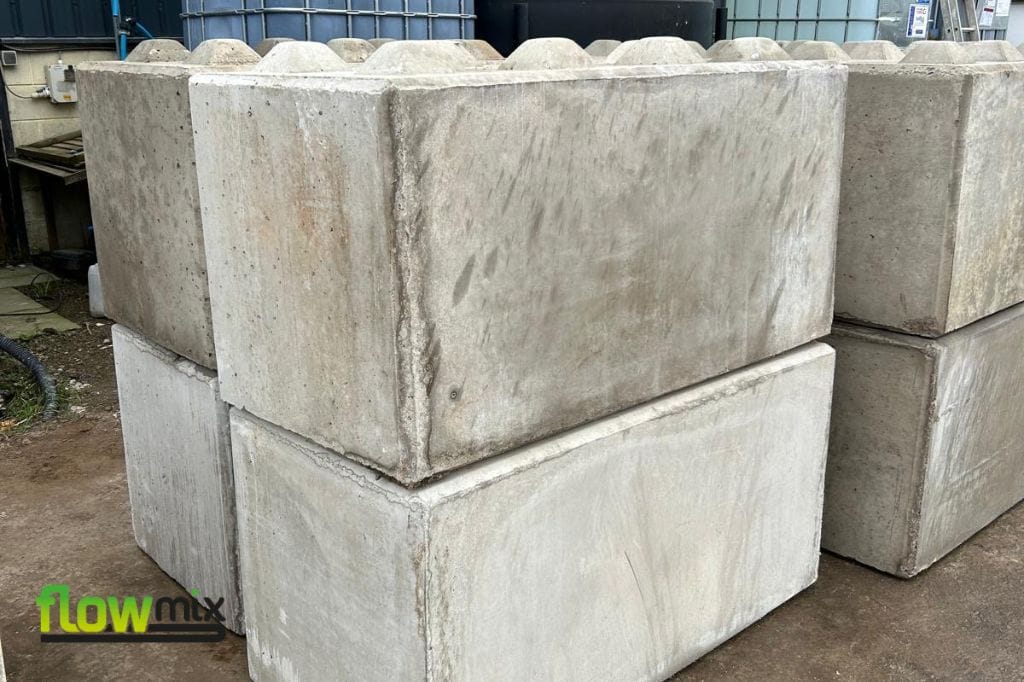
They might look like oversized Lego, but the uses for interlocking concrete blocks go far beyond play. These heavy-duty modular blocks are transforming everything from garden landscapes to industrial storage bays, and they’re doing it with speed, strength and surprising flexibility.
Whether you’re managing a building site, dealing with flood risk, or simply tidying up a sloping garden, the uses for interlocking concrete blocks offer a clever solution. They are fast to install, easy to reposition, and built to last.
In this guide, we’ll explore the many practical ways these concrete blocks are used across the UK and why they might be the perfect answer for your next project.
✅ Order interlocking concrete blocks today
✅ Free, fast quote within 24 hours
✅ Call, message or complete our simple online form
Flowmix Tewkesbury: Tel: 01684 217888 Flowmix Walsall: Tel: 01922 741731
What Are Interlocking Concrete Blocks?
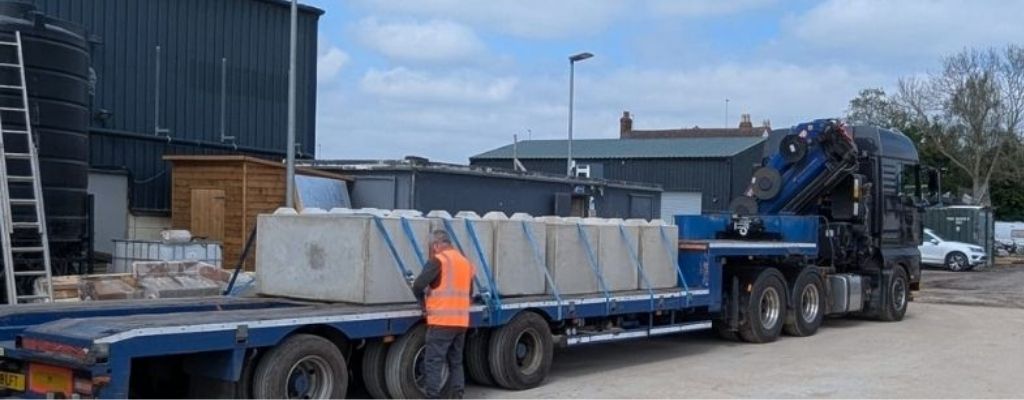
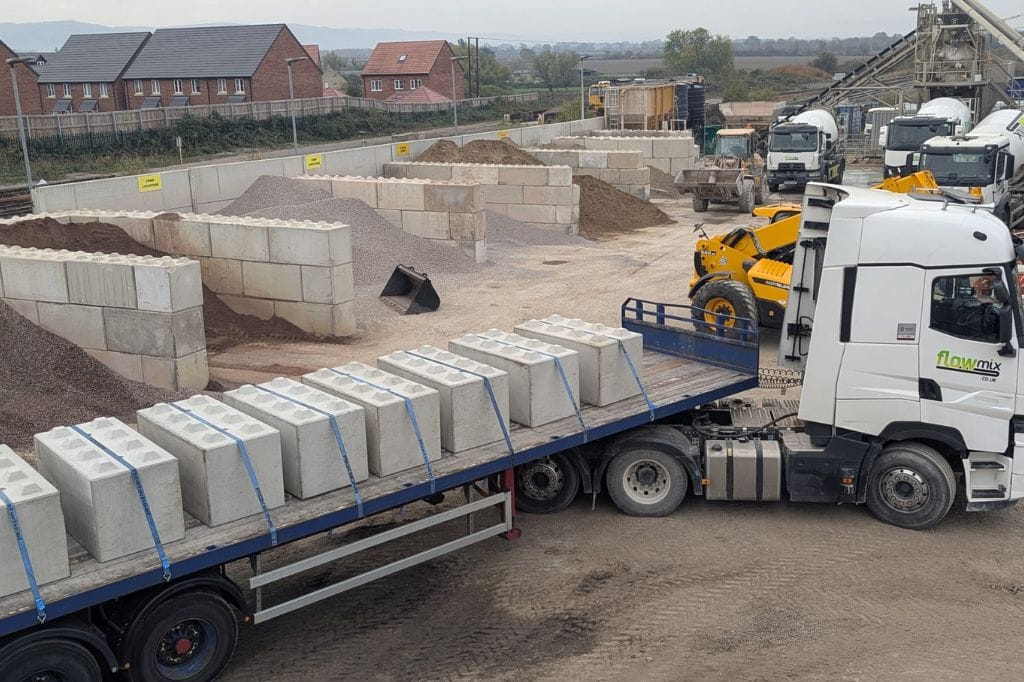
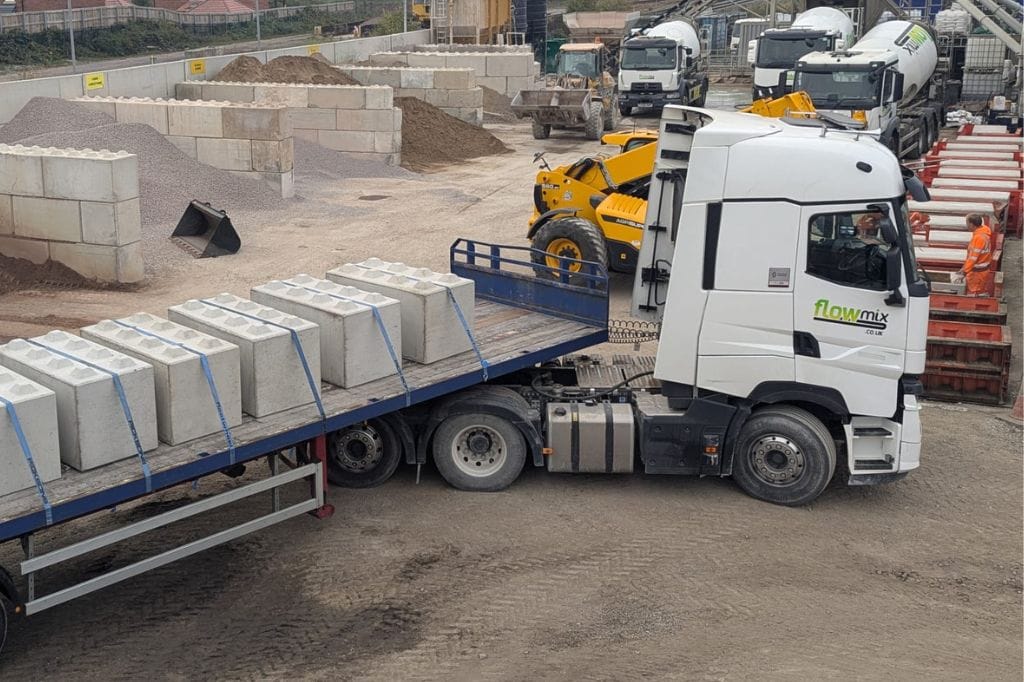
Interlocking concrete blocks are precast, heavy-duty blocks designed to fit together securely without the need for mortar. Much like puzzle pieces, each block locks into the next, creating stable and robust structures with minimal fuss. They’re becoming increasingly popular in construction, landscaping, agriculture, and civil engineering because of their versatility, strength, and flexibility.
These blocks are typically made from high-quality concrete, often incorporating recycled materials, and are available in a range of sizes to suit various applications. Because they don’t require extensive groundwork or curing time, interlocking blocks are ideal for both temporary and permanent builds, whether you’re securing a site or building a storage bay.
They’re also reusable. If your needs change, you can easily dismantle and relocate them. That’s part of what makes them such a cost-effective choice for many industries.
Want to Order Today?
If you’re not sure which block type you need or how many to order, contact Flowmix Tewkesbury or Walsall today. Their expert team can guide you through your options and help you plan your project using interlocking concrete blocks with confidence.
Flowmix Tewkesbury: 01684 217888 Flowmix Walsall: Tel: 01922 741731
Common Uses for Interlocking Concrete Blocks
The uses for interlocking concrete blocks are numerous, which is why they are gaining popularity.
Retaining Walls
Whether it’s a garden terrace or a large-scale embankment, interlocking blocks make retaining walls quick to build and structurally sound. Their mass and interlock provide excellent resistance to pressure, making them ideal for sloped landscapes or soil retention.
Temporary and Permanent Barriers
If you need to secure a site or redirect traffic, these blocks are perfect for creating barriers on construction sites, car parks or roadworks. They’re stable, stackable, and easily moved if plans change.
Storage Bays and Bunkers
Construction companies, farmers and waste management sites use interlocking blocks to create strong, reusable storage bays for aggregates, silage, or scrap materials. They’re durable and quick to install, saving time on site preparation.
Fire and Blast Protection
In industrial environments, the uses for interlocking concrete blocks are invaluable. They are often used to build fire-resistant walls or blast barriers. Their mass and density help absorb impact and provide separation between hazardous zones.
Foundations and Earth Retention
When you need a stable base for a cabin, shed, or machinery, interlocking blocks offer excellent load-bearing capacity, particularly in areas where pouring concrete is impractical.
Flood Defence and Water Control
As extreme weather events become more common, many councils and landowners are turning to interlocking blocks as a reliable flood defence system. Their strength and weight help divert water and protect infrastructure.
Garden and Outdoor Projects
DIYers and landscapers use the giant concrete blocks to build raised beds, outdoor seating, steps and garden walls. Their uniform shape makes it easy to create clean, level structures without specialist tools.
Need Help With Your Order?
If you’re not sure which block type you need or how many to order, contact Flowmix Tewkesbury or Walsall today. Their expert team can guide you through your options and help you plan your project using interlocking concrete blocks with confidence.
Flowmix Tewkesbury: 01684 217888 Flowmix Walsall: Tel: 01922 741731
Other Applications
- Push Walls – They are strong enough for use in agricultural and industrial applications where materials are pushed against the walls.
- Segregation Bays – Used in recycling centres to separate materials and prevent contamination.
- Salt Stores – Suitable for building weather-resistant storage for salt and other bulk materials.
- Culverts – Used in constructing culverts to guide water under roads, driveways or embankments.
- Counterweights – Can be used as stable counterweights in civil engineering and temporary works.
Why Choose Interlocking Blocks Over Traditional Materials?
Traditional building materials like brick or poured concrete have their place, but when time, flexibility, or access is limited, interlocking concrete blocks often emerge as the top choice.
Here’s why more professionals are making the switch:
- Fast Installation: No need for mortar or curing time. You can place the blocks directly on a level base using standard lifting equipment.
- Cost-Effective: Reduced labour, minimal groundwork, and reusable materials all help cut costs in both the short and long term.
- Strong and Stable: Their sheer mass makes them ideal for high-load and high-pressure applications, even without reinforcement.
- Reusable and Relocatable: Unlike traditional walls, these blocks are easy to dismantle and reused elsewhere, making them ideal for evolving projects.
- Minimal Foundation Work: For many installations, a simple level sub-base is all that’s needed.
Whether you’re looking to build something temporary or permanent, these blocks offer flexibility without compromising on strength.
What Size Concrete Blocks do Flowmix Supply?
Flowmix supplies two sizes of interlocking concrete blocks:
- 1600 x 800 x 800mm
- 800 x 800 x 800mm
Who Uses Interlocking Concrete Blocks?
The versatility of interlocking blocks makes them useful across a wide range of industries:
- Builders and Developers – for site security, storage bays, and boundary walls
- Landscapers – used for retaining walls, raised beds and decorative features
- Farmers – for silage clamps, grain storage and dividing bays
- Councils and Local Authorities – for flood defence, roadworks and public safety
- Homeowners and DIYers – for garden walls, terraces and outdoor seating
Regardless of the scale of your project, there’s a strong likelihood that these blocks can be tailored to meet your specific needs. As you can see, the uses for interlocking concrete blocks are numerous.
Ready to Order Interlocking Concrete Blocks?
If you are ready to explore the uses for interlocking concrete blocks in your own project? Speak to the team at Flowmix Tewkesbury or Walsall. We will help you select the right blocks and quantities and arrange for fast delivery to your site.
Flowmix Tewkesbury: 01684 217888 Flowmix Walsall: Tel: 01922 741731
5 Things to Consider Before Buying Concrete Blocks
Before placing an order with Flowmix Tewkesbury or Walsall, it’s worth thinking through the practicalities of using interlocking concrete blocks:
- Weight and Transport: These blocks are heavy and typically require a forklift or telehandler for movement. Make sure your site has easy access and standard lifting equipment.
- Surface Preparation: Although they don’t require traditional foundations, a flat, compacted base is necessary, typically made from Type 1 aggregate.
- DIY or Professional: Some small-scale landscaping projects are OK for DIY jobs, but for structural builds or large walls, it’s best to consult a professional.
- Size and Quantity: Blocks come in various sizes and shapes. Calculating the correct quantity can save time and prevent waste.
- Planning Permission: For taller walls or boundary structures, check with your local planning authority to ensure compliance with relevant regulations.
Conclusion
From flood defences to garden walls, the uses for interlocking concrete blocks are both wide-ranging and highly practical. They’re strong, reusable, and surprisingly quick to install, offering a flexible solution trusted across numerous industries.
Whether you’re building a retaining wall, securing a site, or creating an outdoor feature, these blocks offer a modern alternative to traditional materials without delays or disruptions.
How Flowmix Can Help with Your Project
Flowmix has two plants, Gloucester and Walsall. We provide the following services (with time slots):
✅ Ready-mix concrete, mix on-site (volumetric concrete)
✅ Traditional and liquid screed.
✅ Concrete line pump Hire to reduce manual labour and associated costs, increase efficiency, reduce wastage and clean up.
✅ Interlocking concrete blocks for temporary or permanent barriers.
✅ Mini-Mix loads up to 4 cubic metres.
Flowmix holds the BSA-approved Ready Mix Concrete Kitemark KM683844, a certification that “confirms a product or service’s claim has been independently and repeatedly tested by experts” (source BSI).
Flowmix Tewkesbury: Tel: 01684 217888 Flowmix Walsall: Tel: 01922 741731
Flowmix Delivery Areas
| Tewkesbury | Walsall Plant |
| Bourton-on-the-Water | Aldridge |
| Brockworth | Barton-Under-Needwood |
| Chalford | Birmingham |
| Cheltenham | Brownhills |
| Chipping Campden | Burntwood |
| Cirencester | Burton Upon Trent |
| Droitwich Spa | Cannock |
| Evesham | Coleshill |
| Gloucester | Dudley |
| Great Malvern | Great Haywood |
| Ledbury | Lichfield |
| Newent | Norton Canes |
| Northleach | Penkridge |
| Pershore | Rugeley |
| Ross-on-Wye | Stafford |
| Stow-on-the-Wold | Tamworth |
| Stroud | Walsall |
| Tewkesbury | West Bromwich |
| Worcester | Wolverhampton |