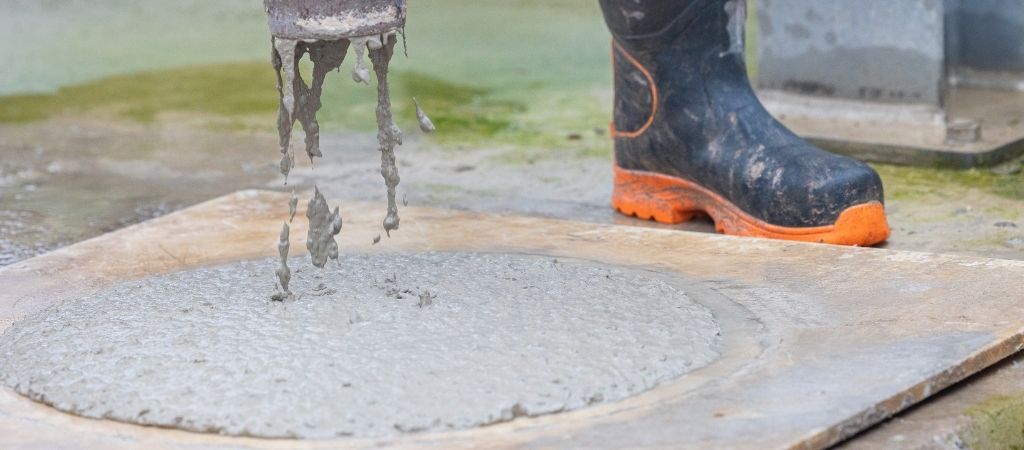
Getting a concrete mix right is about more than just strength on the day it is poured. One of the most common issues we see on sites is too much water in concrete, often added to make the mix easier to work with. While this may seem like a harmless adjustment, excess water can quietly compromise the performance, durability and lifespan of the finished concrete.
Understanding why water control matters can help prevent costly problems later on.
✅ Order ready-mix or volumetric concrete today
✅ Free, fast quote within 24 hours
✅ Call, message or complete our simple online form
Flowmix Tewkesbury: Tel: 01684 217888 Flowmix Walsall: Tel: 01922 741731
Why Water Is So Important in Concrete
Concrete gains its strength through a chemical reaction between cement and water. This reaction is carefully balanced. The amount of water added must be enough to allow hydration to take place, but not so much that it weakens the structure.
When there is too much water in concrete, the cement paste becomes diluted. As the concrete cures and excess water evaporates, it leaves behind tiny voids within the hardened material. These voids reduce strength and increase long-term vulnerability.
Why Extra Water Often Gets Added
Too much water in concrete is rarely intentional. It usually happens for practical reasons on site, such as making the mix easier to place or finish, compensating for hot or windy conditions, or misjudging the moisture already present in aggregates. In some cases, adding water counteracts slump loss during transport or pumping.
While understandable, these adjustments can create problems that are not immediately visible.
What Happens When There’s Too Much Water in Concrete
Reduced Strength
One of the most serious effects of too much water in concrete is reduced compressive strength. Excess water weakens the bond between cement and aggregates, preventing the concrete from achieving its designed load-bearing capacity. It’s especially critical for foundations, slabs and structural elements.
Increased Porosity and Moisture Ingress
Excess water increases porosity. Once hardened, concrete with too much water can allow moisture, air, and chemicals to penetrate more easily. Over time, this can lead to freeze-thaw damage, surface deterioration and corrosion of steel reinforcement.
Shrinkage and Cracking
As surplus water evaporates during curing, the concrete shrinks. Uneven shrinkage can cause internal stresses, leading to cracking days or even weeks after placement. These cracks allow further moisture ingress and reduce durability.
Poor Surface Finish
Too much water in concrete can cause bleeding, where water rises to the surface after placement. That weakens the top layer, leading to dusting, scaling and a poor-quality finish. In high-traffic areas, it can significantly shorten the lifespan of concrete.
Higher Long-Term Costs
Although adding water may seem like a quick fix, the long-term impact is often expensive. Issues such as reduced durability, early cracking, and surface failure can lead to repairs or replacement much sooner than expected.
Need Expert Advice?
Speak to the team at Flowmix Tewkesbury, Gloucestershire or Aldridge, Walsall. We are happy to help with all your concrete requirements.
Flowmix Tewkesbury: Tel: 01684 217888 Flowmix Walsall: Tel: 01922 741731
How to Tell If There Is Too Much Water in the Concrete
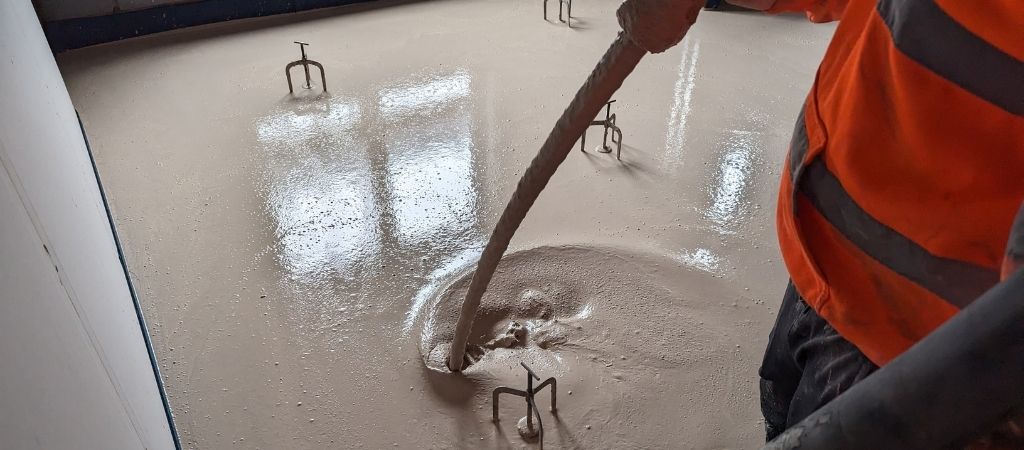
Concrete with excess water often looks runny rather than cohesive. It may not hold its shape when placed, and it can feel challenging to control during finishing. Surface water appearing soon after placement is another warning sign.
Slump testing is a standard test used to measure consistency, but it is essential to remember that good workability does not require too much water in concrete. A well-designed mix can be workable without sacrificing strength.
Why Adding Water After Delivery Is Risky
Once concrete leaves the batching plant, quality control becomes far more difficult. Adding water on site changes the designed mix and creates inconsistency across the pour. Different areas may cure at different strengths, increasing the risk of weak points and cracking.
That is why controlling water at the batching stage is always preferable.
How Professional Suppliers Prevent These Problems
Professional concrete suppliers like Flowmix, focus on accurate batching, precise water measurement and consistent mixing. We achieve workability through correct mix design and, where needed, the use of admixtures rather than excess water.
At Flowmix, controlling water content is a key part of delivering concrete that performs as expected, not just on the day of delivery, but for years to come.
✅ Order ready-mix or volumetric concrete today
✅ Free, fast quote within 24 hours
✅ Call, message or complete our simple online form
Flowmix Tewkesbury: Tel: 01684 217888 Flowmix Walsall: Tel: 01922 741731
What to Do If the Mix Is Too Wet
If you suspect there is too much water in concrete before placement, the safest option is to pause and speak to your supplier. Continuing with an unsuitable mix often leads to problems that cannot be fixed later.
Conclusion
Too much water in concrete is one of the most common and most damaging mistakes made during mixing and placement. While it may improve workability in the short term, it reduces strength, durability and long-term performance.
Getting the mix right from the start saves time, money and future repairs. If you need advice on the right concrete mix for your project, Flowmix is always happy to help.
How Flowmix Can Help With Your Project
Flowmix has two plants, Gloucester and Walsall. We provide the following services (with time slots):
✅ Ready-mix concrete, mix on-site (volumetric concrete)
✅ Traditional and liquid screed.
✅ 200′ Concrete line pump Hire to reduce manual labour and associated costs, increase efficiency, reduce wastage and clean up.
✅ Interlocking concrete blocks for temporary or permanent barriers.
✅ Mini-Mix loads up to 4 cubic metres.
Flowmix has the BSA-approved Ready Mix Concrete Kitemark KM683844, a certification that “confirms a product or service’s claim has been independently and repeatedly tested by experts” (source BSI).
Flowmix Tewkesbury: Tel: 01684 217888 Flowmix Walsall: Tel: 01922 741731
Flowmix Delivery Areas
| Tewkesbury Area | Walsall Area |
| Bourton-on-the-Water | Aldridge |
| Brockworth | Barton-Under-Needwood |
| Chalford | Birmingham |
| Cheltenham | Brownhills |
| Chipping Campden | Burntwood |
| Cirencester | Burton Upon Trent |
| Droitwich Spa | Cannock |
| Evesham | Coleshill |
| Gloucester | Dudley |
| Great Malvern | Great Haywood |
| Ledbury | Lichfield |
| Newent | Norton Canes |
| Northleach | Penkridge |
| Pershore | Rugeley |
| Ross-on-Wye | Stafford |
| Stow-on-the-Wold | Tamworth |
| Stroud | Walsall |
| Tewkesbury | West Bromwich |
| Worcester | Wolverhampton |