
It might sound unbelievable, but some of the world’s most desert-rich countries still import sand for construction. With vast landscapes shaped almost entirely from sand, it seems logical to assume they would have an unlimited supply right on their doorstep.
However, that’s not the case. In construction, logic based on appearance rarely tells the whole story.
Behind every slab, screed, and structural pour is a careful balance of materials. Sand, one of the most common ingredients in concrete, plays a far more critical role than many people realise. Its shape, texture, and formation can determine whether concrete performs as intended or fails to meet structural standards.
That raises an important question, one that applies far beyond deserts and megacities. Why does sand that looks perfectly usable turn out to be unsuitable for concrete, and what does this tell us about material quality in modern construction?
Understanding the difference helps explain why sourcing the right materials matters just as much as sourcing them locally. It is also a reminder that in concrete production, quality is never accidental.
Ready to Order Ready-Mix or Volumetric Concrete?
If you are ready to order a ready-mix concrete delivery, speak to the team at Flowmix Tewkesbury or Walsall. We will help you select the right mix and quantities and arrange for fast delivery to your site.
✅ Order your ready-mix or volumetric concrete today
✅ Free, fast quote within 24 hours
✅ Call, message or complete our simple online form
Not All Sand Is Created Equal
Although people may think of sand as a single, generic material, in reality, it varies widely depending on how it forms.
Desert sand is shaped almost entirely by wind. Over thousands of years, grains collide, roll, and polish against one another. The result is exceptionally smooth, rounded sand, ground down by the wind.
The sand looks clean and uniform, which is why it works so well for dunes, beaches, and landscapes.
Unfortunately, those same characteristics make desert sand poorly suited to concrete.
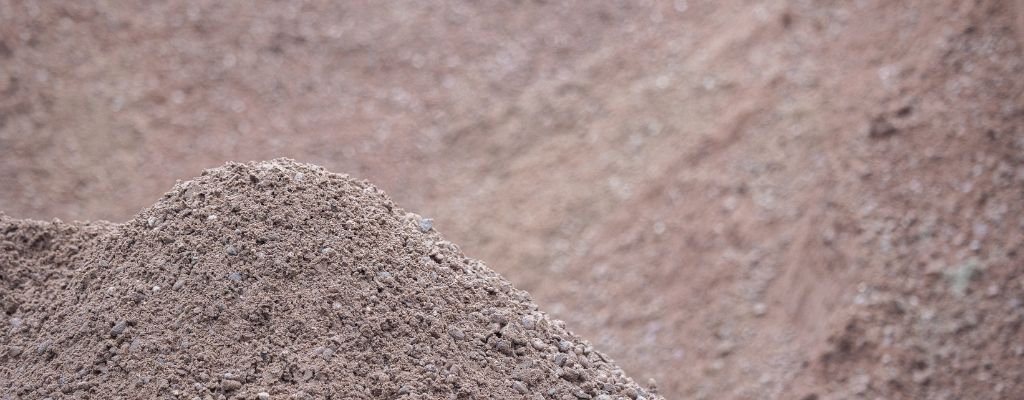
Construction-grade sand, on the other hand, is usually formed through water movement or mechanical crushing. River sand, quarry sand, and manufactured sand tend to have sharp edges and irregular surfaces.
These angular particles create friction and interlock when mixed with cement and aggregate, forming a strong and stable concrete matrix.
To the naked eye, the difference might seem minor. But under load, those microscopic details determine how well concrete holds together.
In professional concrete production, these material properties are non-negotiable.
Why Desert Sand Doesn’t Work for Concrete
Concrete relies on a mechanical bond. When cement hydrates, it needs something to grip onto, and that’s where desert sand falls short.
Because desert sand grains are smooth and rounded, they slide past each other rather than locking together. When used in concrete, this reduces internal friction and weakens the bond between the sand and the cement paste.
The result is concrete that is more prone to cracking, has lower compressive strength, and is less durable over time.
In contrast, angular sand particles act almost like tiny hooks. Their rough surfaces create contact points that help the cement bind everything together. This interlocking structure is what gives concrete its strength and long-term stability.
For structural concrete, screeds, and load-bearing applications, this difference is critical.
Using the wrong type of sand isn’t just inefficient; it can compromise performance and safety. That’s why professional concrete suppliers like Flowmix carefully control sand grading.
The Kind of Sand Construction Actually Needs
For concrete to perform consistently, the sand within the mix must meet precise criteria. It’s not just about strength on the day of the pour, but durability, finish, and long-term performance.
Construction-grade sand needs a balance of particle sizes rather than uniform grains. That allows smaller particles to fill the gaps between larger ones, reducing voids and creating a denser, stronger mix.
The particles themselves should be angular, with rough surfaces that help them bind effectively with cement and aggregate.
It’s why sand sourced from quarries or rivers, or produced through crushing processes, is typically preferred. These sources naturally create the irregular shapes and varied grading that concrete requires.
When properly processed and tested, this type of sand provides consistent setting times, good workability, and reliable strength.
For applications such as ready mix concrete, screeds, and specialist pours, this level of control is essential. It ensures the finished concrete meets performance expectations on site, rather than introducing variables that could affect quality.
Need Expert Advice?
Speak to the team at Flowmix Tewkesbury, Gloucestershire or Aldridge, Walsall. We are happy to help with all your concrete requirements.
Flowmix Tewkesbury: 01684 217888 Flowmix Walsall: Tel: 01922 741731
Mega-Projects and Material Demands
As construction projects grow in size and complexity, the margin for material inconsistency becomes smaller. Large-scale developments demand concrete that performs consistently, every time, across thousands of cubic metres.
Modern infrastructure, high-rise buildings, transport networks, and large commercial developments all rely on tightly controlled concrete specifications.
Even slight variations in sand quality can affect strength, curing behaviour, and surface finish when repeated at scale.
In environments where rapid development is underway, demand for high-performance concrete increases sharply. The focus shifts from what materials are available locally to what materials meet the required standards.
When local sand cannot deliver the necessary performance, importing suitable alternatives becomes a practical decision rather than a luxury.
Whether it’s a large infrastructure scheme or a smaller commercial build, consistent quality materials are key to delivering reliable results.
Why Importing Sand Becomes Inevitable
In regions where naturally occurring sand does not meet construction standards, processing it to an acceptable level can be technically challenging and environmentally costly. Even then, the results may still fall short of what modern concrete specifications demand.
Importing sand that already meets the required grading and particle characteristics can be more efficient, more predictable, and more economical over the long term.
Global supply chains allow construction industries to source materials based on performance rather than proximity. While transporting sand over long distances may seem counterintuitive, the alternative can entail higher failure risk, inconsistent concrete quality, and increased on-site remediation costs.
For concrete producers, the priority is not where the sand comes from, but how it behaves in the mix. The priority must be on strength, workability, and durability. When local materials cannot provide that assurance, importing becomes part of maintaining quality control.
The Hidden Global Demand for Sand
Sand is one of the most heavily used raw materials in the world, yet it rarely gets the attention it deserves. Beyond concrete, it plays a vital role in glass production, road building, infrastructure, and even technology manufacturing.
As global development accelerates, demand for high-quality sand continues to rise.
What makes this demand particularly challenging is that only a fraction of naturally occurring sand is suitable for construction. Desert sand may dominate landscapes, but it contributes very little to the concrete industry.
That creates pressure on rivers, quarries, and coastal sources that produce the correct type of material.
As a result, competition for construction-grade sand has increased worldwide. Supply chains have expanded, sourcing has become more selective, and material testing has become more rigorous. The focus has shifted from abundance to suitability, with performance driving procurement decisions.
For the construction sector, this reinforces a critical reality. Sand is not a limitless resource when quality standards are applied. Managing it responsibly and efficiently is becoming a defining challenge for the industry.
Environmental and Sustainability Considerations
While sand may seem like an endless resource, intensive extraction carries significant environmental consequences. Overexploitation of rivers, quarries, and coastal areas can lead to erosion, habitat loss, and the destabilisation of ecosystems.
These impacts are becoming increasingly visible as construction demand continues to grow worldwide.
For concrete producers and suppliers like Flowmix, sustainability isn’t just a buzzword; it’s a responsibility. By carefully managing sourcing, optimising material use, and exploring alternatives, the industry can reduce environmental pressure while maintaining high-quality production.
Practices such as using recycled aggregates, implementing precise mix designs to minimise waste, and considering manufactured sand all contribute to more sustainable construction.
Balancing performance, availability, and environmental impact is essential. It ensures that every tonne of concrete produced delivers not just strength and durability, but also a responsible approach to resource management.
Looking Ahead: Alternatives and Innovation
As demand for high-quality sand grows, the construction industry is increasingly exploring alternatives that maintain performance while reducing reliance on natural sources.
One promising solution is manufactured sand (M‑sand), produced by crushing rocks to create angular, well-graded particles suitable for concrete.
Manufactured sand offers predictable quality and consistency, making it ideal for large-scale projects.
Recycled aggregates are another essential innovation. By reprocessing construction and demolition waste, concrete producers can create a sustainable, high-performing material that reduces landfill and limits the need for new sand extraction.
Emerging technologies and optimised mix designs also help reduce sand consumption without compromising structural integrity. For example, precision batching, admixtures, and fibre reinforcement can improve concrete performance, enabling a more efficient use of materials.
For companies like Flowmix, embracing these innovations not only ensures that projects meet modern standards but also positions the business at the forefront of sustainable, responsible construction practices.
The future of concrete depends on balancing quality, availability, and environmental stewardship, and innovation is key to that balance.
Conclusion: A Lesson in Assumptions
The story of sand teaches an essential lesson for construction professionals and enthusiasts alike: abundance does not automatically mean suitability.
Even in desert regions, the right materials for modern concrete are not always readily available locally. What matters is the quality, consistency, and performance of the sand in every mix.
For concrete producers, builders, and suppliers like Flowmix, this insight underscores the importance of sourcing, testing, and innovation.
It’s not enough to rely on what appears to be plentiful. Every tonne of material must meet the demands of modern construction, from high-rise buildings to industrial screeds and infrastructure projects.
Ultimately, the “sand paradox” is more than a curiosity. It’s a reminder of the hidden complexities behind the structures we take for granted and the careful planning that goes into building safely, efficiently, and sustainably.
By understanding and respecting these material realities, the construction industry can continue to deliver strong, durable, and responsible results for the future.
How Flowmix Can Help With Your Project
Flowmix has two plants, Gloucester and Walsall. We provide the following services (with time slots):
✅ Ready-mix concrete, mix on-site (volumetric concrete)
✅ Traditional and liquid screed.
✅ Concrete line pump Hire to reduce manual labour and associated costs, increase efficiency, reduce wastage and clean up.
✅ Interlocking concrete blocks for temporary or permanent barriers.
✅ Mini-Mix loads up to 4 cubic metres.
Flowmix has the BSA-approved Ready Mix Concrete Kitemark KM683844, a certification that “confirms a product or service’s claim has been independently and repeatedly tested by experts” (source BSI).
Flowmix Tewkesbury: 01684 217888 Flowmix Walsall: Tel: 01922 741731
Flowmix Delivery Areas
| Tewkesbury Area | Walsall Area |
| Bourton-on-the-Water | Aldridge |
| Brockworth | Barton-Under-Needwood |
| Chalford | Birmingham |
| Cheltenham | Brownhills |
| Chipping Campden | Burntwood |
| Cirencester | Burton Upon Trent |
| Droitwich Spa | Cannock |
| Evesham | Coleshill |
| Gloucester | Dudley |
| Great Malvern | Great Haywood |
| Ledbury | Lichfield |
| Newent | Norton Canes |
| Northleach | Penkridge |
| Pershore | Rugeley |
| Ross-on-Wye | Stafford |
| Stow-on-the-Wold | Tamworth |
| Stroud | Walsall |
| Tewkesbury | West Bromwich |
| Worcester | Wolverhampton |
FAQs
Why Can’t Desert Sand Be Used In Concrete?
Desert sand is smooth and rounded due to wind erosion. That prevents it from bonding effectively with cement, making concrete weaker and more prone to cracking. Construction-grade sand needs angular grains that lock together for strength and durability.
What Type Of Sand Is Suitable For Concrete?
Concrete requires sand that is well-graded and angular, often sourced from rivers, quarries, or manufactured by crushing rocks. The rough texture and varied grain sizes help cement bind properly and improve structural integrity.
Can Recycled Materials Replace Natural Sand In Concrete?
Yes. Recycled aggregates from construction and demolition waste can be used to produce high-quality concrete. That reduces environmental impact and reliance on natural sand while maintaining performance standards.
Why Do Some Countries Import Sand Even If They Have Deserts?
Even countries with abundant desert sand may need to import higher-quality sand for construction. Desert sand is too smooth for concrete, so importing sand with the right properties ensures consistent strength and durability for large-scale projects.
What Are Alternatives To Natural Sand In Construction?
Alternatives include manufactured sand (M-sand), recycled aggregates, and optimised concrete mix designs that reduce sand usage. These solutions can improve sustainability while maintaining quality.
How Does Sand Quality Affect Concrete Performance?
Sand quality affects workability, strength, durability, and finish. Poor-quality sand can lead to cracking, reduced structural integrity, and a shorter lifespan for concrete structures.
Is Sand Mining Environmentally Sustainable?
Excessive sand mining can harm ecosystems, cause erosion, and disrupt habitats. Sustainable sourcing, recycling, and using manufactured sand can help reduce environmental impact while meeting construction needs.