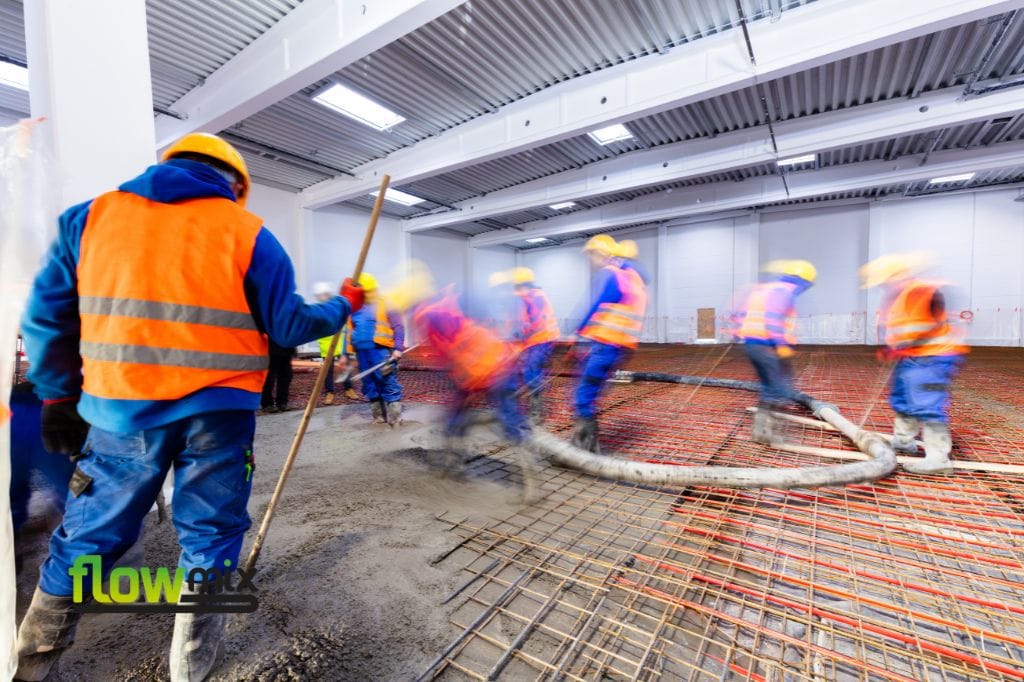
Liquid screed vs dry screed indoors: When it comes to choosing the best flooring solution, the debate between these screeds is an important one. Both options have advantages and are suitable for different types of projects.
Whether you’re installing underfloor heating, levelling an uneven surface, or seeking a smooth, durable finish, understanding the pros and cons of liquid screed and dry screed will help you make an informed decision.
What Is Liquid Screed?
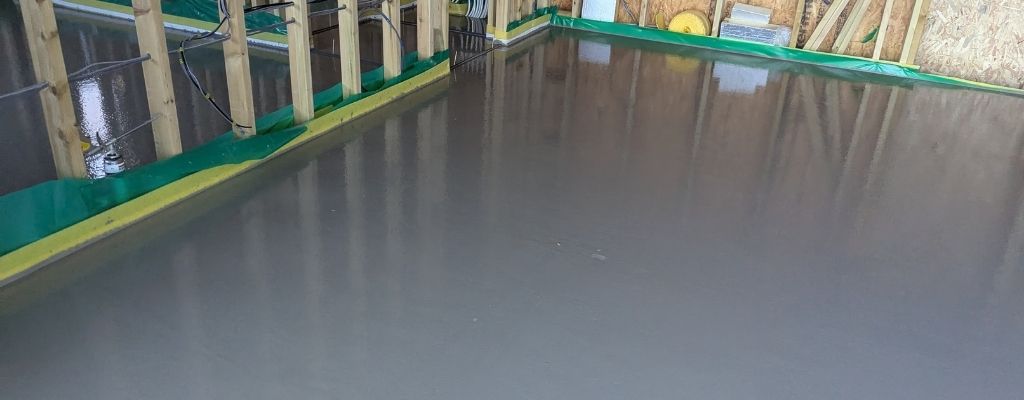
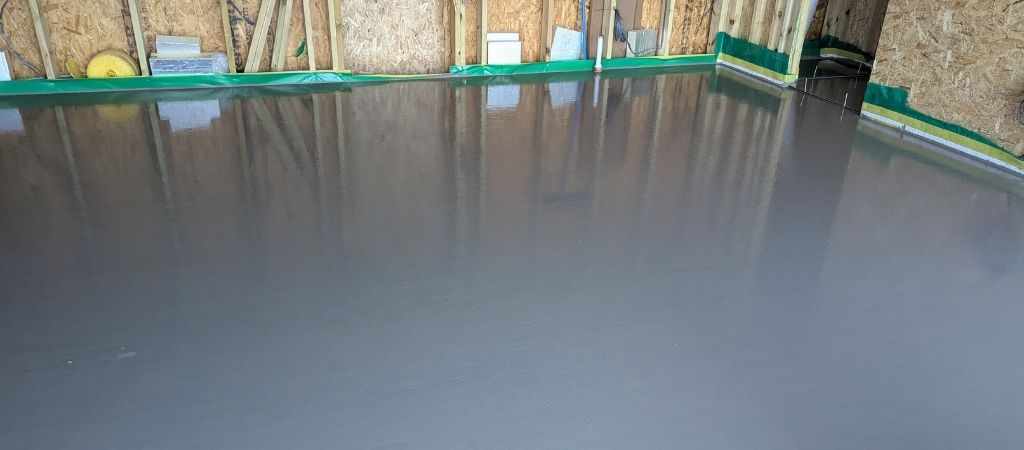
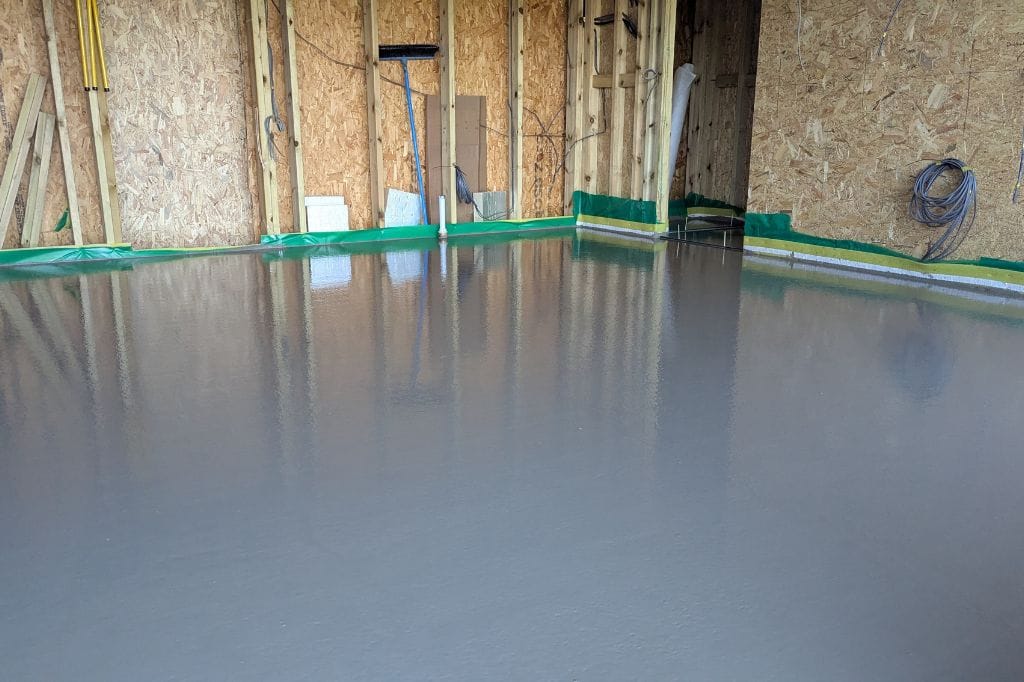
Liquid screed, also known as flowing screed or self-levelling screed, is a high-performance mixture that is poured onto a floor to create a smooth and level surface. It is typically made from a blend of fine aggregates, cement, and specialist additives, allowing it to flow easily and settle evenly.
Benefits of Liquid Screed Indoors
- Faster Installation – Liquid screed is easy to pour and spreads quickly, reducing labour time.
- Minimal Shrinkage – Unlike traditional dry screed, it dries with minimal cracking.
- Excellent Heat Conductivity – Ideal for use with underfloor heating systems.
- Thinner Application – Requires a smaller depth, which reduces drying time.
- Smooth, Level Finish – Reduces the need for additional levelling before final flooring is installed.
Read: Liquid Screed Floor Preparation: Best Step-By-Step Guide
What Is Dry Screed?
Dry screed, often referred to as traditional sand and cement screed, is a manually mixed and applied flooring base. It consists of a semi-dry mixture of sharp sand, cement, and water, which is then compacted and levelled by hand.
Benefits of Dry Screed Indoors
- Cost-Effective – Generally cheaper in terms of material costs.
- Good Structural Integrity – Offers a strong, stable base for heavy flooring materials.
- Flexibility in Application – Can be used for various floor types, including sloped surfaces.
- Easier for Small Areas – More practical for minor repairs and smaller rooms.
Liquid Screed Vs Dry Screed Indoors: Key Differences
| Feature | Liquid Screed | Dry Screed |
| Application Time | Quick & efficient | Labour-intensive |
| Drying Time | Faster (24-48 hours for light foot traffic) | Slower (up to 7 days per 25mm depth) |
| Suitability for UFH | Excellent conductivity | Less efficient |
| Surface Finish | Very smooth & level | Requires additional levelling |
| Shrinkage Risk | Low | Higher risk of cracks |
Read: Screed and Underfloor Heating: A Complete Guide 2025
Comparing Liquid Screed Vs Dry Screed Indoors
Choosing between liquid screed vs dry screed indoors depends on several factors, including installation speed, drying time, and cost. Here’s a breakdown of how they compare:
1. Installation Process
- Liquid screed is poured and self-levels, requiring minimal labour.
- Dry screed must be mixed and manually applied, making it more labour-intensive.
2. Drying Time
- Liquid screed dries faster, often allowing foot traffic within 24-48 hours.
- Traditional screed is slow to cure, typically several weeks.
3. Thermal Efficiency
- Liquid screed offers better thermal conductivity, making it ideal for underfloor heating systems.
- Dry screed does not conduct heat as efficiently, leading to longer heating times.
4. Durability & Strength
- Traditional screed is known for its strength and is often preferred in high-load areas.
- Flow screed is still highly durable but may require additional reinforcement in heavy-use environments.
5. Cost Considerations
- Liquid screed can be more expensive per square metre but reduces labour costs.
- Dry screed materials are often cheaper, but installation is more time-consuming.
Which Screed Should You Choose?
If you need a fast, efficient, and smooth finish, liquid screed is an excellent option, especially for heated flooring. However, if you’re working on a high-load area where strength is the priority, traditional dry screed may be the better choice.
Read: Professional Screed Delivery Services: 5 Key Benefits 2025
When deciding between liquid screed vs dry screed indoors, consider your project’s specific requirements:
- Underfloor Heating: Liquid screed is superior due to its high thermal conductivity.
- Speed of Completion: Liquid screed allows for quicker installation and drying.
- Budget Constraints: Dry screed may be more cost-effective for smaller projects.
- Final Flooring Type: If a perfectly level base is required, liquid screed is the better choice.
Conclusion
Both liquid screed and dry screed offer unique benefits, making them suitable for different applications.
If you require a fast-drying, smooth, and efficient solution, liquid screed is an excellent choice. However, if you prefer a more traditional, cost-effective option with strong structural integrity, dry screed indoors might be the right fit.
By weighing up the pros and cons of liquid screed vs dry screed indoors, you can select the best flooring base for your project.
Let’s put it this way: Would you rather spend a little more upfront or double your labour costs?
- Labour savings – Less time trowelling, more time on the next project
- Energy efficiency – Uses less energy in heated flooring (and it’s backed by NHBC!)
- Minimal material wastage – Dry screed crumbles and cracks if mixed poorly
For a large-scale job, the savings on time and labour make liquid screed the better investment.
The verdict for liquid screed vs dry screed indoors is a no-brainer: If you’re doing a big job indoors, liquid screed pays for itself.
How Flowmix Can Help With Your Project
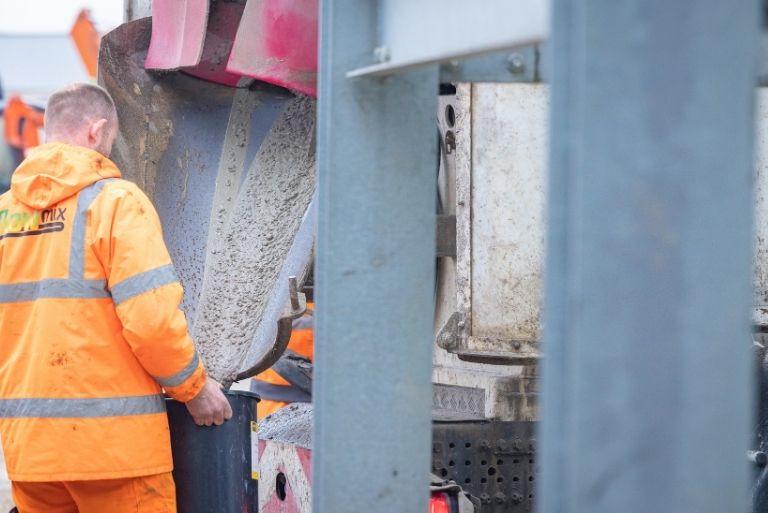
Flowmix has two plants, Gloucester and Walsall. We provide the following services (with time slots):
✅ Ready-mix concrete, mix on-site (volumetric concrete)
✅ Traditional and liquid screed.
✅ Concrete line pump Hire to reduce manual labour and associated costs, increase efficiency, reduce wastage and clean up.
✅ Interlocking concrete blocks for temporary or permanent barriers.
✅ Mini-Mix loads up to 4 cubic metres.
Flowmix has the BSA-approved Ready Mix Concrete Kitemark KM683844, a certification that “confirms a product or service’s claim has been independently and repeatedly tested by experts” (source BSI).
Flowmix Tewkesbury: 01684 217888 Flowmix Walsall: Tel: 01922 741731
Flowmix Delivery Areas
| Tewkesbury | Walsall Plant |
| Bourton-on-the-Water | Aldridge |
| Brockworth | Barton-Under-Needwood |
| Chalford | Birmingham |
| Cheltenham | Brownhills |
| Chipping Campden | Burntwood |
| Cirencester | Burton Upon Trent |
| Droitwich Spa | Cannock |
| Evesham | Coleshill |
| Gloucester | Dudley |
| Great Malvern | Great Haywood |
| Ledbury | Lichfield |
| Newent | Norton Canes |
| Northleach | Penkridge |
| Pershore | Rugeley |
| Ross-on-Wye | Stafford |
| Stow-on-the-Wold | Tamworth |
| Stroud | Walsall |
| Tewkesbury | West Bromwich |
| Worcester | Wolverhampton |
FAQs
What Type of Liquid Screeds Do Flowmix Offer?
Flowmix provides self-levelling liquid screeds Gyvlon and Cemfloor, which are high quality, fast-drying, energy-efficient, and durable. Traditional screed is also available.
Is Liquid Screed Better Than Dry Screed Indoors?
It depends on your project needs. Liquid screed is faster and better for underfloor heating, while dry screed is more affordable and durable.
How Long Does Liquid Screed Take To Dry Compared To Dry Screed?
Liquid screed can be walked on within 24-48 hours, while dry screed may take weeks to fully cure.
Can You Install Underfloor Heating With Dry Screed?
Yes, but liquid screed is more efficient for heated flooring due to its superior thermal conductivity.
Is Liquid Screed More Expensive Than Traditional Screed?
Generally, yes. However, the faster installation and reduced labour costs can make it more cost-effective overall.
Does Liquid Screed Crack Easily?
If not properly applied, liquid screed can develop minor cracks, but using the right mix and allowing proper curing minimises this risk.
Which Type Of Screed Is Best For Commercial Buildings?
For commercial spaces with high foot traffic, dry screed (Traditional screed) may be better due to its strength. However, liquid screed is ideal for projects requiring fast turnaround times.