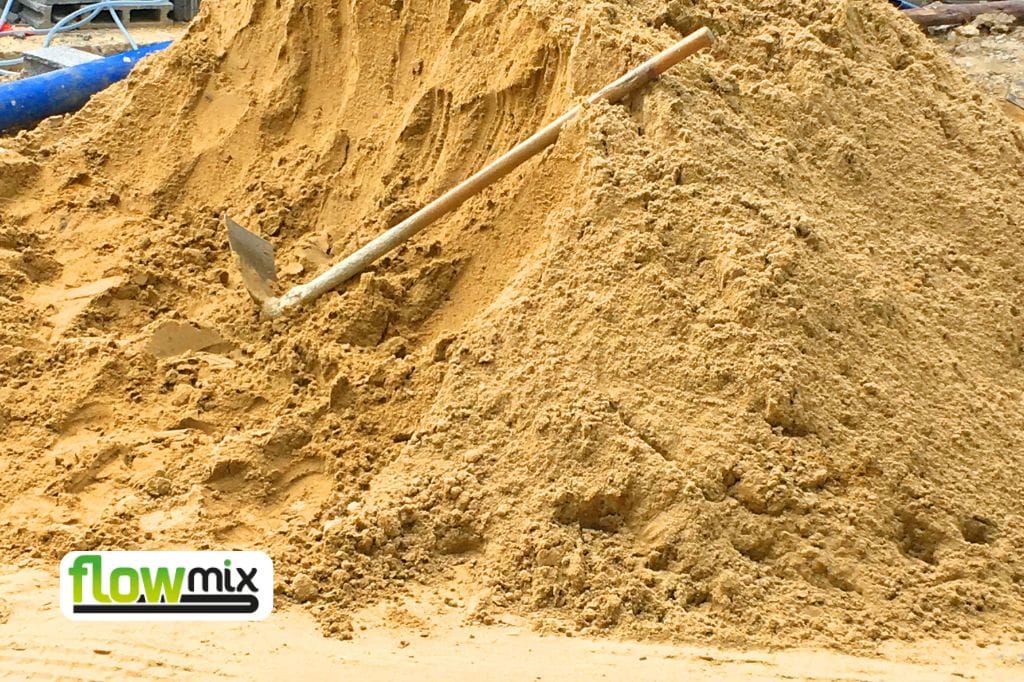
Lignite in sand is probably something you’ve never heard of, because most people haven’t.
When most people think about sand, they imagine it’s all the same. Clean, simple, and ready to use. But when it comes to concrete and screed, that assumption can lead to costly surprises.
Sometimes, what’s hiding in your sand can cause real problems for your project. One small impurity, known as lignite, can make a big difference to the quality and durability of your mix.
What Is Lignite?
Lignite is a soft, brownish type of coal that can sometimes occur naturally in sand deposits, especially if the sand source has become contaminated. It looks harmless enough, but in concrete and screed production, lignite behaves very differently from standard sand particles.
Because it’s light, porous and organic, lignite tends to absorb water during mixing. Later, as the concrete or screed dries out or becomes wet again, it expands and contracts. This constant movement can cause visible surface damage and weaken the integrity of the finished material.
Why Lignite Is a Problem in Concrete and Screed
Even small traces of lignite in sand can cause noticeable issues once the concrete has hardened. Some of the most common problems include:
- Pop-outs and craters – small holes or blemishes that appear on the surface
- Uneven colour or dark patches – caused by lignite reacting within the mix
- Weak spots or poor bonding – reducing the overall strength of the concrete or screed
While these issues may seem cosmetic at first, lignite in sand can lead to long-term durability issues. Surfaces may become more prone to cracking, and the overall finish may lose its smooth, professional appearance.
Need Expert Advice?
Speak to the team at Flowmix Tewkesbury or Walsall. We are happy to help with all your concrete requirements.
Flowmix Tewkesbury: 01684 217888 Flowmix Walsall: Tel: 01922 741731
How Flowmix Prevents Lignite Contamination
At Flowmix Tewkesbury, Gloucestshire and Aldridge, Walsall, quality control begins with the materials we source. We use only high-quality sands and aggregates, thoroughly tested to ensure they’re clean, consistent, and free of impurities such as lignite.
If a sand quarry shows any sign of contamination, our team identifies and rectifies the issue immediately through our extensive network of trusted suppliers. This proactive approach guarantees that every batch of concrete and screed we deliver meets the highest possible standards.
Our goal is simple: to provide strong, smooth, and reliable mixes that perform exactly as they should, every time.
Ready to Order Ready-Mix or Volumetric Concrete?
If you are ready to order a ready-mix concrete delivery, speak to the team at Flowmix Tewkesbury or Walsall. We will help you select the right mix and quantities and arrange for fast delivery to your site.
Flowmix Tewkesbury: 01684 217888 Flowmix Walsall: Tel: 01922 741731
Why Quality Control Matters
Quality concrete starts with quality materials. Even a small amount of lignite in sand can impact the appearance and performance of a finished surface, so it’s essential to know where your materials come from.
When you order from Flowmix, you can rest assured that we have produced your mix using clean, carefully tested materials, giving you confidence that your project will stand the test of time.
It’s just one of the details that make a big difference in the quality and reliability you get from Flowmix.
If you’re sourcing concrete or screed elsewhere, it’s worth asking your supplier a simple question:
Does your sand contain lignite?
Because when it comes to concrete, the smallest details often make the biggest difference.
How Flowmix Can Help With Your Project
Flowmix has two plants, Gloucester and Walsall. We provide the following services (with time slots):
- Ready-mix concrete, mix on-site (volumetric concrete)
- Traditional and liquid screed.
- Concrete line pump Hire to reduce manual labour and associated costs, increase efficiency, reduce wastage and clean up.
- Interlocking concrete blocks for temporary or permanent barriers.
- Mini mix deliveries up to 4 cubic metres.
Flowmix has the BSA-approved Ready Mix Concrete Kitemark KM683844, a certification that “confirms a product or service’s claim has been independently and repeatedly tested by experts” (source BSI).
Flowmix Tewkesbury: 01684 217888 Flowmix Walsall: Tel: 01922 741731
Flowmix Delivery Areas
| Tewkesbury Area | Walsall Area |
| Bourton-on-the-Water | Aldridge |
| Brockworth | Barton-Under-Needwood |
| Chalford | Birmingham |
| Cheltenham | Brownhills |
| Chipping Campden | Burntwood |
| Cirencester | Burton Upon Trent |
| Droitwich Spa | Cannock |
| Evesham | Coleshill |
| Gloucester | Dudley |
| Great Malvern | Great Haywood |
| Ledbury | Lichfield |
| Newent | Norton Canes |
| Northleach | Penkridge |
| Pershore | Rugeley |
| Ross-on-Wye | Stafford |
| Stow-on-the-Wold | Tamworth |
| Stroud | Walsall |
| Tewkesbury | West Bromwich |
| Worcester | Wolverhampton |
FAQs
What Is Lignite In Concrete?
Lignite is a soft, brownish type of coal sometimes found in sand used for concrete or screed. It’s a natural impurity that can cause defects if not removed during material testing and preparation. Lignite in sand can create issues with the finished result.
Why Is Lignite A Problem In Sand?
Because lignite is lightweight and porous, it absorbs water during mixing and expands as the concrete dries or gets wet again. This expansion can lead to surface blemishes, discolouration, and small holes known as pop-outs. Lignite in sand is something to check with your concrete supplier and avoid.
How Can You Tell If Sand Contains Lignite?
It’s only possible to detect lignite in sand through laboratory testing of sand samples. It’s not always visible to the naked eye, which is why professional quality control and aggregate testing are so important before production.
What Happens If Lignite Is Used In Concrete Or Screed?
Concrete or screed containing lignite may look fine at first, but over time it can develop dark patches, pop-outs, and weakened areas. These defects affect both the appearance and durability of the finished surface.
Whether there is lignite in sand is something to ask your concrete supplier before ordering.
How Does Flowmix Prevent Lignite Contamination?
Flowmix uses high-quality, thoroughly tested sands and aggregates to ensure all materials are free from impurities like lignite. If any contamination gets detected at the source, alternative materials are sourced immediately through a trusted supplier network.
Can Lignite Affect The Strength Of Concrete?
Yes, lignite in sand can interfere with cement bonding, creating weak points within the mix. While the overall structure might still hold, it can reduce surface strength and longevity, especially in screeds or decorative finishes.
What Should I Ask My Concrete Supplier?
Always ask the concrete supplier whether they test their sand and aggregates for lignite and other organic impurities. Reputable suppliers should be able to confirm this and provide test results or quality assurance information.