When building structures must withstand extreme temperatures, ordinary cement won’t cut it. That is where hot cement, also known as heat-resistant cement, comes in.
Specially formulated to endure intense heat without cracking or losing strength, it is essential for fireplaces, pizza ovens, industrial furnaces, and other high-temperature applications.
In this guide, we’ll explore what heat-resistant cement is, how it works, and why it’s the ideal choice for demanding projects.
What Is Hot Cement?
Hot cement is a type of cement that retains its strength and durability even under intense heat. Unlike standard Portland cement, which can weaken or crack when exposed to high temperatures, heat-resistant cement is engineered with special binders and additives that allow it to perform reliably.
Hot cement can withstand temperatures up to 1,000°C, making it suitable for both domestic and industrial projects. Its heat-proof composition ensures long-lasting structural stability, even in challenging conditions.
It’s worth noting that the hotter the temperature, concrete strength will degrade, even if it is heat-resistant.
How Heat-Resistant Cement Works
The strength of heat-resistant cement comes from its unique chemical composition. Most hot cements contain calcium aluminate and other high-temperature-resistant compounds that form a stable structure when cured.
Some formulations also include fine refractory aggregates, which further improve thermal resistance.
These ingredients help the cement:
- Resist spalling or surface flaking
- Reduce thermal expansion and prevent cracking
- Maintain strength under repeated heating and cooling cycles
Applications of Heat-Resistant Cement
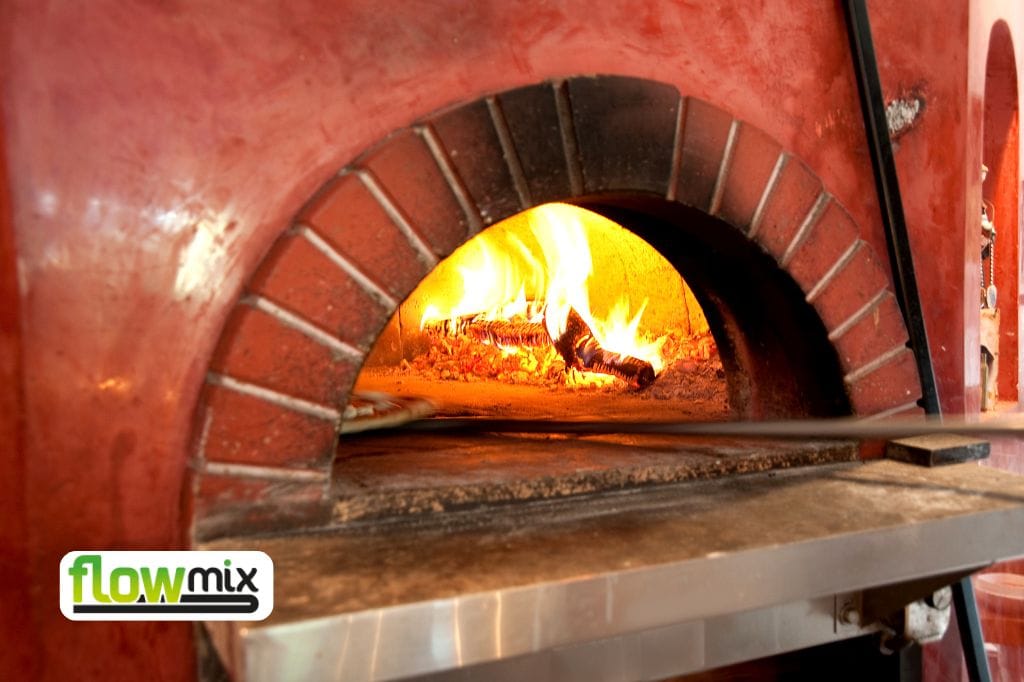
Heat-resistant cement is versatile and used in a wide range of high-temperature applications. In domestic environments, it’s perfect for fireplaces, chimneys, wood-burning stoves, and pizza ovens. In industrial applications, it is commonplace in furnaces, boilers, and foundries, where extreme heat is the norm.
By maintaining its integrity under heat stress, hot cement ensures both safety and durability.
Types of Heat-Resistant Cement
There are several types of heat-resistant cement, each suited to different applications:
- Calcium aluminate cement (CAC): Highly resistant to thermal stress, ideal for industrial furnaces and kilns.
- Refractory cement: Used for fireplaces, ovens, and domestic high-heat construction.
- High alumina fire cement: Provides superior strength at very high temperatures for heavy-duty projects.
Choosing the right type depends on the expected heat levels and the nature of the project.
Need Expert Advice?
Speak to the team at Flowmix Tewkesbury, Gloucestershire or Aldridge, Walsall. We are happy to help with all your concrete requirements.
Flowmix Tewkesbury: 01684 217888 Flowmix Walsall: Tel: 01922 741731
Benefits of Using Hot Cement
Using heat-resistant cement offers several advantages. It provides thermal stability, reducing the risk of heat-induced cracking. Its durability ensures a longer lifespan in high-temperature environments, while its reliability makes structures safer for both domestic and commercial use.
Other benefits include:
- Resistance to thermal shock
- Versatility for indoor and outdoor use
- Peace of mind in high-temperature applications
Tips for Using Heat-Resistant Cement
To get the best results, always follow the manufacturer’s instructions. Mix the cement to the correct consistency, apply it in recommended thicknesses, and allow sufficient curing time before exposing it to heat. It’s advisable to wear protective gear during handling, especially for industrial projects.
Simple steps to remember:
- Avoid applying too thick or too thin layers
- Always check the maximum temperature limit
- Let the cement cure completely before first heating
Following these guidelines helps the cement maintain its strength and longevity.
Common Mistakes to Avoid
Even heat-resistant cement can fail if not used correctly. Common mistakes include:
- Ignoring curing times
- Applying layers of incorrect thickness
- Using regular cement in high-temperature areas
- Exceeding the cement’s maximum temperature limit
Understanding the material and following proper practices is essential for safety and durability.
Hot Cement vs Fire Cement vs Refractory Mortar
It’s essential to know the difference between heat-resistant products. Hot cement is a general-purpose high-temperature cement suitable for most projects. Fire cement is often used for more minor repairs and stoves, while refractory mortar is explicitly for brickwork in kilns, ovens, and industrial furnaces. Choosing the right product ensures durability and safety.
Conclusion
Whether constructing a fireplace, pizza oven, or industrial furnace, hot cement offers the strength and reliability that ordinary cement cannot. Its ability to withstand extreme heat, resist cracking, and maintain structural integrity makes it essential for high-temperature projects. By choosing the right type and applying it correctly, you can ensure long-lasting performance, safety, and peace of mind.
How Flowmix Can Help With Your Project
Flowmix has two plants, Gloucester and Walsall. We provide the following services (with time slots):
✅ Ready-mix concrete, mix on-site (volumetric concrete)
✅ Traditional and liquid screed.
✅ Concrete line pump Hire to reduce manual labour and associated costs, increase efficiency, reduce wastage and clean up.
✅ Interlocking concrete blocks for temporary or permanent barriers.
✅ Mini-Mix loads up to 4 cubic metres.
Flowmix has the BSA-approved Ready Mix Concrete Kitemark KM683844, a certification that “confirms a product or service’s claim has been independently and repeatedly tested by experts” (source BSI).
Flowmix Tewkesbury: 01684 217888 Flowmix Walsall: Tel: 01922 741731
Flowmix Delivery Areas
| Tewkesbury Area | Walsall Area |
| Bourton-on-the-Water | Aldridge |
| Brockworth | Barton-Under-Needwood |
| Chalford | Birmingham |
| Cheltenham | Brownhills |
| Chipping Campden | Burntwood |
| Cirencester | Burton Upon Trent |
| Droitwich Spa | Cannock |
| Evesham | Coleshill |
| Gloucester | Dudley |
| Great Malvern | Great Haywood |
| Ledbury | Lichfield |
| Newent | Norton Canes |
| Northleach | Penkridge |
| Pershore | Rugeley |
| Ross-on-Wye | Stafford |
| Stow-on-the-Wold | Tamworth |
| Stroud | Walsall |
| Tewkesbury | West Bromwich |
| Worcester | Wolverhampton |
FAQs
How Hot Can Heat-Resistant Cement Get?
Most formulations handle temperatures up to 1,800°C.
Is Fireproof Cement The Same As Heat-Resistant Cement?
Not always. Fireproof cement may resist fire for a brief period, whereas heat-resistant cement is best for long-term exposure to high heat.
Can You Use Hot Cement In Outdoor Fire Pits?
Yes, it is ideal for outdoor projects exposed to direct flame.
How Long Does Heat-Resistant Cement Take To Cure?
Most require 24–48 hours before first heating.
Is Hot Cement Safe For Food, Such As Pizza Ovens?
Yes, most heat-resistant cements suitable for ovens are food-safe once fully cured.