Concrete strength is the backbone of every strong and reliable structure, so ensuring its quality is essential for both safety and long-term performance. One of the most trusted and widely used methods for doing this is concrete cube testing.
Concrete cube testing is a simple but accurate way to confirm whether a mix will deliver the strength your project needs. By providing precise, measurable results, this test gives builders, contractors and homeowners complete confidence in the finished structure.
At Flowmix, delivering dependable, high-performance concrete is always a priority. Concrete cube testing forms an integral part of that commitment, helping our customers achieve the right strength, durability and compliance for every type of construction project.
✅ Order your ready-mix or volumetric concrete today
✅ Free, fast quote within 24 hours
✅ Call, message or complete our simple online form
Flowmix Tewkesbury: 01684 217888 Flowmix Walsall: Tel: 01922 741731
What Is Concrete Cube Testing?
Concrete cube testing is a standard method used across the construction industry to determine the compressive strength of fresh concrete. During the pour, a sample of the concrete is placed into cube moulds, compacted carefully, and then set aside to cure. These cubes are laboratory-tested, undergoing compression tests to measure the force they can withstand before failure.
The most common testing intervals are seven days and twenty-eight days. The seven-day result provides an early indication of strength development, while the twenty-eight-day test offers the final confirmed figure.
This data helps verify that the concrete used on site meets the project’s specified design strength.
Why Is Concrete Cube Testing Important?
There are three core reasons why concrete cube testing is necessary:
- Quality Assurance: The test provides clear evidence that the mix delivered to the site is fit for purpose. By confirming the material performs as expected, it helps avoid future defects, weak points or expensive remedial work.
- Meeting Regulations: Every construction project must follow recognised strength standards, including those outlined in British Standards. Cube testing demonstrates that the concrete complies, providing contractors with the documentation they need for inspections and sign-off.
- Protecting Structural Strength: The final structure depends on the concrete’s ability to handle compressive loads. Cube test results show whether the hardened concrete reaches the required strength, ensuring it can safely support the load-bearing requirements.
Even for residential work, such as foundations or ground floor slabs, cube tests provide peace of mind and help prevent future issues.
Ready to Order Ready-Mix or Volumetric Concrete?
If you are ready to order a ready-mix concrete delivery, speak to the team at Flowmix Tewkesbury or Walsall. We will help you select the right mix and quantities and arrange for fast delivery to your site.
✅ Order your ready-mix or volumetric concrete today
✅ Free, fast quote within 24 hours
✅ Call, message or complete our simple online form
Flowmix Tewkesbury: 01684 217888 Flowmix Walsall: Tel: 01922 741731
How the Concrete Cube Testing Process Works
The testing process is reasonably straightforward:
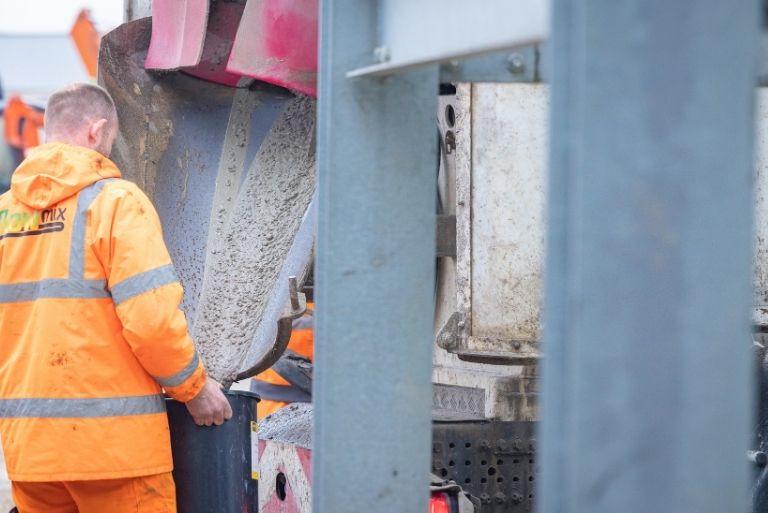
- Sampling the concrete: A representative sample of fresh concrete is taken directly from the pour or the delivery truck. That ensures the cube reflects the material actually used on site.
- Filling the cube moulds: The concrete is placed into steel or plastic moulds in layers and compacted carefully to remove air pockets.
- Curing the cubes: Once filled and levelled, the cubes are stored under controlled conditions in a temperature-controlled water tank heated to 20°C.
- Laboratory testing: When the cubes reach the required age, they are transported to a certified laboratory. There, they go into a compression machine that applies increasing force until the cube fails. The maximum force recorded determines the compressive strength.
These results are compared with the project specifications to confirm whether the concrete achieves the required grade.
Common Factors That Affect Test Results
Although cube testing is highly reliable, a few factors can influence the outcome. These include:
- Mix accuracy: Even slight variations in cement content or aggregates can alter the final strength.
- Water content: Excess water weakens the concrete and leads to low results.
- Curing conditions: Poor curing practices cause reduced strength development.
- Sampling technique: If the sample is not collected correctly, it may not accurately reflect the on-site quality of the mix.
Working with an experienced and reputable supplier, such as Flowmix, helps minimise these risks.
Flowmix Tewkesbury: 01684 217888 Flowmix Walsall: Tel: 01922 741731
When Should You Request Concrete Cube Testing?
Cube testing is recommended for any project where strength certification is required, including:
- Floors and slabs
- Structural foundations
- High load-bearing areas
- Commercial and industrial builds
- Projects overseen by building inspectors or structural engineers
Even for smaller domestic projects, testing can be beneficial, particularly when long-term durability is essential.
The Benefits for Builders, Contractors and Homeowners
Choosing to carry out concrete cube testing offers several advantages. It provides reassurance that the concrete supplied meets the correct specification, helping reduce risk and avoid delays. It also demonstrates compliance with regulatory standards and supports the structure’s long-term performance.
Most importantly, it offers peace of mind. Knowing that your concrete has been tested and validated allows you to move forward confidently with the rest of your build.
Conclusion
Concrete cube testing remains one of the most trusted methods for ensuring strength, safety and structural reliability. By combining high-quality materials, precise mixing, and expert guidance, Flowmix helps customers achieve excellent results on every project.
How Flowmix Can Help With Your Project
Flowmix has two plants, Gloucester and Walsall. We provide the following services (with time slots):
✅ Ready-mix concrete, mix on-site (volumetric concrete)
✅ Traditional and liquid screed.
✅ Concrete line pump Hire to reduce manual labour and associated costs, increase efficiency, reduce wastage and clean up.
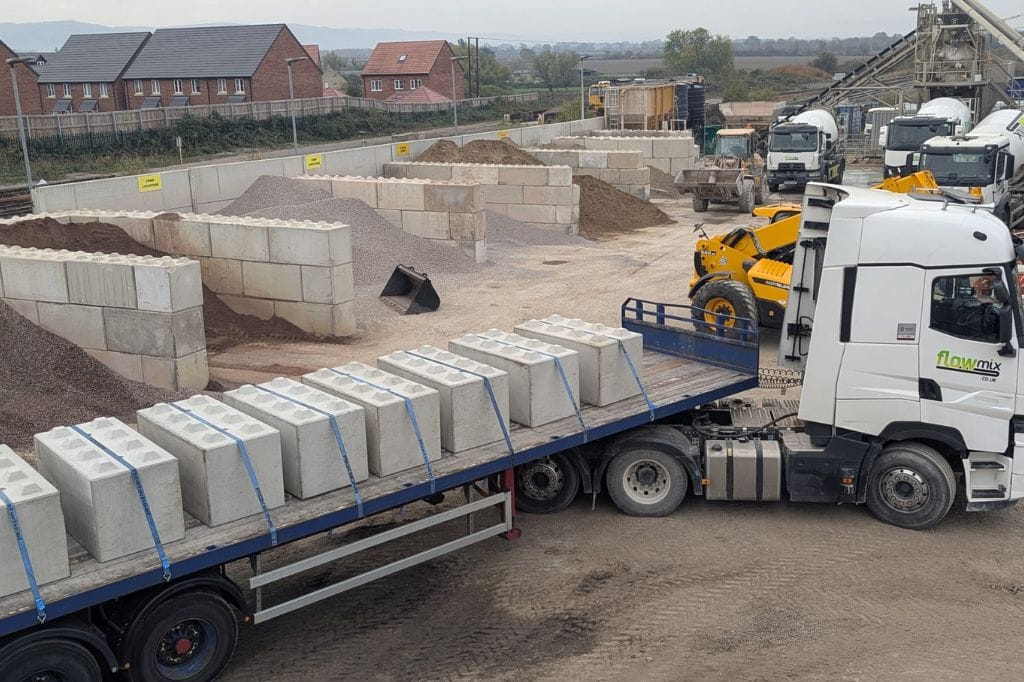
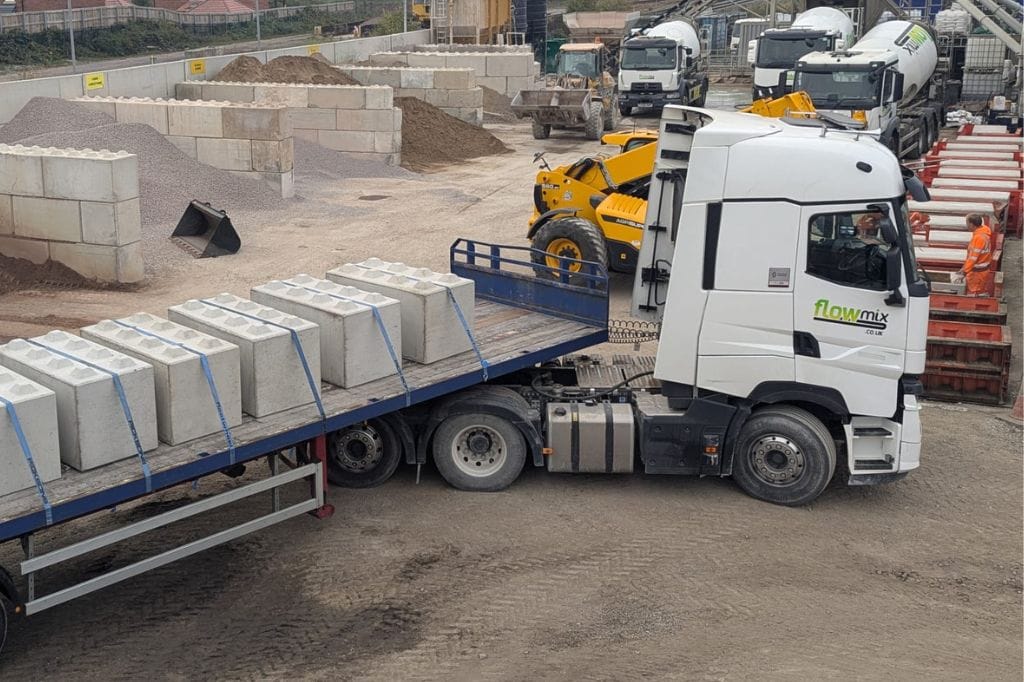
✅ Interlocking concrete blocks for temporary or permanent barriers.
✅ Mini-Mix loads up to 4 cubic metres.
Flowmix has the BSA-approved Ready Mix Concrete Kitemark KM683844, a certification that “confirms a product or service’s claim has been independently and repeatedly tested by experts” (source BSI).
Flowmix Tewkesbury: 01684 217888 Flowmix Walsall: Tel: 01922 741731
Flowmix Delivery Areas
| Tewkesbury Area | Walsall Area |
| Bourton-on-the-Water | Aldridge |
| Brockworth | Barton-Under-Needwood |
| Chalford | Birmingham |
| Cheltenham | Brownhills |
| Chipping Campden | Burntwood |
| Cirencester | Burton Upon Trent |
| Droitwich Spa | Cannock |
| Evesham | Coleshill |
| Gloucester | Dudley |
| Great Malvern | Great Haywood |
| Ledbury | Lichfield |
| Newent | Norton Canes |
| Northleach | Penkridge |
| Pershore | Rugeley |
| Ross-on-Wye | Stafford |
| Stow-on-the-Wold | Tamworth |
| Stroud | Walsall |
| Tewkesbury | West Bromwich |
| Worcester | Wolverhampton |
FAQs
What Is Concrete Cube Testing?
Concrete cube testing is a method used to measure the compressive strength of fresh concrete. A small sample is poured into cube moulds, cured, then tested in a laboratory to confirm whether the mix meets the required strength for the project.
Why Is Concrete Cube Testing Important?
It ensures the concrete supplied and used on site performs as expected. It protects structural safety, helps meet building regulations, and gives confidence that floors, foundations, or load-bearing elements will stand the test of time.
When Are Concrete Cubes Usually Tested?
Most cubes are tested at 7 days and again at 28 days. The 7-day test gives an early indication of strength development, while the 28-day test provides the official result used for compliance and certification.
Who Needs Concrete Cube Testing?
Builders, contractors, engineers and project managers often require cube tests for structural work such as foundations, floors, retaining walls and commercial projects. Homeowners completing major extensions may also benefit from certified test results.
What Affects Concrete Cube Test Results?
Factors include the accuracy of the original mix, water content, temperature, and curing conditions. Be aware that poor handling can affect the final strength reading.