
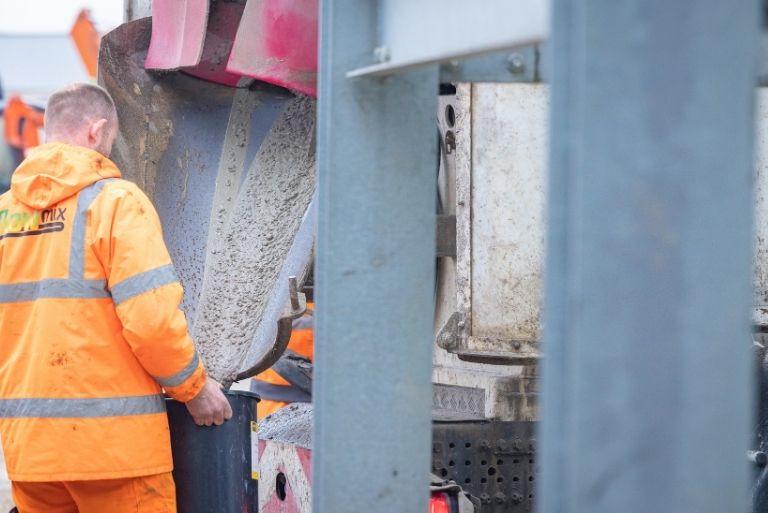
A concrete shed base is a solid, long-lasting foundation for your garden shed, ensuring durability and stability for years. While hiring a professional can be convenient, doing it yourself can save money and provide a sense of accomplishment. Here’s how to easily lay a concrete shed base yourself, step by step.

Why Choose Ready Mix Concrete?

Using ready-mix concrete is an excellent way to save time and effort on your DIY project, especially when working alone. That said, mixing concrete by hand is practical only for small areas. It can be a time-consuming process that requires precise knowledge of measurements, proper ratios, and the ability to judge the correct concrete consistency by sight.

Read: Concrete Slump Test: What is it & Why Does It Matter?

Why You Need a Concrete Shed Base

A concrete base provides a flat, stable, long-lasting foundation, preventing your shed from sinking or shifting. It also protects against moisture, pests, and uneven weight distribution.

Tools and Materials You’ll Need

Before you lay a concrete shed base, gather the following tools and materials:

Tools:

  • Trowel
  • Shovel
  • Spirit level
  • Rubber mallet
  • Concrete float
  • Wheelbarrow
  • Tape measure
  • Wooden stakes

Materials:

  • Concrete mix
  • Wooden planks (for the frame)
  • Gravel
  • Sand
  • Water

Step 1: Check Weather Conditions

Hot Weather: Concrete cures too fast in hot weather, which causes it to set prematurely. The problem is that fast curing can create structural weakness, cause surface defects or completely fail altogether.

If you suddenly experience a freakish hot day and you’ve already committed to the project, you can try the following:

  1. Precool the ingredients.
  2. Shade and insulate the area to avoid direct sunlight.
  3. Hydrate with misting – but don’t over dampen.
  4. Consider laying the shed base early morning or later in the day when temperatures cool.

Cold Weather: When it’s cold, setting times slow down and can affect concrete strength.

To combat cold weather conditions when you lay a concrete shed base, here are some tips:

  1. Warm the materials (water, cement and aggregates) before mixing.
  2. Insulate the surfaces and forms to reduce the risk of freezing.
  3. Cover the freshly poured concrete with tarps or blankets, ensuring there is sufficient ventilation to prevent condensation.

Wet Weather: There’s more chance of wet weather in the UK than other conditions, so it’s best to prepare. Excessive rainfall can weaken the cement mix by diluting the cement-water ratio, reducing concrete strength and other issues.

To combat excessive rain, consider the following options:

  1. Use Waterproof Admixtures: They can improve water resistance by creating a barrier preventing water penetration.
  2. Monitor Weather Forecasts: Choose a time when there’s a break in the rainfall.
  3. Cover the Concrete: Shield the newly poured shed base with waterproof tarps to minimise exposure to rain.

Read: Concrete Weather Conditions: Flowmix Gloucester Top Tips

Need Expert Advice?

Speak to the team at Flowmix Tewkesbury or Walsall. We are happy to help with all your concrete requirements.

Flowmix Tewkesbury: 01684 217888 Flowmix Walsall: Tel: 01922 741731

Step 2: Choose the Best Location

Pick a flat area that isn’t prone to waterlogging. Ensure the site is accessible and provides enough clearance for your shed’s size and intended use.

Pro Tip: Use spray paint or stakes and string to mark out the area.

Step 3: Measure and Mark the Base

  • Measure the shed’s dimensions and add an extra 4-6 inches on all sides for overhang.
  • Mark the area using wooden stakes and string to create a rectangle or square.

Step 4: Prepare the Ground

  1. Clear the Site: Remove grass, plants, and debris from the area.
  2. Excavate the Ground: Dig about 6 inches to create space for the base layers.
  3. Level the Surface: Use a spirit level to ensure the ground is flat.

Step 5: Build a Wooden Frame

  • Cut wooden planks to match the dimensions of your base.
  • Assemble the frame and secure it with screws or nails.
  • Place the frame on the prepared ground and check it is level.

Step 6: Lay the Sub-Base

  1. Add Gravel: Pour a 3-inch layer of gravel into the frame for drainage.
  2. Compact It: Use a tamper or a heavy object to compact the gravel.
  3. Add Sand: Spread a 1” layer of sand over the gravel to create a smooth surface.

Step 7: Mix and Pour the Concrete

  1. Mix the Concrete: Follow the simple instructions on the back of the concrete mix bag. Aim for a thick, smooth consistency.
  2. Pour the Concrete: Fill the wooden frame with the concrete mix, starting from one end.
  3. Spread Evenly: Using a shovel or trowel, spread the concrete evenly across the frame.

Step 8: Level and Smooth the Surface

  • Use a straight plank or a screed board to level the concrete by running it across the frame edges.
  • Smooth the surface with a concrete float for a professional finish.

Step 9: Let It Cure

  • Allow the concrete to set for at least 24-48 hours before removing the frame.
  • Avoid placing heavy objects on the base until fully cured (about 7 days).

Tips for A Successful Shed Base

  • Work Quickly: Concrete sets fast, so have everything ready before you start mixing.
  • Check the Weather: Choose a dry day to avoid rain-related issues affecting the curing process.
  • Safety First: Wear sturdy gloves and safety goggles when handling concrete.

Ready to Order Ready-Mix or Volumetric Concrete?

If you are ready to order a ready-mix concrete delivery, speak to the team at Flowmix Tewkesbury or Walsall. We will help you select the right mix and quantities and arrange for fast delivery to your site.

Flowmix Tewkesbury: 01684 217888 Flowmix Walsall: Tel: 01922 741731

Conclusion

When you lay a concrete shed base yourself, you’ll see it isn’t a complicated process. It’s a straightforward DIY project if you prepare well, watch the weather, use the right tools, and materials. Not only will you save money, but you’ll also gain the satisfaction of building a sturdy foundation for your shed.

Follow these steps, and you’ll have a durable base ready for your garden shed in no time!

How Flowmix Can Help With Your Project

Flowmix has two plants, Gloucester and Walsall. We provide ready-mix concrete, mix on-site (volumetric) and liquid screed.

In addition, you can hire a 200′ concrete line pump to reduce manual labour and associated costs, increase efficiency, reduce wastage and clean up. Moreover, we also provide interlocking concrete blocks for temporary or permanent barriers.

Flowmix has the BSA-approved Ready Mix Concrete Kitemark KM683844, a certification that “confirms a product or service’s claim has been independently and repeatedly tested by experts” (source BSI).

Flowmix Tewkesbury: 01684 217888 Flowmix Walsall: Tel: 01922 741731

FAQs

Why Do I Need A Concrete Shed Base?

A concrete base provides a strong, stable, long-lasting foundation for your shed, preventing sinking, shifting, or water damage.

What Tools And Materials Do I Need To Lay A Concrete Shed Base?

You’ll need a shovel, spirit level, tape measure, trowel, wooden stakes, gravel, sand, cement, and water. Optional tools include a concrete mixer, screed board and a wheelbarrow.

How Thick Should A Concrete Shed Base Be?

Typically, a concrete shed base should be around 4-6 inches thick to ensure adequate strength and durability.

How Do I Prepare The Ground For A Concrete Shed Base?

Clear the area of grass and debris, excavate the site to the required depth, and compact a sub-base of gravel and sand before pouring the concrete.

Can I Lay A Concrete Shed Base On Uneven Ground?

Yes, but you must first level the ground by excavating or adding fill material to ensure a flat surface. Be aware if the shed base is on a hill, that unexpected rain could lead to water flowing downhill onto the newly laid concrete before it has fully cured.

How Long Does Concrete Take To Set?

Concrete typically sets within 24-48 hours but requires at least 7 days to cure properly. Full strength is usually achieved after 28 days.

Can I Use Ready Mix Concrete For My Shed Base?

Yes, ready-mix concrete is a convenient option that ensures consistent quality and saves time compared to mixing concrete by hand.

How Do I Calculate The Amount Of Concrete Needed?

Multiply the depth, length, and width, of the base to determine the volume of concrete required. Alternatively, use the Flowmix concrete volume calculator for accuracy.

Do I Need A Professional To Lay A Concrete Shed Base?

While a professional can ensure a perfect finish, you can lay a concrete shed base yourself. It’s a manageable DIY project if you follow the proper steps and guidelines.

How Do I Maintain A Concrete Shed Base?

After you lay a concrete shed base, maintenance is minimal. It involves keeping the surface clean, checking for cracks, and addressing drainage issues to prevent water pooling.

Preparing for a concrete floor is the best way to ensure a smooth, hassle-free experience and a concrete flooring installation you can be proud of.

Before you receive your concrete delivery from Flowmix, here are four simple steps to prepare the site for your concrete pour.  

1: Prepare The Foundation

Before you even think about pouring concrete, take a moment to focus on the foundation. A weak or uneven base will leave your concrete prone to cracking and crumbling, no matter how small or large the project is. The first step is preparing for a concrete floor to create a strong, level surface.

Start by digging down to the necessary depth. If you’re working on foundations or floor slabs, don’t forget to factor in space for the subbase, a damp-proof membrane, and the concrete itself. Remember to clear the area of stones, plants, and any debris that could interfere with your work.

Pro Tip: When preparing for a concrete floor, consider how water will flow around your concrete, especially if it’s outdoors or in a spot prone to moisture. Adding drainage solutions—like channels or weep holes—can prevent water from pooling under the slab and gradually weakening it.

Taking the time now to handle these details will help prevent problems down the road!

2: Lay The Subbase And Damp-Proof Membrane

After excavating the area to the correct depth, it’s time to prepare for the concrete pour by laying the subbase.
Note: If unsure of the depth required, contact the Flowmix team for advice.

A subbase is a layer of aggregate material that sits snugly between the subgrade (the compacted soil beneath) and the base course. Its primary job is to create a solid, load-bearing foundation that can handle the weight and wear of outdoor spaces like driveways, gardens, and pathways. 

Without a properly laid subbase, your paving risks shifting, cracking, or sinking over time. The foundation ensures everything above it stays level and durable, regardless of traffic or weather conditions.

The key when preparing for a concrete floor, is to consider what job the concrete will do. The subbase thickness is an essential element of preparing for a concrete floor as it directly affects how much weight the concrete can handle.

  • Lighter Applications: Gravel or crushed stone works well.
  • Heavy-Duty Use: For high-traffic areas, you’ll want to go the extra mile with a reinforced subbase—compacted stone or even a concrete foundation beneath the slab might be your best bet.

Don’t forget about the damp-proof membrane (DPM). This thin layer prevents moisture from creeping up into your slab, which can lead to problems like efflorescence or damage to flooring materials. Moreover, it ensures the fresh concrete doesn’t dry out too quickly, giving you a stronger, more durable finish.

Taking these steps might feel like extra work, but they’re the secret to a concrete slab that stands the test of time.

Need Expert Advice?

Speak to the team at Flowmix Tewkesbury or Walsall. We are happy to help with all your concrete requirements.

Flowmix Tewkesbury: 01684 217888 Flowmix Walsall: Tel: 01922 741731

3: Build A Frame To Hold it All Together

Before the concrete pouring, building a sturdy frame to shape and support the concrete as it sets is essential. Typically, this frame is made from 25mm-thick timber planks, carefully positioned and secured to stay in place throughout the pour. The thickness of the frame should match the desired thickness of your concrete slab, so precise measurements are key.

Getting the frame level and square is critical. Grab a spirit level and tape measure to double-check everything is aligned. A crooked or uneven frame can leave you with a misaligned slab, so don’t skip this step!

For larger projects, consider adding extra bracing to keep the frame steady and prevent any shifting under the weight of the wet concrete.

Building a solid, well-measured frame will ensure your slab turns out smooth, even, and ready to handle whatever comes its way.

Read: Concrete Slump Test: What is it & Why Does It Matter?

4: Get Ready For The Concrete Delivery

The final step before the concrete arrives is to prepare your site for a smooth and efficient pour. A little planning at this stage goes a long way in preventing delays and ensuring the concrete doesn’t start curing prematurely.

  • Start by clearing paths for easy access, especially if the terrain is uneven or sloped.
  • Lay down planks or supports where needed.
  • Double-check you have all the tools and labour required for the job.

Ensure your equipment is ready to go—wheelbarrows, shovels, and trowels are must-haves for evenly distributing the concrete. If it’s a larger pour, you’ll likely need extra hands to help with levelling, smoothing, and finishing the surface as quickly as possible. Timing is everything, and being well-prepared ensures you maintain the quality of the finish.

Note: Hiring a concrete line pump can significantly speed up the concrete pour, minimise mess and wastage and reduce the need for intensive manual labour. Flowmix can supply a 200’ concrete line pump. Contact the Flowmix team for details.

When preparing for a concrete floor, don’t forget to check the weather forecast! Extreme heat is a contractor’s nightmare, as it can cause the concrete to cure too quickly. So, on hot days, wetting the subbase or using retarders can help.

Conversely, cold temperatures can slow curing or even cause freezing. In that case, consider using heaters or thermal blankets to keep the concrete at an optimal temperature. if you’re unsure, contact the Flowmix team for advice.

A little foresight at this final stage can help ensure your project has a flawless pour and excellent, long-lasting results.

How Flowmix Can Help With Your Project

Flowmix has two plants, Gloucester and Walsall. We provide ready-mix concrete, mix on-site (volumetric) and liquid screed.

In addition, you can hire a 200′ concrete line pump to reduce manual labour and associated costs, increase efficiency, reduce wastage and clean up. Moreover, we also provide interlocking concrete blocks for temporary or permanent barriers.

Flowmix has the BSA-approved Ready Mix Concrete Kitemark KM683844, a certification that “confirms a product or service’s claim has been independently and repeatedly tested by experts” (source BSI).

Flowmix Tewkesbury: 01684 217888 Flowmix Walsall: Tel: 01922 741731

FAQs

How Do I Ensure My Subfloor Is Ready For Concrete?

Before pouring concrete, ensure the subfloor is level, compacted, and debris-free. A proper base, such as gravel or sand, helps prevent cracking and ensures durability.

Do I Need To Use A Moisture Barrier Before Laying Concrete?

A moisture barrier is essential, especially for indoor spaces or areas prone to dampness. It prevents water from seeping through and reduces the risk of cracks and mould growth.

How Long Should I Wait Before Using My New Concrete Floor?

Concrete typically takes 24-48 hours to dry for light foot traffic, but complete curing can take up to 28 days. Avoid placing heavy loads or installing flooring until the concrete has fully cured.

What Tools Do I Need To Prepare For A Concrete Floor?

You’ll need tools like a level, tamper, rake, measuring tape, moisture barrier, and rebar or wire mesh (for reinforcement). When preparing for a concrete floor ensures a smooth and durable finish.

Can I Pour Concrete Over An Existing Floor?

The existing floor must be clean, level, and structurally sound. Applying a bonding agent and roughening the surface will help the new concrete adhere properly.

Are you gearing up for a construction project and need concrete advice from a ready mix concrete supplier?

Finding the right ready mix concrete supplier can make or break your build if that’s the case! The last thing you want is a concrete supplier letting you down or sending the wrong ready mix concrete.

In this guide, we’ll pour over everything you need to know about what to look for from a ready mix concrete supplier.

What is Ready Mix Concrete and Why Choose It?

It might seem obvious to construction companies but if you’re an individual planning a concrete home project, we will provide the definition of ready mix concrete.

The Definition Of Ready Mix Concrete

Ready mix concrete consists of a carefully measured blend of cement, aggregates (sand and gravel or crushed stone), water, and often chemical admixtures.

The production method sets ready mix concrete apart – it’s mixed off-site and delivered to the construction site in a freshly mixed state, typically in revolving drum trucks.

The key features of ready mix concrete are its consistency and quality control. Each batch is mixed according to specific recipes that meet the exact requirements of a particular construction project.

Each batch could include strength, workability, setting time, and durability specifications. Computerised batching systems ensure that each load maintains the same high quality, eliminating variations that can occur with on-site mixing.

The Advantages Of Ready Mix over Site-Mixed Concrete

Ready mix concrete offers several significant advantages over concrete mixed on-site:

  1. Quality Control: Flowmix Gloucester and Walsall plants have sophisticated equipment and trained staff to ensure precise measurements and consistent mixing. This level of control is difficult to achieve on a construction site.
  2. Time and Labor Savings: Using ready mix concrete eliminates the need for on-site material storage, mixing equipment, and additional labour required for mixing, meaning faster construction timelines.
  3. Reduced Waste: Batch plants can more accurately calculate required quantities, reducing excess waste.
  4. Variety of Mixes: A ready mix supplier offer a wide range of specialised concrete mixes that would be challenging to produce on-site.
  5. Environmental Benefits: Centralised production allows for better dust control and more efficient use of resources, reducing the environmental impact compared to site mixing.
  6. Consistency: Every batch of ready mix concrete is mixed to the exact specifications, ensuring uniform quality throughout a project

Need Expert Advice?

Speak to the team at Flowmix Tewkesbury or Walsall. We are happy to help with all your concrete requirements.

Flowmix Tewkesbury: 01684 217888 Flowmix Walsall: Tel: 01922 741731

Common Ready Mix Applications in Construction

Ready mix concrete is versatile and used in multiple construction applications, such as foundations, structural elements like beams and walls, and infrastructures such as highways and tunnels.

Ready mix is ideal for precast elements like barrier walls, marine structures exposed to saltwater, industrial floors, underwater concreting and airport runways.

Ready mix concrete is popular for many residential projects, such as driveways and patios.

Key Factors to Consider When Choosing A Ready Mix Concrete Supplier

Do you know what to look for when choosing a ready mix supplier? If not, the following is a helpful checklist.

#1: Reputation and Experience in the Industry

A supplier’s reputation reflects the company’s reliability and product quality. Look for companies with an excellent track record in the industry.

Experienced ready mix concrete suppliers like Flowmix have likely dealt with a vast range of construction projects and can offer valuable insights.

Check online reviews, ask for recommendations, and inquire about their years in business.

A well-established ready mix supplier is more likely to understand local construction needs and regulations. We can advise on topics like planning permission.

They’re also more likely to be around for the long haul, which is crucial if you need support or have questions post-project.

#2: Quality Control Measures and Certifications

High-quality concrete is crucial for the success and safety of any construction project. Reputable suppliers like Flowmix have stringent quality control processes in place. That includes: –

  • Precise measurement systems
  • Regular testing of materials
  • Well-maintained equipment

Look for a ready mix concrete supplier certified by industry organisations such as the British Ready Mixed Concrete Association (BRMCA).

These certifications indicate that the supplier meets specific standards for product quality, plant operations, and environmental compliance. Don’t hesitate to ask about their quality assurance procedures and how they handle any issues that may arise. Our friendly and experienced team at Flowmix is happy to answer your questions.

Ready to Order Ready-Mix or Volumetric Concrete?

If you are ready to order a ready-mix concrete delivery, speak to the team at Flowmix Tewkesbury or Walsall. We will help you select the right mix and quantities and arrange for fast delivery to your site.

Flowmix Tewkesbury: 01684 217888 Flowmix Walsall: Tel: 01922 741731

#3: Delivery Capabilities and Fleet Size

The ability to deliver concrete when and where you need it is crucial. A supplier’s fleet size and condition can impact their ability to meet your schedule, especially for large or time-sensitive projects.

Ask about their delivery radius, average response times, and ability to handle rush orders.

A more extensive fleet generally means more flexibility and reliability. However, you might consider the age and maintenance of their trucks. Modern mixer trucks with GPS tracking can provide more accurate delivery estimates.

Another question is whether the concrete supplier’s drivers can manage tricky delivery spots, such as narrow tracks, awkward site access, turning areas, etc.

Flowmix routinely offers timed delivery slots, and we can track deliveries with our cloud-based software.

Stuff happens, so ask about their policies for delays or breakdowns to ensure they have established contingency plans.

#4: Range of Concrete Mix Designs Offered

A good concrete supplier should offer a wide range of concrete mix designs to suit various applications. That includes different concrete strength grades, speciality mixes for harsh environments (like marine-grade concrete), and mixes with specific properties like rapid setting or high flowability.

They should also be able to create custom concrete mixes to meet unique project requirements. Ask the company whether they can add various concrete additives or supplementary materials for enhanced performance or sustainability.

Another consideration that may be important to you is whether the company provides sustainable and eco-friendly concrete options. That may include concrete mixes using recycled aggregates and low-carbon types of cement.

The Ready Mix Concrete Ordering Process

You’re ready to order your ready mix concrete. Here is what to expect from your concrete supplier.

How to Accurately Estimate Your Concrete Needs

Measure the area precisely, including length, width, and depth and factor in the shape (rectangular, circular, or irregular).

Add 5-10% to your calculation to account for potential waste or spillage and consider slopes or variations in thickness.

Once you have accurate measurements, consult your contractor or the concrete supplier for verification. Call our experienced and friendly team, and we will do our best to help you.

How to Place an Order with a Concrete Supplier

Contact the concrete supplier well before the required date to provide project details, such as location, date, time, and volume needed.

Specify the concrete mix design or performance requirements. If you aren’t sure, the supplier will ask the right questions to ascertain your needs.

Discuss any site access issues or special equipment needs (like pumps)

Finally, confirm the order details in writing to avoid misunderstandings and ask about cancellation policies and weather contingencies.

What to Expect on Delivery Day

Being prepared for concrete delivery helps ensure a smooth process. Before delivery, know the supplier’s policy on rejected loads or excess concrete.

Ensure the site is accessible for the concrete mixer truck and that your forms, reinforcement, and finishing tools are ready.

Contact the concrete supplier to discuss a contingency plan if there’s torrential rain or a sudden heatwave. If, on the day, the temperature is above 75 degrees Fahrenheit, leaving it until a cooler day is best to avoid cracking and premature curing.

Concrete workability in hot or wet conditions is tricky and can reduce concrete strength.

Assign someone to guide the truck driver to the pour location, be prepared to check the delivery ticket for accuracy, and plan to test the concrete if required (slump test, air content, etc.).

Be ready to start placing and finishing the concrete immediately upon arrival.

Tips for Working with Ready Mix Concrete Suppliers

Discover how to get the best from the ready mix concrete supplier you work with.

Build Strong Relationships with Concrete Suppliers

It’s essential to build a good relationship with your concrete supplier. The most vital ingredient is good communication, ensuring the smooth execution of your project.

Can you get expert advice on concrete specifications, mix designs, and application techniques? Is there an option for priority service during peak seasons or tight schedules?

Finally, how does the ready mix concrete supplier resolve the issue if something goes wrong? Here at Flowmix, we put the customer first.

Our team of experienced internal staff and drivers are part of the Flowmix family. We pride ourselves on hiring people with excellent problem-solving and communication skills.

Negotiate Prices and Contracts

We know it’s not British to negotiate, but it can lead to improved pricing and terms, especially if you have ongoing concrete requirements.

Negotiation should always be win-win. Be open to value-added services that might offset higher prices, and remember, the lowest price isn’t always the best deal if it compromises quality or reliability.

Conclusion

Purchasing from the right ready mix concrete supplier is crucial for the success of your concrete construction projects. Considering factors like concrete quality control, reliability, and service range, you’ll be well-equipped to make an informed decision.

Remember, the perfect supplier isn’t just about getting the mix right – it’s about building a solid foundation for your entire project.

Ready to take the next step? Contact the Flowmix team for friendly and experienced guidance on your concrete project.

How Flowmix Can Help With Your Project

Flowmix has two plants, Gloucester and Walsall. We provide the following services (with time slots):

Flowmix has the BSA-approved Ready Mix Concrete Kitemark KM683844, a certification that “confirms a product or service’s claim has been independently and repeatedly tested by experts” (source BSI).

Flowmix Tewkesbury: 01684 217888 Flowmix Walsall: Tel: 01922 741731

FAQs

What Is Ready Mix Concrete from Flowmix?

Flowmix supplies high-quality ready mix and volumetric concrete produced in our state-of-the-art batching plants. Each load is mixed to your exact requirements and delivered across Gloucester, Cheltenham, Tewkesbury and the wider Cotswolds, ready for immediate use.

Why Choose Flowmix as Your Ready Mix Concrete Supplier in Gloucester?

With over a decade of experience, Flowmix offers competitive pricing, reliable two-hour delivery slots and expert local knowledge. Our team understands the specific ground conditions across Gloucestershire and ensures every mix meets the highest standards.

How Do I Know How Much Concrete to Order from Flowmix?

Our specialists can calculate the exact volume you need based on your measurements. We also offer mix-on-site services, so you only pay for the amount you use, avoiding waste and saving money.

Can Flowmix Deliver Ready Mix Concrete to Sites with Limited Access?

Yes. We provide concrete line pump hire to place concrete quickly and efficiently, even in hard-to-reach areas such as narrow Gloucester streets, steep driveways in the Cotswolds or enclosed garden projects.

How Soon Should I Use Flowmix Ready Mix Concrete After Delivery?

Concrete starts to set as soon as it’s mixed, so we recommend placing it within 1–2 hours of delivery. Our two-hour delivery slots mean your concrete arrives exactly when you need it, keeping it fresh and workable. Alternatively, you can order volumetric concrete, which is mixed on site.

Concrete weather conditions can significantly affect the performance of ready-mix concrete. It depends on numerous factors, but perhaps none is more influential than weather conditions during placement and curing.

Whether laying a simple residential patio or managing a major commercial construction project, understanding weather’s impact on concrete can mean the difference between lasting results and premature failure.

Concrete weather conditions such as temperature, humidity, wind, and rainfall significantly affect how concrete behaves during placement and throughout its critical early curing period. These factors can either support or compromise the development of concrete’s intended structural properties.

This article examines how various weather conditions influence concrete work, from the challenges of cold-weather pours to the specific considerations needed for hot and wet conditions. Understanding these environmental factors is essential for achieving high-quality, durable concrete structures that stand the test of time.

What Does Different Weather Do To Concrete?

Different concrete weather conditions can significantly impact results, especially when aiming for a consistent pour within a limited curing period. The concrete pouring environment influences the consistency of the mix and affects the outcome—this is especially true in extreme weather.

While the long-term weathering of concrete, such as erosion from water, is a concern after curing, it’s crucial to evaluate the feasibility of pouring concrete in challenging weather conditions.

Adverse weather can affect the cement and extend curing times or make it harder to complete the job. Assessing weather conditions for each concrete project is essential to ensure the best possible results.

At Flowmix Concrete Suppliers, we’re experienced concrete experts for Gloucestershire and West Midlands and beyond. We’ve seen all kinds of weather extremes over the years and enjoy sharing tips on pouring concrete in the not so Great British weather!

Need Expert Advice?

Speak to the team at Flowmix Tewkesbury or Walsall. We are happy to help with all your concrete requirements.

Flowmix Tewkesbury: 01684 217888 Flowmix Walsall: Tel: 01922 741731

The Performance of Ready Mix Concrete in Different Weather Conditions

How Hot Weather Affects Concrete

Hot weather is one of the most challenging concrete weather conditions to navigate.

When temperatures climb, ready-mix concrete crews face a litany of unique challenges. The accelerated hydration and evaporation rates typical of hot conditions can severely compromise concrete performance if not adequately addressed.

Chief among the concerns about hot weather is the risk of premature setting. Concrete’s rapid initial curing in heat makes it increasingly difficult to effectively place, consolidate, and finish the material before it hardens. That can lead to unsightly surface defects, structural weaknesses, and even complete failure of the concrete element.

How to Overcome Hot Weather Challenges

Combating the effects of heat requires a multifaceted approach:

  • Cooling the Ingredients: Precooling the concrete mix components, especially the aggregates, can substantially slow the hydration process and extend the window for workability.
  • Shading and Insulation: Providing shade over the pour area and using insulating blankets helps mitigate direct solar exposure that drives moisture loss.
  • Moisture Retention: The frequent application of curing compounds or continuous misting helps hydrate the concrete surface, preventing rapid drying and shrinkage cracking.
  • Proper Scheduling: Pour concrete during the coolest times of day (early morning or night) to take advantage of lower ambient temperatures.

With these hot-weather best practices for concrete pouring, construction teams can successfully place and cure high-quality concrete even in the most challenging conditions. Careful planning and execution are essential to producing durable, long-lasting results regardless of the concrete weather conditions.

Read: Concrete Slump Test: What is it & Why Does It Matter?

How Cold Weather Affects Concrete

In Gloucestershire’s cold weather, low temperatures can significantly influence the performance of ready-mix concrete.

Cold concrete weather conditions slow down cement hydration, extending setting times and limiting early strength gain. Builders, therefore, need to take measures to ensure the concrete cures effectively, reaching the necessary strength and durability.

Practical Strategies To Combat Cold Weather Challenges Include:

  • Pre-heat Materials: Warming aggregates, water, and cement before mixing helps keep the concrete mix at an ideal temperature, preventing rapid cooling during placement.
  • Insulate Forms & Surfaces: Insulating the forms, subgrade, and other concrete placement areas helps retain warmth, reducing the risk of freezing and excessive hardening.
  • Cover Freshly Poured Concrete: Covering newly placed concrete with insulated blankets or tarps immediately after pouring helps trap heat and prevent freezing. Ensure proper ventilation to reduce condensation and maintain ideal curing conditions.

Contact the experienced Flowmix team in Gloucester or Walsall to discuss a ready-mix concrete delivery in cold weather. We can advise on suitable concrete weather conditions for planning your project.

Ready to Order Ready-Mix or Volumetric Concrete?

If you are ready to order a ready-mix concrete delivery, speak to the team at Flowmix Tewkesbury or Walsall. We will help you select the right mix and quantities and arrange for fast delivery to your site.

Flowmix Tewkesbury: 01684 217888 Flowmix Walsall: Tel: 01922 741731

Rainy Conditions: Managing Ready-Mix Concrete in Typical British Weather

In rainy conditions, ready-mix concrete can encounter multiple issues that may impact its quality and durability. Excessive rainfall can increase the water-cement ratio, leading to challenges like lower strength, surface imperfections, and permeability.

Additionally, rainwater can dilute the mix, affecting its overall workability.

To tackle rainy weather challenges, consider the following strategies:

  • Using Waterproof Admixtures: Adding waterproofing admixtures to the concrete mix enhances water resistance, minimising the risk of moisture-related damage. These admixtures create a barrier that prevents water penetration, boosting the concrete’s performance in wet conditions.
  • Monitoring Weather Forecasts: Tracking weather forecasts allows for optimal scheduling of concrete pours, reducing delays and ensuring more favourable weather for placement and curing.
  • Covering the Concrete: Using waterproof tarps or curing blankets during concrete placement and curing shields it from direct rain exposure, helping maintain the necessary moisture balance for proper curing.

Conclusion

Here at Flowmix Concrete, we’re used to the UK’s diverse, often unseasonal concrete weather conditions. If you need advice and guidance on concrete pouring in less-than-ideal weather in Gloucestershire, West Midlands, and the surrounding areas, contact the Flowmix team at Tewkesbury or Walsall today.

The experienced Flowmix team can help you navigate any tricky concrete weather conditions.

How Flowmix Can Help With Your Project

Flowmix has two plants, Gloucester and Walsall. We provide ready-mix concrete, mix on-site (volumetric) and liquid screed.

In addition, you can hire a 200′ concrete line pump to reduce manual labour and associated costs, increase efficiency, reduce wastage and clean up. Moreover, we also provide interlocking concrete blocks for temporary or permanent barriers.

Flowmix has the BSA-approved Ready Mix Concrete Kitemark KM683844, a certification that “confirms a product or service’s claim has been independently and repeatedly tested by experts” (source BSI).

Flowmix Tewkesbury: 01684 217888 Flowmix Walsall: Tel: 01922 741731

FAQs

Can You Pour Concrete During A Heatwave?

Though the UK generally has mild weather, occasional hot spells can bring unique challenges for concrete pouring.

The main concern during a heatwave is its effect on the curing process. Concrete cures through a hydration reaction between cement and water. High temperatures can accelerate water loss from the mix, potentially compromising the strength of the cured concrete.

If the mix loses too much water, it may shrink, crack, or flake. However, concrete pouring is possible during hot weather by taking a few precautions:

  • Pour early or late in the day when temperatures are cooler.
  • Keep materials in the shade and dampen any forms to reduce heat.

Can You Pour Concrete In The Rain?

Is it possible to pour concrete in the rain? Will it still set? These are common questions when a job needs doing, and the forecast predicts continuous rain.

Ideally, it’s best to avoid rain altogether by scheduling the pour for a day with minimal rainfall. However, with unpredictable weather, especially in the UK, pouring concrete in the rain is possible if you’re well-prepared.

Rainwater can add excess water or contaminants to the mix, and it may even wash out some cement, so it’s crucial to keep rainwater from entering the concrete if mixing on site.

After pouring, cover the concrete immediately with a tarp to protect it as it cures. Even if it’s dry when you pour, rain might come later, so it’s always better to be cautious.

Can You Pour Concrete When It’s Snowing?

Although snow is uncommon in the UK, it does happen. Fortunately, snow doesn’t have to halt your concrete pour as long as the site is kept clear.

Avoid laying concrete on frozen or snow-covered surfaces; using tarps to protect the area before and after pouring is recommended.

Extreme cold weather conditions can affect the quality of the final product, so special considerations for pouring concrete in cold temperatures are essential.

How Cold Is Too Cold To Pour Concrete?

Pouring concrete in snowy conditions is possible with adequate preparation, but temperature is a crucial factor.

Only pour concrete when the air and surface temperatures are at least three degrees Celsius. That ensures the prevention of ice forming in the concrete mix.

If ice forms within the mixture due to low temperatures, the concrete will not achieve the required strength, which could later cause cracking and flaking.

To counter this issue, place space heaters near the pour.

Can You Pour Concrete On A Windy Day?

While high winds can be inconvenient and may cause objects to blow across the site, they don’t necessarily prevent you from pouring concrete if you take precautions.

The primary concern with wind is that it can accelerate concrete evaporation, causing the top layer to cure too quickly, possibly leading to cracking or flaking.

Minimise the risk by setting up windbreakers around the pour site. That can help ensure a steady pour and reduce shrinkage in the final product.
Strong winds can speed up evaporation, causing the surface to dry faster than the deeper layers. This imbalance may lead to cracking.

What’s the Best Weather for Pouring Concrete?

Mild, cloudy days with moderate temperatures and little wind are ideal, as they allow concrete to set evenly and maintain the right moisture balance.

You’re ready to learn how to lay a concrete driveway and excited about getting your ready-mix concrete order so you can get started.

If you’ve done the preparation work, have the right tools for laying concrete and the driveway installation goes well, you will soon have an attractive concrete driveway you can be proud of. It may last 20-50 years and be the envy of your neighbours.

Multiple factors can affect the finished quality of your concrete driveway and how long it lasts. This article is a step-by-step guide that teaches you how to lay a concrete driveway without making rookie mistakes

Pre-Planning Your Driveway Project

Planning for every stage and eventuality is vital if you want your driveway project to go smoothly.

Planning Permission For A Concrete Driveway

The most often asked question about laying a concrete driveway is whether you need planning permission. You’ll be pleased to learn the answer is straightforward.

If you use porous (permeable) concrete, you don’t need planning permission to lay a concrete driveway. Using permeable concrete is advisable because a non-porous mix increases the risk of flooding, which could cause damage to electrical equipment and property.

Need Expert Advice?

Speak to the team at Flowmix Tewkesbury or Walsall. We are happy to help with all your concrete requirements.

Flowmix Tewkesbury: 01684 217888 Flowmix Walsall: Tel: 01922 741731

Correct Dimensions and Sub-Base

It’s essential to get accurate dimensions before ordering your ready-mix concrete. If you need help with this, contact the Flowmix team for guidance.

Another defining factor is to have a suitable sub-base for the driveway. Compacted hardcore is the popular choice for a sub-base, with a recommended depth of 100mm.

Ordering Your Ready-Mix Concrete In Advance

If you plan to lay a concrete driveway yourself, planning everything with plenty of time to spare is vital. We advise having a contingency plan for unexpected weather conditions or anything that could cause delays. Don’t worry. We can help with any concerns you might have.

The best advice is to call the Flowmix team once you have decided to lay a concrete driveway. We can help you plan your project, advise you on concrete mixes, and book a timed delivery slot when the foundations are down and you are ready to start.

Read: Top 9 Factors Affecting Concrete Strength

How to Lay a Concrete Driveway

Now, we’re down to the nitty-gritty about how to lay a concrete driveway so it will look fantastic and last for decades. Driveway site preparation is essential to doing a good job, so these twelve tips will help you master this epic project.

Step #1: Lay the Perimeter

Use wooden stakes to mark the perimeter of your driveway. Stake them into the ground at determined intervals.

Once completed, check that the outline matches the planned width and length of the driveway.

Step #2: Add Wooden Forms

Adding wooden forms contains the wet ready-mix concrete so it stays in place and doesn’t slide off the sub-base when it’s poured. Ensure the forms are securely anchored to be straight, aligned and remain in place.

Step #3: Dig Out The Topsoil And Level Out The Sub-Base

This step is critical for successfully laying a concrete driveway. The foundations must be solid and level. Dig the topsoil to the required depth. If you’re unsure of the correct depth, contact the experienced Flowmix team for advice.

After adding the sub-base, the next step is to firmly compact it with a plate compactor, which you can hire locally for a reasonable price.

Finally, use a spirit or laser level to check your sub-base is level before laying the concrete.

Step #4: Reinforcing The Concrete

You may not need to reinforce the concrete for your driveway, so this step is optional, depending on whether the driveway will regularly have heavy loads.

Flowmix can advise whether the driveway needs reinforcing with steel rebars or mesh. The chances are, if you’re laying a domestic driveway, reinforcing is unnecessary. However, you might choose this option if you want a super-strong concrete driveway.

Ready to Order Ready-Mix or Volumetric Concrete?

If you are ready to order a ready-mix concrete delivery, speak to the team at Flowmix Tewkesbury or Walsall. We will help you select the right mix and quantities and arrange for fast delivery to your site.

Flowmix Tewkesbury: 01684 217888 Flowmix Walsall: Tel: 01922 741731

Step #5: Driveway Pouring Process

Plan your concrete delivery for when the weather forecast is above 50°F for around seven consecutive days. Be aware that extreme heat can cause concrete to harden too fast.

When your ready-mix concrete arrives, the experienced Flowmix driver will pour the concrete in even loads. Before delivery, we can advise if you need a concrete line pump. In most cases, unless access to the pour is tricky, we can pour the concrete directly into the forms.

As the drum pours the concrete, you can distribute it on the sub-base using a hoe, aiming to keep it flat and above the top of the forms.

Step #6: Smooth the Surface

Once the concrete is poured, the next step is to flatten it to create a smooth, even surface. Remove excess concrete and level using a straight piece of 2′ x 4′ timber horizontally, moving it backwards and forward across the concrete in a sawing motion.

You will need a concrete float (a simple specialised tool for smoothing concrete once the surface is level) to smooth the surface. Floating helps remove imperfections on the surface of the concrete and helps compact it.

Step #7: Cut in Contraction Joints

Concrete expands and contracts with temperature fluctuations. As it hardens, the volume shrinks. Contraction joints help control the natural shrinking and expansion as the concrete dries.

You will need a grooving tool to cut evenly-spaced expansion joints for concrete, depending on the depth. The suggested spacing for a 4″ deep concrete driveway is around every four feet. If you have concerns about this step, discuss them with the Flowmix team during the planning and preparation stage.

Step #8: Create A Non-Slip Finish

Creating a non-slip finish for your newly laid concrete driveway is simple. Grab a hard-bristled broom and run it evenly across the driveway, sticking in one direction with each stroke. This vital step will aid traction for your vehicles.

Step #9: Curing Your Newly Laid Concrete Driveway

You have completed the hard work; now it’s time to be patient before driving your car onto the driveway.

After around 7-10 days, your drive should be water-cured, which helps keep the concrete surface moist. It helps prevent evaporation, aids heat absorption, minimises shrinkage and distributes temperature evenly.

You can spray, mist or sprinkle water on the surface, ensuring that you don’t use water 5°C cooler than the surface of the concrete as that can cause thermal shock, which can cause the concrete to crack.

Step #10: Remove the Forms

Once the concrete has hardened, carefully remove the stakes and one form at a time. This is usually possible within 24 hours, but it’s advisable to leave for at least 48 hours.

At this stage, the concrete hasn’t fully cured, so take your time and use common sense to remove the forms safely.

Step #11: Edging the Concrete

Concrete finishing techniques can help perfect the final result.

You will need an edging tool for this optional step to help create smooth edges on the driveway. Avoid pressing the concrete down by slightly raising the back or front of the edging tool and using a smooth motion.

Step #12: Using Your Driveway

Curing concrete driveways is the slow part of the job.

Your driveway is ready for vehicles to use around 28 days after pouring. You can easily walk on the concrete after 48 hours, but avoid parking on the driveway until after 28 days.

Taking Care of Your Concrete Driveway

A correctly installed and maintained concrete driveway can last for decades. The following are 3 factors to consider when you lay a concrete driveway: –

  1. Quality Concrete: Using the right type and mix of concrete to lay your driveway is essential.
  2. Weather Conditions: Excessive weather conditions like snow, rain and extreme heat can cause a driveway to deteriorate faster.
  3. Driveway Sealing and Maintenance:  Sealing your concrete driveway can help prevent staining and damage from salt and excess moisture. Seal all gaps and cracks to prevent water damage. Driveway sealing and maintenance

Read: Concrete Slump Test: What is it & Why Does It Matter?

Conclusion

Flowmix can provide the correct concrete mix for driveways. We can help you with your plans and advise  and guide you every step of the way.

If you are ready to order a ready-mix concrete delivery, speak to the team at Flowmix Tewkesbury or Walsall. We will help you select the right mix and quantities and arrange for fast delivery to your site.

Flowmix Tewkesbury: 01684 217888 Flowmix Walsall: Tel: 01922 741731

How Flowmix Can Help With Your Project

Flowmix has two plants, Gloucester and Walsall. We provide the following services (with time slots):

Flowmix has the BSA-approved Ready Mix Concrete Kitemark KM683844, a certification that “confirms a product or service’s claim has been independently and repeatedly tested by experts” (source BSI).

Flowmix Tewkesbury: 01684 217888 Flowmix Walsall: Tel: 01922 741731

FAQs

How Thick Should My Concrete Driveway Be?

Flowmix recommends a driveway thickness of at least 100–125mm for standard vehicles. If you plan to park heavier vehicles, our team can advise on increasing the depth for added strength and durability.

Do I Need Permission Before Laying a Concrete Driveway?

In most cases, planning permission isn’t required, but if your driveway will drain water onto the road rather than a permeable surface, local regulations may apply. Flowmix can guide you on the best drainage solutions to stay compliant.

What’s the Best Time of Year to Lay a Concrete Driveway?

We advise laying concrete in mild, dry weather. Our experienced team schedules pours to avoid extreme heat or frost, ensuring your driveway cures evenly and to the highest standard.

When Can I Park on My New Concrete Driveway?

With Flowmix concrete, light foot traffic is fine after 24–48 hours. We recommend waiting at least 7 days before parking vehicles, and ideally 28 days for maximum strength and longevity.

Should I Lay a Concrete Driveway Myself or Use Flowmix?

While DIY is possible, a driveway requires expert preparation, precise mixing and a quality finish. Flowmix provides professional advice, high-grade concrete and reliable delivery so your driveway stands the test of time.

Ready mix vs site mixed concrete? Which is the best? It’s a question the Flowmix team often get asked.

Whether you’re a contractor working on a commercial or domestic build or a DIY enthusiast planning a new driveway, there’s a lot to consider when sourcing your concrete.

It’s essential to weigh up the many advantages and disadvantages of ready mixed vs site mixed concrete. From calculating the costs, including manual labour and wastage, and your projected timescales.

Often, for DIY enthusiasts, the volume of ready mix concrete might be too much for a small project. For contractors, there’s the convenience of ready mix concrete. However, if there are holdups, it could be costly.

This article abour ready mix vs site mixed concrete explains the difference between the two and the pros and cons of each.

What Is Site Mixed Concrete?

Often referred to as volumetric concrete, site mixed concrete is when the supplier delivers the “dry” ingredients ready to be mixed on-site for construction or domestic applications.

There are many benefits to having the concrete mixed on-site, but the main criterion for this choice is having sufficient space in the construction area for mixing.

Flowmix Tewkesbury or Walsall provides the precise ratio of ingredients for the desired concrete strength.

Ready to Order Ready-Mix or Volumetric Concrete?

If you are ready to order a ready-mix concrete delivery, speak to the team at Flowmix Tewkesbury or Walsall. We will help you select the right mix and quantities and arrange for fast delivery to your site.

Flowmix Tewkesbury: 01684 217888 Flowmix Walsall: Tel: 01922 741731

Pros And Cons Of Site Mixed Concrete

Mixed on-site has multiple advantages and is entirely suitable for small DIY projects. For contractors, some of the disadvantages can be costly.

Advantages Of Site Mixed Concrete

  • On-site mixed concrete offers precise cost control because it reduces waste. You only need to produce the amount of cement required. Any leftover raw materials can be reused.
  • On-site production of site-mix concrete can be decreased or increased according to demand. For instance, If there are holdups in the project, you can delay mixing the concrete until needed.
  • On-site mixing provides a level of flexibility. You can adapt the mixes if necessary.

Disadvantages of Site Mixed Concrete

  • For on-site mixing, you need enough space to mix the concrete.
  • If you aren’t mixing immediately, you will need storage space for the raw materials.
  • It can be tricky to keep a mix consistency between batches of concrete if you’re mixing yourself because the measurement of raw materials needs to be precise. There is no choice but to rely on the person mixing the concrete to have sufficient skills to mix correctly.
  • On-site mixing, if done poorly, can cause time delays and costly wastage. Such waste is also harmful to the environment.
  • On-concrete mixing is labour-intensive, from purchasing and handling to the on-site mix and concrete placement. The additional time could delay a project’s timescales and increase costs.

Ready mix vs site mixed concrete choices are best determined by the project requirements.

Read: Ordering eady Mix Concrete Gloucester: A Homeowner’s Guide

What Is Ready Mixed Concrete?

Ready-mixed concrete is pre-mixed to order at the Flowmix concrete plant according to the required amount and strength.

During transit, the drum rotates to prevent the concrete from setting. Once the concrete arrives on-site, it’s ready for pouring.

Need Expert Advice?

Speak to the team at Flowmix Tewkesbury or Walsall. We are happy to help with all your concrete requirements.

Flowmix Tewkesbury: 01684 217888 Flowmix Walsall: Tel: 01922 741731

Advantages and Disadvantages Of Ready Mixed Concrete

When shopping ready mixed concrete, one must know the benefits and potential downsides.

Advantages of Ready Mixed Concrete

  • Ready Mixed Concrete is convenient, especially for DIY projects
  • Time spent laying the concrete is more efficient than on-site mix. Once the concrete truck arrives, it’s just a case of pouring the concrete into the fill site.
  • Ordering ready mix concrete from an established, reputable supplier like Flowmix provides peace of mind. You know it is produced in a controlled environment, using precise measuring techniques to your exact volume and mix specifications.
  • You don’t need storage space as the ready mix concrete is ready for pouring immediately on delivery.
  • Labour costs are lower. Even if the truck cannot get near the area, you can hire a concrete line pump from Flowmix for time efficiency – no need for multiple wheelbarrow trips to the fill.
  • There is minimum waste, making the entire process more sustainable
  • An expert mixes the ready mix concrete, which guarantees durability, meaning it can endure adverse weather conditions, such as floods, extreme heat or cold, without compromising its stability.

Disadvantages Of Ready Mixed Concrete

  • The cost of ready mix vs site mixed concrete may appear more expensive. However, although that may seem like a disadvantage when compared to the time-saving and labour costs, ready-mix concrete often works out to be a cheaper option.
  • Ordering ready-mix concrete may not be the best option if it’s a small DIY job requiring little volume.
  • When the Flowmix truck arrives on site, it’s essential to use the concrete immediately. If there’s a holdup with the project, that could prove to be costly.

Conclusion: Ready Mix vs Site Mixed Concrete

When deciding between ready mix vs site mixed concrete, consider the differences, and whether you have someone with sufficient skill to mix on site. If you are unsure which to choose, contact the Flowmix team for advice.

How Flowmix Can Help With Your Project

Flowmix has two plants, Gloucester and Walsall. We provide ready-mix concrete, mix on-site and liquid screed.

In addition, you can hire a 200′ concrete line pump to reduce manual labour and associated costs, increase efficiency, reduce wastage and clean up. Moreover, we also provide interlocking concrete blocks for temporary or permanent barriers.

Flowmix has the BSA-approved Ready Mix Concrete Kitemark KM683844, a certification that “confirms a product or service’s claim has been independently and repeatedly tested by experts” (source BSI).

Flowmix Tewkesbury: 01684 217888 Flowmix Walsall: Tel: 01922 741731

Read: Concrete Slump Test: What is it & Why Does It Matter?

FAQs

What Is Ready Mix Concrete?

Ready mix concrete is manufactured in a batching plant according to specific mix designs and delivered to your site in a ready-to-use state. It ensures consistent quality and saves time on mixing at the site.

What Is Site Mixed Concrete?

Site mixed concrete (volumetric concrete) is mixed manually or with on-site machinery. While it allows flexibility for small projects or adjustments, consistency can vary depending on materials, weather, and mixing methods.

Which Is More Cost-Effective: Site Mixed or Ready Mixed Concrete?

For larger projects, ready mix concrete is often more cost-effective due to reduced labour, time savings, and less waste. For very small projects or tight budgets, site mixing may be cheaper.

Which Offers Better Quality and Strength?

Ready mix concrete generally offers higher and more consistent strength because it’s professionally mixed under controlled conditions. Site mixed concrete may vary in quality depending on the accuracy of the mix and handling.

How Do Project Size and Timeline Affect the Choice?

Large-scale or time-sensitive projects usually benefit from ready mix due to faster delivery and consistent quality. Small or irregular projects may find site mixing more flexible and convenient.

Are There Environmental or Waste Considerations?

Ready mix concrete typically generates less waste on-site and reduces the risk of over-ordering. Site mixing can produce more leftover material and may have a higher carbon footprint if mixing equipment is inefficient.

Concrete strength is vital to a concrete project’s success, safety and longevity.

Starting a project with weak concrete, especially if you’re a contractor, can weaken your reputation, as the customer will blame the contractor rather than the materials.

Even if you are a homeowner working on a small domestic project, like laying a driveway, understanding what influences concrete strength can help you do a better job.

#1: The Quality of Raw Materials

The quality of constituents determines the strength of the concrete

  • Water-Cement Ratio: Although a high-water cement ratio makes it easier to mix and place, a higher water content can weaken the strength of the set concrete. The Flowmix team can advise on the optimum water-to-cement ratio.
  • Cement: The strength of concrete improves when using high-quality cement with fewer impurities.
  • Aggregates: These should be clean, hard, and free from chemicals and organic matter.

#2: The Mixing Process

Concrete strength depends on mixing thoroughly to ensure a uniform consistency. If the ingredients aren’t mixed properly, it can create pockets of weakness in the concrete.

#3: Optimum Curing Conditions

Concrete can take a long time to cure fully. It needs the right temperature, adequate moisture and time to cure to full strength. Protecting the concrete during curing is vital when experiencing extreme heat or cold conditions.

Read: How Concrete Hardens: The Science Explained in Simple Terms

#4: Admixtures

Admixtures are additives or chemicals added during the concrete mix for specific enhancements such as durability, workability, and early or final concrete strength.

If you intend to use admixtures, it’s essential to use suitable types and quantities as they can impact the strength of concrete.

Contact the Flowmix team about using the best admixtures for your concrete project.

#5: Ambient Temperature

Choosing the best time for your concrete project depends on watching the weather forecast. If it’s too hot, whilst the heat may speed up the curing process, it can weaken the overall concrete strength. If it’s too cold, that retards the curing process.

If you’re unsure about the best time to plan for your concrete delivery, the Flowmix team will provide guidance.

Need Expert Advice?

Speak to the team at Flowmix Tewkesbury or Walsall. We are happy to help with all your concrete requirements.

Flowmix Tewkesbury: 01684 217888 Flowmix Walsall: Tel: 01922 741731

#6: Compaction

A concrete mix needs to be compacted to avoid air pockets, which can reduce its strength. Correct compaction ensures a dense and strong concrete structure.

#7: Porosity and Density

As mentioned in compaction, porous concrete is weaker than dense concrete. Influencing factors are: –

  • Water-cement ratio
  • Compaction techniques
  • Curing conditions

#8: Age of Concrete

Concrete becomes stronger as it ages, although the strengthening process slows down over time. The overall strength depends on the type of cement used and the curing conditions.

#9: Type and Duration of Load

Dynamic loads can affect the strength and longevity of concrete more than static loads, depending on the duration of the load and whether it has prolonged dynamic use.

For example, a heavy truck parked on a concrete area will cause less wear and tear than a fleet of heavy trucks driving across the concrete for eight or more hours daily.

Read: Ordering Ready Mix Concrete: A Homeowners Guide

Conclusion

When planning your concrete project, consider the factors affecting concrete strength.

Concrete is exceptionally strong and strengthens over time. Still, consider the elements affecting the strength before ordering a concrete delivery.

Whether you’re a contractor, architect or a homeowner planning to lay a concrete drive, considering all the elements can ensure the concrete structure withstands the test of time.

How Flowmix Can Help With Your Project

Flowmix has two plants, Gloucester and Walsall. We provide ready-mix concrete, volumetric concrete (mix on-site) and liquid screed.

In addition, you can hire a 200′ concrete line pump to reduce manual labour and associated costs, increase efficiency, reduce wastage and clean up. Moreover, we also provide interlocking concrete blocks for temporary or permanent barriers.

Flowmix has the BSA-approved Ready Mix Concrete Kitemark KM683844, a certification that “confirms a product or service’s claim has been independently and repeatedly tested by experts” (source BSI).

Flowmix Tewkesbury: 01684 217888 Flowmix Walsall: Tel: 01922 741731

FAQs

What Determines the Strength of Concrete?

Concrete strength is influenced by a combination of factors including the mix design, water-to-cement ratio, curing process, aggregate quality, and environmental conditions. Understanding these factors helps ensure a durable and long-lasting structure.

How Does the Water-to-Cement Ratio Affect Concrete Strength?

The water-to-cement ratio is one of the most critical factors. Too much water weakens the mix and reduces strength, while too little water can make the concrete difficult to work with and properly cure.

Why Is Curing Important for Concrete Strength?

Proper curing ensures that concrete hydrates correctly, developing maximum strength over time. Poor curing can lead to cracks, reduced durability, and lower overall performance.

Do Aggregates Influence Concrete Strength?

Yes. The type, size, and quality of aggregates used in the mix affect the concrete’s strength and durability. Well-graded, clean, and strong aggregates contribute to better structural performance.

Can Environmental Conditions Affect Concrete Strength?

Absolutely. Extreme temperatures, humidity, and exposure to wind or rain during curing can impact the concrete’s final strength. Controlling the environment or protecting the pour is essential for optimal results.

How Do Admixtures Influence Concrete Strength?

Admixtures like plasticisers, accelerators, and retarders can modify the workability, setting time, and strength of concrete. Using the right admixtures allows you to achieve specific strength and performance goals.

Ordering ready mix concrete shouldn’t be a challenge for homeowners. Here at Flowmix, we believe in simplifying everything for our customers as much as possible.

Home construction projects can seem like intricate puzzles – just when you think you’ve got everything figured out, a new challenge jumps out and demands your problem-solving skills.

Among the challenges, choosing the best concrete for your project can feel like solving a complex riddle that could make or break your entire project.

Suppose you’re knee-deep in a construction project, juggling a million tasks. Suddenly, concrete selection becomes the most critical decision. It’s not just about mixing wet grey stuff and hoping for the best. The type of ready mix concrete you choose can impact everything from your project’s structural integrity to long-term durability.

Ready-mixed concrete isn’t just a simple commodity – it’s a carefully engineered solution designed to meet specific construction needs. Unlike the one-size-fits-all approach many might assume, concrete comes with nuanced specifications that can dramatically influence your project’s success. Still, you don’t have to worry about that because the Flowmix team is here to remove the headaches of ordering ready mix concrete.

In this homeowner guide to ordering ready mix concrete, we’ll break down the mysteries of ready-mixed concrete and help you get the best from your ready mix concrete supplier.

Ready to Order Ready-Mix or Volumetric Concrete?

If you are ready to order a ready-mix concrete delivery, speak to the team at Flowmix Tewkesbury or Walsall. We will help you select the right mix and quantities and arrange for fast delivery to your site.

Flowmix Tewkesbury: 01684 217888 Flowmix Walsall: Tel: 01922 741731

What Do You Need Ready Mix Concrete For?

Think concrete is just, well, concrete? Think again. Construction isn’t a one-mix-fits-all industry, and ready-mix concrete is like the chameleon of building materials. It’s adaptable, specialised, and packed with potential for a multitude of projects.

Imagine ordering a custom suit. You don’t just grab something off the rack. You specify every detail. Ready-mix concrete works precisely the same way.  

Want to add some pizzazz with decorative aggregates? You know, perhaps create a driveway that becomes the envy of your neighbours. We can help guide your creative ideas into reality.

The secret sauce to your home project success is communication. Before booking the concrete truck, you’ll want to have a conversation with Flowmix, your local concrete supplier based in Tewkesbury or Walsall.

Tell us everything: colour preferences, specialist admixtures (don’t worry. We will advise on admixtures), and performance requirements.

From corrosion inhibitors to specialised accelerators, your concrete mix can be as unique as your project. It’s time to get specific, think strategically, and transform that generic grey material into a custom-engineered solution to make your construction dreams a reality.

Need Expert Advice?

Speak to the team at Flowmix Tewkesbury or Walsall. We are happy to help with all your concrete requirements.

Flowmix Tewkesbury: 01684 217888 Flowmix Walsall: Tel: 01922 741731

How to Order Ready Mix Concrete Correctly

There’s a few guidelines necessaryto ensure you get the right concrete mix at the right time for the right job. However, the Flowmix team have experience in all things concrete and will guide you step by step.

  • Calculating The Amount of Concrete Needed: Before ordering ready mix concrete, measure the depth, width and length of the space for the concrete fill. By multiplying those three measurements, you will have cubic metres (m³) volume.
    Have you already got a headache from that? If that’s the case, use the concrete calculator on this website or, even better, contact us, and we’ll do the maths for you. The Flowmix team will calculate the exact quantity of concrete needed if you have an irregularly shaped or awkward area.
  • The Project is On An Awkward Site: Don’t worry. Flowmix can offer several solutions. You may need to hire a concrete line pump if the truck can’t get near the fill site. Or, you may prefer volumetric concrete, which is mixed on site. Give us a call. We can advise.
  • Specify the Concrete Strength: Different concrete projects need different mix strengths. Flowmix can advise on this aspect of your project.
  • Concrete Density: Take into account how heavy the load will be that the concrete supports. Heavy loads require more concrete density.
  • Allow for Excess: Always allow for wastage, spillage, and spreading when ordering ready mix concrete. A typical guide is 5-10% extra. You don’t want to suddenly run out as you near the end of the project.
  • Curing Time: Weather affects concrete curing time. In hot weather, it cures quickly, weakening the mix, which can later cause cracking. As concrete cures, it becomes less workable. In cold and wet weather, curing takes longer. Talk to the Flowmix team about the best time to plan your home concrete project.
  • Cost Considerations: You don’t want any surprises, so before starting your project, contact Flowmix for a quote for ready-mix concrete.

Other Considerations for Ordering Ready Mix Concrete

Suppose your concrete project is in an awkward area. Perhaps the concrete truck cannot park near the intended concrete fill, and you dread long hours of backbreaking work pushing wheelbarrows full of wet concrete. If that’s the case, one popular alternative is to hire a concrete line pump from Flowmix. It’s 200 metres long, saves time and effort and significantly reduces the risk of spillage and wastage.

Read: Concrete Line Pump: 7 Unexpected Benefits for Your Project

Ordering ready mix concrete need not be confusing, even if it’s your first time. Our guide will hopefully help you understand the critical factors of the concrete ordering process, allowing you to choose the right type and amount of ready-mix concrete for your construction project.

How Flowmix Can Help With Your Project

Flowmix has two plants, Gloucester and Walsall. We provide the following services (with time slots):

Flowmix has the BSA-approved Ready Mix Concrete Kitemark KM683844, a certification that “confirms a product or service’s claim has been independently and repeatedly tested by experts” (source BSI).

Flowmix Tewkesbury: 01684 217888 Flowmix Walsall: Tel: 01922 741731

FAQs

What Is Ready Mix Concrete?

Ready mix concrete is a pre-mixed blend of cement, aggregates, water, and sometimes admixtures, delivered to your site in a concrete mixer truck. It’s ready to pour, saving time and labour on site.

How Do I Know How Much Concrete I Need?

Please measure the length, width, and depth of your project area (in metres), then multiply them together to get the volume in cubic metres. Most suppliers offer a concrete calculator or can help you work it out over the phone.

The best option is to give us a call:

Flowmix Tewkesbury: 01684 217888 Flowmix Walsall: Tel: 01922 741731

What’s The Minimum Order For Ready Mix Concrete?

Minimum orders vary by supplier, but many offer deliveries from as little as 0.5 to 1 cubic metre. Small loads may incur a part-load fee, so it’s best to check in advance.

How Much Notice Do I Need To Give For Delivery?

Most companies recommend booking at least 24–48 hours in advance. For large jobs or peak periods, giving more notice ensures you get your preferred delivery slot.

Do I Need To Prepare The Site Before Delivery?

Yes. Make sure there’s clear access for the delivery truck (usually around 3 metres wide) and the area is level, safe, and ready for pouring. If access is tight, consider a concrete pump.

Can You Deliver Concrete If I Don’t Have Good Access?

Yes. The way around this issue is to hire our 200’concrete pump, which the driver can position over walls, through buildings, anywhere that’s awkward, up to 200 metres away from the truck.

How Long Will The Concrete Truck Stay On Site?

Most ready mix deliveries include around 30–45 minutes on site for unloading. Extra time may incur additional charges, so make sure your team is ready to pour on arrival.

Can I Change Or Cancel My Order?

Most companies allow changes or cancellations up to 24 hours before delivery. Short-notice changes may result in a fee, especially if batching has already started.

What Happens If I Order Too Much Or Too Little?

Ordering a little extra is often wise to account for spillage or uneven ground. If you order too little, the supplier may be able to send a small top-up load, though this will cost more. Too much may result in wasted concrete, so accurate measuring is key.

One way around this issue is to order volumetric concrete, which means the truck delivers the dry materials to mix on-site. That means you only use and pay for what you need.

Ready to Order Ready-Mix or Volumetric Concrete?

If you are ready to order a ready-mix concrete delivery, speak to the team at Flowmix Tewkesbury or Walsall. We will help you select the right mix and quantities and arrange for fast delivery to your site.

Flowmix Tewkesbury: 01684 217888 Flowmix Walsall: Tel: 01922 741731

The concrete slump test is a straightforward method used to assess the ease of flow, workability, and overall suitability of freshly mixed concrete.

It is susceptible to variations in the concrete’s consistency, producing slump measurements that range from 10 mm to 210 mm.

Why Do A Concrete Slump Test?

The concrete slump test ensures consistency across multiple loads or batches of the same concrete, verifying that it meets the necessary specifications. Additionally, the slump test helps detect workability problems in the mix, enabling corrections or rejections before the concrete is applied on-site.

A concrete slump test can save time and potential wastage with the many different types of concrete.

Need Expert Advice?

Speak to the team at Flowmix Tewkesbury or Walsall. We are happy to help with all your concrete requirements.

Flowmix Tewkesbury: 01684 217888 Flowmix Walsall: Tel: 01922 741731

What Does ‘Slump’ Mean?

The ‘slump’ of concrete refers to its consistency before setting. Though the term might sound confusing or complex, the process is relatively straightforward. A higher slump means the concrete is more fluid than that with a lower slump.

You might find the word ‘slump’ unusual in the context of concrete, as it typically describes slouching or sinking. However, the term comes from measuring how much a heap of concrete slumps or settles when left to stand.

The concrete slump test involves filling a cone with a concrete sample, removing the cone, and then measuring how far the concrete has slumped down.

The process involves seven key steps:

  1. Position the slump cone on a smooth, level surface.
  2. Fill the cone in three layers. Compact each layer twenty-five times with a steel rod.
  3. Remove any excess concrete from the top and base of the cone.
  4. Lift the cone straight up, clearing it from the concrete.
  5. Place the cone upside down next to the concrete on the surface.
  6. Use a measuring stick to determine how much the concrete has slumped by measuring the distance from the bottom of the bar to the top of the concrete.
  7. Record the slump to the nearest 10 mm.

The concrete slump test produces one of three shapes:

  1. A True slump – whereby the concrete retains the slump shape.
  2. Shear slump – the top of the concrete shape shears off by slipping to the side or shearing away.
  3. Collapse slump – the concrete is too “wet” and simply collapses in a heap .

A slump cone test is carried out using a metal mould shaped like a frustum of a cone, with different top and bottom diameters. The cone is filled with concrete in three layers. Each layer is compacted using a steel tamping rod to ensure even distribution.

Once filled and tamped, the cone, you gently lift the cone, allowing the concrete to “slump” or settle—the vertical displacement of the concrete measures the slump value.

If the mixture is too wet, the concrete will collapse, known as a collapse slump. Conversely, if the water-cement ratio is too low, the concrete may hold its shape (true slump) or slip sideways (shear slump).

Understanding the differences between a shear, collapse, and true slump can prevent problems such as wasted concrete and other resources. Accurate slump test results ensure a construction project proceeds smoothly and without issues.

When assessing the quality of fresh concrete, the slump test is often the standard method used. This test provides crucial information about the concrete’s workability by measuring its consistency before it sets.

Read: Ordering Ready Mix Concrete Gloucester: A Homeowner’s Guide

The Importance of the Slump Test in Construction

The concrete slump test is more than just a measurement; it indicates the concrete’s quality and workability. A concrete slump chart helps interpret these values, revealing whether the mix is too dry or too wet.

On a construction project, the slump test report informs decisions about mixing, placement, and curing, directly impacting the final structure’s integrity. For example, a mix with high workability might be suitable for road construction but inappropriate for structures requiring light reinforcement.

In conclusion, the slump test is a critical step in ensuring the quality of the concrete used is suitable for your project.

Ready to Order Ready-Mix or Volumetric Concrete?

If you are ready to order a ready-mix concrete delivery, speak to the team at Flowmix Tewkesbury or Walsall. We will help you select the right mix and quantities and arrange for fast delivery to your site.

Flowmix Tewkesbury: 01684 217888 Flowmix Walsall: Tel: 01922 741731

What You Will Need to Do A Slump Test

When preparing to conduct a concrete slump test, the first item you’ll need is a slump cone.

This metal mould has a smaller top diameter than the bottom, resembling the frustum of a cone. The interior surface of the cone should be smooth to minimise surface friction during the test.

A base plate is also necessary, providing a surface to place the slump cone.

In addition to the slump cone and base plate, you will need a steel tamping rod to compact the fresh concrete in layers inside the cone. Ensure the rod is smooth and of the correct length. Some testing kits may include a ruler or scale to measure the slump value accurately.

Step-by-Step: Slump Cone Test Procedure

  • Ensure the slump cone and base plate are clean and free of debris or old concrete.
  • Place the base plate on a level surface and position the slump cone over it.
  • Fill the cone in three layers, each approximately one-third the height of the cone.
  • Tamp each layer 25 times using a tamping rod to compact it uniformly onto the layer below.
  • After tamping the final layer, level the concrete at the top by removing any excess.
  • Lift the cone vertically with a smooth, quick motion, allowing the concrete to slump.
  • Observe whether the result is a true slump, shear slump, or collapse slump, which indicates the concrete’s workability.
  • Measure the slump value by calculating the difference between the cone’s height and the highest point of the slumped concrete.
  • Record the slump value in your test report for future reference.

Common Mistakes and Best Practices

Conducting a concrete slump test may seem straightforward, but even small mistakes can significantly affect the results. One common error is tamping the fresh concrete too vigorously or insufficiently, distorting the slump value. It’s essential to use the tamping rod uniformly to assess the concrete’s workability accurately.

Another frequent issue is lifting the slump cone too quickly or slowly, leading to a shear or collapse slump. The speed at which the cone is removed is critical in determining the correct slump value.

If the concrete collapses completely, the mix is too wet and requires adjustment. On the other hand, a zero slump suggests that the mix is too dry and may need a revision of the water-cement ratio.

Following the standard test method and adhering to the exact slump cone procedure will provide the most accurate results. Always refer to a slump test report to compare your findings and ensure accuracy throughout the process.

The slump test is a fundamental quality control tool in the construction industry, where even minor differences can lead to significant consequences.

From understanding the meaning of concrete slump to recognising the subtle differences between shear slump and collapse slump, this test can play a crucial role in establishing the successful outcome of a concrete project.

How Flowmix Can Help With Your Project

Flowmix has two plants, Gloucester and Walsall. We provide the following services (with time slots):

Flowmix has the BSA-approved Ready Mix Concrete Kitemark KM683844, a certification that “confirms a product or service’s claim has been independently and repeatedly tested by experts” (source BSI).

Flowmix Tewkesbury: 01684 217888 Flowmix Walsall: Tel: 01922 741731

FAQs

What Is A Concrete Slump Test?

A concrete slump test is a simple on-site method used to measure the consistency and workability of fresh concrete before it sets. It helps ensure the mix is right for the job.

Why Is a Concrete Slump Test Important?

It confirms that the concrete has the correct water-to-cement ratio. Too much water can weaken the concrete, while too little can make it hard to work with or place.

How Is A Concrete Slump Test Performed?

Fresh concrete is poured into a cone-shaped mould (called a slump cone), in three layers. Each layer is tamped down, and then the cone gets lifted off. The amount the concrete “slumps” or settles is then measured.

What Is A Good Concrete Slump Value?

It depends on the project. For example:

  • Low slump (25–50mm): ideal for roads and pavements
  • Medium slump (50–100mm): suitable for foundations and footings
  • High slump (100–175mm): best for columns and walls with high reinforcement

What Does A Zero Slump Mean?

A zero slump means the concrete is very stiff and has almost no workability. It may be used for roads or precast concrete where little flow is needed.

What Causes A Failed Slump Test?

Failures can happen due to incorrect mix ratios, poor batching, or delays in pouring. A failed test usually means the concrete needs to be adjusted or remixed.

Can Concrete Slump Be Adjusted On-Site?

Yes, in some cases. You can add water or admixtures to achieve the desired consistency, but it’s essential to do this carefully to avoid compromising strength.

Is A Concrete Slump Test Required For Every Pour?

While not legally required for every job, it’s a good practice for quality control—especially for structural projects or when pouring large amounts of concrete.

What Are The Limitations Of The Slump Test for Concrete?

It doesn’t measure concrete strength or durability. It only indicates consistency and workability. For more detailed analysis, lab tests may be needed.

Who Typically Performs The Slump Test?

Site supervisors, quality control personnel, or ready-mix concrete delivery drivers often carry out the test to ensure the batch meets project requirements.

Ready to Book a Delivery?

Top-quality concrete, traditional or liquid screed, pump hire or precast interlocking concrete blocks delivered to suit your schedule.