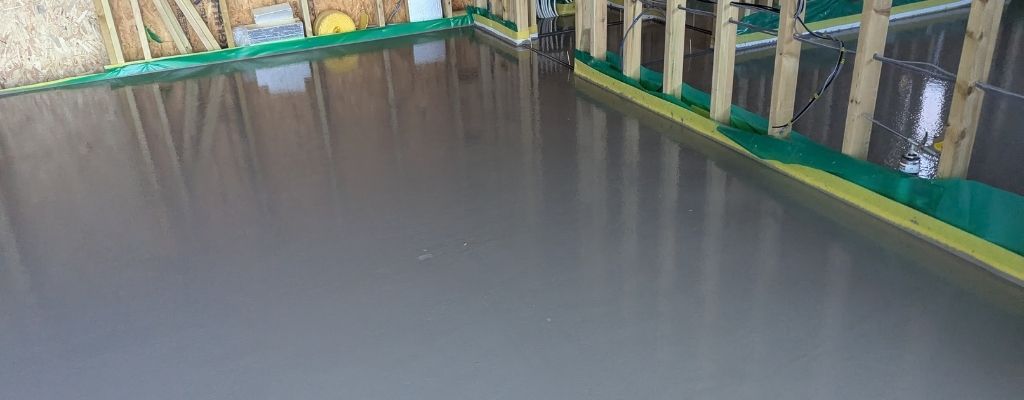
Creating a smooth, level and durable floor is an important part of any building project. Traditionally, sand and cement screeds have been widely used to provide the surface for the final floor covering. However, modern self-levelling screed provides an alternative that can be faster to install and particularly well suited to larger areas and underfloor heating systems.
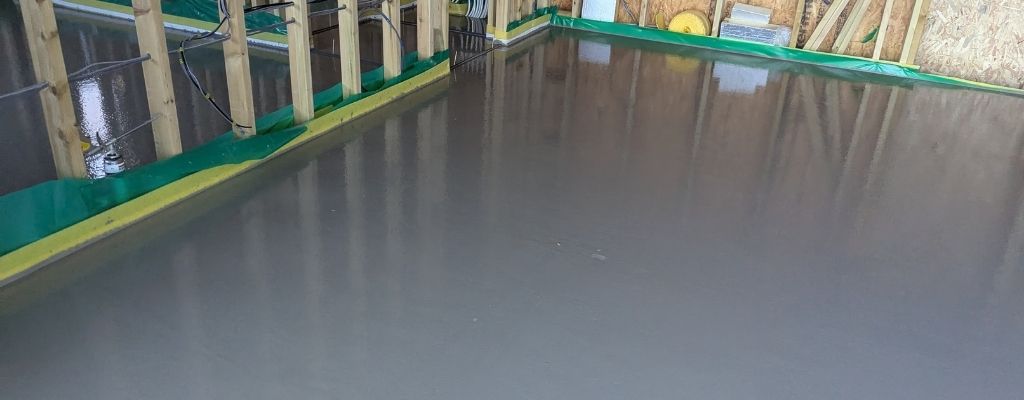
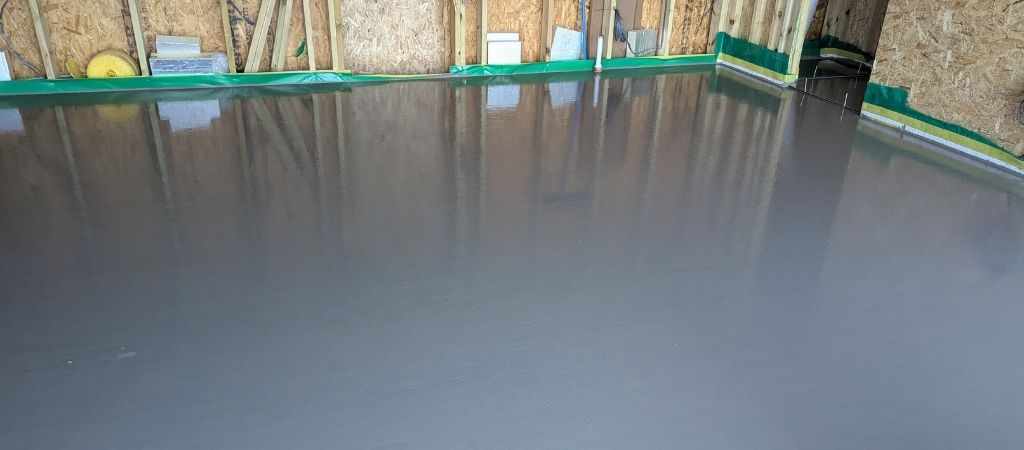
Also commonly referred to as liquid screed or flowing screed, it is delivered to site ready mixed and pumped into position, where its fluid consistency allows it to flow efficiently across the floor.
At Flowmix, we supply both Cemfloor self-levelling screed and Gyvlon self-levelling screed, giving our customers a choice of high-performance screed systems for domestic and commercial projects.
But how does self-levelling screed work, what are its advantages and how do Cemfloor and Gyvlon differ?
✅ Order liquid screed today
✅ Free, fast quote within 24 hours
✅ Call, message or complete our simple online form
Flowmix Tewkesbury: Tel: 01684 217888 Flowmix Walsall: Tel: 01922 741731
What Is Self-Levelling Screed?
Self-levelling screed is a free-flowing floor screed designed to create a smooth and consistent surface over a structural floor, insulation or underfloor heating system.
Unlike traditional sand and cement screed, which has a relatively dry consistency and needs to be manually spread and compacted, flowing screed has a much more fluid consistency.
It can therefore be pumped directly into the required area, then professionally levelled and finished.
Despite the name, self-levelling screed shouldn’t be thought of as a product you can pour onto a floor and leave to find its own perfect level. Correct preparation, depth control, installation and finishing are still essential.
Its flowing characteristics do, however, make it possible to achieve a highly consistent floor level efficiently.
What Is Self-Levelling Screed Used For?
Liquid floor screed can be used in a wide range of domestic and commercial projects, such as new-build homes, home extensions, renovation projects, and commercial buildings, concrete floors, floating floors over insulation, floors incorporating underfloor heating and large floor areas
Different self-levelling screed products are designed for different applications. The right specification depends on the floor construction and the project’s requirements.
The Benefits of Self-Levelling Screed
One reason self-levelling screed has become increasingly popular is that it offers several practical advantages during both installation and use.
Faster Installation
Because liquid screed is pumped rather than manually laid and compacted, installers can complete large areas relatively quickly.
For larger residential developments and commercial projects in particular, this can significantly reduce the amount of time required to screed a floor.
Reduced Labour
Traditional sand and cement screed requires considerable manual handling, spreading and compacting.
Flowing screed can be pumped directly to the required area, reducing the physical labour involved in moving and placing the material.
This can make installation considerably more efficient, particularly where access across a large floor area would otherwise involve moving significant quantities of screed manually.
Need Expert Advice?
Speak to the team at Flowmix Tewkesbury, Gloucestershire or Aldridge, Walsall. We are happy to help with all your concrete requirements. Contact us by email or telephone.
Flowmix Tewkesbury: Tel: 01684 217888 Flowmix Walsall: Tel: 01922 741731
Smooth, Consistent Floors
The fluid nature of self-levelling floor screed helps it spread evenly across the floor.
When correctly installed, it produces a smooth, consistent surface ready for subsequent floor finishes once the screed has reached the required moisture condition and any necessary preparation is complete.
Suitable for Large Areas
The speed at which flowing screed can be pumped and installed makes it particularly useful for larger floors.
Depending on the product and specification, flowing screeds may also allow larger areas to be installed with fewer joints than would typically be required with traditional screed.
Reduced Screed Depth
Some liquid screed systems can be installed at reduced depths compared with conventional sand and cement screed.
The minimum thickness depends on the screed product, floor construction, and application, so always determine the correct depth from the product specification rather than assuming a standard thickness.
Excellent for Underfloor Heating
One of the biggest advantages of liquid screed is how well it works with modern underfloor heating systems.
Self-Levelling Screed for Underfloor Heating
Self-levelling screed is particularly well suited to floors incorporating underfloor heating.
When traditional semi-dry screed is installed around heating pipes, careful compaction is needed to ensure good contact around the pipework. Flowing screed behaves differently.
Because the material flows around the underfloor heating pipes, it can provide close contact with the pipework while reducing the risk of air pockets around the system. That allows heat to transfer efficiently from the pipes into the surrounding screed and across the floor.
Both Cemfloor and Gyvlon offer screeds specifically suitable for use with underfloor heating systems.
Installing certain flowing screeds at reduced depths can also reduce the amount of material that needs to be heated, although the required depth depends on the system and specification.
What Is Cemfloor Self-Levelling Screed?
Cemfloor is a high-performance, free-flowing, self-compacting screed. It’s suitable for a broad range of domestic and commercial applications, including new builds, renovations and floors incorporating underfloor heating.
Cemfloor uses a cementitious binder system and can be used in bonded, unbonded and floating floor constructions, subject to the appropriate product specification.
One significant advantage of Cemfloor is that it doesn’t require removing surface laitance before applying floor coverings. This can reduce preparation requirements later in the construction programme.
✅ Order liquid screed today
✅ Free, fast quote within 24 hours
✅ Call, message or complete our simple online form
Flowmix Tewkesbury: Tel: 01684 217888 Flowmix Walsall: Tel: 01922 741731
What Is Gyvlon Self-Levelling Screed?
Gyvlon is a range of flowing screeds based on a calcium sulphate, or anhydrite, binder.
Like Cemfloor, its flowing consistency makes it particularly suitable for floors containing underfloor heating. The material flows around the heating pipes, providing close contact between the screed and the heating system.
Gyvlon offers different screed products designed for particular floor constructions and applications rather than a single one-size-fits-all product.
Depending on the specification, Gyvlon flowing screeds can be used for floating, unbonded and bonded floor constructions as well as specialist applications. The manufacturer’s specifications and the floor design requirements should always determine the correct depth.
What Flooring Can Be Laid Over Self-Levelling Screed?
Once the self-levelling screed has dried sufficiently and any required preparation is complete, it can accommodate a wide range of finished flooring materials.
These can include:
- Carpet
- Natural stone
- Laminate
- Engineered timber
- Ceramic and porcelain tiles
- Vinyl and other resilient flooring
The exact preparation required will depend on both the screed and the chosen floor finish. That is particularly important with calcium sulphate screeds, where you should use compatible primers, adhesives, and preparation methods.
Always follow the screed and flooring manufacturers’ recommendations before installing the final covering.
Does Self-Levelling Screed Crack?
All screeds can crack if they are incorrectly specified, installed, or allowed to dry under unsuitable conditions. However, modern flowing screeds are designed to provide good dimensional stability when installed correctly.
Correct floor preparation, movement joints, screed depth, curing or drying conditions and the commissioning of underfloor heating all play a part in achieving a successful installation.
It is therefore important to consider the screed as part of the complete floor system rather than simply as a layer poured over the subfloor.
Preparing for a Liquid Screed Delivery
Good preparation can make a major difference to how smoothly the installation goes.
Before the screed arrives, the floor construction should be ready, and any insulation, membranes and underfloor heating systems should be correctly installed and secured.
Seal the area properly because flowing screed has a much more fluid consistency than traditional sand and cement screed; gaps around edges, service penetrations, or other openings can allow the material to escape.
Also consider access for the delivery vehicle and pumping equipment in advance.
Getting these details sorted before delivery helps the screed installation team work efficiently once the material arrives.
Choosing the Right Self-Levelling Screed
No single self-levelling screed is perfect for every floor. The right choice depends on what you are building and what you need the finished floor to do.
Before ordering, consider:
- Whether underfloor heating is installed
- Required drying programme
- The final floor covering
- The size of the floor
- Required screed depth
- Floor construction
- Project timescale
- Site access
The distinction between cement-based and calcium sulphate screeds may also influence which product is most suitable.
If you’re unsure, discussing the complete project, rather than asking for a particular brand of screed, can help identify the most appropriate solution.
How Flowmix Can Help with Your Project
Flowmix has two plants, Gloucester and Walsall. We provide the following services (with time slots):
✅ Ready-mix concrete, mix on-site (volumetric concrete)
✅ Traditional and liquid screed.
✅ Concrete line pump Hire to reduce manual labour and associated costs, increase efficiency, reduce wastage and clean up.
✅ Interlocking concrete blocks for temporary or permanent barriers.
✅ Mini-Mix loads up to 4 cubic metres.
Flowmix holds the BSA-approved Ready Mix Concrete Kitemark KM683844, a certification that “confirms a product or service’s claim has been independently and repeatedly tested by experts” (source BSI).
Flowmix Tewkesbury: Tel: 01684 217888 Flowmix Walsall: Tel: 01922 741731
Flowmix Delivery Areas
| Tewkesbury | Walsall Plant |
| Bourton-on-the-Water | Aldridge |
| Brockworth | Barton-Under-Needwood |
| Chalford | Birmingham |
| Cheltenham | Brownhills |
| Chipping Campden | Burntwood |
| Cirencester | Burton Upon Trent |
| Droitwich Spa | Cannock |
| Evesham | Coleshill |
| Gloucester | Dudley |
| Great Malvern | Great Haywood |
| Ledbury | Lichfield |
| Newent | Norton Canes |
| Northleach | Penkridge |
| Pershore | Rugeley |
| Ross-on-Wye | Stafford |
| Stow-on-the-Wold | Tamworth |
| Stroud | Walsall |
| Tewkesbury | West Bromwich |
| Worcester | Wolverhampton |