Anyone working in construction in the UK knows that the weather rarely pays much attention to your schedule. You can carefully plan a concrete pour, prepare the site and organise the workforce, only for rain to arrive on the day and make everything more difficult.
Wet weather can quickly turn access routes muddy, make surfaces slippery and make moving concrete around a site much harder than it needs to be. Even relatively light rain can change site conditions considerably, and that’s where pumped concrete can make a real difference.
Using a concrete pump allows concrete to be moved directly from the mixer to the area where it is needed, reducing the amount of manual handling and movement around the site. When the British weather isn’t cooperating, that can make the entire concrete pour quicker, cleaner and easier to control.
✅ Order ready-mix or volumetric concrete today
✅ Free, fast quote within 24 hours
✅ Call, message or complete our simple online form
Flowmix Tewkesbury: Tel: 01684 217888 Flowmix Walsall: Tel: 01922 741731
What Is Pumped Concrete?
Pumped concrete is concrete that is transferred from a concrete mixer to the pour location using a concrete pump, usually through a flexible hose or pipeline.
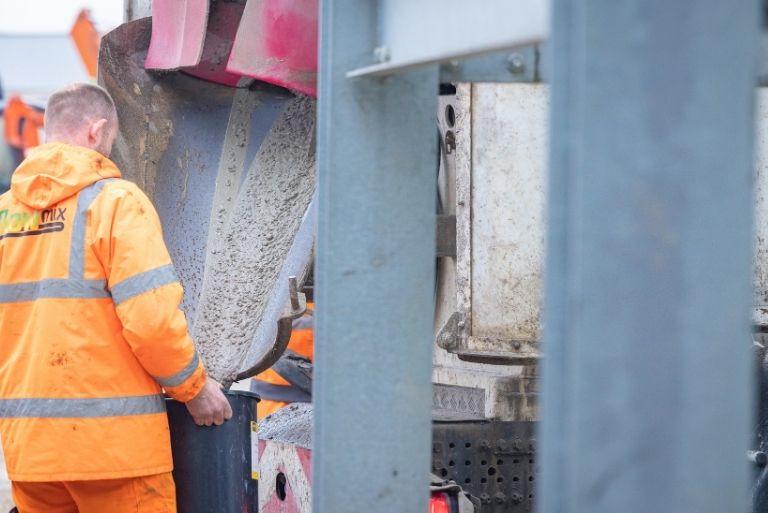
Instead of relying on direct discharge from the mixer or moving concrete backwards and forwards in wheelbarrows, the pump transports the concrete directly to where it needs to go.
It can be useful on sites where access is restricted, the pour is some distance from the road, or there are buildings, walls, landscaping or other obstacles between the mixer and the work area.
It also becomes particularly useful when poor weather makes normal site access more difficult.
Why Does Bad Weather Make Concrete Pours More Difficult?
Rain doesn’t simply mean getting wet while you work. It can change the condition of an entire construction site surprisingly quickly.
Firm ground can become muddy or waterlogged; access routes become slippery, and areas that were perfectly manageable when planning the job may suddenly become much harder to navigate, especially on clay soils.
If concrete needs to be moved manually from the mixer to the pour location, these conditions can slow the job considerably.
Wheelbarrows become harder to push through soft ground, repeated journeys take longer, and workers have to navigate slippery or uneven surfaces while transporting a heavy load.
There may also be areas of the site that you don’t want a heavy concrete mixer attempting to access after prolonged rain.
Using pumped concrete can remove many of these problems because the concrete travels through the pump hose rather than being repeatedly transported across the site.
Pumped Concrete Reduces Manual Handling
One of the advantages of concrete pumping in poor weather is reduced manual handling.
On a straightforward site with good access, moving smaller quantities of concrete by wheelbarrow may be perfectly practical. Once the ground becomes wet, muddy or slippery, however, the same job can become much more difficult.
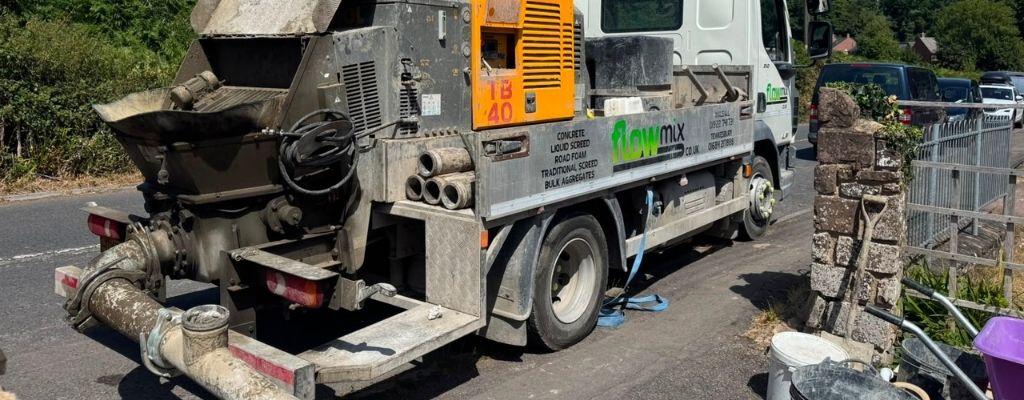
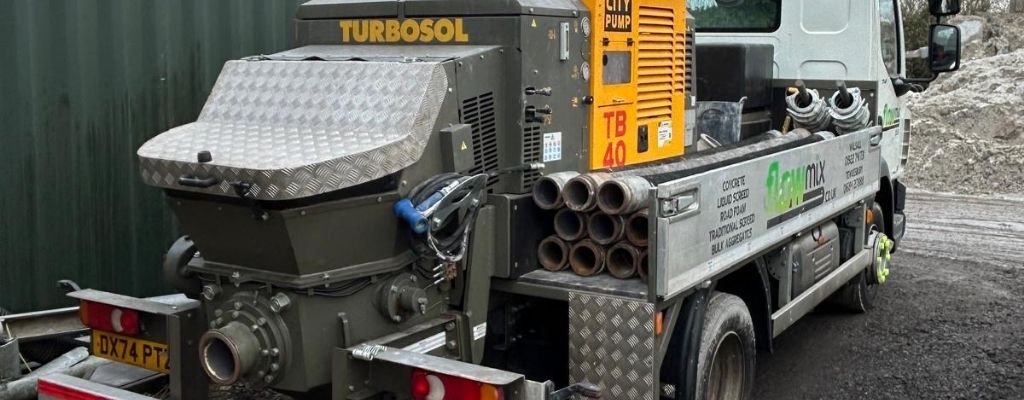
A concrete pump allows the concrete to travel from the mixer through a hose directly towards the pour location.
Workers can then concentrate on placing and levelling the concrete rather than repeatedly transporting it across the site.
For larger pours or locations some distance from the mixer, the difference can be considerable.
Faster Concrete Placement When the Weather Changes
British weather has an annoying habit of changing its mind.
A dry morning can quickly turn into a wet afternoon, so there are occasions when contractors have a relatively limited window in which to complete a pour under suitable conditions, and that’s where pumped concrete has an advantage.
Concrete pumps can move concrete efficiently from the mixer to the pour area without the constant journeys required when concrete is being transported manually.
That doesn’t mean a concrete pump makes it suitable to pour concrete in all weather conditions. Heavy rain, extreme temperatures and other adverse conditions can still affect concrete placement, finishing and curing.
However, when conditions are suitable for the pour, but the forecast is less than ideal, being able to place the concrete efficiently can help keep the project moving.
Better Access When the Ground Is Wet or Muddy
Vehicle access is one of the biggest considerations when planning any concrete delivery.
Direct discharge from a concrete mixer requires the vehicle to get reasonably close to the pour location. That isn’t always possible even in good weather. After several days of rain, access can become even more difficult.
Ground that would normally support site traffic may become soft or muddy, while narrow access routes can become difficult to navigate safely. A concrete pump provides greater flexibility because the mixer doesn’t necessarily have to reach the pour itself.
Instead, the vehicle and pump can be positioned in a suitable location and the concrete transported through the pump line to the required area.
For projects involving rear gardens, extensions, foundations and other restricted-access locations, this can be particularly useful.
Need Expert Advice?
Speak to the team at Flowmix Tewkesbury, Gloucestershire or Aldridge, Walsall. We are happy to help with all your concrete requirements. Contact us by email or telephone.
Flowmix Tewkesbury: Tel: 01684 217888 Flowmix Walsall: Tel: 01922 741731
Pumped Concrete Can Help Keep the Site Cleaner
Rain and construction sites already make a fairly effective recipe for mud. Add wheelbarrows carrying wet concrete backwards and forwards and things can become messy very quickly.
Concrete pumping creates a more direct route between the mixer and the pour location. Rather than transporting concrete across several areas of the site, the pump hose delivers it much closer to the site pour.
There will always be cleaning and site management involved in a concrete pour but reducing unnecessary movement around the site can help keep the operation more controlled.
Fewer Wheelbarrow Journeys Across Slippery Ground
Wet weather can also create additional health and safety considerations.
Slippery surfaces, uneven ground and mud can all increase the difficulty of moving around a construction site. Carrying or pushing heavy loads through those conditions adds another challenge.
Using pumped concrete significantly reduces the number of journeys workers need to make while transporting concrete.
The pump does the heavy work of moving the material, allowing the site team to focus on controlling the hose and placing the concrete correctly.
A concrete pump doesn’t remove the need for proper site preparation, risk assessment or safe working practices, but reducing unnecessary manual transportation can make a difficult job much more manageable.
Reaching Difficult Pour Locations
Poor weather isn’t the only reason to consider pumped concrete. Sometimes the location itself is the problem.
The concrete may need to reach the rear of a property, pass through restricted access, travel around existing buildings or be placed somewhere a concrete mixer cannot reach.
Concrete pumping is commonly used for projects such as house extensions, foundations and footings, concrete floors, rear garden projects, commercial flooring, restricted-access construction sites and projects where the pour is a significant distance from the road.
When wet weather is added to an already difficult access situation, pumping can become an even more practical option.
Preparing for a Pumped Concrete Pour in Bad Weather
Even when you’re using a concrete pump, preparation matters.
The site should be ready before the concrete arrives, with the pour area properly prepared and unnecessary standing water removed. Access for the mixer and concrete pump should also be considered in advance.
If rain is forecast, make sure suitable covers or other protection are available for freshly placed concrete where required.
It’s also worth thinking about where the pump will be positioned. Pumped concrete helps keep the mixer away from difficult ground while still reaching the pour, but the pump itself still requires an appropriate setup area.
A little planning before the delivery arrives can prevent a lot of rushing around in the rain later.
Pumping Concrete in the Rain
Concrete can be pumped when it is raining, but whether concrete should be poured depends on the severity of the weather and the particular project.
A concrete pump helps solve the problem of getting concrete to the pour location. It doesn’t protect freshly placed concrete from adverse weather.
Light rain may be manageable with appropriate preparation, but heavy rain can cause problems with freshly placed concrete. Excess water can affect the surface, interfere with finishing and potentially compromise the finished result.
✅ Arrange concrete pump hire today
✅ Free, fast quote within 24 hours
✅ Call, message or complete our simple online form
Flowmix Tewkesbury: Tel: 01684 217888 Flowmix Walsall: Tel: 01922 741731
Pumped Concrete for Difficult Access
If a concrete mixer cannot get close enough to discharge directly into the required area, the alternatives usually involve finding another way to transport the concrete.
For small quantities, that may mean wheelbarrows. For larger pours or longer distances, this can quickly become labour-intensive and time-consuming.
A concrete pump can transport concrete over a much greater distance and around many common site obstacles.
It makes pumped concrete particularly useful for residential projects where the work is taking place behind the property, but the mixer must remain on the road or driveway.
Is Pumped Concrete More Expensive?
Using a concrete pump adds another element to the cost of a concrete delivery, so looking only at the delivery price may make pumping appear more expensive.
However, the overall cost of the pour is more important.
If pumping reduces the amount of manual labour required, speeds up placement and makes it possible to reach an area that would otherwise require extensive wheelbarrowing, it can represent very good value.
The larger the pour or the more difficult the access, the more important these factors can become. In addition, when the site is wet and muddy, avoiding dozens of wheelbarrow journeys may be worth considerably more than the cost difference suggests.
Conclusion
When wet conditions make access and concrete placement challenging, pumped concrete provides an efficient way to move concrete across the site without relying on wheelbarrows.
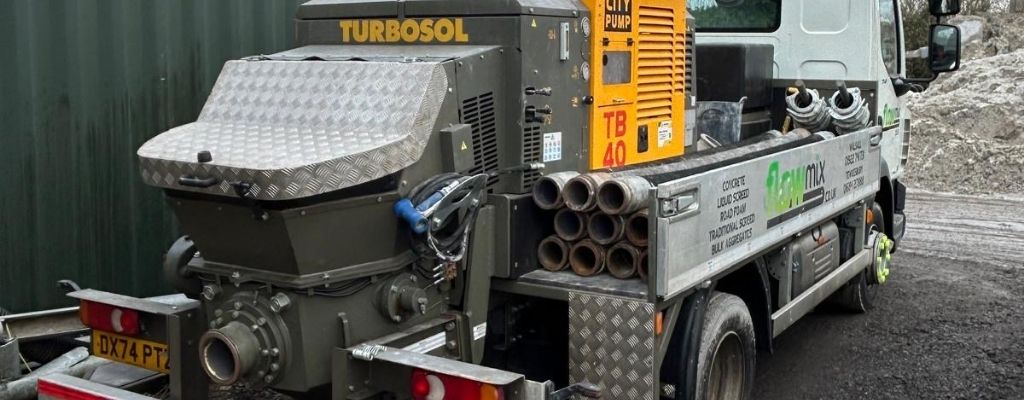
Flowmix supplies ready mix concrete for domestic and commercial projects across the West Midlands, with concrete pumping available for sites where direct access isn’t practical. The concrete line pump is 70-metres long.
If you’re planning a concrete pour and aren’t sure whether you’ll need a concrete pump, speak to the Flowmix team before delivery. We can help you consider the access, distance to the pour and volume of concrete required so you can choose the most practical delivery method for your project.
How Flowmix Can Help with Your Project
Flowmix has two plants, Gloucester and Walsall. We provide the following services (with time slots):
✅ Ready-mix concrete, mix on-site (volumetric concrete)
✅ Traditional and liquid screed.
✅ Concrete line pump Hire to reduce manual labour and associated costs, increase efficiency, reduce wastage and clean up.
✅ Interlocking concrete blocks for temporary or permanent barriers.
✅ Mini-Mix loads up to 4 cubic metres.
Flowmix holds the BSA-approved Ready Mix Concrete Kitemark KM683844, a certification that “confirms a product or service’s claim has been independently and repeatedly tested by experts” (source BSI).
Flowmix Tewkesbury: Tel: 01684 217888 Flowmix Walsall: Tel: 01922 741731
Flowmix Delivery Areas
| Tewkesbury | Walsall Plant |
| Bourton-on-the-Water | Aldridge |
| Brockworth | Barton-Under-Needwood |
| Chalford | Birmingham |
| Cheltenham | Brownhills |
| Chipping Campden | Burntwood |
| Cirencester | Burton Upon Trent |
| Droitwich Spa | Cannock |
| Evesham | Coleshill |
| Gloucester | Dudley |
| Great Malvern | Great Haywood |
| Ledbury | Lichfield |
| Newent | Norton Canes |
| Northleach | Penkridge |
| Pershore | Rugeley |
| Ross-on-Wye | Stafford |
| Stow-on-the-Wold | Tamworth |
| Stroud | Walsall |
| Tewkesbury | West Bromwich |
| Worcester | Wolverhampton |