
Bonded vs unbonded screed? How do you know which screed is best for your project?
Flooring isn’t just about aesthetics – it’s a crucial structural element that demands strength, durability, and perfect levelling. Get it wrong, and you’ll face problems for years. Screed flooring delivers these essential qualities, but choosing between available options can be overwhelming for even experienced builders.
In the debate for bonded vs unbonded screed, both have unique properties for individual jobs.
There are two primary screed designs: bonded and unbonded. Each serves specific purposes and comes with distinct advantages. At Flowmix, we’ve installed thousands of square meters of both types across countless projects.
We’ve learned what works where and when to recommend each option. Drawing from this experience, we’ll explain what screed is, how these bonded vs unbonded screeds differ fundamentally, and where each option truly shines.
Every building has unique requirements, and we’re here to help you make the right choice. Contact Flowmix for a detailed quote and expert recommendations regarding bonded vs unbonded screeds based on your project needs.
✅ Order liquid screed today
✅ Free, fast quote within 24 hours
✅ Call, message or complete our simple online form
Flowmix Tewkesbury: Tel: 01684 217888 Flowmix Walsall: Tel: 01922 741731
What is Screed?
Screed isn’t complicated – it’s a precision layer that transforms rough concrete into a perfect subfloor. Think of it as your floor’s foundation. Screed is made from a precise mix of cement, carefully selected aggregates, and water.
Screed creates a surface that’s robust and refined. This layer can range from whisper-thin at 25mm to a substantial 100mm thick.
What makes screed versatile is its finishing options. You can leave it exposed for an industrial look or use it as the ideal base for carpets, hardwood, or other flooring material. Its strength and smoothness make it the perfect canvas for whatever comes next. The choice is bonded vs unbonded screed, so read on to learn which is best for your project.
Flowmix supplies the following liquid screeds:
- Gyvlon Liquid Screed: Suitable for underfloor heating applications and floating, unbonded, or bonded construction.
Read more about Gyvlon Liquid Screed. - Cemfloor Liquid Screed: This fast-drying and self-levelling screed is compatible with all floor covering products and adhesives and is ideal for underfloor heating.
Read more about Cemfloor Liquid Screed.
Flowmix also supplies Traditional screed (dry screed), A mix of sand and cement at a typical ratio of one part cement to four parts sand.
Need Expert Advice?
If you’d like to learn more about bonded vs unbonded screed, please speak with the Flowmix team in Tewkesbury or Walsall. We are happy to help with all your concrete requirements.
Flowmix Tewkesbury: 01684 217888 Flowmix Walsall: Tel: 01922 741731
What Is Bonded Screed?
Bonded screed creates an unbreakable connection with the concrete beneath it. The process starts with the mechanical preparation of the substrate, followed by applying a bonding agent or slurry that essentially glues the layers together.
This method forms a strong bond between screed and concrete.
Most bonded screed installations run 25-40mm thick – just enough to create that perfect surface while maintaining maximum structural integrity. It’s all about achieving that sweet spot between adhesion and thickness.
When Would You Use Bonded Screed?
Bonded screed shines in high-stress environments. It’s the go-to choice for areas that take a beating, such as driveways where cars constantly roll in and out or parking structures that face constant vehicle traffic.
The strong bond with the substrate creates a unified structure that can handle excessive loads day after day.
The direct connection to the concrete below means forces get distributed evenly, making unbonded screed perfect for these demanding applications.
What Are The Benefits Of Using Bonded Screed?
Bonded screed has several key advantages, making it a top choice for many projects. For starters, its thinner profile makes the application straightforward. You only need a simple cement-water slurry or bonding agent. That means less material and faster installation times.
The real magic happens in the long term. The bonding agents contain special additives that fight against shrinkage, a common problem in concrete work.
When installed correctly, the bonded screed stays dimensionally stable for years. The tight bond with the substrate also means excellent load distribution and superior durability.
Unbonded screed floats independently, and bonded screed becomes one with its foundation, creating a unified structure stronger than the sum of its parts. This integrated strength is invaluable for areas facing heavy traffic or constant stress.
In addition, since bonded screed requires less material thickness than unbonded options, you’ll often save on material costs. Efficiency and performance are what make bonded screed a wise choice.
What Is Unbonded Screed?
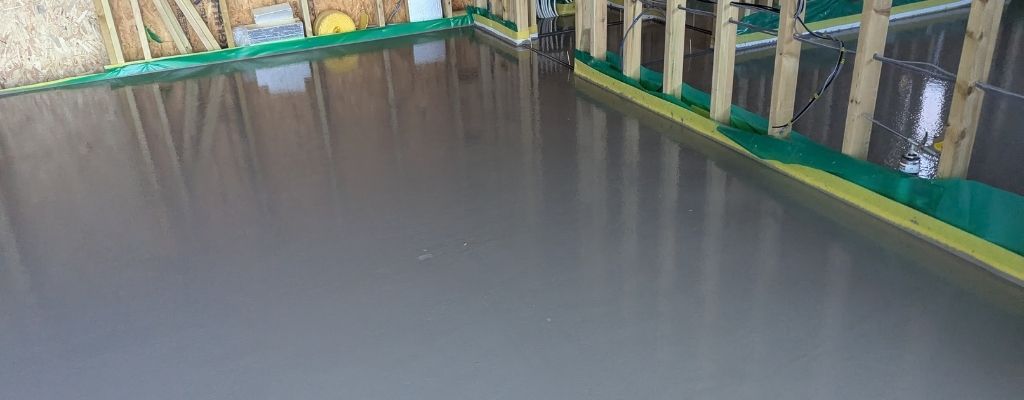
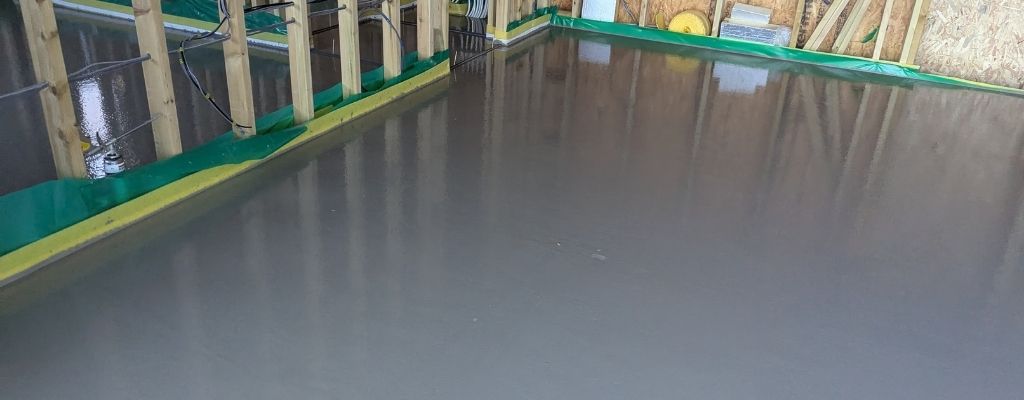
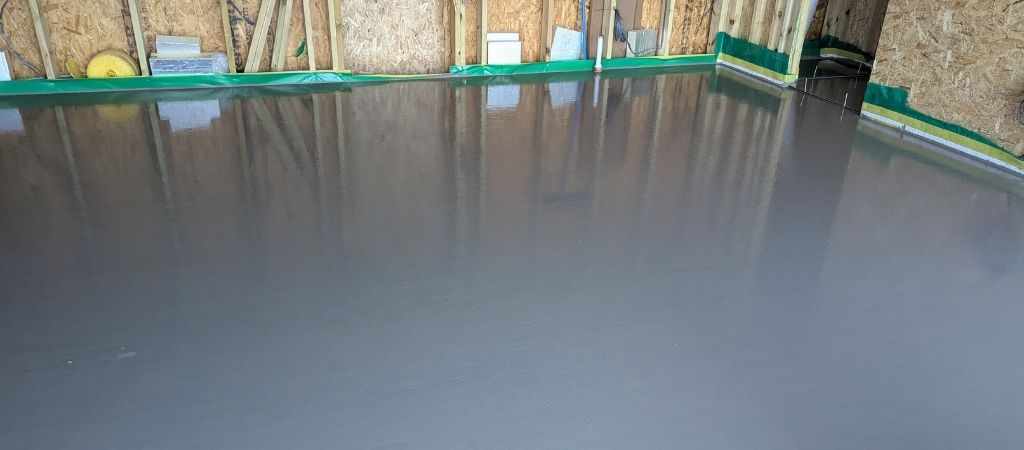
Unbonded screed takes a different approach entirely. Instead of bonding to the concrete, it’s deliberately isolated using a damp-proof membrane or polyethene sheet. That creates a floating layer that works independently from the substrate below.
The primary challenge of unbonded screed is the need for patience during installation. If you rush the drying process, you end up with warped edges – a costly mistake to fix. That’s why unbonded screed runs thicker, typically over 50mm. The extra bulk provides the stability needed for a floating installation.
Read: Liquid Screed Floor Preparation: Best Step-By-Step Guide
When Would You Use Unbonded Screed?
Unbonded screed is the champion of moisture control. The damp-proof membrane isn’t just a separator – it’s a critical barrier against water problems. That makes unbonded screed perfect for spaces where moisture could spell disaster, like installations with underfloor heating systems.
Think basement floors, ground-level rooms, or any space where dampness tends to creep up from below. The membrane creates a protective shield, allowing the screed above to perform at its best without moisture interference.
Ready to Order Liquid Screed?
If you are ready to order a liquid screed delivery, speak to the team at Flowmix Tewkesbury or Walsall. We will help you select the right product and quantities for your project and arrange for fast delivery to your site.
Flowmix Tewkesbury: 01684 217888 Flowmix Walsall: Tel: 01922 741731
Why Choose Unbonded Screed?
Unbonded screed offers several benefits that make it an excellent choice for specific flooring needs:
- Prevents Settlement: Using a damp-proof membrane to separate the screed from the concrete, unbonded screed helps prevent the floor from sinking under heavy pressure, a common issue with concrete floors.
- Reduces Shrinkage Cracking: Shrinkage accounts for approximately 80% of screed cracking. The separation provided by unbonded screed minimises this risk during the drying process.
- Protects Against Damp: The damp-proof membrane acts as a barrier, stopping moisture from rising through the substrate and safeguarding the screed.
Unbonded screed is a reliable choice for areas where moisture and structural integrity are key considerations.
Bonded vs Unbonded Screed: Which Should You Choose?
The choice between bonded vs unbonded screed depends on the specific requirements of your project.
- Bonded screed is ideal for areas where durability is essential, especially when the floor needs to handle heavy, regular loads.
- Unbonded screed, on the other hand, works best in spaces prone to moisture or dampness.
No matter your project type, Flowmix offers tailored flooring solutions for the specific needs of commercial and residential spaces.
How Flowmix Can Help With Your Project
Flowmix has two plants, Gloucester and Walsall. We provide the following services (with time slots):
✅ Ready-mix concrete, mix on-site (volumetric concrete)
✅ Traditional and liquid screed.
✅ Concrete line pump Hire to reduce manual labour and associated costs, increase efficiency, reduce wastage and clean up.
✅ Interlocking concrete blocks for temporary or permanent barriers.
✅ Mini-Mix loads up to 4 cubic metres.
Flowmix holds the BSA-approved Ready Mix Concrete Kitemark KM683844, a certification that “confirms a product or service’s claim has been independently and repeatedly tested by experts” (source BSI).
Flowmix Tewkesbury: Tel: 01684 217888 Flowmix Walsall: Tel: 01922 741731
Flowmix Delivery Areas
| Tewkesbury | Walsall Plant |
| Bourton-on-the-Water | Aldridge |
| Brockworth | Barton-Under-Needwood |
| Chalford | Birmingham |
| Cheltenham | Brownhills |
| Chipping Campden | Burntwood |
| Cirencester | Burton Upon Trent |
| Droitwich Spa | Cannock |
| Evesham | Coleshill |
| Gloucester | Dudley |
| Great Malvern | Great Haywood |
| Ledbury | Lichfield |
| Newent | Norton Canes |
| Northleach | Penkridge |
| Pershore | Rugeley |
| Ross-on-Wye | Stafford |
| Stow-on-the-Wold | Tamworth |
| Stroud | Walsall |
| Tewkesbury | West Bromwich |
| Worcester | Wolverhampton |