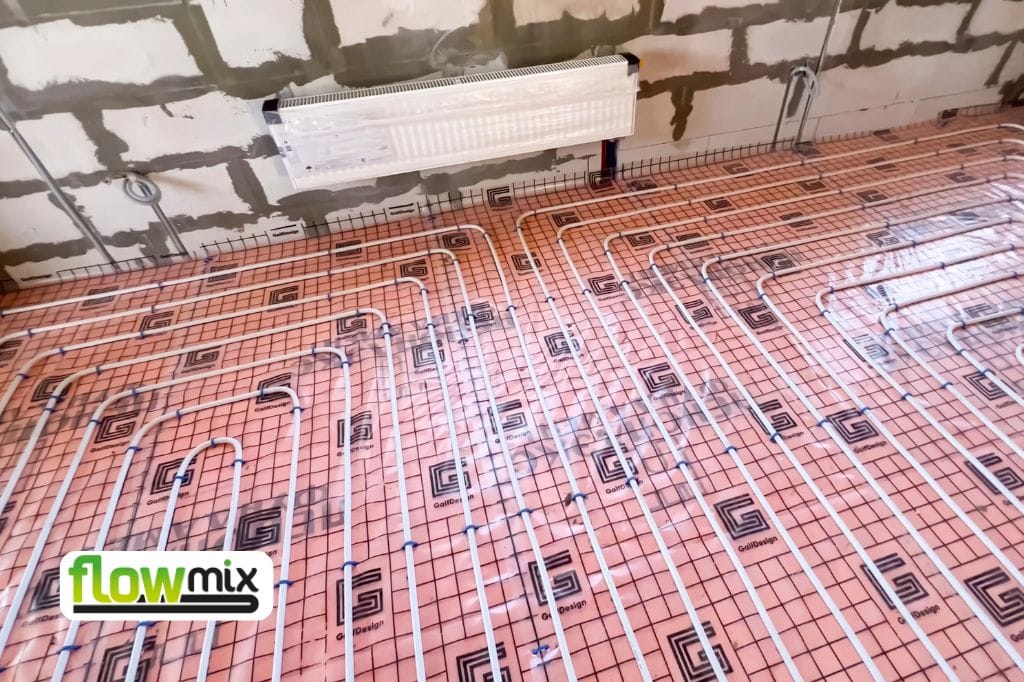
When you are choosing the right screed for a project, thermal performance is one of the most important factors to consider, especially if you are installing underfloor heating.
The type of screed you use can make a noticeable difference to how quickly a room heats up, the energy usage and how comfortable the space feels day to day.
In this post, we compare the thermal conductivity of traditional sand and cement screed with modern liquid screed, helping you understand which option delivers the best heat performance.
✅ Order your liquid screed today
✅ Free, fast quote within 24 hours
✅ Call, message or complete our simple online form
Flowmix Tewkesbury: 01684 217888 Flowmix Walsall: Tel: 01922 741731
What Is Thermal Conductivity and Why Does It Matter?
Thermal conductivity is the rate at which a material conducts heat. A higher thermal conductivity means heat moves through the material faster and more evenly. When it comes to floors, good thermal conductivity is essential because:
- Heat from underfloor heating needs to rise quickly through the screed layer.
- Better heat transfer leads to improved energy efficiency.
- Rooms feel warmer, faster and more consistent.
Considering these factors, the type of screed you choose is key.
Traditional Sand and Cement Screed
Traditional screed is a mixture of sand, cement and water. It is usually laid at a thicker depth and manually levelled, which means the finish can vary slightly depending on the installer’s technique.
Thermal Performance
Traditional screed has a lower thermal conductivity due to its composition and the potential for tiny air pockets within the mix. These air pockets slow down the flow of heat, so it takes longer for the floor to warm up.
Underfloor heating systems need to work harder, and energy use can be higher than with more thermally efficient materials.
Pros
- Strong and reliable
- Cost-effective for many projects
- Widely available and familiar to installers
Cons
- Longer drying times
- Lower thermal conductivity
- Thicker application required
Liquid Screed
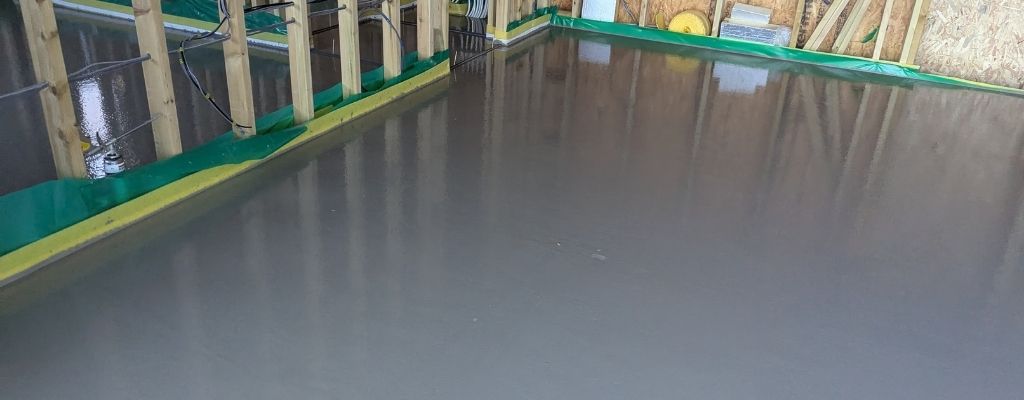
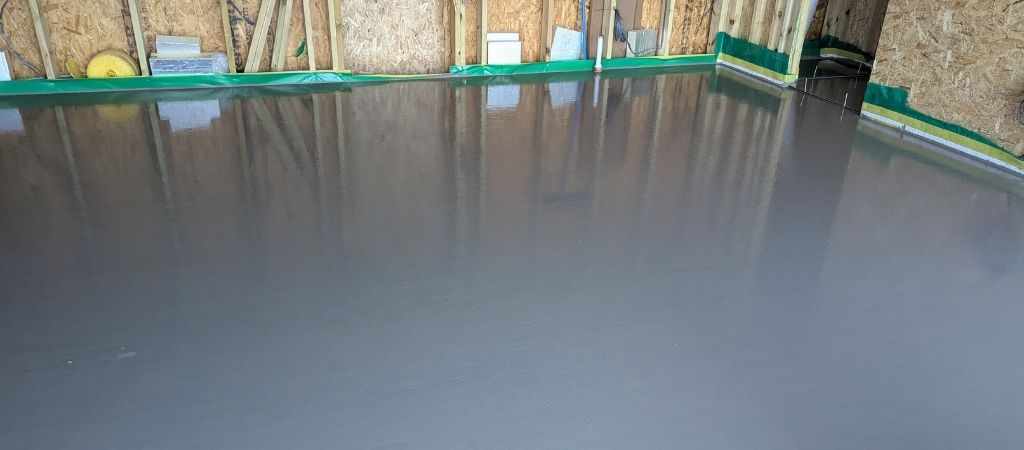
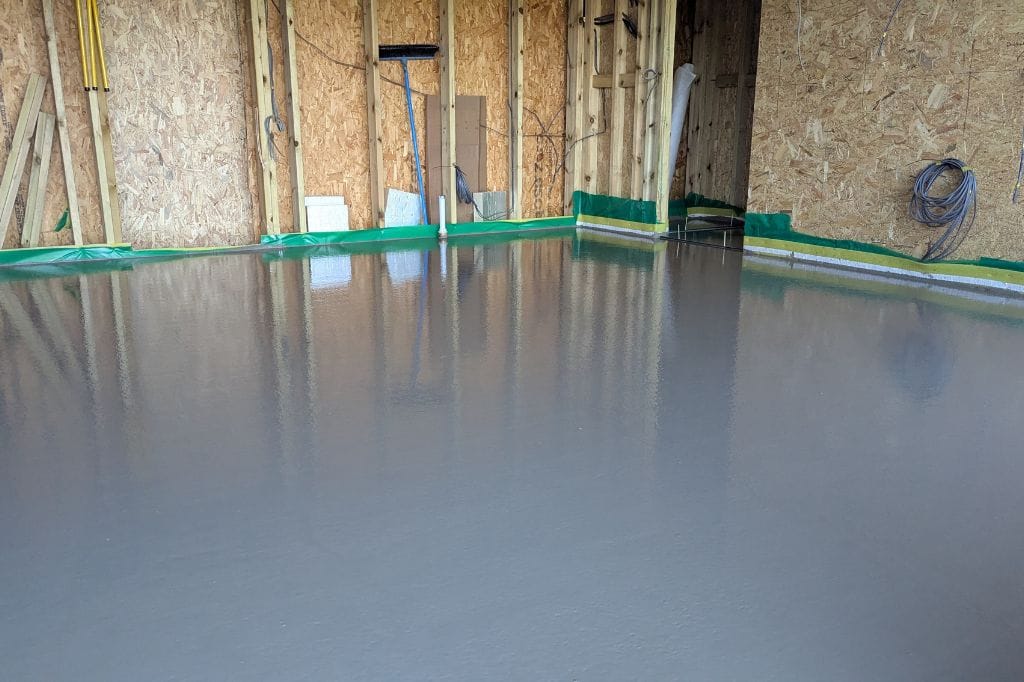
Liquid screed, often made from anhydrite or calcium sulphate, is a free-flowing material that levels itself once poured. It can be quick to install, and because it wraps around underfloor heating pipes with great precision, it creates a much denser and more consistent finish.
Thermal Performance
Liquid screed has a significantly higher thermal conductivity than traditional screed. Its density and reduced air voids make it highly efficient at transferring heat. With liquid screed, you can expect:
It has faster heat-up times, which improves energy efficiency. This better responsiveness from underfloor heating provides a more comfortable and consistent room temperature.
Pros
- Smooth, level finish
- Perfect for underfloor heating
- Excellent thermal performance
- Installed quickly and efficiently
Cons
- Requires specific primers before floor coverings
- Must be protected from moisture
- Laitance needs removing after curing
Traditional vs Liquid Screed Comparison
| Feature | Traditional Screed | Liquid Screed |
| Thermal Conductivity | Lower | Higher |
| Heat-Up Time | Slower | Faster |
| Underfloor Heating Performance | Adequate but less efficient | Outstanding and highly efficient |
| Thickness | Thicker application | Thinner, more precise layer |
| Drying Time | Longer | Faster initial installation, drying depends on conditions |
| Overall Energy Efficiency | Lower | Higher |
Ready to Order Traditonal or Liquid Screed?
If you are ready to order traditional or liquid screed, speak to the team at Flowmix Tewkesbury or Walsall. We will arrange for prompt delivery to your site when you are ready to start your project.
✅ Order your traditional or liquid screed today
✅ Free, fast quote within 24 hours
✅ Call, message or complete our simple online form
Flowmix supplies traditionals screed and Gyvlon and Cemfloor liquid screeds.
Flowmix Tewkesbury: 01684 217888 Flowmix Walsall: Tel: 01922 741731
Why Thermal Conductivity Matters for Underfloor Heating
Underfloor heating works best when the screed transfers heat rapidly and evenly. Liquid screed’s superior conductivity means:
- Lower running costs over time
- More control and responsiveness
- Quicker warm-up times in everyday use
- A comfortable warmth underfoot without long delays
For renovations, extensions and new builds aiming for energy-efficient performance, liquid screed is often the preferred choice.
Cost Considerations
While liquid screed can cost slightly more upfront, the long-term savings often outweigh the initial investment. You may see:
- Reduced heating bills
- Less strain on the heating system
- Quicker installation, saving labour time
Traditional screed still has its place, particularly in areas where cost is the top priority or where high thermal performance isn’t essential.
Which Screed Should You Choose?
- Choose traditional screed for simple, budget-friendly projects where underfloor heating performance is not the primary focus.
- Choose liquid screed if you want maximum thermal efficiency, fast installation and the best possible results with underfloor heating.
Flowmix Screed Expertise
Flowmix supplies both traditional and liquid screed across Tewkesbury, Gloucestershire, Aldridge and the West Midlands. With over a decade of experience, our team can help you choose the right screed for your build and deliver it reliably, at competitive pricing and with a convenient two-hour delivery window.
Whether you are planning a domestic renovation or a large commercial project, we are here to help you achieve the perfect finish.
Need Expert Advice?
Speak to the team at Flowmix Tewkesbury, Gloucestershire or Aldridge, Walsall. We are happy to help with all your concrete requirements.
Flowmix Tewkesbury: 01684 217888 Flowmix Walsall: Tel: 01922 741731
How Flowmix Can Help With Your Project
Flowmix has two plants, Gloucester and Walsall. We provide the following services (with time slots):
✅ Ready-mix concrete, mix on-site (volumetric concrete)
✅ Traditional and liquid screed.
✅ Concrete line pump Hire to reduce manual labour and associated costs, increase efficiency, reduce wastage and clean up.
✅ Interlocking concrete blocks for temporary or permanent barriers.
✅ Mini-Mix loads up to 4 cubic metres.
Flowmix has the BSA-approved Ready Mix Concrete Kitemark KM683844, a certification that “confirms a product or service’s claim has been independently and repeatedly tested by experts” (source BSI).
Flowmix Tewkesbury: 01684 217888 Flowmix Walsall: Tel: 01922 741731
Flowmix Delivery Areas
| Tewkesbury Area | Walsall Area |
| Bourton-on-the-Water | Aldridge |
| Brockworth | Barton-Under-Needwood |
| Chalford | Birmingham |
| Cheltenham | Brownhills |
| Chipping Campden | Burntwood |
| Cirencester | Burton Upon Trent |
| Droitwich Spa | Cannock |
| Evesham | Coleshill |
| Gloucester | Dudley |
| Great Malvern | Great Haywood |
| Ledbury | Lichfield |
| Newent | Norton Canes |
| Northleach | Penkridge |
| Pershore | Rugeley |
| Ross-on-Wye | Stafford |
| Stow-on-the-Wold | Tamworth |
| Stroud | Walsall |
| Tewkesbury | West Bromwich |
| Worcester | Wolverhampton |
FAQs
Is Liquid Screed Better For Underfloor Heating?
Yes, liquid screed is generally considered the better option for underfloor heating. Its higher thermal conductivity means heat travels through the floor faster and more evenly, creating a more responsive and energy-efficient heating system.
Does Traditional Screed Ever Outperform Liquid Screed?
Traditional screed can be the better choice for projects where budget is the main priority or where underfloor heating is not being installed. It is strong, reliable, and widely used, but it does not match liquid screed in terms of thermal performance.
How Long Does Each Type Of Screed Take To Dry?
Traditional sand-and-cement screed can take several weeks to cure fully, depending on thickness and conditions. Liquid screed dries more quickly initially, but still requires proper moisture testing before laying floor coverings. Drying times vary, so it is best to follow manufacturer guidance.
Can Liquid Screed Be Used In Both Domestic And Commercial Builds?
Absolutely. Liquid screed is suitable for homes, extensions, commercial units and large developments. Its smooth finish and excellent heat transfer make it popular across all project types.
What Thickness Does Each Screed Type Need?
Traditional screed is usually applied at a thicker depth to achieve the required strength. You can lay liquid screed much thinner, improving efficiency and reducing overall load. Your installer will advise on the appropriate depth for your project.
Do I Need Special Equipment For Liquid Screed?
It’s best to install liquid screed using a specialised pump to ensure an even, high-quality finish. Flowmix can supply liquid screed and arrange pump hire if required.
Is Liquid Screed More Expensive?
Upfront, liquid screed can cost slightly more, but many customers find they save money over time because their underfloor heating system runs more efficiently. Faster installation can also help reduce labour costs.
Can I Use Traditional Screed With Underfloor Heating?
Yes, you can. Traditional screed works with underfloor heating, but it does not offer the same thermal performance as liquid screed. Rooms may take longer to heat, and energy use may be higher.