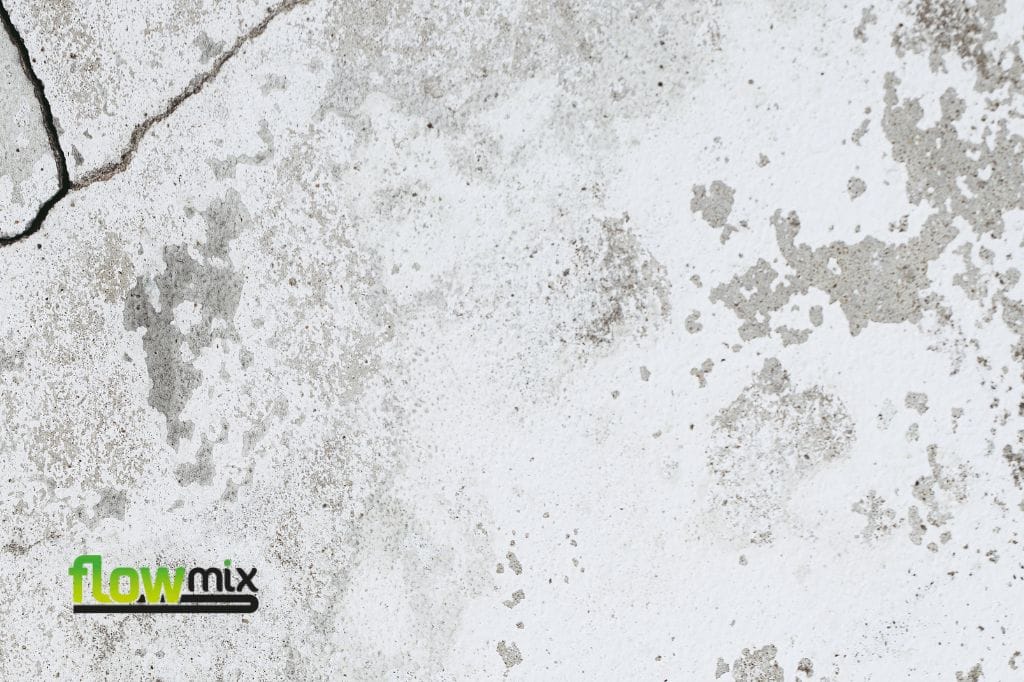
Stop screed from cracking so you don’t ever have to watch a beautiful flooring project go sideways because of a bumpy, cracked subfloor? It’s a constructor’s nightmare that we all try to avoid.
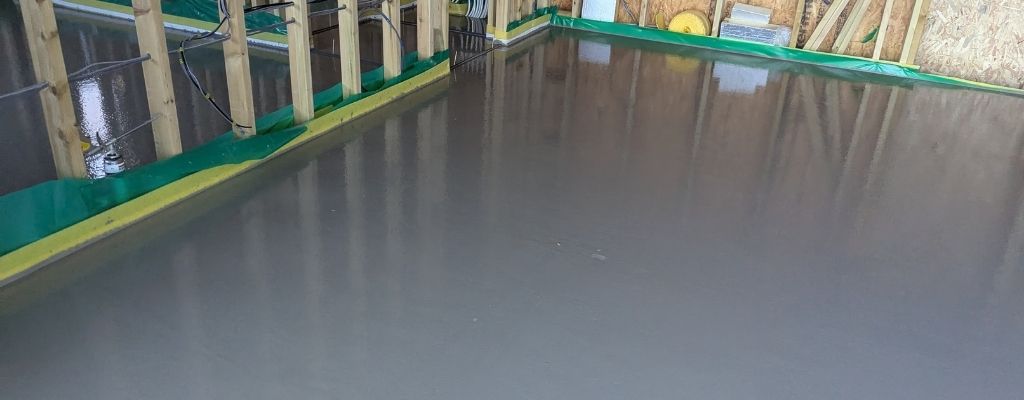
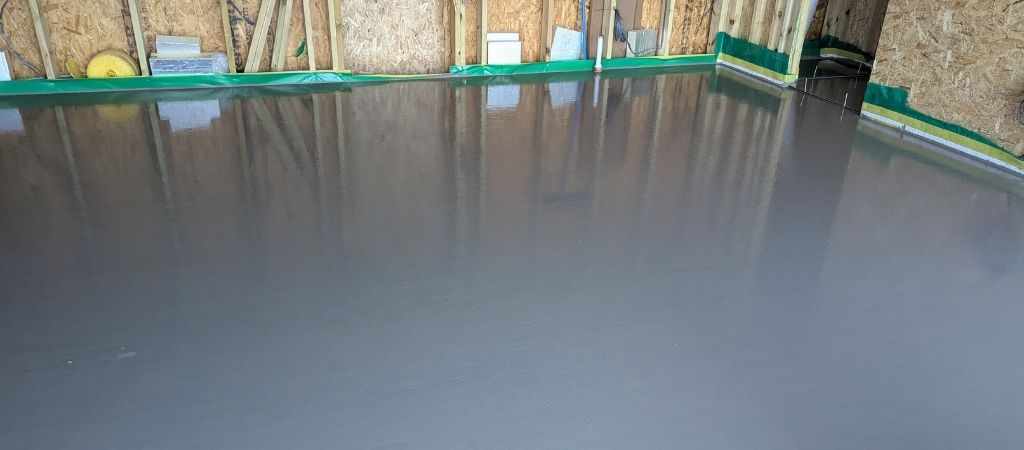
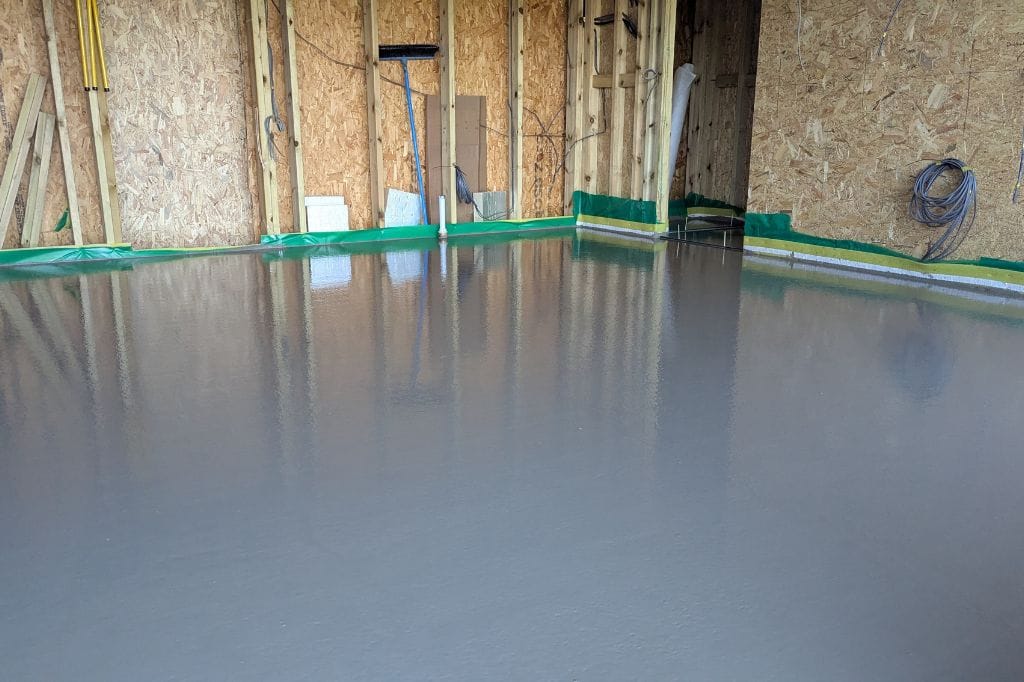
Think of self-levelling screed as the unsung hero of home renovation. It’s not just some boring construction material; it’s the smooth operator that transforms rough, uneven surfaces into perfect canvases for your dream floors.
Plywood subfloors might seem innocent, but they’re flooring’s worst enemy. If you try laying tiles or wood directly on them, it’s a recipe for disaster. Self-levelling screed is like a superhero swooping in to save the day, creating a flawless barrier that sets the stage for stunning flooring.
But here’s the catch: not all screed applications are created equal. Cracks, bubbles, and uneven surfaces are the irritating villains waiting to sabotage your perfect floor.
The good news is that this guide will teach you how to stop screed from cracking by using the proper techniques. Let’s get started if you want your floors to look like they’ve been kissed by professional magic.
✅ Order liquid screed today
✅ Free, fast quote within 24 hours
✅ Call, message or complete our simple online form
Flowmix Tewkesbury: Tel: 01684 217888 Flowmix Walsall: Tel: 01922 741731
Tip #1: Become Familiar with the Using Self-Leveling Compound
The best way to stop screed from cracking and bubbling is to familiarise yourself with the manufacturer’s instructions. They will give you complete guidelines for proper mixing, the ideal screed consistency and when and where it’s best to use the self-levelling compound.
Additionally, you can find further information on the manufacturer’s website or contact their helpline. The more you familiarise yourself with correct usage, the better the result.
Tip #2: Practice Using The Self-Levelling Compound
A typical rookie mistake is jumping into a screed project without first practising. It’s a bit of an art, and maybe you don’t know what to expect. To stop screed from cracking, the goal is to achieve the manufacturer’s recommended consistency. It might help to know that the best screed consistency is not too thick. You have over-mixed it if it’s like smooth peanut butter. It’s more like a watery soup consistency. If it’s too thick, it won’t self-level when you pour it onto the intended floor.
Read: Screed and Underfloor Heating: A Complete Guide 2025
Tip #3: Pour the Self-Levelling Compound Evenly
The worst mistake you can make when working with a self-levelling screed is to rush the job. Take your time if you want to stop screed from cracking. Pour the compound slowly and carefully so it spreads onto the floor, slipping into all the low spots to create a perfectly level floor surface.
Should you pour the screed too quickly, there’s a chance of getting air into the mix, which will result in bubbling. To reduce the possibility of getting air bubbles, go slower than you think is slow.
Need Expert Advice?
Speak to the team at Flowmix Tewkesbury or Walsall. We are happy to help with all your concrete requirements.
Flowmix Tewkesbury: 01684 217888 Flowmix Walsall: Tel: 01922 741731
Tip #4: Check the Room Temperature
Before laying the self-levelling screed, check the room temperature is consistent with the manufacturer’s guidelines. If the room is too cold or hot, it affects the screed’s setting, potentially leading to cracking when the compound dries.
Before the big day, ensure you have a room heater or fan, depending on the temperature. Keep a thermometer handy and monitor the temperature throughout.
If we’re having a heatwave or extreme cold, it might be better to wait for more ambient temperatures before laying the screed.
Read: Professional Screed Delivery Services: 5 Key Benefits
Tip #5: Try to Prevent Drafts
After you’ve ensured an ambient temperature following manufacturer guidelines, the next thing to check is whether there are air currents or drafts in the room. The larger the room, the more chance there are areas of air pockets, especially in houses under construction or with multiple large windows.
Cover any spaces where air can enter the room, including windows, to stop the screed from cracking. Cover windows with plastic or anything that prevents air from escaping into the room. The first few hours of setting are crucial to the final result.
How Flowmix Can Help With Your Project
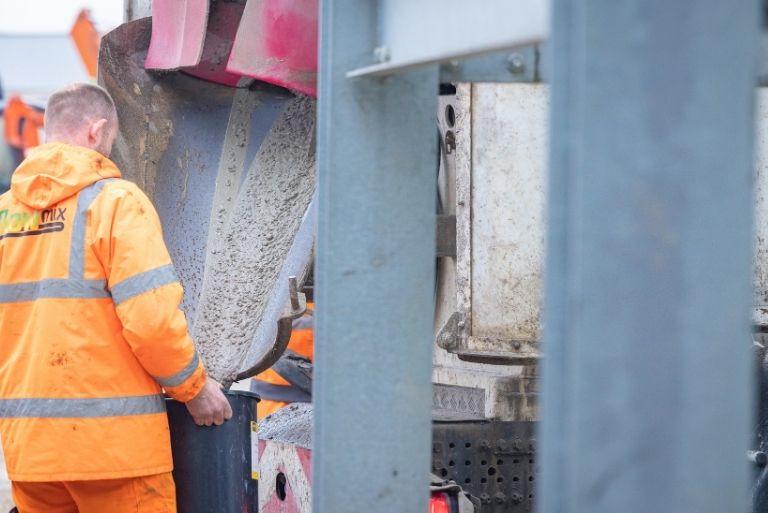
Flowmix has two plants, Gloucester and Walsall. We provide the following services (with time slots):
✅ Ready-mix concrete, mix on-site (volumetric concrete)
✅ Traditional and liquid screed.
✅ Concrete line pump Hire to reduce manual labour and associated costs, increase efficiency, reduce wastage and clean up.
✅ Interlocking concrete blocks for temporary or permanent barriers.
✅ Mini-Mix loads up to 4 cubic metres.
Flowmix holds the BSA-approved Ready Mix Concrete Kitemark KM683844, a certification that “confirms a product or service’s claim has been independently and repeatedly tested by experts” (source BSI).
Flowmix Delivery Areas
| Tewkesbury | Walsall Plant |
| Bourton-on-the-Water | Aldridge |
| Brockworth | Barton-Under-Needwood |
| Chalford | Birmingham |
| Cheltenham | Brownhills |
| Chipping Campden | Burntwood |
| Cirencester | Burton Upon Trent |
| Droitwich Spa | Cannock |
| Evesham | Coleshill |
| Gloucester | Dudley |
| Great Malvern | Great Haywood |
| Ledbury | Lichfield |
| Newent | Norton Canes |
| Northleach | Penkridge |
| Pershore | Rugeley |
| Ross-on-Wye | Stafford |
| Stow-on-the-Wold | Tamworth |
| Stroud | Walsall |
| Tewkesbury | West Bromwich |
| Worcester | Wolverhampton |