Screed and underfloor heating is something Flowmix has helped hundreds of customers with over the years.
You may have wondered what lies beneath those comfortably warm floors in modern homes. While you may assume it’s just standard concrete, it’s not. It’s actually screed, a specialised material that heating professionals swear by.
Screed is thinner, smoother, and more adaptable to modern heating solutions. It’s fascinating how this relatively simple material has become the backbone of efficient underfloor heating systems across the construction industry. Yes, screed remains largely unknown to those outside the trade.
As temperatures drop and energy costs soar, more homeowners are discovering the benefits of screed and underfloor heating for a warm home. Screed acts as a structural layer and a heat conductor. The science behind its simplicity creates a perfectly smooth, flowing layer that works in harmony with heating elements to transform cold floors into cosy surfaces.
Flowmix has worked with clients for countless installations and variations in application methods, and we’ve learned that the relationship between screed and underfloor heating is anything but straightforward. For the best job, it’s a material that demands respect and understanding, with strengths and limitations that can make or break a heating system’s performance.
This introduction to screed and underfloor heating is a simple guide if you are considering upgrading your home’s heating system.
Read: Professional Screed Delivery Services: 5 Key Benefits 2025
Understanding Screed: The Basics
Screed is a specialised form of mortar designed specifically for creating level surfaces. Unlike standard concrete, screed produces an exceptionally smooth, flat finish – exactly what you need before laying down your final flooring, whether carpet, tiles, or hardwood.
The key to screed’s effectiveness lies in its composition. Made with fine-grain sand, it has a consistency that allows it to flow and settle evenly. That makes it particularly easy to work with during installation, and its relatively quick drying time helps keep construction projects on schedule.
Screed and underfloor heating application: Screed is applied over a concrete base layer in a typical installation.
Concrete is the foundation, while screed is the precision levelling layer above it. You’ll encounter two main types in most projects: semi-dry screed and liquid screed. Each has unique advantages for different situations. Your choice will depend on the specific project requirements.
This relationship between the concrete foundation and screed creates an ideal surface for modern flooring installations. It’s a practical solution that has become standard practice in construction for good reason.
Need Expert Advice?
Speak to the team at Flowmix Tewkesbury or Walsall. We are happy to help with all your concrete requirements.
Flowmix Tewkesbury: 01684 217888 Flowmix Walsall: Tel: 01922 741731
Semi-Dry Screed
Semi-dry screed is the time-tested version used in construction for decades. It’s a mixture of sand and cement, typically blended at ratios of 3:1 or 4:1, with water added to create a workable consistency. It’s similar to mixing concrete but with finer materials and more precise measurements.
Installation requires significant skill and experience. Unlike more modern alternatives, semi-dry screed doesn’t naturally flow into place – it needs expert handling to achieve that perfect level surface.
Professional installers use specialised tools, such as trowels with flat edges, to manually spread and smooth the mixture. For added durability, many contractors incorporate Polypropylene fibres into the mix, which helps prevent cracking and increases the screed’s overall strength.
This traditional method is more labour-intensive for screed and underfloor heating but remains popular because it offers excellent control over the final result in skilled hands. However, the quality of the finished surface depends heavily on the installer’s expertise.
Liquid Screed
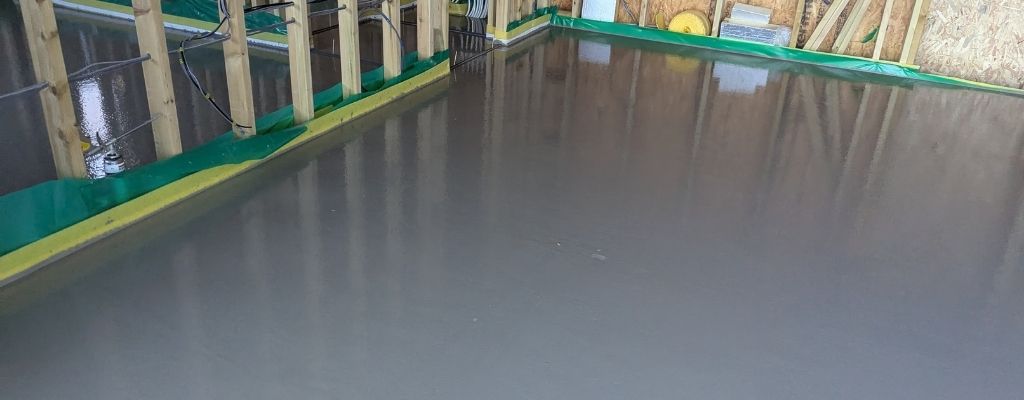
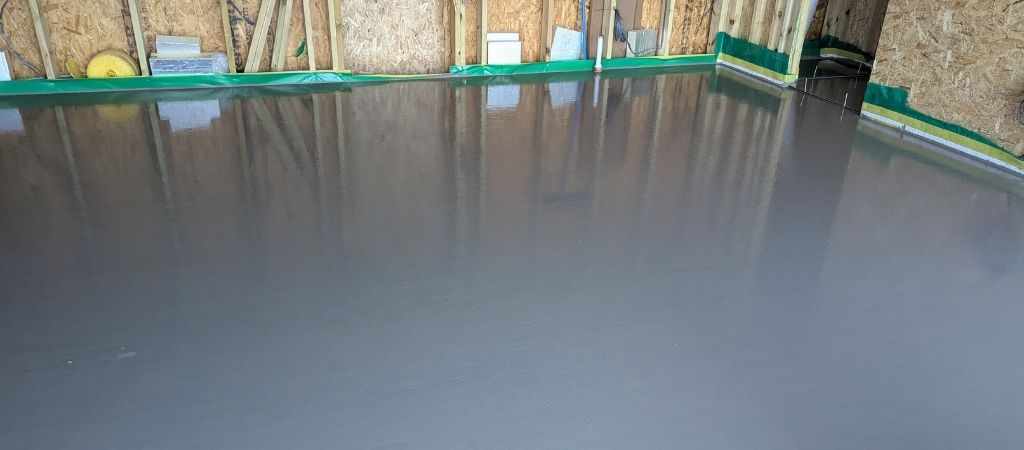
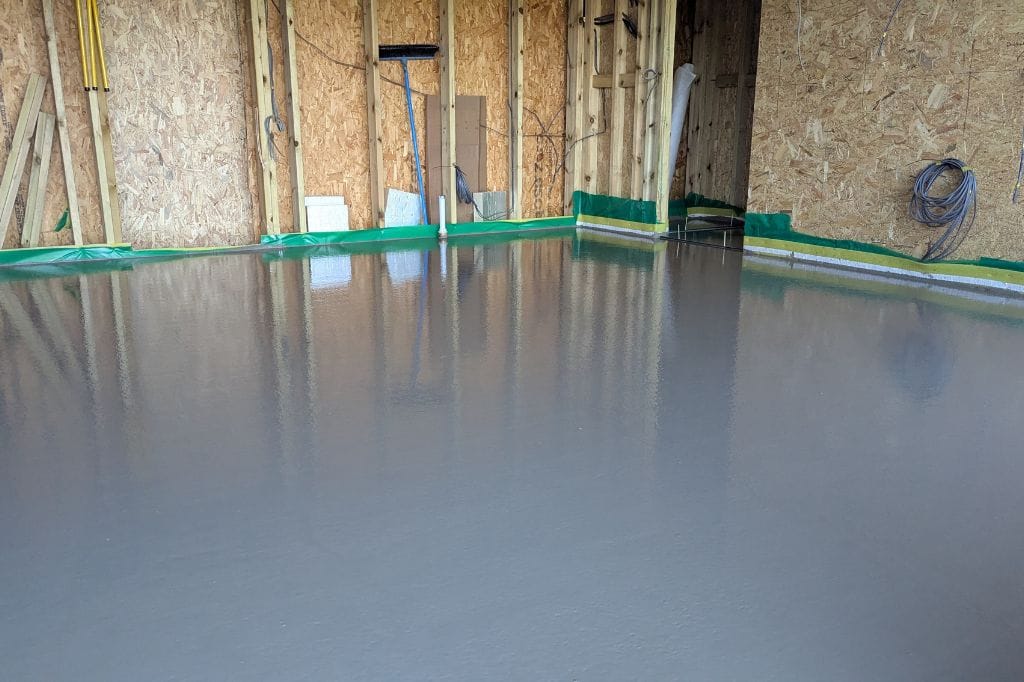
Liquid screed, such as Gyvlon and Cemfloor, known as flowing or self-leveling screed, represents a more modern approach to floor preparation. As its name suggests, this material flows like a liquid when poured, naturally spreading to create an even surface without manual intervention.
Unlike semi-dry screed, liquid screed doesn’t require extensive smoothing or levelling by hand.
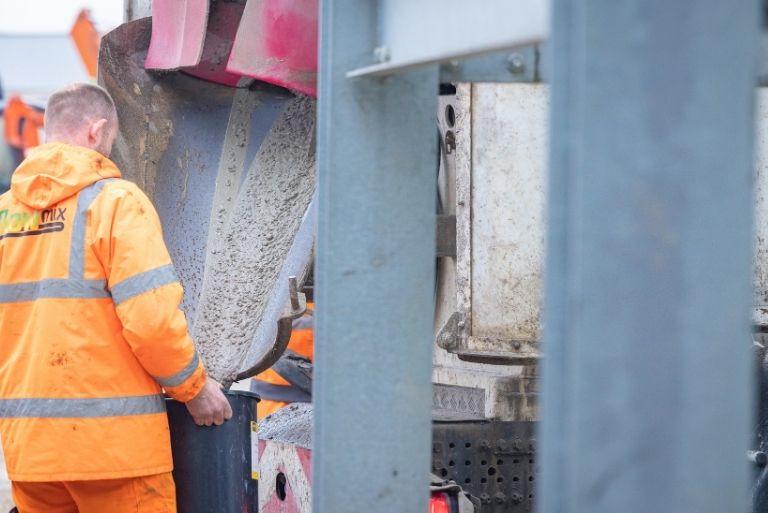
One of the core advantages of liquid screed is its ready-to-use nature. The material arrives on site, ready mixed to the perfect consistency. That eliminates the need for on-site mixing and reduces preparation time. Its faster drying time is another significant benefit, helping to keep construction schedules on track by allowing subsequent work to begin sooner.
The self-leveling properties make this type of screed particularly appealing for projects where speed and efficiency are priorities. However, it’s important to note that proper subfloor preparation is still essential for optimal results.
Why Screed Works Well With Underfloor Heating
Screed has become the go-to material for underfloor heating installations thanks to several key properties that make it ideal for the job, regardless of which type you choose.
The material’s flowing nature creates a perfect thermal envelope around heating pipes. When poured, liquid screed surrounds the underfloor heating system, eliminating air gaps and creating seamless contact with the pipes. This full encasement is crucial because it ensures efficient heat transfer from the pipes to your floor surface, leading to better heating performance and lower energy costs.
However, proper installation requires careful attention to timing and technique. One critical step is the initial heating cycle, which helps cure the screed. It’s essential to manage this process carefully. If you start too early, you risk cracking the screed as it dries. The timing of this first heat-up is crucial for the long-term durability of your floor.
It’s worth noting that while screed excels at heat distribution and creating level surfaces, it trades some structural strength for these benefits. Unlike traditional concrete, screed prioritises smoothness and heat conductivity over raw strength. That isn’t usually a problem in residential settings, but it’s an important consideration for your project planning.
Ready to Order Liquid Screed?
If you are ready to order liquid screed, speak to the team at Flowmix Tewkesbury or Walsall. We will arrange for prompt delivery to your site when you are ready to start your project.
Flowmix Tewkesbury: 01684 217888 Flowmix Walsall: Tel: 01922 741731
What Type Of Liquid Screed Do Flowmix Supply?
Flowmix supplies the following liquid screeds:
Gyvlon Liquid Screed
Gyvlon Liquid Screed is a self-compacting, free-flowing screed manufactured to BSEN 13813:2002. It’s manufactured from selected aggregates and recycled calcium sulphate binder.
Gyvlon screeds are ideal for commercial and domestic applications and suitable for underfloor heating applications and unbonded, bonded and floating construction. It provides a perfectly level surface to prepare for final floor finishes.
Cemfloor Liquid Screed
Cemfloor is fast-drying and self-leveling. It’s the perfect screed for underfloor heating systems because of its high thermal conductivity and thin depths. Cemfloor is a popular liquid screed because there is no requirement for laitance removal. In addition, it’s compatible with all floor covering products and adhesives.
Read more about Cemfloor Screed
Flowmix also Supply Traditional (Dry) Screed
Traditional Screed is a dry mix of sand and cement. The standard mix ratio is 4:1 sand to one part cement, although, in some situations, the mix could be 3 – 5 parts sand to one part cement.
Conclusion: Screed and Underfloor Heating
Whether you opt for a semi-dry screed or its more modern liquid counterpart, it is essential in successful underfloor heating installations. Its unique properties – from its smooth finish to its excellent heat distribution capabilities – make it particularly well-suited.
Screed requires careful handling during installation, especially during the crucial first heating cycle. Still, the result is an efficient and effective heating system perfect for your chosen floor covering.
Understanding the differences between screed types and their proper installation methods can help ensure your underfloor heating project delivers the comfort and efficiency you want. With proper planning and installation, a screed-based underfloor heating system can provide years of reliable, comfortable heating for your space.
Screed and underfloor heating is something we talk about daily at Flowmix. Our range of screeds is popular with domestic and construction customers. The experienced Flowmix team is happy to discuss your upcoming project and what type of screed would be the best.
How Flowmix Can Help With Your Project
Flowmix has two plants, Gloucester and Walsall. We provide the following services (with time slots):
✅ Ready-mix concrete, mix on-site (volumetric concrete)
✅ Traditional and liquid screed.
✅ Concrete line pump Hire to reduce manual labour and associated costs, increase efficiency, reduce wastage and clean up.
✅ Interlocking concrete blocks for temporary or permanent barriers.
✅ Mini-Mix loads up to 4 cubic metres.
Flowmix holds the BSA-approved Ready Mix Concrete Kitemark KM683844, a certification that “confirms a product or service’s claim has been independently and repeatedly tested by experts” (source BSI).
Flowmix Tewkesbury: Tel: 01684 217888 Flowmix Walsall: Tel: 01922 741731
Flowmix Delivery Areas
| Tewkesbury | Walsall Plant |
| Bourton-on-the-Water | Aldridge |
| Brockworth | Barton-Under-Needwood |
| Chalford | Birmingham |
| Cheltenham | Brownhills |
| Chipping Campden | Burntwood |
| Cirencester | Burton Upon Trent |
| Droitwich Spa | Cannock |
| Evesham | Coleshill |
| Gloucester | Dudley |
| Great Malvern | Great Haywood |
| Ledbury | Lichfield |
| Newent | Norton Canes |
| Northleach | Penkridge |
| Pershore | Rugeley |
| Ross-on-Wye | Stafford |
| Stow-on-the-Wold | Tamworth |
| Stroud | Walsall |
| Tewkesbury | West Bromwich |
| Worcester | Wolverhampton |
FAQs
What Is Screed And Why Is It Used With Underfloor Heating?
Screed is a smooth layer of material, usually sand and cement, laid over a subfloor to provide a level surface. When used with underfloor heating, it helps distribute heat evenly and protects the heating pipes.
Can All Types Of Screed Be Used With Underfloor Heating?
Not all screeds are suitable. Fast-drying or fibre-reinforced screeds are often recommended for underfloor heating systems because they minimise shrinkage and improve thermal conductivity.
How Thick Should Screed Be Over Underfloor Heating Pipes?
The ideal thickness depends on the system, but generally, the recommended depth is 50–75mm over pipes to ensure proper heat distribution and protect the pipes from damage.
How Long Does Screed Take To Cure Before Using Underfloor Heating?
Curing times vary depending on the type of screed. Traditional sand and cement screeds can take up to 28 days to fully cure, while fast-drying screeds may be ready in as little as 7 days. Proper curing is essential to prevent cracks and ensure efficient heating.
Can Underfloor Heating Be Turned On During Screed Curing?
The heating should only be switched on gradually after the screed has sufficiently cured. Slowly ramping up the temperature helps avoid thermal shock and cracking.
What Are The Benefits Of Using Screed With Underfloor Heating?
Screed provides a level, smooth surface, improves heat efficiency, protects heating pipes, and contributes to long-lasting, energy-efficient flooring.
Why Choose Flowmix For Screed And Underfloor Heating Projects?
Flowmix offers high-quality screed mixes, expert advice, and reliable delivery across Tewkesbury, Gloucestershire, and Aldridge. With over a decade of experience, we ensure your underfloor heating project is completed safely, efficiently, and to the highest standard.
What Type of Screed do Flowmix Do?
Flowmix provides the following types of liquid screed:
- Gyvlon: More fluid than sand cement screeds. That means it is considerably quicker to install (up to 10X faster), which reduces manual labour time, meaning more cost efficiency.
- Cemfloor: Cemfloor is self-levelling and fast-drying. It is the ideal screed for underfloor heating systems because it has high thermal conductivity and thin depths.
- Traditional Screed: Traditional (dry) screed is a mix of sand and cement. It is less popular than liquid screeds.