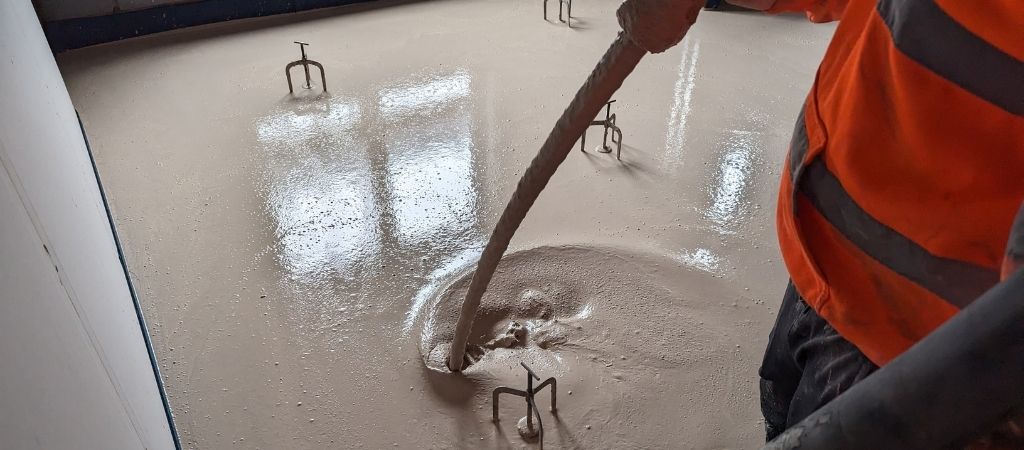
Level concrete floors are essential if you want a strong, long-lasting surface that is ready for tiles, vinyl, carpet, resin, or polished concrete. Whether you are working on a garage, extension, commercial unit, or renovation project, getting the floor level at the right stage saves time, money, and frustration later.
In this guide, we explain how to level concrete floors properly, the tools and materials you need, and when it makes sense to involve a professional concrete supplier like Flowmix.
✅ Order ready-mix, volumetric concrete or screed today
✅ Free, fast quote within 24 hours
✅ Call, message or complete our simple online form
Flowmix Tewkesbury: Tel: 01684 217888 Flowmix Walsall: Tel: 01922 741731
What Does It Mean to Level Concrete Floors?
When we talk about level concrete floors, it means a surface that is even, flat, and consistent across the entire area. A floor can look fine at first glance, but still have low spots, high points, or dips that cause problems when you install floor coverings or place heavy loads on it.
Uneven concrete floors can lead to cracked tiles, lifting vinyl, pooling water, and premature wear. Levelling the floor creates a stable base and helps your final finish perform as it should.
Step 1: Assess the Floor Before You Start
Before you attempt to level concrete floors, you need to understand how uneven the surface really is.
Use a long spirit level, straightedge, or laser level to check for dips and high spots. Mark problem areas with chalk so you know where work is needed. Minor imperfections can often be fixed with a self-levelling compound, while more significant unevenness may require grinding or screeding.
Also, check the condition of the concrete. Remove dust, debris, old adhesive, paint, or loose material, and make sure the surface is clean and dry.
Step 2: Prepare the Surface Properly
Good preparation is one of the most critical steps when levelling concrete floors.
Start by thoroughly cleaning the floor using a broom and an industrial vacuum. If there are raised areas, use a concrete grinder to smooth them. That allows the levelling material to flow evenly, reducing the amount of product you need.
Apply a suitable primer across the surface. Primer improves adhesion and prevents the concrete from drawing moisture out of the levelling compound too quickly.
Step 3: Choose the Right Levelling Method
The best method for levelling concrete floors depends on the condition of the existing slab.
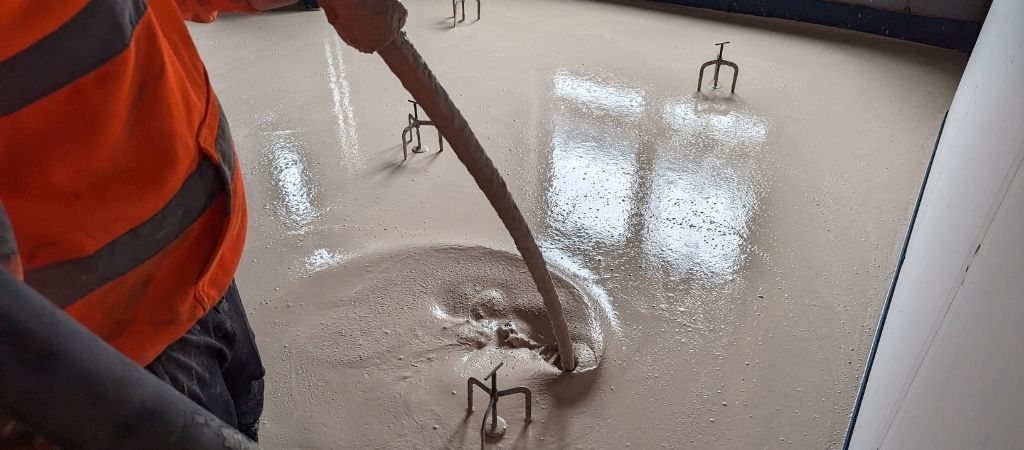
For small dips and minor unevenness, a self-levelling compound is often the easiest solution. Once mixed, it flows into low areas and naturally finds its level.
For larger areas or deeper inconsistencies, a sand-and-cement screed or a liquid screed may be more suitable. That is where working with an experienced supplier like Flowmix helps, as the correct concrete or screed mix makes a big difference to the final result.
Step 4: Apply the Levelling Material
Mix your levelling compound or screed exactly as instructed. Adding too much water weakens the mix and can lead to cracking or dusting later.
Pour the material onto the floor, starting with the lowest points. Use a trowel or screed bar to guide it across the surface and remove air pockets. Self-levelling products will settle on their own, but they still need gentle encouragement to reach edges and corners.
Allow the floor to cure fully before walking on it or installing floor coverings. Drying times vary depending on the product and thickness.
Need Expert Advice?
Speak to the team at Flowmix Tewkesbury, Gloucestershire or Aldridge, Walsall. We are happy to help with all your concrete requirements.
Flowmix Tewkesbury: Tel: 01684 217888 Flowmix Walsall: Tel: 01922 741731
Levelling New Concrete Floors
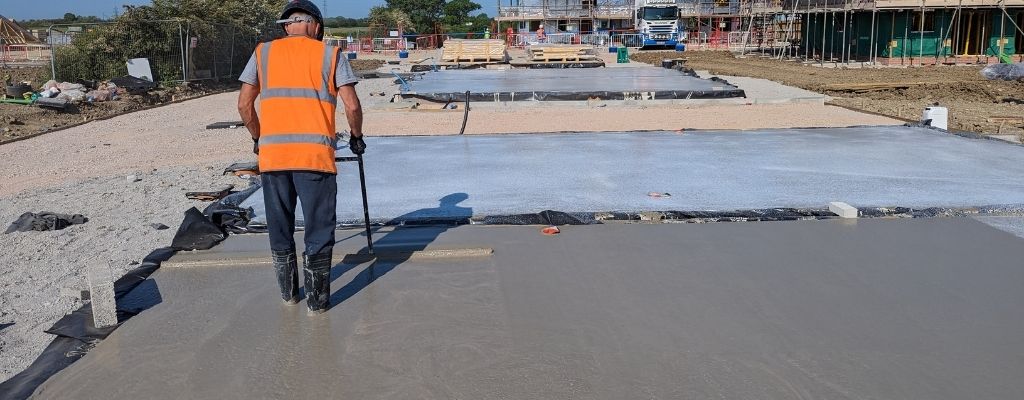
If you are installing a brand-new floor, the easiest way to achieve level concrete floors is to get it right at the pour stage. Correct base preparation, formwork, and screeding are essential.
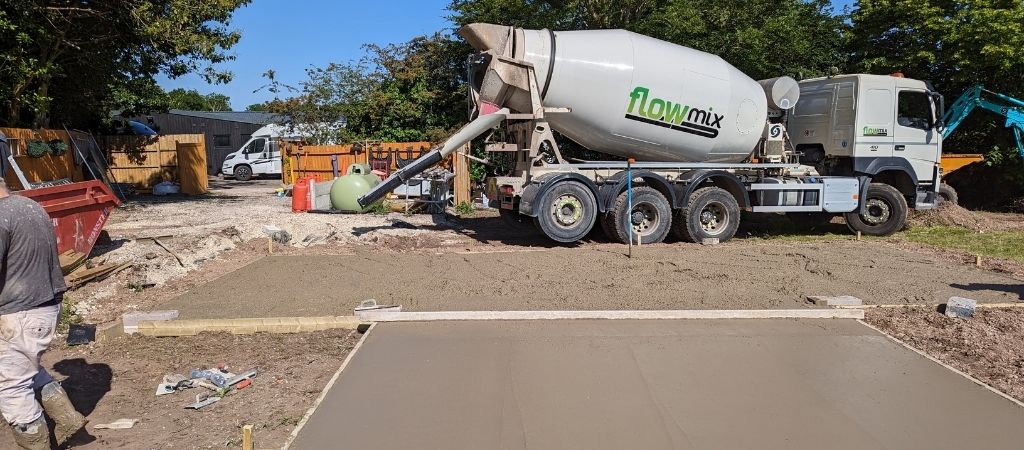
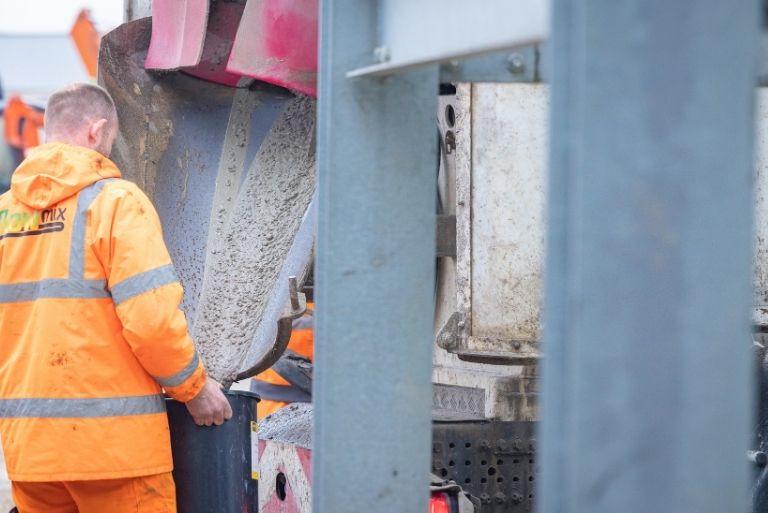
Flowmix supplies high-quality ready mix concrete, liquid screed, and mix-on-site solutions that help contractors and homeowners achieve consistent, level results from the start.
With a reliable mix and a controlled pour, you reduce the need for corrective levelling later.
Common Mistakes to Avoid
One of the biggest mistakes when levelling concrete floors is skipping preparation. Dust, moisture, or lack of primer can cause levelling compounds to fail.
Rushing curing times is another common issue. Even if the surface looks dry, the concrete underneath may not be ready for flooring.
Finally, using the wrong mix for the job can lead to poor results. Getting advice from a professional concrete supplier helps avoid costly mistakes.
How Flowmix Can Help With Your Project
Flowmix has two plants, Gloucester and Walsall. We provide the following services (with time slots):
✅ Ready-mix concrete, mix on-site (volumetric concrete)
✅ Traditional and liquid screed.
✅ 200′ Concrete line pump Hire to reduce manual labour and associated costs, increase efficiency, reduce wastage and clean up.
✅ Interlocking concrete blocks for temporary or permanent barriers.
✅ Mini-Mix loads up to 4 cubic metres.
Flowmix has the BSA-approved Ready Mix Concrete Kitemark KM683844, a certification that “confirms a product or service’s claim has been independently and repeatedly tested by experts” (source BSI).
Flowmix Tewkesbury: Tel: 01684 217888 Flowmix Walsall: Tel: 01922 741731
Flowmix Delivery Areas
| Tewkesbury Area | Walsall Area |
| Bourton-on-the-Water | Aldridge |
| Brockworth | Barton-Under-Needwood |
| Chalford | Birmingham |
| Cheltenham | Brownhills |
| Chipping Campden | Burntwood |
| Cirencester | Burton Upon Trent |
| Droitwich Spa | Cannock |
| Evesham | Coleshill |
| Gloucester | Dudley |
| Great Malvern | Great Haywood |
| Ledbury | Lichfield |
| Newent | Norton Canes |
| Northleach | Penkridge |
| Pershore | Rugeley |
| Ross-on-Wye | Stafford |
| Stow-on-the-Wold | Tamworth |
| Stroud | Walsall |
| Tewkesbury | West Bromwich |
| Worcester | Wolverhampton |