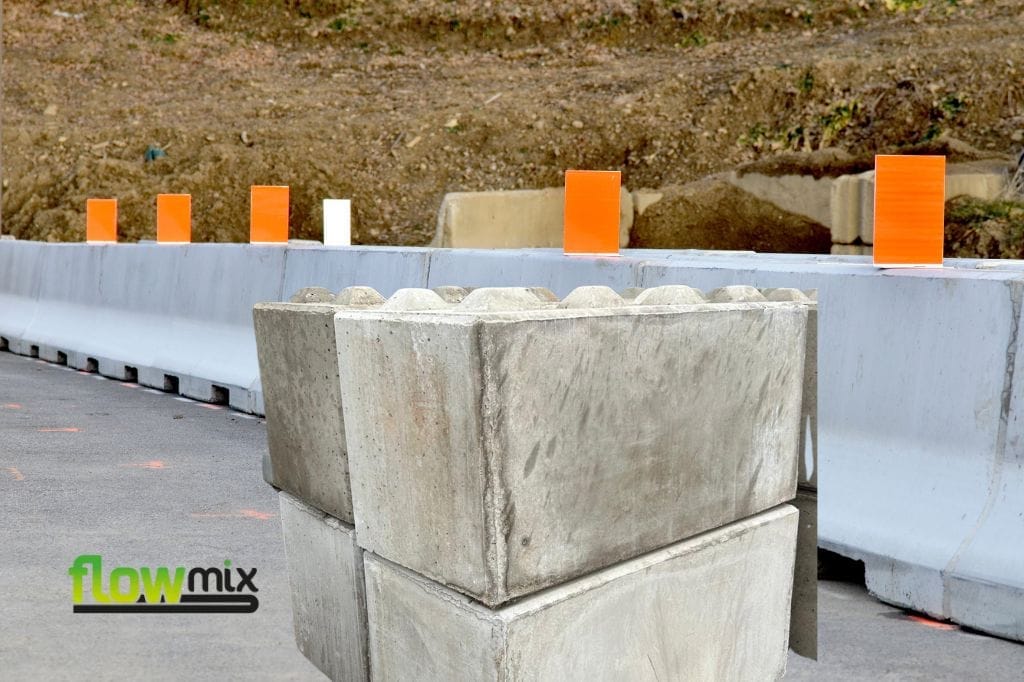
Have you noticed your interlocking concrete blocks shifting, leaning over or separating? It’s an issue that can lead to bigger structural problems if left untreated. Whether you’re building a retaining wall, driveway edge or storage bay, it’s essential to understand how to stop interlocking concrete blocks from shifting before the problem starts.
Interlocking blocks lock firmly together, like giant Lego, creating strength and stability. However, even the most carefully laid blocks can shift when the ground beneath them changes or when external forces like water, weight and temperature fluctuations come into play.
The good news is that with the proper preparation and maintenance, you can easily stop interlocking concrete blocks from shifting and extend the lifespan of your structure.
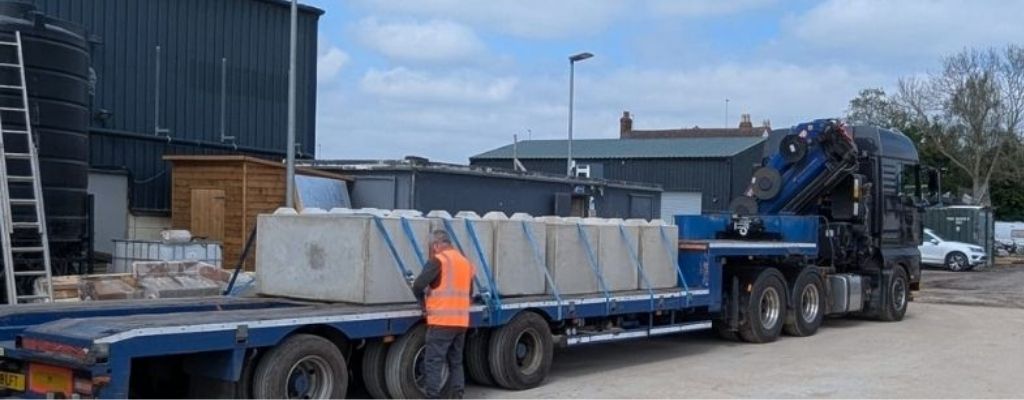
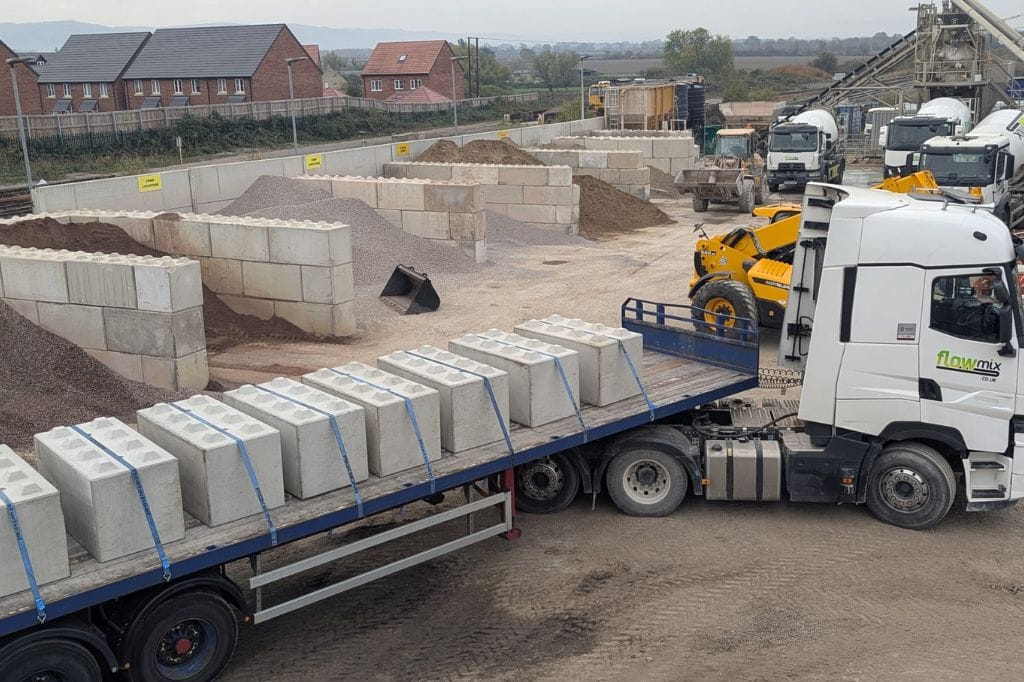
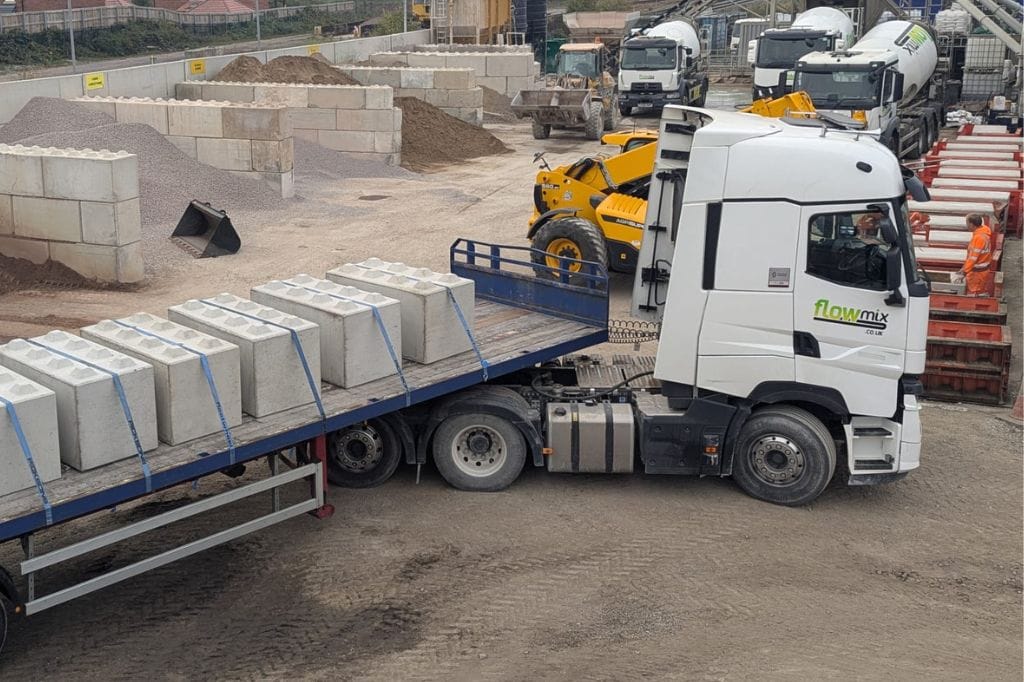
Flowmix provides interlocking concrete blocks from Tewkesbury, Gloucestershire and Aldridge, Walsall plants. In this guide, we’ll explore why shifting happens, how to identify early warning signs, and the practical steps you can take to stop interlocking concrete blocks from moving.
Why Interlocking Concrete Block Shifting Is An Issue
Even minor shifting can lead to severe structural issues over time. The strength of an interlocking system depends on each block staying tightly connected. Once one block shifts, the surrounding ones start to lose alignment, and the entire structure can gradually weaken.
This movement can cause gaps, uneven surfaces and misalignment that not only spoil the appearance but also compromise safety. Water can penetrate the gaps, frost can expand inside joints, and the foundation beneath can erode further.
With a stable base, good drainage and the correct installation methods, you can confidently stop interlocking concrete blocks from shifting and ensure your structure remains durable for years to come.
Can Interlocking Concrete Blocks Shift After Assembly?
Yes, even after proper installation, interlocking concrete blocks can shift over time if the surrounding conditions change. While these blocks interlock and create a stable structure, their strength still depends on the integrity of the ground beneath and how they were laid.
Ground movement, water erosion, vibration or temperature changes can gradually loosen the base or create small gaps between blocks. Once movement begins, it often spreads, causing more blocks to slip or tilt. That’s why it’s essential to take proactive steps to stop interlocking concrete blocks from shifting right from the start.
Professionally installed interlocking blocks are less likely to move, as experts ensure the sub-base is well compacted, properly drained and level. However, even the best installations can be affected by natural elements like freeze-thaw cycles or shifting soil.
If you notice early signs of movement, don’t ignore them. A slight adjustment now can prevent bigger repairs later. By understanding what causes movement and reinforcing the base, you can stop interlocking concrete blocks from shifting and maintain a strong, even surface for years to come.
Need Expert Advice?
Speak to the team at Flowmix Tewkesbury or Walsall. We are happy to help with all your concrete requirements.
Flowmix Tewkesbury: 01684 217888 Flowmix Walsall: Tel: 01922 741731
Common Causes Of Interlocking Concrete Blocks Shifting
Here are the most common reasons and what you can do to stop interlocking concrete blocks shifting.
Foundation Issues
The foundation is the backbone of any block structure. If the sub-base isn’t solid, level or properly compacted, movement is inevitable. Over time, loose or uneven ground allows the blocks to sink or tilt.
To stop interlocking concrete blocks from shifting, always start with a solid foundation made from compacted crushed stone or aggregate. Use a plate compactor to achieve uniform density and prevent future settlement. Compaction tests are a great way to confirm that the ground can support the structure’s weight.
Water Erosion
Water is one of the biggest threats to stability. Poor drainage can cause rainwater to pool around the base, gradually washing away the supporting material beneath the blocks. Once erosion begins, it can lead to gaps, leaning and eventual collapse.
Installing proper drainage systems, such as gravel backfill or perforated drainpipes, will help stop interlocking concrete blocks shifting by keeping water flowing away from the structure.
Heavy Loads Or Impact
Heavy machinery, vehicles or even stacked materials can exert uneven pressure on the blocks. Over time, this weight causes them to move or compress the soil underneath. If your project will bear significant loads, the base must be reinforced to stop interlocking concrete blocks shifting under pressure.
Freeze-Thaw Cycle
In colder climates, water trapped in the joints or beneath the blocks freezes and expands, pushing the blocks upward. When it thaws, the blocks settle unevenly, creating misalignment. This repetitive cycle can cause severe long-term damage.
To stop interlocking concrete blocks from shifting during winter, ensure excellent drainage and consider using frost-resistant base materials that can handle temperature changes.
Soil Type
Not all soils provide equal support. Clay soils expand and contract with moisture, while sandy soils may shift easily under heavy weight. Before installation, test your soil type to determine if stabilisation is required. Adding compacted gravel or a concrete footing can dramatically improve stability and stop interlocking concrete blocks from shifting due to soil movement.
By addressing these factors during preparation, you’ll create a strong, long-lasting structure that resists movement in every season.
Are Sinkholes Causing My Blocks To Shift?
If you’ve noticed sudden movement or sinking in one area of your wall or block structure, a sinkhole could be the hidden cause. Sinkholes form when underground materials, such as clay or limestone, dissolve or collapse due to water erosion or decaying organic matter. That creates empty spaces below the surface, leading to ground instability.
Even a small void beneath your base can trigger block displacement, making it nearly impossible to stop interlocking concrete blocks shifting without addressing the root cause.
Warning signs of a developing sinkhole include soft or spongy ground, deep cracks forming along the base of the wall, or depressions appearing in the surrounding soil.
If you suspect a sinkhole, avoid adding more weight to the area. Instead, call a professional to inspect the ground before undertaking repairs. The affected soil may need to be compacted, stabilised, or backfilled with concrete to stop interlocking concrete blocks from shifting and restore structural integrity.
Ultimately, the key is to address both surface and subsurface conditions. A stable foundation supported by sound soil is the best way to ensure your interlocking concrete blocks remain level, aligned, and secure for years to come.
Ready to Order Interlocking Concrete Blocks?
If you are ready to order interlocking concrete blocks, speak to the team at Flowmix Tewkesbury or Walsall. We will help you select the right blocks and quantities and arrange for fast delivery to your site.
Flowmix Tewkesbury: 01684 217888 Flowmix Walsall: Tel: 01922 741731
How Can I Gauge The Ground Before Placing Interlocking Concrete Blocks?
Before laying interlocking concrete blocks, it’s crucial to assess the ground carefully. The stability of your entire structure depends on the quality and condition of the soil beneath. Proper evaluation helps prevent future movement and ensures you can effectively stop interlocking concrete blocks shifting.
Here are practical steps to gauge the ground:
- Visual Inspection: Look for uneven surfaces, cracks, pooling water, or depressions. These can indicate weak spots that may compromise the base.
- Soil Testing: Determine soil type and drainage properties. Clay, sandy, or peat soils behave differently under weight and moisture, so testing helps decide whether stabilisation is needed.
- Compaction Tests: Use a hand tamper or plate compactor to check if the soil is firm. If it compresses too easily, it may require additional aggregate or concrete fill to prevent future shifting.
- Observation Over Time: Watch how the soil reacts after rainfall or freezing conditions. Movement or settling during wet or cold periods can signal underlying instability.
- Survey Existing Slopes: Ensure the ground is level or properly graded. Uneven slopes increase the risk of blocks moving over time.
By taking these steps, you can ensure a solid foundation and proactively prevent interlocking concrete blocks shifting before installation. Proper ground assessment reduces the need for costly repairs and helps your structure remain stable, level and durable.
Vegetation and Existing Infrastructure
Tree roots, shrubs, and even large plants can grow beneath or alongside your structure, exerting pressure that causes the blocks to move over time. Roots can lift blocks, create gaps, and gradually compromise the interlock, making it challenging to stop interlocking concrete blocks shifting without removing or managing the vegetation.
Existing infrastructure, such as underground pipes, cables, or foundations, can also affect stability. Water pipes can leak, or drainage systems can fail, leading to soil erosion beneath your blocks.
Even minor ground vibrations from nearby construction or heavy traffic can disturb loosely supported blocks. Identifying and accounting for these factors before installation helps to stop interlocking concrete blocks shifting and ensures a long-lasting, stable structure.
Practical steps include trimming or removing invasive roots, avoiding placing blocks directly above underground utilities, and planning around existing structures. By doing so, you minimise the risk of unexpected movement and maintain the integrity of your installation over time.
How To Stop Interlocking Concrete Blocks from Moving?
Preventing interlocking concrete blocks from moving requires a combination of proper planning, careful installation, and ongoing maintenance. Here’s how to ensure your blocks remain stable and secure:
- Prepare a Solid Base: Start with a compacted sub-base of gravel or crushed stone. Use compaction tests to ensure the ground can support the weight of your blocks. A strong foundation is the first step to stop interlocking concrete blocks from shifting.
- Level and Align Blocks Correctly: Lay blocks carefully, starting with a straight base course. Stagger joints for added strength and use string lines or levels to maintain alignment. Proper placement prevents gaps that could allow movement later.
- Install Adequate Drainage: Water can erode the base and create instability. Add gravel backfill, perforated drainage pipes, or sloping surfaces to channel water away. Controlling moisture helps stop interlocking concrete blocks shifting due to erosion or freeze-thaw cycles.
- Account for Soil Type and Load: Choose blocks suitable for your soil conditions and expected load. Clay or sandy soils may require extra stabilisation. Reinforced or heavier blocks are better for areas that will bear weight, helping to stop concrete blocks from shifting under pressure.
- Maintain Your Blocks Over Time: Inspect your installation regularly. Refill joints with sand or gravel, trim nearby vegetation, and promptly adjust any minor misalignment. Proactive maintenance is key to preventing interlocking concrete blocks from shifting in the long term.
- Professional Assistance When Needed: For large projects, steep slopes, or high-load applications, professional advice or installation can make all the difference. Experts ensure proper base preparation, drainage, and alignment, which significantly reduces the risk of movement and efficiently prevents interlocking concrete blocks shifting.
By combining these measures, you can enjoy a durable, stable, and visually appealing structure. Taking the time to plan, install, and maintain your interlocking concrete blocks is the most reliable way to stop them from shifting before problems arise.
What Size Concrete Blocks do Flowmix Supply?
Flowmix supplies two sizes of interlocking concrete blocks:
- 1600 x 800 x 800mm
- 800 x 800 x 800mm
Conclusion
Shifting interlocking concrete blocks can lead to structural issues, uneven surfaces, and costly repairs. Fortunately, with careful planning, a solid foundation, proper installation, and ongoing maintenance, you can effectively stop interlocking concrete blocks from shifting and protect your investment.
Key steps include preparing a compacted base, ensuring correct block alignment, managing drainage, considering soil type and load, controlling vegetation, and monitoring existing infrastructure. Simple tests like compaction checks can also help gauge ground stability before installation.
For those tackling larger projects or areas with challenging soil, professional guidance is invaluable. Flowmix provides expert advice, high-quality concrete, and reliable solutions to ensure your interlocking concrete blocks stay perfectly in place. Take the proper precautions today to stop interlocking concrete blocks from shifting and enjoy a safe, strong, and long-lasting structure.
How Flowmix Can Help With Your Project
Flowmix has two plants, Gloucester and Walsall. We provide the following services (with time slots):
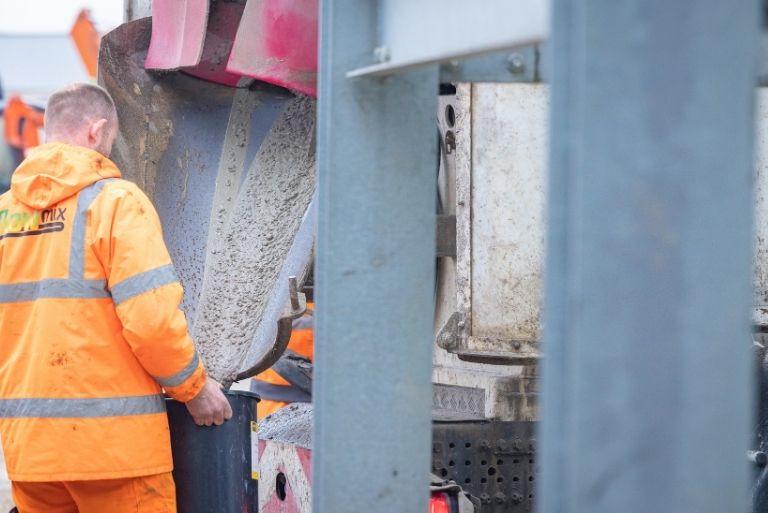
✅ Ready-mix concrete, mix on-site (volumetric concrete)
✅ Traditional and liquid screed.
✅ Concrete line pump Hire to reduce manual labour and associated costs, increase efficiency, reduce wastage and clean up.
✅ Interlocking concrete blocks for temporary or permanent barriers.
✅ Mini-Mix loads up to 4 cubic metres.
Flowmix has the BSA-approved Ready Mix Concrete Kitemark KM683844, a certification that “confirms a product or service’s claim has been independently and repeatedly tested by experts” (source BSI).
Flowmix Tewkesbury: 01684 217888 Flowmix Walsall: Tel: 01922 741731
Flowmix Delivery Areas
| Tewkesbury Area | Walsall Area |
| Bourton-on-the-Water | Aldridge |
| Brockworth | Barton-Under-Needwood |
| Chalford | Birmingham |
| Cheltenham | Brownhills |
| Chipping Campden | Burntwood |
| Cirencester | Burton Upon Trent |
| Droitwich Spa | Cannock |
| Evesham | Coleshill |
| Gloucester | Dudley |
| Great Malvern | Great Haywood |
| Ledbury | Lichfield |
| Newent | Norton Canes |
| Northleach | Penkridge |
| Pershore | Rugeley |
| Ross-on-Wye | Stafford |
| Stow-on-the-Wold | Tamworth |
| Stroud | Walsall |
| Tewkesbury | West Bromwich |
| Worcester | Wolverhampton |