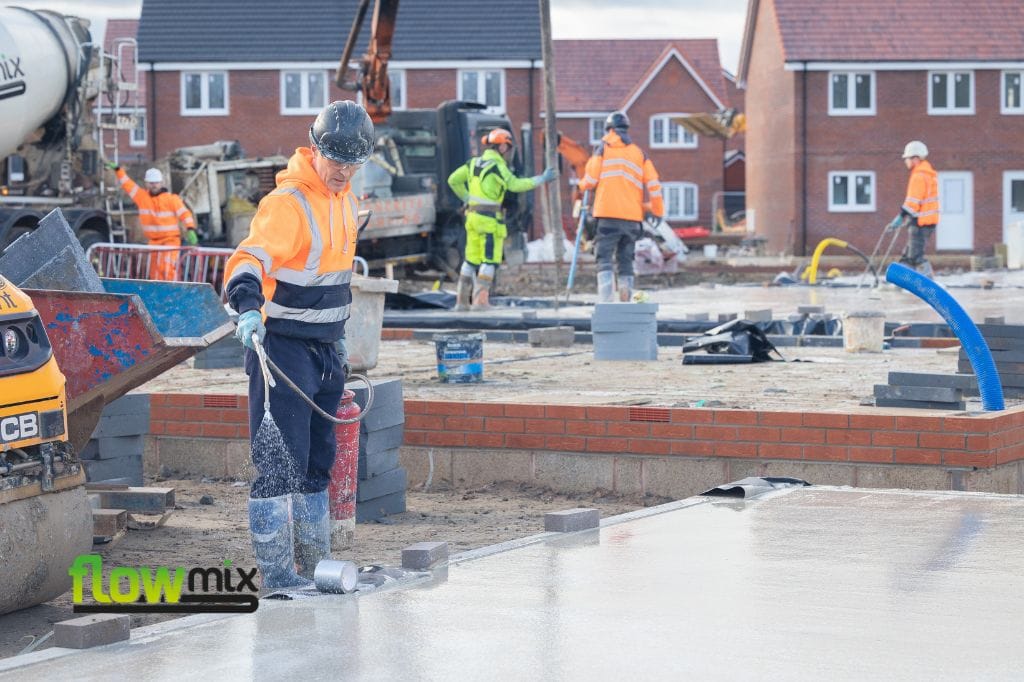
Concrete footings are crucial for the success of your project. A building is only as strong as what lies beneath it. Concrete footings, therefore, are the critical foundation that keeps everything stable, but getting them right requires careful planning and execution.
Without proper footings, buildings can crack, sink, or fail in the worst cases. It’s not just about pouring concrete into a hole; it’s about creating a foundation that will support tons of weight for decades.
The concrete footings process demands precision. From choosing the right concrete mix to preparing the site correctly, each step plays a vital role in creating the best foundation. Poor installation isn’t just an inconvenience – it’s a serious structural risk that can compromise an entire building.
Flowmix is a specialist in all things concrete and has many years of experience serving clients in Gloucestershire and West Midlands. This guide covers the critical steps for installing proper concrete footings.
We’ll walk through selecting materials, preparing your site, and ensuring your foundation gives your structure the support it needs.
Whether you’re building a simple deck or a complex structure, understanding these basics helps ensure your project starts on solid ground.
What are Concrete Footings?
Concrete footings form the crucial base of every structure. Like massive feet, they spread the building’s weight across the ground, preventing sinking and instability.
The concrete must withstand at least 3,500 pounds per square inch of pressure (psi). Whether supporting a single column, multiple columns, or entire walls, these foundations need to handle immense weight without failing.
Something to consider is that although concrete excels at handling downward pressure (compression), it’s weaker when pulled apart (tension). That’s why builders reinforce footings with steel rebar (reinforcing bars) running horizontally and vertically. This combination creates a foundation that can handle whatever forces the building throws at it.
Read: 5 DIY Concrete Pouring Dangers: When to Call A Professional
Need Expert Advice?
Speak to the team at Flowmix Tewkesbury or Walsall. We are happy to help with all your concrete requirements.
Flowmix Tewkesbury: 01684 217888 Flowmix Walsall: Tel: 01922 741731
What is the Best Concrete Mix to Use for Footings?
Getting your concrete mix right can make or break your footing’s strength. It’s all about balance – specifically, the careful combination of cement, sand, and stone that creates the perfect foundation.
The secret is in the stone because aggregate is the real muscle behind concrete strength. The stones and sand particles make up most of the mix and determine how much weight it can handle. More stone generally means stronger concrete, but there’s a catch.
If you use too large or coarse stones, you will end up with “honeycombing“, when gaps form where the aggregate clusters around the rebar. Those empty spaces weaken the entire structure. To prevent this issue, add finer aggregates and mix thoroughly.
Don’t worry about getting it wrong. Flowmix is happy to advise on the best mix for your concrete footings.
For solid footings, the following is the typical ratio:
- 1 part cement
- 2 parts sand
- 4 parts stone (measured by volume)
This mix strikes the sweet spot between strength and workability. It’s tough enough to support massive weight while still being practical to pour and finish.
Getting the proportions precisely right matters as much as using quality ingredients. This ratio has proven itself time and again in creating foundations that last.
Ready-Mix: The Smart Choice for Concrete Footings
Skip the mixing headache, save time and labour and go straight to pouring. Ready-mix concrete delivers the perfect blend without the backbreaking work of measuring and mixing by hand.
Read: Concrete Slump Test: What is it & Why Does It Matter?
Ready to Order Ready-Mix or Volumetric Concrete?
If you are ready to order a ready-mix concrete delivery, speak to the team at Flowmix Tewkesbury or Walsall. We will help you select the right mix and quantities and arrange for fast delivery to your site.
Flowmix Tewkesbury: 01684 217888 Flowmix Walsall: Tel: 01922 741731
Why Ready-Mix Concrete Makes Sense
Think of ready-mix concrete like a custom-tailored suit – made precisely to your specifications. There is no excess material sitting around, no workers tied up mixing cement, there is less mess and clean up, and there is no need to store piles of raw materials on your job site.
Professional concrete mixing plants like Flowmix use precision equipment to create consistent batches every time. We test our mixes regularly and can adjust the formula based on weather conditions and your specific needs.
The cost savings add up. DIY mixing might seem cheaper at first glance, but ready-mix often saves money in the long run:
- No labour costs for mixing
- No storage space needed
- Consistent quality every time
- Zero waste from improper ratios
For foundation work where strength and reliability matter most, ready-mix concrete gives you professional results without the hassle of manual mixing.
Read: 4 Top Tips For Preparing For A Concrete Floor
How Do You Lay Concrete Footings?
Here’s a quick and simple guide to laying concrete footings.
Building Your Foundation: A Step-by-Step Guide
Four key steps stand between you and solid concrete footings. While this overview helps explain the process, remember that foundation work requires experienced professionals to get it right.
Step 1: Site Preparation
Success starts with understanding your soil. Test its load-bearing capacity – this determines your footing’s size and depth. Clear all vegetation and debris, then mark your foundation corners precisely.
Soft soil needs extra attention to prevent future sinking.
Step 2: Trench Work
Dig wide and deep. Your trench should extend at least 2 feet beyond the foundation’s edges, giving workers room to manoeuvre. Aim for a 2-foot width and 2-3 foot depth minimum.
Remove all loose dirt and roots afterwards.
Step 3: Rebar Installation
Think of rebar as your concrete’s skeleton. Space grade pins are 2 feet apart, keeping them 1 foot from corners. Position rebar equally distant from sides and base to ensure uniform strength distribution throughout your footing.
Step 4: The Pour
Whether using ready-mix or site-mixed concrete, timing is crucial. Pour within 30 minutes of mixing to ensure proper setting. Flowmix offers timed delivery spots so you can be sure of the perfect timing for the pour.
Consider using a concrete pump for easier placement, especially in tight spots. Finish by applying an acrylic-based sealer to protect against moisture damage.
Professional Insight: Laying footings requires significant expertise. It’s a job best left to experienced professionals who know how to carry out the process correctly.
Each site presents unique challenges. While these four steps outline the basics, successful footing installation demands experience, proper equipment, and a deep understanding of concrete behaviour.
How Flowmix Can Help With Your Project
Flowmix has two plants, Gloucester and Walsall. We provide ready-mix concrete, mix on-site (volumetric) and liquid screed.
In addition, you can hire a 200′ concrete line pump to reduce manual labour and associated costs, increase efficiency, reduce wastage and clean up. Moreover, we also provide interlocking concrete blocks for temporary or permanent barriers.
Flowmix has the BSA-approved Ready Mix Concrete Kitemark KM683844, a certification that “confirms a product or service’s claim has been independently and repeatedly tested by experts” (source BSI).
Flowmix Tewkesbury: 01684 217888 Flowmix Walsall: Tel: 01922 741731
FAQs
What Is The Best Sized Aggregate To Use for Footings?
The aggregate should be around ½” – 1” in size. This mix will yield a 3,500 psi after 28 days of curing.
How Deep Should Concrete Footings Be?
Typically 2-3 feet deep for most residential structures. However, depth varies based on your area’s soil type, local building codes, and frost line. Always check local requirements – they trump general guidelines.
What Strength Concrete Do I Need For Footings?
The minimum is 3,500 PSI (pounds per square inch), which provides the necessary compression strength to support your structure. Use a 1:2:4 mix ratio (cement: sand: stone) if mixing yourself, or order ready-mix specifying 3,500 PSI.
Why Do Footings Need Rebar?
Rebar prevents cracking and provides tensile strength that concrete lacks on its own. While concrete excels at handling downward pressure, it needs steel reinforcement to resist spreading forces and soil movement.
Rebar is like a skeleton that holds everything together.