
Flooding has become a serious concern across the UK, and Gloucestershire, in particular, is no stranger to rising water levels from the River Severn and the River Avon. One increasingly popular solution is the use of concrete blocks for flooding.
Communities in Tewkesbury and the surrounding areas have faced repeated disruptions, while parts of the West Midlands, such as Bewdley, have also experienced devastating floods in recent years. For homeowners, businesses, and local authorities, finding reliable ways to reduce the impact of flooding is essential.
Known for their strength, durability, and speed of installation, concrete blocks are proving themselves as a practical choice for flood defence projects. But how effective are they really, and could they be the right option for protecting properties in Gloucestershire and the West Midlands?
Why Flood Defence Matters Locally
The UK is experiencing an increase in both the frequency and severity of flooding, with Gloucestershire and the West Midlands among the regions most at risk. The historic market town of Tewkesbury has become almost synonymous with rising waters, as it sits at the confluence of the Severn and Avon rivers.
In July 2007, one of the worst floods recorded in Tewkesbury showed the river rising by an alarming 4.92 meters.
Meanwhile, areas such as Bewdley in Worcestershire regularly experience severe flood events. These incidents highlight the urgent need for strong, long-lasting flood defence measures.
Relying on short-term fixes such as sandbags may provide temporary relief, but they are rarely enough to protect homes, businesses, and infrastructure from repeated flood damage. That’s why permanent, reliable solutions are becoming essential.
The use of concrete blocks for flooding offers a proven way to create barriers that are not only durable but also cost-effective and flexible enough to be adapted for different environments across Gloucestershire and the West Midlands.
Need Expert Advice?
Speak to the team at Flowmix Tewkesbury or Walsall. We are happy to help with all your concrete requirements.
Flowmix Tewkesbury: 01684 217888 Flowmix Walsall: Tel: 01922 741731
Are Concrete Blocks Suitable for Flood Protection?
When selecting the ideal material for flood barriers, strength, durability, and water resistance are paramount; this is where concrete blocks for flooding stand out. Unlike sandbags or timber barriers, concrete has the structural integrity to withstand prolonged exposure to water and heavy pressure from rising flood levels.
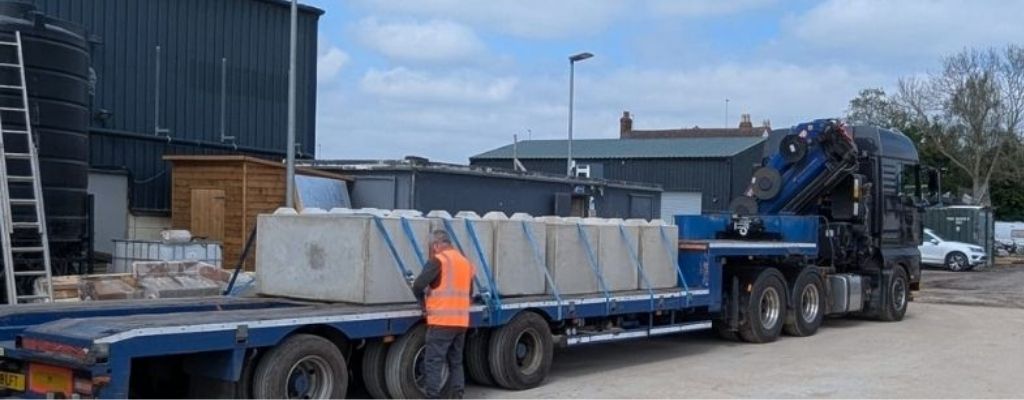
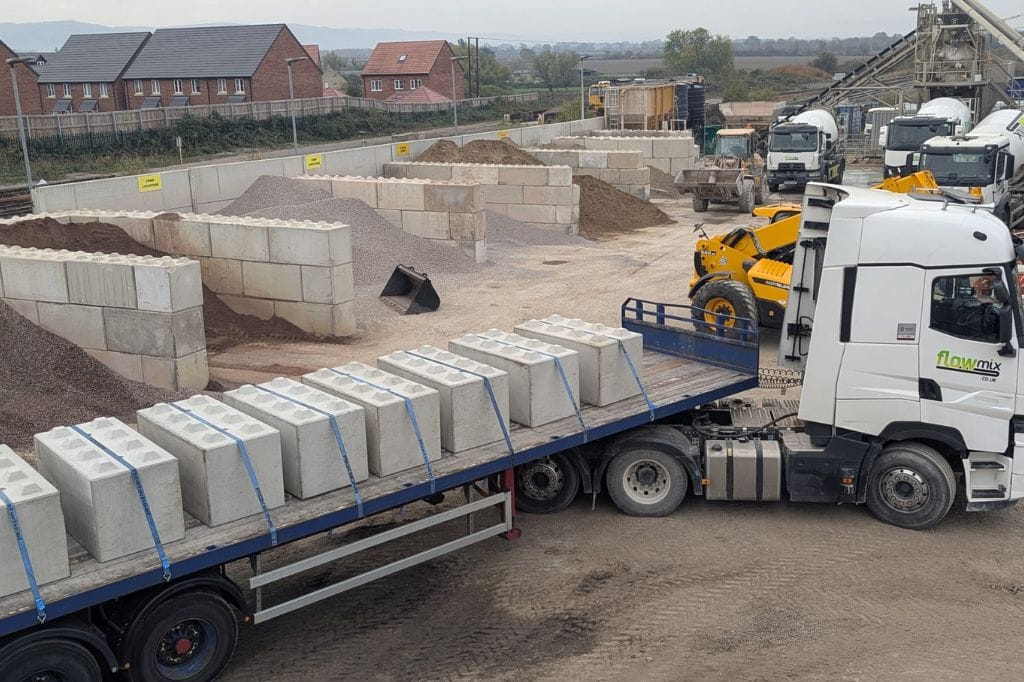
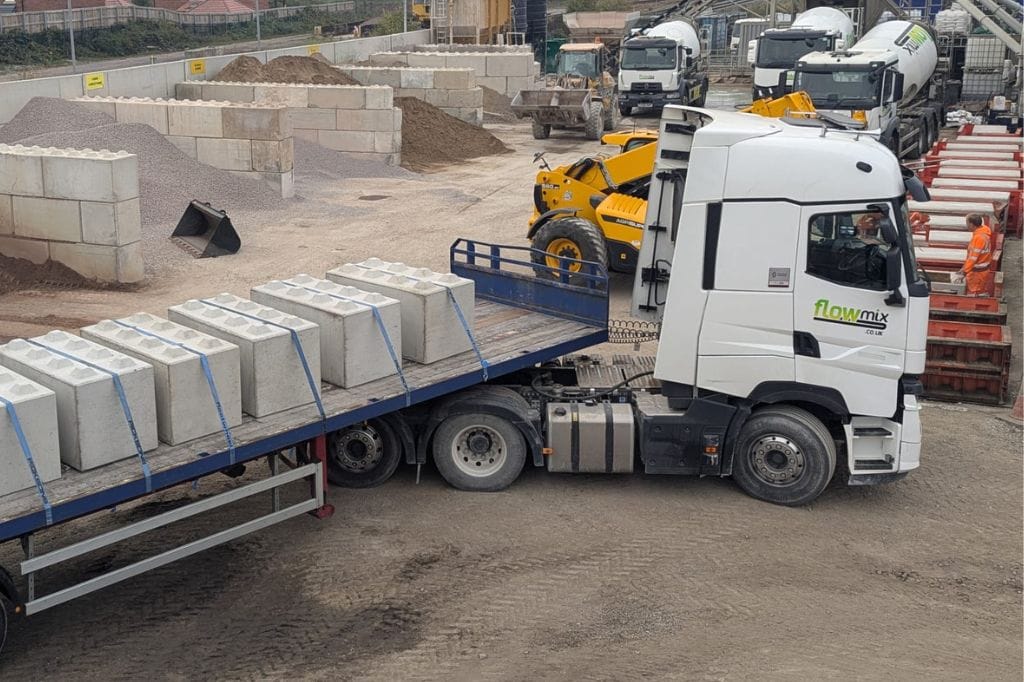
Interlocking concrete blocks, in particular, lock firmly into place, like giant Lego bricks, creating barriers that can be assembled quickly without the need for mortar. That makes them a practical solution for long-term flood defence schemes and highly effective in emergencies where rapid deployment is vital.
For properties and infrastructure in Gloucestershire and the West Midlands, this adaptability makes concrete blocks one of the most reliable solutions available.
How Effective Are Interlocking Concrete Blocks?
Interlocking concrete blocks for flooding are highly effective because they combine strength with practicality. Their dense structure allows them to withstand the pressure of moving water, while their interlocking design ensures stability without the need for mortar. These blocks have multiple uses but are an ideal flood defence.
For areas such as Tewkesbury, Gloucester, or Bewdley, where flooding is a recurring issue, interlocking concrete blocks provide the resilience and reliability necessary to protect homes, businesses, and vital infrastructure.
Key Benefits of Using Concrete Blocks for Flood Defence
When it comes to protecting properties from rising water, concrete blocks for flooding offer a range of advantages over traditional solutions. Their robust design and versatility make them a reliable choice for both residential and commercial flood defence. Here are the main benefits:
Strength and Durability
Interlocking concrete blocks can withstand significant pressure from flowing water, debris, and soil movement. Unlike sandbags, which can degrade quickly, high-quality concrete blocks maintain their structural integrity over time, offering a long-term solution for flood-prone areas.
Water Resistance and Protective Coatings
Concrete blocks naturally resist water penetration, and many are available with additional waterproof coatings. That ensures minimal absorption during floods, thereby reducing the risk of weakening or erosion, a common issue with temporary flood barriers.
Rapid Deployment in Emergencies
Flooding often occurs with little warning, making speed critical. Modular interlocking blocks are quick to assemble into temporary or permanent barriers, offering a faster response compared to traditional methods that require filling and stacking sandbags.
Modular Design for Flexible Solutions
The interlocking nature of these blocks allows for flexible barrier designs tailored to specific sites. Whether you need a straight wall along a riverbank or a more complex layout around buildings, you can arrange these blocks to provide maximum protection.
Cost-Effective and Low Maintenance
Although the initial investment may be higher than sandbags, concrete blocks for flooding are reusable and require minimal maintenance. Over time, they can be a more economical solution due to their longevity and durability.
Ready to Order Interlocking Concrete Blocks?
If you are ready to order interlocking concrete blocks, speak to the team at Flowmix Tewkesbury or Walsall. We will help you select the right blocks and quantities and arrange for fast delivery to your site.
Flowmix Tewkesbury: 01684 217888 Flowmix Walsall: Tel: 01922 741731
What Size Concrete Blocks do Flowmix Supply?
Flowmix supplies two sizes of interlocking concrete blocks:
- 1600 x 800 x 800mm
- 800 x 800 x 800mm
Which Types of Blocks Are Best for Flood Barriers
Choosing the correct type of concrete blocks for flooding is crucial to ensure maximum protection and longevity. Not all blocks perform equally under water pressure, so understanding the options is key.
- Interlocking or Modular Blocks: These blocks fit together securely, ensuring a stable structure. Their interlocking design prevents gaps that could allow water to seep through, making them ideal for both temporary and permanent flood defences.
- High-Density Concrete Blocks: Blocks made from high-density concrete provide superior strength and resistance to water pressure. They are less prone to cracking or shifting during floods, ensuring the barrier remains effective even in severe conditions.
Concrete Blocks to Avoid
Lightweight or porous blocks may seem easier to handle, but they are not suitable for flood defence. These blocks can absorb water, lose structural integrity, and potentially fail when exposed to sustained pressure, putting properties at risk.
Real-World Applications and Case Studies
The effectiveness of concrete blocks in mitigating flooding is evident across the UK, with several notable projects demonstrating their durability and flexibility.
- Swanage Coastal Protection: Swanage utilised interlocking concrete blocks to reinforce the coastline, thereby protecting properties from the effects of high tides and storm surges.
- Bewdley Riverbank Reinforcement: Along the River Severn in Bewdley, high-density concrete blocks created a stable flood barrier for residential and commercial areas.
- Redcar Flood Mitigation: Redcar saw success with concrete block barriers around low-lying industrial zones. The interlocking blocks enabled fast deployment and easy modifications, allowing authorities to adapt the barriers to changing flood patterns.
By learning from these real-world examples, property owners and businesses can see how concrete blocks for flooding provide a reliable, long-term solution to flood risk.
Flowmix supplies a wide range of high-quality interlocking concrete blocks suitable for flood defence projects in Gloucestershire and the West Midlands.
Whether you need blocks for riverbank reinforcement in Tewkesbury or emergency flood barriers in Aldridge, Flowmix can deliver on time, with expert advice on selecting the most effective types for your site.
Flowmix Concrete Blocks Delivery Areas
| Tewkesbury Area | Walsall Area |
| Bourton-on-the-Water | Aldridge |
| Brockworth | Barton-Under-Needwood |
| Chalford | Birmingham |
| Cheltenham | Brownhills |
| Chipping Campden | Burntwood |
| Cirencester | Burton Upon Trent |
| Droitwich Spa | Cannock |
| Evesham | Coleshill |
| Gloucester | Dudley |
| Great Malvern | Great Haywood |
| Ledbury | Lichfield |
| Newent | Norton Canes |
| Northleach | Penkridge |
| Pershore | Rugeley |
| Ross-on-Wye | Stafford |
| Stow-on-the-Wold | Tamworth |
| Stroud | Walsall |
| Tewkesbury | West Bromwich |
| Worcester | Wolverhampton |
Conclusion
Flooding is an increasingly serious concern for properties and businesses in Gloucestershire and the West Midlands. Using interlocking concrete blocks for flooding offers a durable, water-resistant, and adaptable solution that outperforms traditional methods like sandbags.
With interlocking, high-density blocks, it is possible to create barriers that are strong, long-lasting, and quickly deployable in emergencies.
If you are looking to protect your home, commercial property, or local infrastructure, Flowmix can provide the right concrete blocks for your flood defence needs. From supply in Tewkesbury, Gloucestershire, to Aldridge in the West Midlands, Flowmix offers expert advice, timely delivery, and high-quality products designed to withstand the challenges of flooding.
Contact Flowmix today to discuss how you can safeguard your property with reliable, long-term flood protection solutions.
Flowmix Tewkesbury: 01684 217888 Flowmix Walsall: Tel: 01922 741731
How Flowmix Can Help With Your Project
Flowmix has two plants, Gloucester and Walsall. We provide the following services (with time slots):
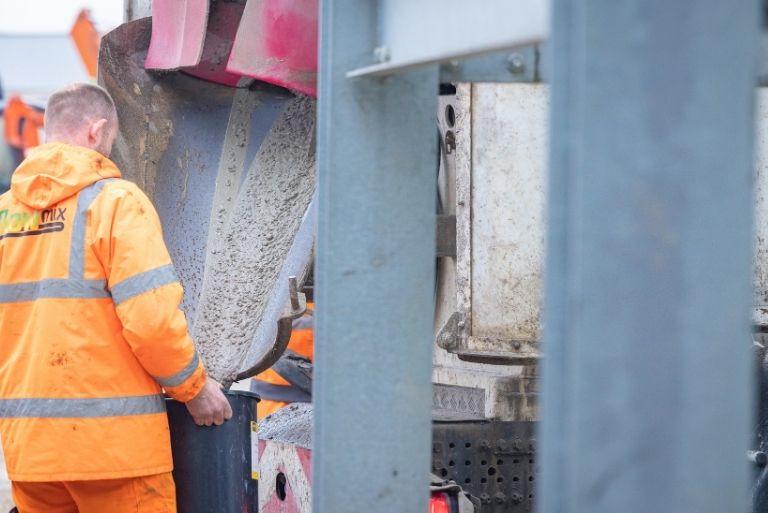
- Ready-mix concrete, mix on-site (volumetric concrete) and liquid screed.
- Concrete line pump Hire to reduce manual labour and associated costs, increase efficiency, reduce wastage and clean up.
- Interlocking concrete blocks for temporary or permanent barriers.
- Mini-mix loads up to 4 cubic metres.
Flowmix has the BSA-approved Ready Mix Concrete Kitemark KM683844, a certification that “confirms a product or service’s claim has been independently and repeatedly tested by experts” (source BSI).
Flowmix Tewkesbury: 01684 217888 Flowmix Walsall: Tel: 01922 741731