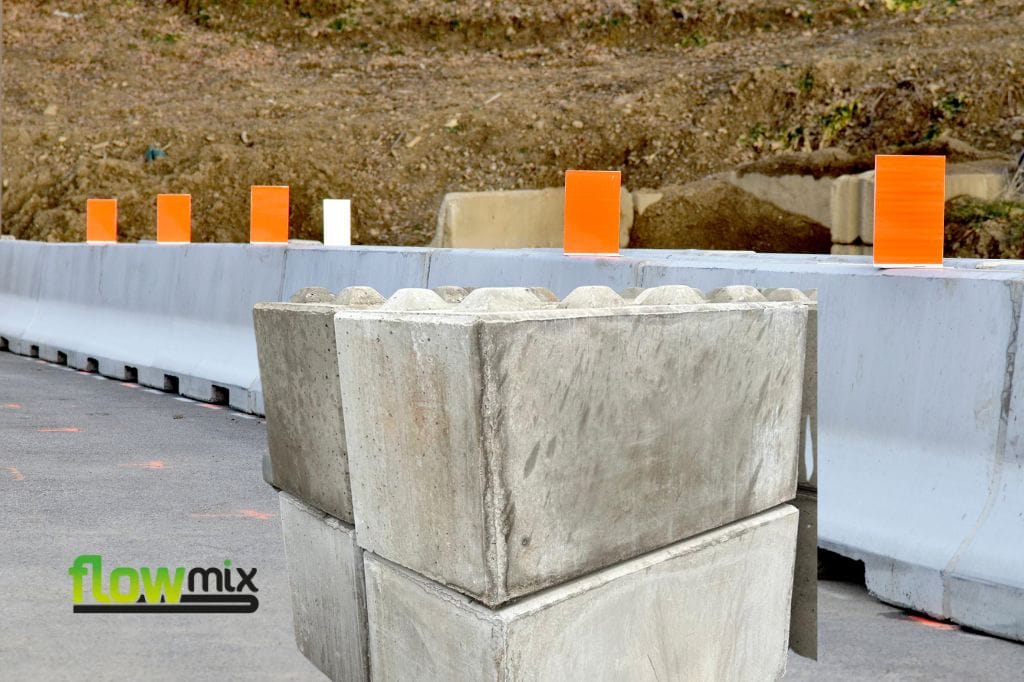
Interlocking concrete blocks or concrete barriers are becoming a popular choice for building project and event management. Whether it’s a small-scale DIY or a large industrial site, you’ve probably come across terms like interlocking blocks or concrete barriers.
At first glance, they may seem similar, but understanding the differences can save you time, hassle, and potentially a significant amount of money down the line.
Whether you’re protecting site access, managing security, or laying the foundations of something long-term, understanding your options between interlocking concrete blocks or concrete barriers, helps you make better choices from the start.
The demand for innovative, flexible construction solutions is growing across private and industrial sectors. If you’re weighing which concrete product suits your needs best, you’re in the right place. Let’s break it all down.
What Are Interlocking Concrete Blocks?
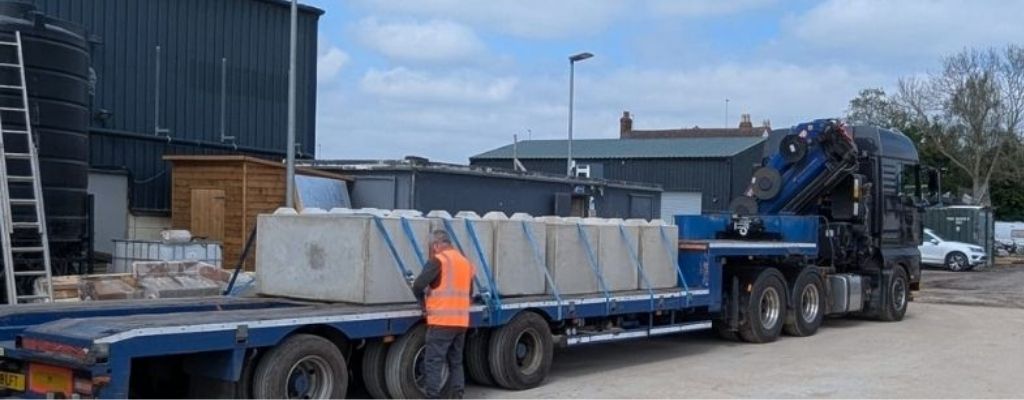
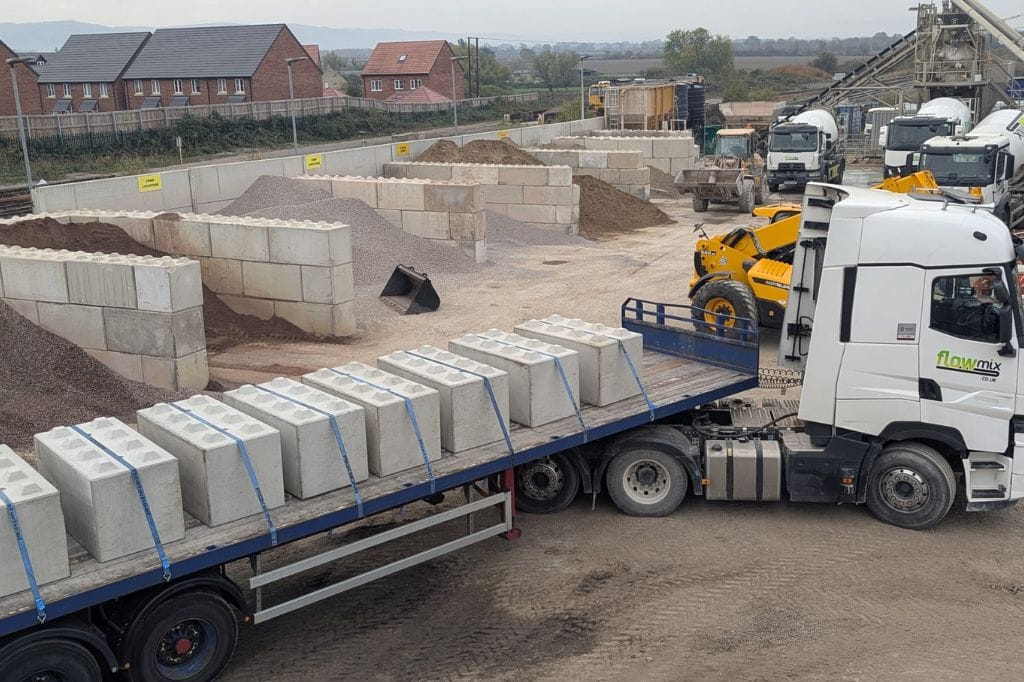
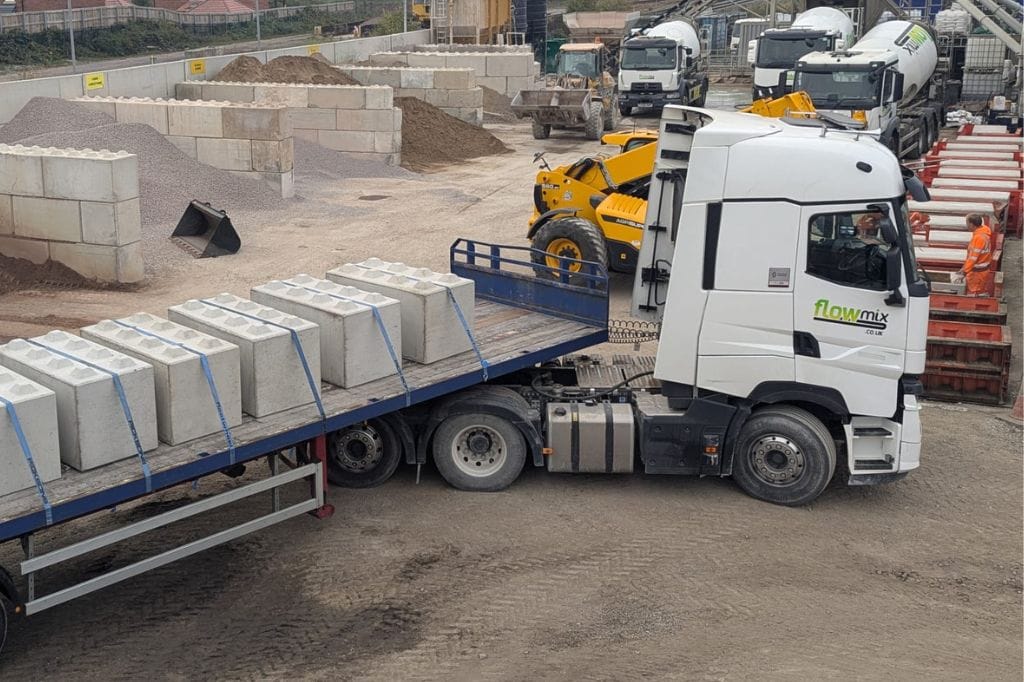
Imagine giant LEGO bricks made of solid concrete designed to hold back soil, build barriers, or section off spaces on construction sites. That’s essentially what interlocking concrete blocks are. They’re strong, stackable, and incredibly handy for a wide range of building and landscaping projects.
These blocks are specially designed with a male/female interlocking system, meaning they slot neatly into one another without the need for mortar. That makes them sturdy, quick to install and easy to reposition, which is ideal when flexibility and speed are crucial.
Are Interlocking Concrete Blocks Easy to Manouvre?
Because they’re so easy to manoeuvre (with the right machinery, of course), they’re perfect for projects that need a solid solution without the faff of permanent construction. If you need to move them later, it’s an easy job with lifting equipment.
In short, interlocking blocks are characterised by their strength, simplicity, and versatility. If you’re after a no-nonsense building block that gets the job done fast, these might be just what you’re looking for.
Ready to Order Interlocking Concrete Blocks?
If you are ready to order interlocking concrete blocks, speak to the team at Flowmix Tewkesbury or Walsall. We will help you select the right blocks and quantities and arrange for fast delivery to your site.
Flowmix Tewkesbury: 01684 217888 Flowmix Walsall: Tel: 01922 741731
What Are the Pros of Interlocking Concrete Blocks?
When it comes to heavy-duty building solutions, interlocking concrete blocks or concrete barriers each have their place. Still, let’s focus for a moment on why interlocking blocks are such a popular choice for temporary and permanent construction projects.
1. Fast and Fuss-Free Installation
Interlocking concrete blocks fit together like puzzle pieces, which means no mortar, no faffing about, and no unnecessary delays. They’re quick and easy to position, making them ideal when you need something solid, safe, and quick to install.
2. Cost-effective and Efficient
Thanks to their reusable nature, interlocking blocks can save you money over time. Fewer materials, reduced labour, and the ability to move and reuse them make them a budget-friendly choice, especially for evolving construction sites.
3. Completely Reusable
Unlike traditional builds that are permanent (and expensive to alter), interlocking concrete blocks are easy to reposition. So, whether you’re building a storage bay today or rearranging your site layout next month, they’ve got your back.
4. Built to Last
These blocks are made from high-strength concrete, built to withstand the elements, pressure, and wear and tear. Once installed, they stay put. They are significantly longer lasting than a Gabion wall.
5. Minimal Groundwork Required
In many cases, all you need is a level, compacted surface. There’s no need for mortar or steel reinforcements. That’s a big win for time and budget.
6. Resistant to Extreme Weather Conditions
Whether it’s heavy rain, snow, heat waves, or high winds, interlocking concrete blocks are designed to withstand the elements. They’re built to perform in the UK’s famously unpredictable weather.
7. Fire-Resistant Properties
Because interlocking blocks are made from dense concrete, they have natural fire-resistant qualities. They help to mitigate the spread of fire in specific settings, particularly useful in industrial applications or where fire safety is a concern.
8. Versatile Across Projects
From retaining walls and security zones to waste bays and site separation, interlocking concrete blocks offer unmatched flexibility. You’ll often see them used alongside concrete barriers on larger projects for extra control and protection.
So, whether you’re managing a construction site, prepping for an industrial build, or need a strong, reusable wall fast, interlocking concrete blocks deliver strength, speed, and simplicity.
In addition, interlocking concrete blocks offer sound resistance, are stackable, and are unlikely to be displaced once they’re in position. They’re easy to move with standard lifting equipment.
Need Expert Advice?
Speak to the team at Flowmix Tewkesbury or Walsall. We are happy to help with all your concrete requirements.
Flowmix Tewkesbury: 01684 217888 Flowmix Walsall: Tel: 01922 741731
What Are Interlocking Concrete Blocks Used For?
At first glance, most of the uses for interlocking concrete blocks or concrete barriers seem the same, but there are differences, which we’ll explore later.
- Site perimeter security
- Temporary or permanent site walls
- Firebreak walls in industrial settings
- Agricultural or equestrian enclosures
- Traffic management and access control
- Retaining walls and embankment support
- Backfilling and soil retention on sloped land
- Supporting infrastructure during construction
- Flood defences and water diversion structures
- Storage bays for aggregates, sand, salt, or waste
- Ballast or support for scaffolding and structures
- Divider walls in warehouses or recycling facilities
- Creating bays, bins, or compartments for material separation
- Pairing with concrete barriers for enhanced protection and zoning
What Is a Concrete Barrier
If interlocking concrete blocks are like giant LEGO bricks, then concrete barriers are in the heavyweight corner of site safety. These solid, continuous structures are designed to control traffic, protect work zones, and prevent vehicles from entering hazardous areas.
Both interlocking concrete blocks or concrete barriers are usually precast, heavy, and built to withstand significant impact, making them ideal for:
- Road safety and traffic management
- Separating lanes or blocking off restricted zones
- Protecting construction sites or event perimeters
- Acting as permanent or temporary crash barriers
Unlike interlocking blocks, concrete barriers are typically not stackable or repositionable without the use of heavy machinery. They’re all about stability, impact resistance, and security.
Advantages of Concrete Barriers
Concrete barriers might not be the flashiest building blocks, but when it comes to safety and security, they’re absolute heavy hitters. Here’s why many construction and road projects rely on them alongside interlocking concrete blocks:
1. Superior Impact Resistance
Designed to absorb and deflect vehicle impacts, concrete barriers provide a high level of protection on busy roads, construction sites, and event perimeters.
2. Permanent or Temporary Solutions
Whether you need a long-term safety installation or a temporary traffic control measure, concrete barriers are a tough and reliable solution.
3. High Visibility and Customisation
Often painted or fitted with reflective strips, concrete barriers enhance site visibility, helping to keep workers and drivers safer, especially at night or in poor weather conditions.
4. Minimal Maintenance
Once installed, concrete barriers require very little upkeep. Their durability means they withstand years of wear and tear.
5. Versatile Uses
From dividing highways to securing sensitive areas or guiding pedestrian flow, concrete barriers are multi-purpose safety solutions.
6. Stability Without Foundations
Like interlocking blocks, concrete barriers typically only need a level surface to sit on, speeding up installation and reducing groundwork costs.
What Are Concrete Blocks Used For?
- A base for fences and gates
- Partition walls within buildings
- Fire-resistant walls and barriers
- Retaining walls and boundary walls
- Crowd control for perimeters at events
- Noise barriers along roads and railways
- Structural support in industrial buildings
- Block vehicles from entering a secure site
- Landscaping features like garden walls and raised beds
- To protect workers from hazards during construction work
- Building walls and foundations for residential and commercial structures
- Used in combination with interlocking concrete blocks or concrete barriers for various construction and security projects
Ready to Order Interlocking Concrete Blocks?
If you are ready to order interlocking concrete blocks, speak to the team at Flowmix Tewkesbury or Walsall. We will help you select the right blocks and quantities and arrange for fast delivery to your site.
Flowmix Tewkesbury: 01684 217888 Flowmix Walsall: Tel: 01922 741731
What Size Concrete Blocks do Flowmix Supply?
Flowmix supplies two sizes of interlocking concrete blocks:
- 1600 x 800 x 800mm
- 800 x 800 x 800mm
Difference Between Interlocking Concrete Blocks or Concrete Barriers
If you’re wondering whether to choose interlocking concrete blocks or concrete barriers for your next project, here are the key differences to help you make an informed decision.
Both are essential concrete products, but they serve quite different purposes on site:
| Feature | Interlocking Concrete Blocks | Concrete Barriers |
| Design & Shape | Modular blocks with male/female edges that fit together | Solid, continuous, heavy precast barriers |
| Installation | Quick to stack & reposition without mortar | Usually placed individually, heavy & fixed in place |
| Mobility | Easily moved & reused on different sites | Difficult to move without machinery |
| Primary Uses | Retaining walls, storage bays, temporary structures | Traffic control, safety barriers, crash protection |
| Foundation Needs | Often require just a flat, compacted surface | Usually require level ground; may need anchoring |
| Flexibility | Highly flexible and reconfigurable | For permanent or semi-permanent placement |
| Durability | Strong and weather-resistant | Robust, impact-resistant |
| Fire Resistance | Yes | Yes |
In summary, interlocking concrete blocks offer versatility, speed, and reusability, making them ideal when flexibility is a priority. Concrete barriers, on the other hand, deliver maximum protection and stability where safety and impact resistance are top priorities.
Choosing between interlocking concrete blocks or concrete barriers depends on your project’s specific needs, whether you want a solid, semi-permanent barrier or a modular, adaptable building block.
Both interlocking concrete blocks or concrete barriers play vital roles in construction and site safety. If you need flexibility, quick setup, and reusability, interlocking blocks are the ideal solution.
For maximum impact resistance and long-term security, concrete barriers are unmatched in their effectiveness. Understanding how they differ ensures you pick the right solution for your project, saving time, money, and hassle.
How Flowmix Can Help With Your Project
Flowmix has two plants, Gloucester and Walsall. We provide the following services (with time slots):
- Ready-mix concrete, mix on-site (volumetric concrete) and liquid screed.
- Concrete line pump Hire to reduce manual labour and associated costs, increase efficiency, reduce wastage and clean up.
- Interlocking concrete blocks for temporary or permanent barriers.
- Mini-Mix loads up to 4 cubic metres.
Flowmix has the BSA-approved Ready Mix Concrete Kitemark KM683844, a certification that “confirms a product or service’s claim has been independently and repeatedly tested by experts” (source BSI).
Flowmix Tewkesbury: 01684 217888 Flowmix Walsall: Tel: 01922 741731
Flowmix Delivery Areas
| Tewkesbury | Walsall Plant |
| Bourton-on-the-Water | Aldridge |
| Brockworth | Barton-Under-Needwood |
| Chalford | Birmingham |
| Cheltenham | Brownhills |
| Chipping Campden | Burntwood |
| Cirencester | Burton Upon Trent |
| Droitwich Spa | Cannock |
| Evesham | Coleshill |
| Gloucester | Dudley |
| Great Malvern | Great Haywood |
| Ledbury | Lichfield |
| Newent | Norton Canes |
| Northleach | Penkridge |
| Pershore | Rugeley |
| Ross-on-Wye | Stafford |
| Stow-on-the-Wold | Tamworth |
| Stroud | Walsall |
| Tewkesbury | West Bromwich |
| Worcester | Wolverhampton |